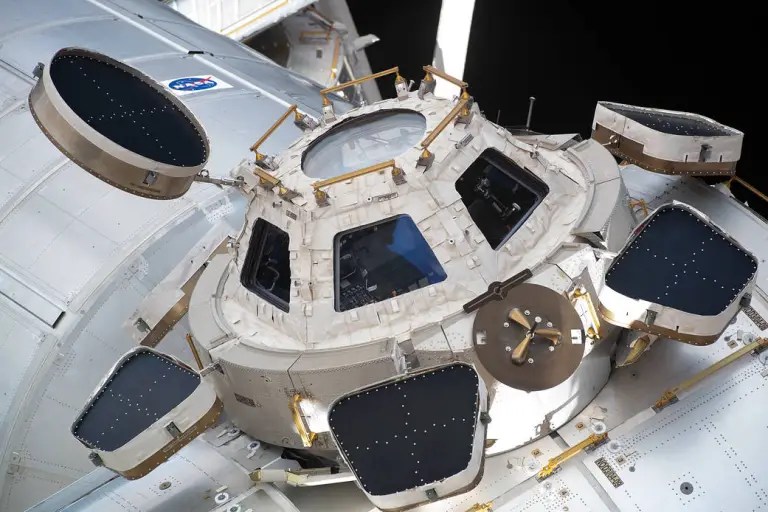
Image (Credit): The ISS’s “window to the world” is pictured from the Nauka Multipurpose Laboratory Module. (NASA)
“We expected a launch market that was going to take off. We expected tourism to take off. We expected the ability to do research and technology development on the International Space Station, bring it back to Earth and mass produce it…We’re not seeing any of those three things.”
–Statement by Joel Montalbano, NASA’s acting associate administrator for space operations, addressing the need for NASA to build onto the current International Space Station (ISS), which is part of the newly announced NASA space initiatives. Mr. Montalbano was speaking at a March 25th hearing before the House Committee on Science, Space, and Technology, Subcommittee on Space and Aeronautics. The vice ranking member of the full committee, Rep. George Whitesides (D-CA), questioned NASA’s new approach, stating:
Based on the old plan, several companies raised probably in excess of $2 billion in private capital and did so on the expectation that NASA would follow through…My concern is that if NASA is not a reliable partner for private investors, we’re not going to get that money and we’re not going to then save money by being able to cost-share with the private sector.
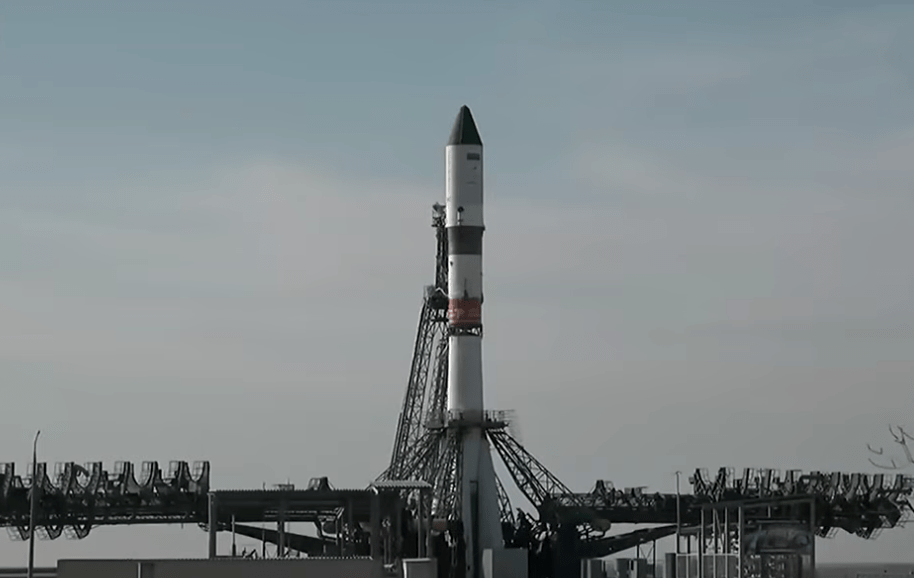
Image (Credit): The Soyuz rocket carrying the Progress 94 mission just prior to launch. (Roscosmos)
The Russians successfully launched a cargo shipment of food, fuel, and supplies to the International Space Station (ISS) earlier today. The Roscosmos Progress 94 spacecraft left the Baikonur Cosmodrome in Kazakhstan aboard a Soyuz rocket.
Not everything was perfect, but there is no need to worry. An antenna issue may compromise the unmanned attaching to the ISS on Tuesday morning, but manual controls are available. The Russians are more than able to perform this tasks.
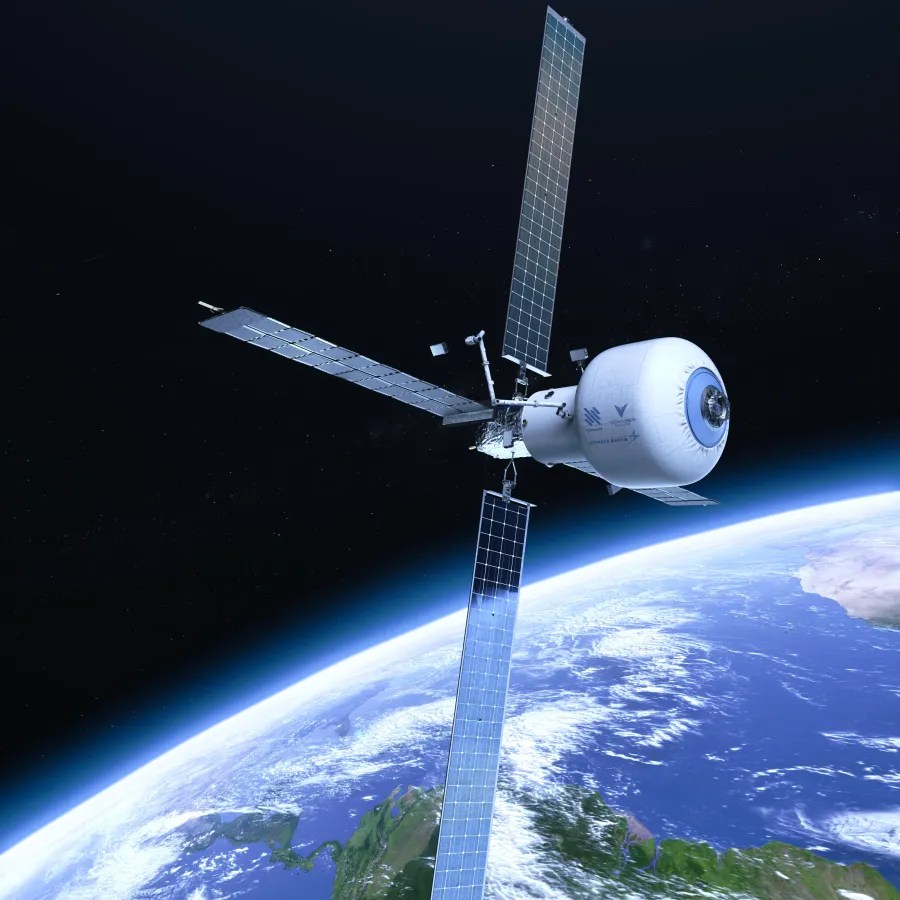
Image (Credit): A artist’s rendering of Nanoracks, Voyager Space, and Lockheed Martin’s Starlab commercial space station. (Nanoracks/Lockheed Martin/Voyager Space)
Senator Ted Cruz (R-TX), Chairman of the Senate Commerce, Science, and Transportation Committee, earlier today highlighted some of the sections in the NASA Authorization Act of 2026 designed to counter Chinese ambitions on the Moon while also keeping the US in the forefront of space stations.
Let me touch on a few highlights of the NASA Authorization Act. The bill—
Directs NASA to create a permanent “moon base” so we can get there before the Chinese;
Keeps American astronauts in space, extending the ISS through 2032 and requiring the launch of two independent commercial space stations before the ISS can be retired;
Protects against disclosure of NASA tech secrets to Chinese spies; and
Restores fiscal discipline while modernizing NASA’s workforce through public-private partnerships.
This all sounds good, but first we need to successfully get to the Moon before worrying about permanent versus temporary Moon bases. I would rather we focus just getting a manned spacecraft back on the Moon after more than 50 years. The more burdens we place on these initial missions, the less likely we will have the chance to land on the Moon.
Mr. Musk’s complex dance with multiple Starships was designed to handle a spacecraft with four astronauts and a complex lunar habitat. A simpler mission just to replant the flag may have made more sense if the latest Space Race is about being the first to get back on the lunar surface. And if a Moon base is really a national priority, we should be able to find the funds do to both – a quick, basic mission to put boots on the lunar surface and a more complex mission supporting a Moon base. However, last year’s proposed budget cuts indicated the White House doesn’t know what it wants.
In terms of a space station, the idea of getting more years out of the enormous investment in the International Space Station makes perfect sense. That said, requiring long-term investment from the commercial sector for space stations seems presumptuous. While NASA can support the design of future stations, it cannot ensure their construction and viability. Besides, it is not clear we have enough research, both government and commercial, to support one space station. Do we really need two? And should that be NASA’s decision?
I believe the private sector can decide on the need for space stations all by itself, and so far it has not shown enough interest in this area. The government is good at big things, while the private sector has very specific profit-driven interests when it comes to space missions, like anything else. So far, the commercial funding seems to be drifting towards orbiting data centers and even space tourism. Is this what Senator Cruz envisions?
We may need to simplify our milestones if we are trying to beat the Chinese and maintain our presence in space. Big ideas need to be supported with big budgets and/or clear private sector benefits. With the current administration starting costly wars around the world while also sending mixed signals to the private sector via excessive tariffs and various crony-capitalist actions, we will be lucky to keep the lights on at NASA.
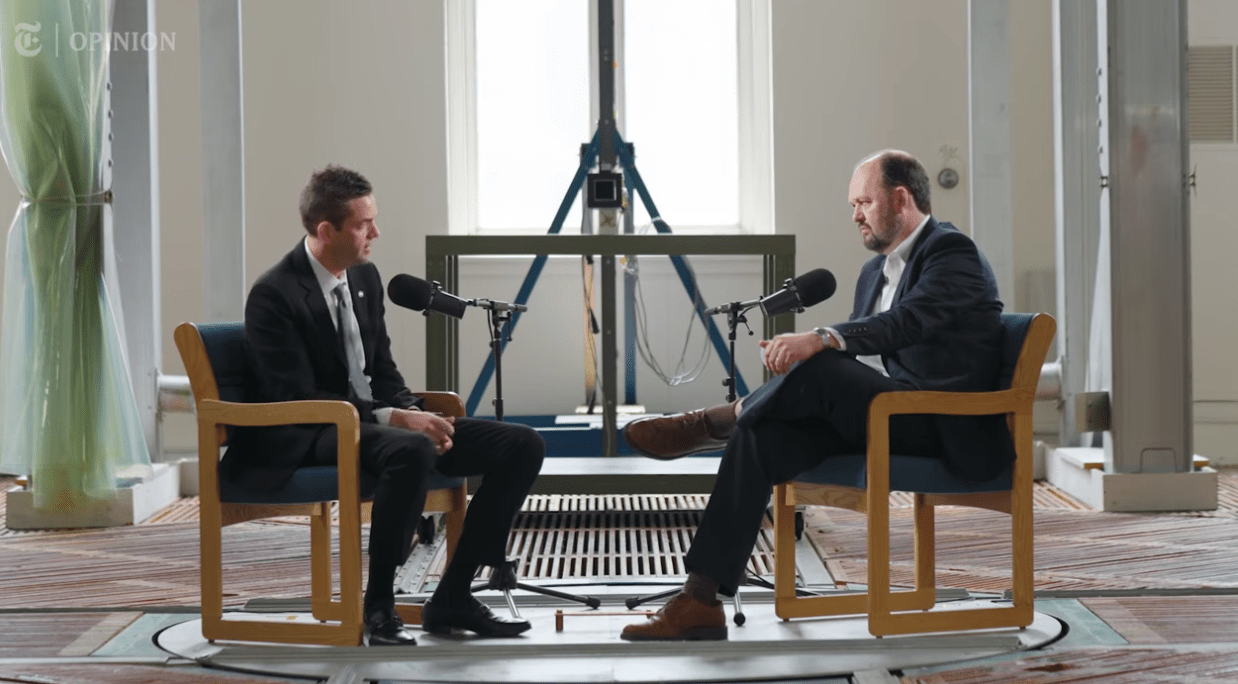
Image (Credit): NASA Administrator Jared Isaacman and New York Times columnist Ross Douthat speaking on the Interesting Times program. (New York Times)
New York Times columnist Ross Douthat sat down with NASA Administrator Jared Isaacman recently to discuss the future of NASA and more. You can listen to the interview, titled ‘The New Space Race,” via the New York Times‘ Interesting Times podcast or watch it on YouTube.
I was a little skeptical about what I would learn from NASA’s new administrator, a billionaire space tourist until recently, but Jared Isaacman was well spoken during the interview. He seemed both candid with his answers as well as well comfortable with everything Ross tossed his way. His only stumble in my opinion was when he was trying to cover for the proposed draconian cuts to NASA by the White House in 2025. Fortunately, Congress saved the agency and his butt, though you would not know that from his answer.
I particularly liked his openness about his own space travels as well as the return mission to the Moon. In terms of himself, he compared his own gravity-free experience in space as the equivalent of being an upside down chipmunk. He also did not appear overwhelmed by his privileged view of the Earth from low Earth orbit. He said the high-definition images from the International Space Station (ISS) over the years has given everyone a great view of the Earth.
As far as establishing an early settlement on the Moon, he did not try to oversell it. He stated:
For the first maybe, I don’t know, 10 years, it’s going to look like a pretty cool futuristic junkyard with lots of landers and rovers around.
Mr. Isaacman also restated his critique of NASA’s handing of the Boeing Starliner mission to the ISS, did not exaggerate the profits to be made in space at the moment, expressed his opinions on intelligent life elsewhere as well as the public’s interest in UFOs, and stated he expected a manned mission to land on Mars within about 10 years.
Check it out for yourself if you want to learn a little more about the man running NASA. The interview runs for about an hour.
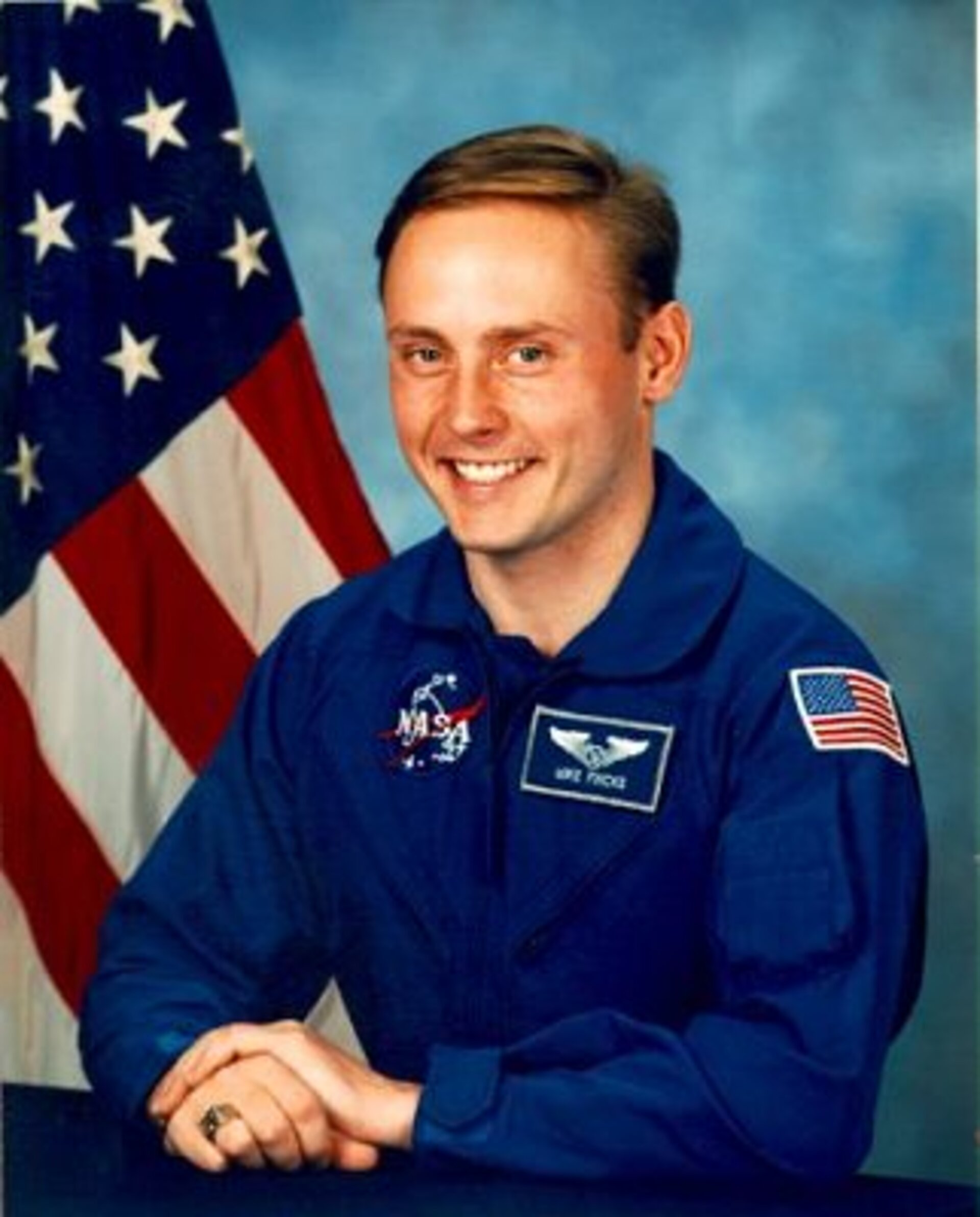
Image (Credit): An earlier photo of NASA astronaut Edward Michael “Mike” Fincke. (European Space Agency)
While NASA had kept it quiet for a while, we now know that the medical evacuation of Crew-11 from the International Space Station (ISS) last month related to NASA astronaut Mike Fincke (age 58).
While we still do not know the underlying medical condition, and maybe never will, it appears Fincke is still recovering given that he has stated:
I’m doing very well and continuing standard post-flight reconditioning at NASA’s Johnson Space Center in Houston. Spaceflight is an incredible privilege, and sometimes it reminds us just how human we are…Thank you all for your support.
It is good that he reminds us of human frailty as we send manned spacecraft to the Moon again, while also contemplating the daunting task of sending humans to Mars.
We were reminded of human frailty again this past weekend when a US Navy sub had to resurface near Greenland because of crew member’s medical condition. A submarine submerged for months at a time is probably as close as you will get to the conditions and isolation of a spacecraft going to Mars.
Note: An interesting fact about Mike Fincke is that he appeared as a guest star on the last episode of Star Trek: Enterprise in 2025. He played the part of Lt. M. Fincke.

 Our Awesome Universe