Space Stories: Cygnus Spacecraft Damaged, AI & Astronomy, and Toxic Martian Dust

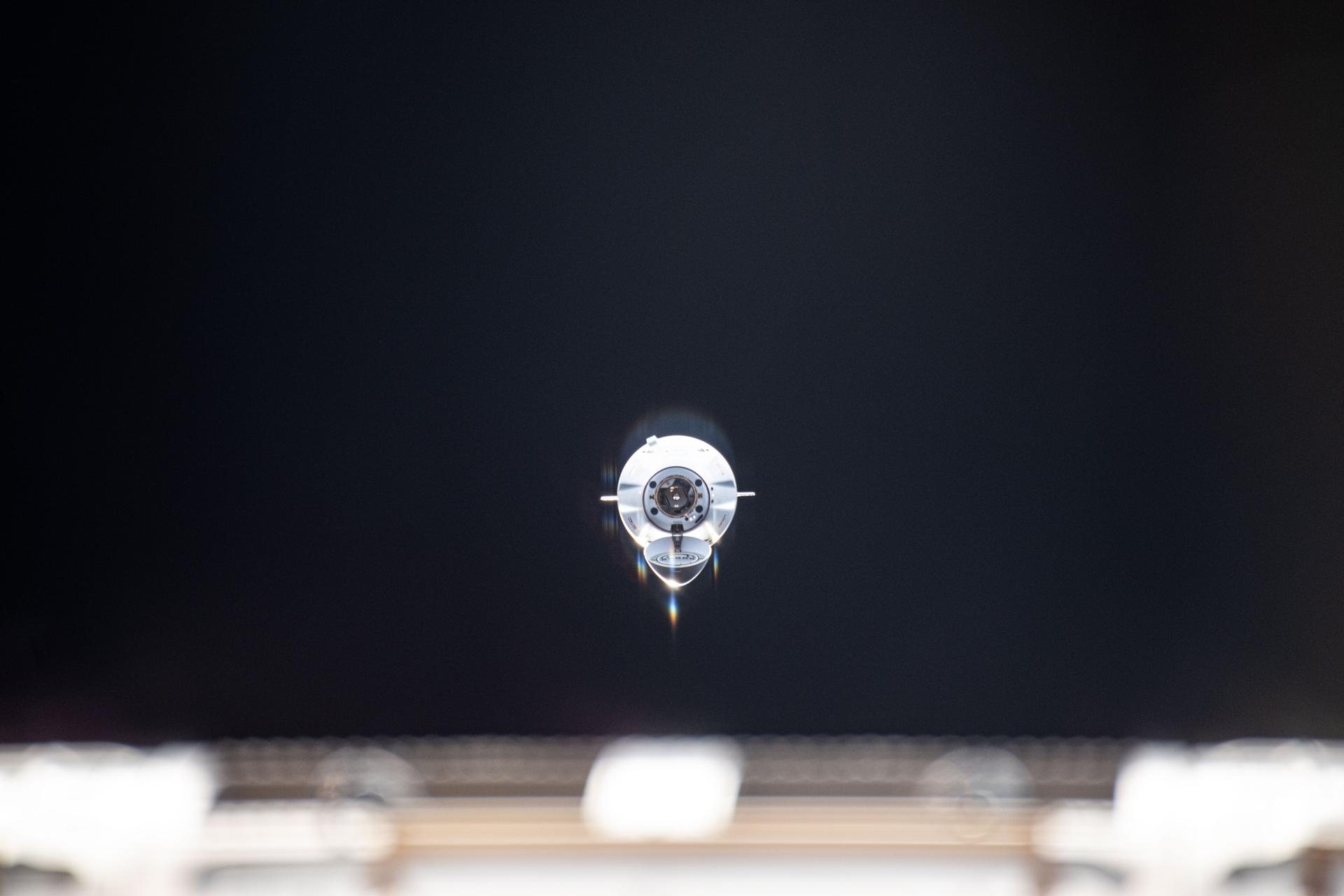
Image (Credit): The Cygnus cargo shit at the International Space Station. (Northrup Grumman)

Here are some recent stories of interest.

Ars Technica: After a Spacecraft was Damaged en route to Launch, NASA Says it Won’t Launch

Three weeks ago, NASA revealed that a shipping container protecting a Cygnus spacecraft sustained “damage” while traveling to the launch site in Florida. Built by Northrop Grumman, Cygnus is one of two Western spacecraft currently capable of delivering food, water, experiments, and other supplies to the International Space Station. This particular Cygnus mission, NG-22, had been scheduled for June. As part of its statement in early March, the space agency said it was evaluating the NG-22 Cygnus cargo supply mission along with Northrop.

Intelligent Computing: AI Reshapes How We Observe the Stars

AI tools are transforming how we observe the world around us—and even the stars beyond. Recently, an international team proved that deep learning techniques and large language models can help astronomers classify stars with high accuracy and efficiency. Their study, “Deep Learning and Methods Based on Large Language Models Applied to Stellar Light Curve Classification,” was published Feb. 26 in Intelligent Computing.

CNN: Toxic Dust on Mars Would Present Serious Hazard for Astronauts

Toxic dust on Mars would make a future mission to the red planet extremely hazardous for astronauts and require significant countermeasures, new research suggests. Substances such as silica, gypsum, perchlorates and nanophase iron oxides contained in Martian dust could have life-threatening effects on members of a potential Mars mission, according to a study published in the journal GeoHealth last month.

Crew-10 Members Heading to ISS

Image (Credit): The SpaceX Falcon 9 rocket standing ready earlier in the week to launch the Crew-10 members to the ISS. (SpaceX)

Yesterday saw the launch of the Crew-10 members from NASA’s Kennedy Space Center in Cape Canaveral. The Crew-10 members heading to the International Space Station (ISS) are NASA astronauts Anne McClain and Nichole Ayers, JAXA (Japan Aerospace Exploration Agency) astronaut Takuya Onishi, and Roscosmos cosmonaut Kirill Peskov.

This new crew will relieve the current ISS crew, which includes two astronauts (Suni Williams and Butch Wilmore) who arrived at the station last year on the Boeing Starliner only to stay longer than anticipated.

NASA has shown innovation by integrating Williams and Wilmore into the Expedition 72 crew and keeping them busy. Both of their attitudes have been positive throughout this process, regardless of all the drama back on Earth started by Elon Musk about a “rescue.”

NASA doesn’t do drama. We can expect a safe and professional transition of crews.

Update: The new crew arrived at the ISS safely Sunday morning.

Second Update: As of yesterday, March 8, the Crew-9 members, including NASA astronauts Butch Wilmore and Suni Williams, returned safely to Earth.

Image (Credit): The SpaceX Dragon Freedom spacecraft after it splashed down in the Gulf of America yesterday, returning Crew-9 to Earth. (NASA)

Russian Cargo Heads to the ISS

Image (Credit): Launch of Russia’s Progress MS-30 lifting off from Baikonur Cosmodrome in Kazakhstan. (NASA)

While things are still unstable with the Russians here on Earth, the International Space Station (ISS) resupply missions continue. Yesterday saw the launch of the Progress MS-30 cargo spacecraft from Kazakhstan. The supplies should be at the ISS by late tomorrow.

Whatever is happening between the US and Russia with regards to Ukrainian negotiations, it is good to see that space science is still taking place in the background.

It’s business as usual. Let’s keep it up.he

Update: The Progress MS-30 has successfully arrived at the ISS.

Space Quote: More on the ISS “Stranded” Story

Image (Credit): European Space Agency astronaut Andreas Mogensen (Twitter/X)

“You know as well as I do, that Butch and Suni are returning with Crew-9, as has been the plan since last September. Even now, you are not sending up a rescue ship to bring them home. They are returning on the Dragon capsule that has been on ISS since last September.”

Comments by Andreas Mogensen, a Danish astronaut who commanded the ISS between September 2023 to early 2024, in response to Elon Musk’s constant tweets about his efforts to “rescue” the two Starliner astronauts on the International Space Station (ISS). NASA already resolved the issue, yet Mr. Musk seems to need the attention given that otherwise the media keeps ignoring his actions (such as harassing federal employees, including those at NASA).

Upcoming Event: Stories from the Archaeology of a Space Station

Image (Credit): The International Space Station. (NASA)

On February 27th, the Archaeological Institute of America’s (AIA) Washington DC Society will be sponsoring an archaeological talk titled “The Past of the Future / The Future of the Past: Stories from the Archaeology of a Space Station.”

Professor Justin Walsh from Chapman University and the University of South Carolina has co-directed the first full-scale archaeological investigation of a site in space, in this case the International Space Station (ISS). He will share aspects of this work as well as discuss how social science disciplines like archaeology can be useless tool for improving life on Earth and in space.

It is nice to see scientific discussions about NASA programs are still underway in this uncertain environment. We are lucky to have so many private groups like AIA to encourage and host such events.

The event starts at 7pm at the University of Maryland. It is free and open to the public. You can learn more about the event at this link.

You can also read more about the ISS archaeology program at this link.

Posted in ISS