NASA Cancels VIPER Moon Mission

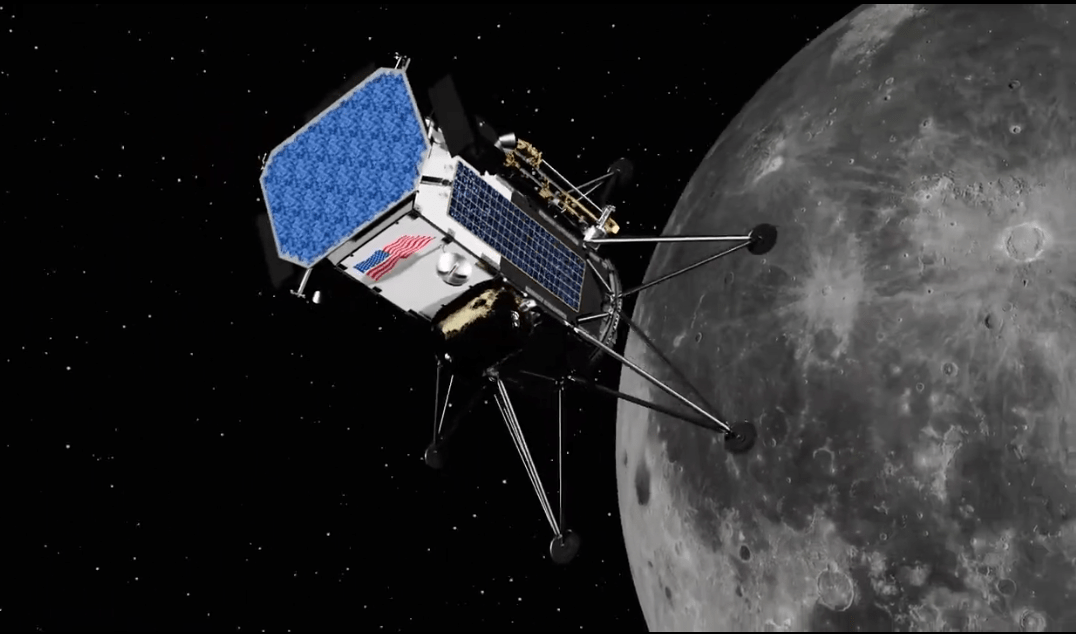
Image (Credit): An artist’s rendering of the NASA’s PRIME-1 spacecraft approaching the Moon. The mission will need to accomplish some of the work previously assigned to the VIPER mission. (NASA)

It has not been a great year for NASA so far. While the Chinese brought back samples from the far side of the Moon, we saw two NASA-contracted commercial spacecraft either fail to reach the Moon or critically mess up the landing. Plus we now have a Boeing capsule stranded at the International Space Station (ISS) while SpaceX just flubbed a rocket launch that brings into question manned flights to the ISS.

Am I missing anything? Oh yeah, and NASA has decided to cancel its Moon rover, the Volatiles Investigating Polar Exploration Rover (VIPER) project, after spending $450 million. Cost overruns and multiple delays had made the mission too expensive and too late in the game to be useful.

Nicola Fox, associate administrator, Science Mission Directorate, NASA Headquarters in Washington, stated:

We are committed to studying and exploring the Moon for the benefit of humanity through the [Commercial Lunar Payload Services] program…The agency has an array of missions planned to look for ice and other resources on the Moon over the next five years. Our path forward will make maximum use of the technology and work that went into VIPER, while preserving critical funds to support our robust lunar portfolio.

Fortunately, VIPER was one of a number of missions designed to seek water on the lunar surface. For example, NASA has the Polar Resources Ice Mining Experiment-1 (PRIME-1) , which is still scheduled to land at the South Pole later this year.

It has been a rough year for NASA, but the multiple missions planned for the Moon provide more opportunities to get it right, while the ISS issues do not appear insurmountable. NASA just needs a break, and its commercial partners need to prove they can meet the goals that were set for them.

Note: If you were one of the people who added your name to the VIPER mission, maybe NASA will open up another opportunity for your name on the Moon.

Space Stories: Redefining Planets, Second Thoughts About Crashing the ISS, and NASA Preparing for Artemis II

Credit: AdisResic at Pixabay

Here are some recent stories of interest.

Space.com: What Exactly is a Planet?’ Astronomers Want to Amend the Definition

Three astronomers last week proposed expanding the official definition of a planet to encompass worlds orbiting stars other than our own, a nuance not currently included in the formal definition of the term established in 2006 by the International Astronomical Union, or IAU. If the trio’s new definition pans out, thousands of celestial bodies across the universe could be confirmed as formal planets.

Forbes: U.S. Plan To Crash Space Station Is Condemned By Space Agency Leaders

An American plan to destroy the International Space Station by propelling it to burn through the atmosphere, and then crashing it into the Pacific Ocean, would rob citizens of the future of one of civilization’s greatest technological masterworks, and should be halted, say one-time leaders of NASA and of the European Space Agency. NASA’s draft blueprints to send the ISS on a peacetime kamikaze mission, to explode on impact with Antarctic waters, would obliterate a pole star of human ingenuity, says Jean-Jacques Dordain, Director General of the European Space Agency when the ISS was being built and expanded.

NASA: NASA Barge Preparations Underway for Artemis II Rocket Stage Delivery

Team members are installing pedestals aboard NASA’s Pegasus barge to hold and secure the massive core stage of NASA’s SLS (Space Launch System) rocket, indicating NASA barge crews are nearly ready for its first delivery to support the Artemis II test flight around the Moon. The barge will ferry the core stage on a 900-mile journey from the agency’s Michoud Assembly Facility in New Orleans to its Kennedy Space Center in Florida…Measuring 212 feet in length and 27.6 feet in diameter, the core stage is the largest rocket stage NASA has ever built and the longest item ever shipped by a NASA barge.

Travel to the ISS May be Limited to the Russians

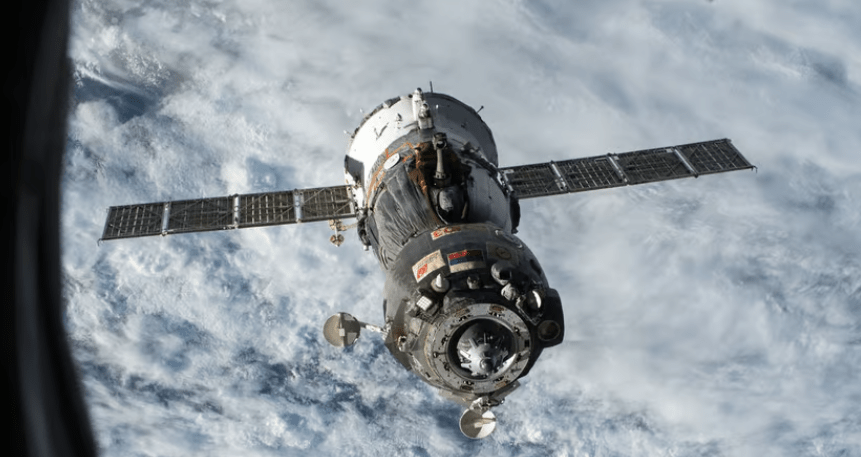
Image (Credit): A Russian Soyuz spacecraft outside the ISS. (NASA)

Well, the U.S. now has one space company with its manned spacecraft stranded at the International Space Station (ISS) while a second space company responsible for manned flights to the ISS has been grounded following a rocket mishap.

That’s right, while the Boeing Starliner awaits word on when it can return to Earth after it maiden flight, SpaceX just suffered a Falcon 9 rocket launch failure related to its Starlink program.

So where does this leave the ISS? Dependent on the Russians for manned flights to the ISS until the SpaceX problem can be investigated. Of course, SpaceX was also one solution for returning the Boeing crew to Earth if the Starliner problem could not be timely resolved. So much for that at the moment.

Both the Boeing and SpaceX issues could be resolved in the next few weeks, but this shows how quickly the situation can change on the ground and in space. While the Russians have certainly had their own issues with the Soyuz spacecraft as well, at least the men and women on the station have one option available to them.

Let’s hope Boeing gets its act together and the SpaceX mishap can be resolved quickly.

Podcast: Alan Alda Interviews Astronaut Cady Coleman

If you missed it, check out Alan Alda’s podcast Clear & Vivid for his recent interview with NASA astronaut Cady Coleman.

It’s a thoughtful interview as only Mr. Alda can do it. Ms. Coleman discusses her experiences on the International Space Station (ISS), which she calls a “floating palace.” Ms. Coleman has been part of three space missions, including two space shuttle missions as well as a stay on the ISS.

Ms. Coleman discusses funny episodes in her career, such as losing control of bbq sauce in zero gravity, as well as her overall feeling that the ISS represents something positive for all of humanity, regardless of the crazy movie plots where the astronauts and cosmonauts are at each other’s throats. She pointed out that the ISS was nominated for a Nobel peace prize back in 2014, which she thought was an appropriate gesture.

Overall, its a good conversation that may give you more insight into how one lives in space in such tight quarters.

Listen in if you get a chance.

Pic of the Week: Happy Fourth of July!

Image (Credit): Six U.S. astronauts currently aboard the ISS. From left to right they are Jeanette Epps, Tracy Dyson, Butch Wilmore, Mick Barratt, Suni Williams, and Matt Dominick. The are holding copies of the Declaration of Independence, U.S. Constitution, and Bill of Rights. (NASA)

This week’s image comes from the International Space Station (ISS) where the U.S. astronauts have a message for all of us regarding the Fourth of July. You can watch the entire video here and hear a message from each of the astronauts – Mike Barratt, Matt Dominick, Tracy Caldwell Dyson, Jeanette Epps, Suni Williams and Butch Wilmore.