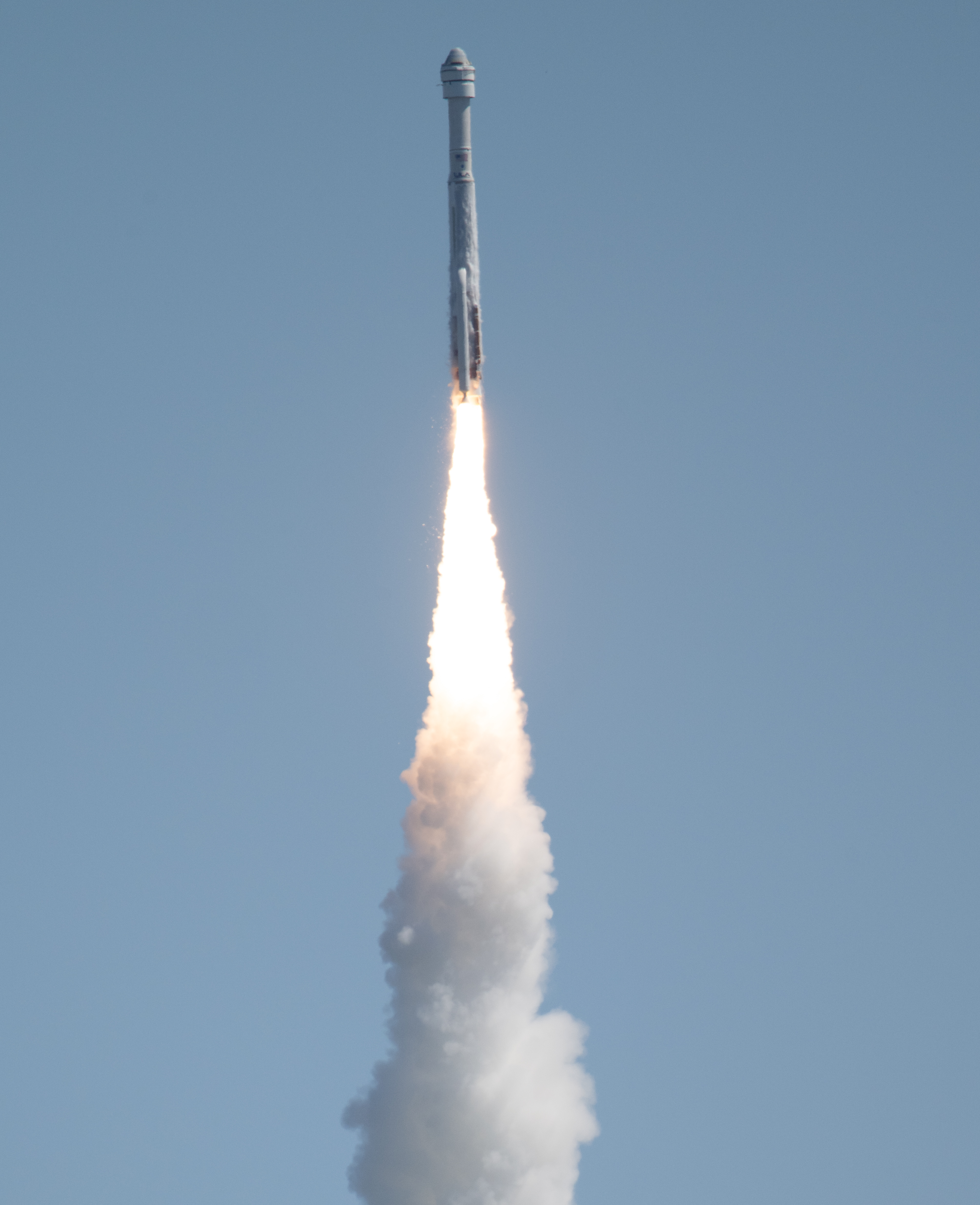
Image (Credit): The launch of Boeing’s Starliner earlier today from Cape Canaveral Space Force Station. (NASA/Joel Kowsky)
Boeing’s CST-100 Starliner launched earlier today (June 5) on a United Launch Alliance Atlas V rocket from Space Launch Complex-41 at Cape Canaveral Space Force Station in Florida.
Astronauts Butch Wilmore and Suni Williams are now safe in orbit on their way to the International Space Station (ISS). They will dock at the ISS tomorrow afternoon.
Boeing’s Starliner is the second graduate from NASA’s Commercial Crew Program, which also includes SpaceX.
You can read more about the Starliner mission and upcoming events at this NASA site.
Update: The two astronauts arrived safely at the ISS safely on Thursday (June 6), though there were some issues with the Starliner’s thrusters.
Image (Credit):Logo for NASA’s Commercial Crew Program. (NASA)
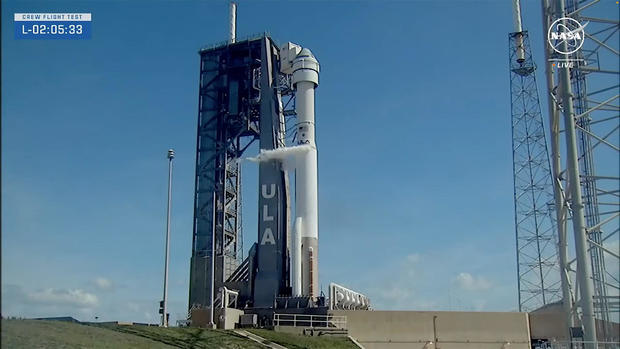
Image (Credit): The Starliner awaiting launch, should it ever happen. (NASA)
Nothing to report about the Boeing Starliner, again. This time it was a computer glitch that stopped the countdown earlier today only a few minutes before the planned launch.
While a launch tomorrow was initially proposed, Boeing stating:
NASA, Boeing, and ULA (United Launch Alliance) are forgoing a Starliner Crew Flight Test launch attempt Sunday, June 2, to give the team additional time to assess a ground support equipment issue at Cape Canaveral Space Force Station’s Space Launch Complex-41 in Florida.
The launch of the crewed capsule towards the International Space Station will be delayed until at least the middle of next week.
After years of waiting, I guess we should not be surprised. However, we can be disappointed. Boeing has a long list of accomplishments in the space industry. We are at the edge of the next great space race. This is no time to stumble.
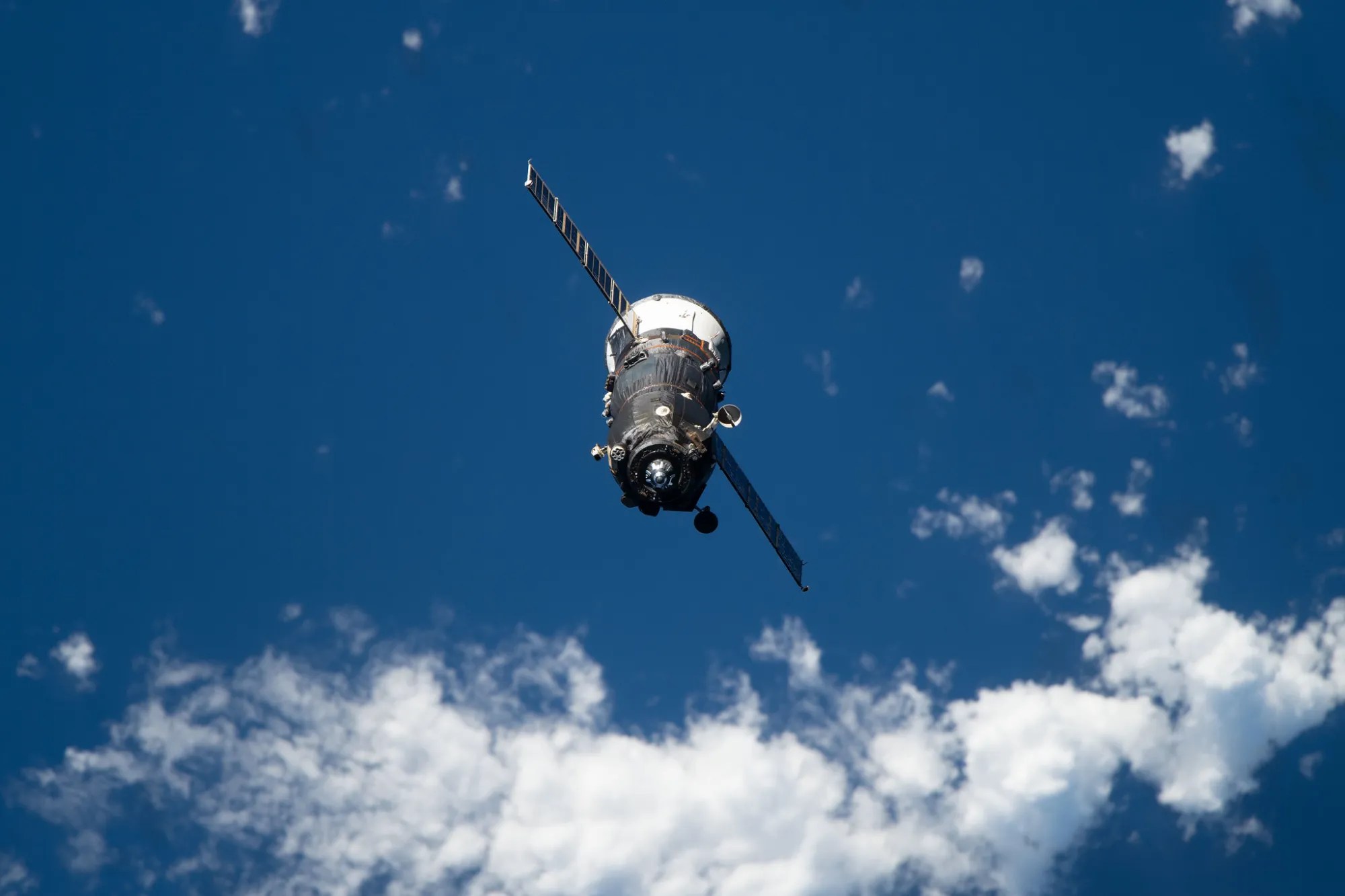
Image (Credit): The Progress 85 cargo craft after undocking from International Space Station on Feb. 12. (NASA)
Yesterday saw another successful resupply launch towards the International Space Station (ISS). The Russian Progress 88 uncrewed spacecraft attached to a Soyuz rocket left Kazakhstan early Thursday morning. It will dock with the ISS Saturday morning (which you can watch on NASA TV).
These missions have become so routine that you generally see few if any stories about such missions. That is a sign of an efficient system. The residents on the ISS like boring efficiency as long as it gets them the supplies they need.
Stay tuned for a little more drama when the Boeing Starliner heads to the ISS tomorrow.
Image (Credit): India’s Vikram lander on the Moon’s surface. (India Space Research Organization)
A U.S. official speaking in India promised that an Indian astronaut would be on the International Space Station (ISS) soon, maybe by year end. The Hindustan Times reports that the comments were made by U.S. Envoy Eric Garcetti at the US-India Commercial Space Conference: Unlocking Opportunities for US & Indian Space Startups.
Mr. Garcetti was quoted as stating:
NASA will soon provide advanced training to Indian astronauts, with the goal of mounting a joint effort to the International Space Station, hopefully, this year or shortly thereafter, which was one of the promises of our leaders’ visit together.
India already has a growing space program, including last year’s rover mission on the Moon, yet this is a smart move by the U.S. It is similar to Russian efforts to expand the list of visitors to the ISS.
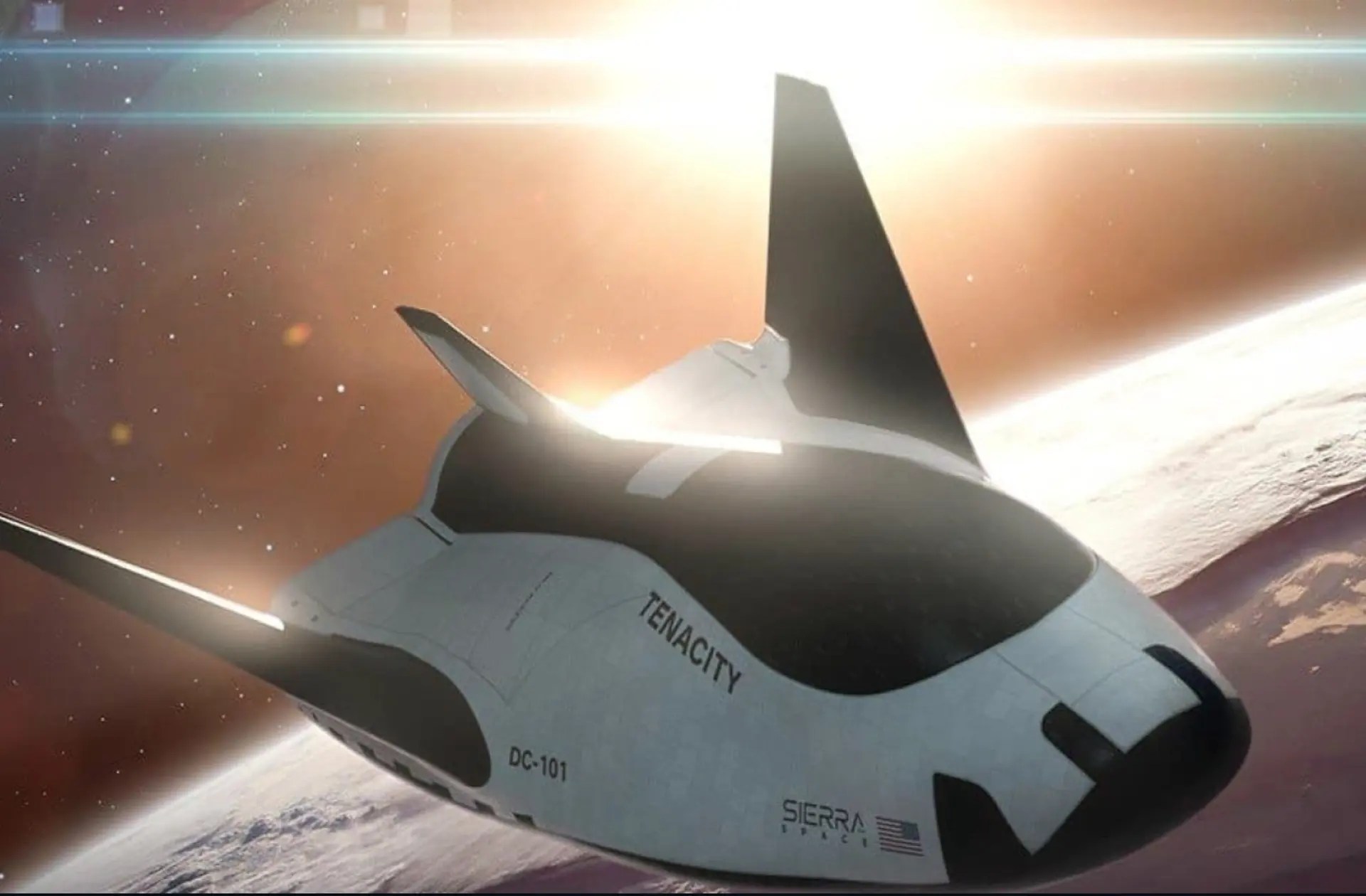
The world’s first winged commercial spaceplane has arrived at NASA’s Kennedy Space Center in Florida, its final destination before its first mission to the International Space Station (ISS) later this year.Following rigorous testing at Ohio’s Neil Armstrong Test Facility, the Dream Chaser DC-100 spaceplane named Tenacity got the green light to commence final pre-launch preparations, such as finishing its thermal protection system and payload integration, before it hitches a ride on a United Launch Alliance (ULA) Vulcan rocket to deliver 7,800 pounds (3,540 kg) of food, water and science experiments to the ISS.
In deserts across Australia and South Africa, astronomers are planting forests of metallic detectors that will together scour the cosmos for radio signals. When it boots up in five years or so, the Square Kilometer Array Observatory will look for new information about the universe’s first stars and the different stages of galactic evolution. But after syncing hundreds of thousands of dishes and antennas, astronomers will quickly face a new challenge: combing through some 300 petabytes of cosmological data a year—enough to fill a million laptops…In preparation for the information deluge, astronomers are turning to AI for assistance, optimizing algorithms to pick out patterns in large and notoriously finicky data sets. Some are now working to establish institutes dedicated to marrying the fields of computer science and astronomy—and grappling with the terms of the new partnership.
How old is Earth’s water? Could it be older even than the planet itself? A team of astronomers say they’ve found the “missing link” that shows how water is delivered from gaseous star-forming regions in space to planets like Earth. The research suggests that Earth’s water is even older than the Sun. The news comes as a result of studies of a dusty planet-forming disc surrounding a star 1,300 lightyears from Earth



 Our Awesome Universe