NASA’s FY 2023 Budget Request

Credit: NASA

So what else did NASA Administrator Bill Nelson share with the Senate Committee on Appropriations last week (beyond his comments about the International Space Station)? In his prepared statement regarding NASA’s $26 billion budget request, he highlighted a number of priorities for his agency, including:

  • the Artemis Program to bring astronauts back to the Moon and related exploration costs – $7.5 billion;
  • continued support for the ISS – $4.3 billion;
  • the space technology research and development portfolio for the Moon, Mars, and other areas, such as sending the CAPSTONE CubeSat to the Moon as a pathfinder for the Artemis program – $1.44 billion;
  • greater science funding for projects such as exploring solutions for bringing the samples of Martian rock and soil collected by the Perseverance rover to Earth through the Mars Sample Return mission – $8 billion; and
  • supporting the civil aviation manufacturing sector with test flights on its Low Boom Flight Demonstrator, which will enable environmentally and socially acceptable supersonic passenger flights, as well as continued work on the X-57 Maxwell, an all-electric aircraft – $971 million.

NASA certainly has a lot on its place, and I did not even highlight the focus on Earth iteself, such as the planned Earth System Observatory, which is an array of satellites, instruments, and missions designed to generate a 3D, holistic view of the entire planet.

We just provided a $40 billion aid package to Ukraine so that it can defend itself and have a better future. This $26 billion will take us out of the realm of Earth-bound conflicts and allow us to find our future in the stars, or at least the solar system. It is money well spent.
Space Stories: Near Earth Hazards, Mars Helicopter, and Super-Earths

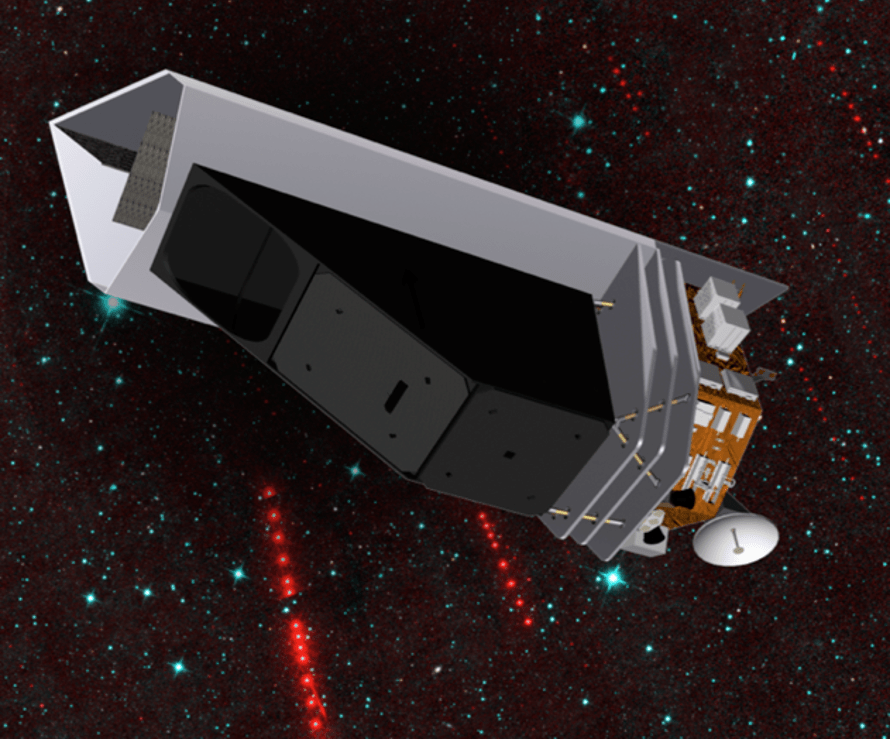
Image (Credit): he NEO Surveyor infrared space telescope is optimized for finding, tracking and characterizing potentially hazardous asteroids and comets. (NASA/JPL)

Here are some recent stories of interest.

Spacenews.com:House committee questions proposed delay in NASA asteroid mission

Members of the House Science Committee used a hearing about the planetary science decadal survey to criticize a proposal in NASA’s budget request to delay work on a space telescope to track near Earth objects (NEOs).

NASA: NASA’s Ingenuity Mars Helicopter Captures Video of Record Flight

The Ingenuity Mars Helicopter’s black-and-white navigation camera has provided dramatic video of its record-breaking 25th flight, which took place on April 8. Covering a distance of 2,310 feet (704 meters) at a speed of 12 mph (5.5 meters per second), it was the Red Planet rotorcraft’s longest and fastest flight to date. (Ingenuity is currently preparing for its 29th flight.)

Space.com:James Webb Space Telescope will study two strange ‘super-Earths

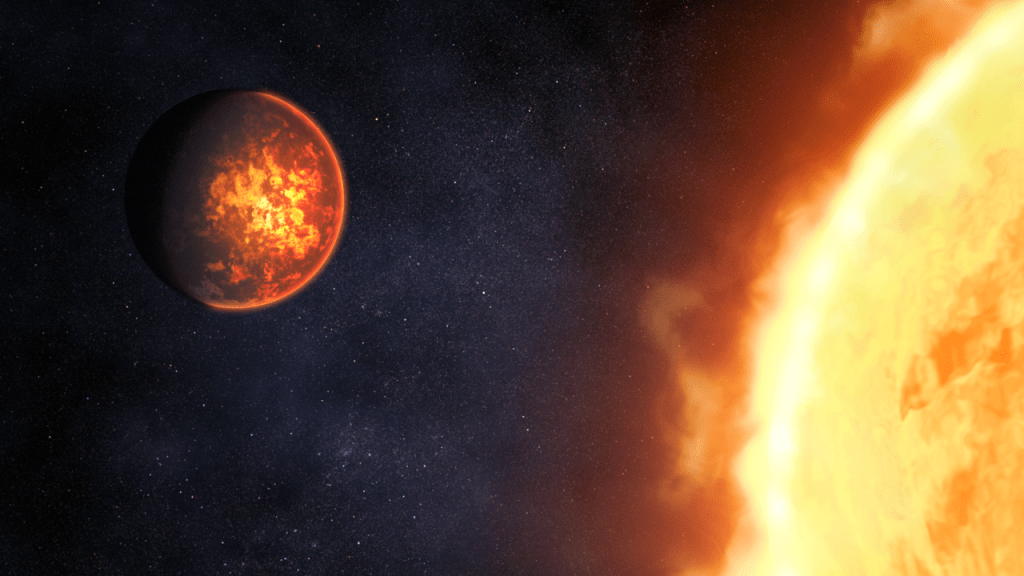
The James Webb Space Telescope plans to explore strange, new rocky worlds in unprecedented detail...Rocky planets are more difficult to sight than gas giants in current telescope technology, due to the smaller planets’ relative brightness next to a star, and their relatively tiny size. But Webb’s powerful mirror and deep-space location should allow it to examine two planets slightly larger than Earth, known as “super-Earths.”

Image (Credit): Illustration showing what exoplanet 55 Cancri e could look like, based on current understanding of the planet. (webbtelescope.org)

The Latest on Exocomets

Image (Credit): Artist’s drawing of exocomets around the young Beta Pictoris. (NASA/FUSE/Lynette Cook)

We have all heard about exoplanets and exomoons, but what about exocomets? It appears the bodies we can observe outside of our solar system are getting even smaller. In a Scientific American article, “Ukrainian Astronomers Discover ‘Exocomets’ around Another Star,” we learn about Ukrainian astronomers who found five such comets using data from NASA’s Transiting Exoplanet Survey Satellite (TESS).

The comets in question orbit the young star Beta Pictoris, which is about 65 light-years from Earth. This is not the first time comments were detected in this distant solar system’s debris disk. The researchers confirmed those earlier sighting as well. The planet-forming debris surrounding the star presents plenty of opportunities for comet sightings.

Such findings, using information from both the Kepler Space Telescope and TESS, continue to expand our understanding of these objects. Once we focus the James Webb Space Telescope on these little bodies, it should get even more interesting.

Extra: You can find the 2019 Astronomy article on the exocomets around Beta Pictoris here.

Podcast: More on the James Webb Space Telescope

Image (Credit): Alan Alda’s podcast Clear & Vivid (Amazon)

I wanted to highlight another astronomy interview from Alan Alda’s Clear+Vivid podcast, in this case involving a mother and daughter team. Astronomers Natalie and Natasha Batalha discuss “Looking for Life on Alien Worlds” using the new James Webb Space Telescope. The two guests discuss upcoming efforts to better understand the 5,000+ planets that have already been discovered. One of their favorites among the exoplanet systems is the TRAPPIST-1 system, noting the parent red star is about the size of Jupiter. This small star has seven exoplanets, with the “Goldilocks zone” being much closer in than is the case in our system.

NASA describes one of the exoplanets in the “Goldilocks zone,” TRAPPIST-1d, in this way:

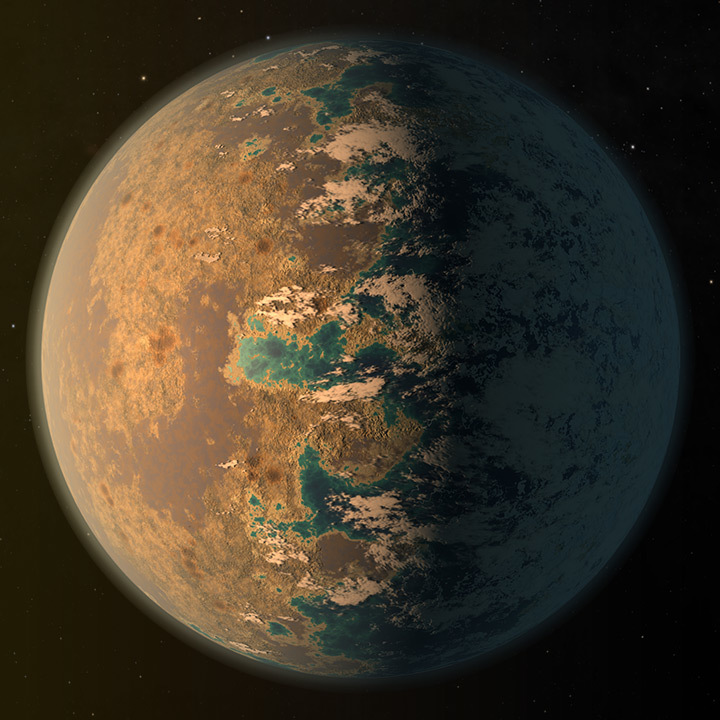
TRAPPIST-1d is one of seven Earth-sized planets in the TRAPPIST-1 system. About 40 light-years from Earth, TRAPPIST-1 is unusual both for its number of small rocky planets and the number in the habitable zone. Several of the artist’s illustrationsportray possible water or ice in the system– the proximity of the planets to their red dwarf star may indicate that any of them could have water on their surface. This artist’s concept shows TRAPPIST-1d with a narrow band of water near the terminator, the divide between a hot, dry day and an ice-covered night side.

You can read more about the TRAPPIST-1 system here.

Image (Credit): Artist’s image of exoplanet TRAPPIST-1d. (NASA)

Most Distant Galaxy on Record

Image (Credit): This timeline illustrates the earliest galaxy candidates as well as the history of the universe.(Harikane et al., NASA, EST and P. Oesch/Yale)

Just recently I posted about the discovery of the farthest star. Well, now astronomers have spotted the farthest galaxy. The Harvard Gazette reports that a galaxy named HD1 appears to be about 13.5 billion light-years away and may contain the universe’s first stars or even the earliest black hole discovered to date. The contents of this galaxy is still being studied (and theorized).

The story quotes Fabio Pacucci, an astronomer at the Center for Astrophysics who was involved in the discovery, who stated:

Answering questions about the nature of a source so far away can be challenging… It’s like guessing the nationality of a ship from the flag it flies, while being faraway ashore, with the vessel in the middle of a gale and dense fog. One can maybe see some colors and shapes of the flag, but not in their entirety. It’s ultimately a long game of analysis and exclusion of implausible scenarios.

More review of the data as well as updated data from the James Webb Space Telescope at some point in the future should help to answer questions related to this galaxy.

You can read more about this discover in the Astrophysical Journal. You may also be interested in the accompanying paper published in the Monthly Notices of the Royal Astronomical Society Letters,