Space Stories: The Fate of Juno, the End of a NASA Probe, and “Extragalactic Archeology”

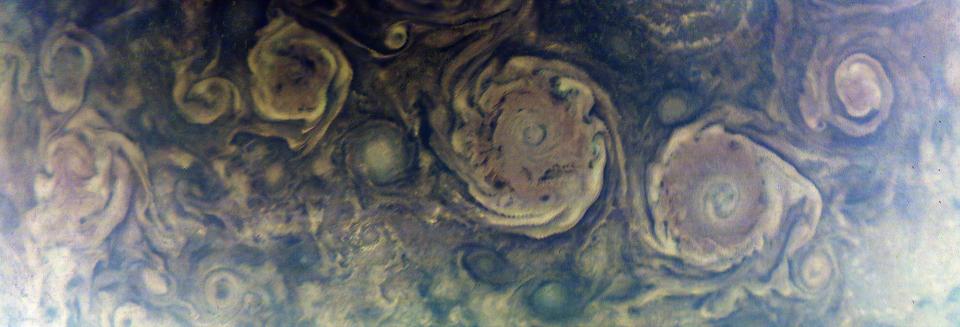
Image (Credit): Jupiter’s North Pole at minimum emission angle as captured by the Juno spacecraft. (NASA/JPL-Caltech/SwRI/MSSS/Thomas Thomopoulos)

Here are some recent space-related stories of interest.

Ars Technica: “A Mission NASA Might Kill is Still Returning Fascinating Science from Jupiter

Jupiter’s colossal storms generate lightning flashes at least 100 times more powerful than those on Earth, according to scientists analyzing data from NASA’s Juno spacecraft. The findings were published March 20 in the journal AGU Advances. Researchers used data recorded by Juno in 2021 and 2022, after NASA granted an extension to the spacecraft’s operations upon completing a five-year science campaign at Jupiter. Juno remains in good health, but NASA officials have not said if they will approve another extension for the mission. The issue is money.

Astronomy.comNASA’s Van Allen Probe A Burns Up Over the Pacific after 14 Years in Space

NASA’s Van Allen Probe A re-entered Earth’s atmosphere on Wednesday, March 11, at 6:37 a.m. EDT, marking the final chapter for a spacecraft that reshaped scientists’ understanding of the radiation environment around our planet. The U.S. Space Force confirmed the spacecraft came down over the eastern Pacific Ocean. NASA said most of the 1,300-pound (600 kilograms) probe burned up during reentry, though some pieces may have reached the surface. Its twin, Probe B, remains in orbit and is not expected to re-enter before 2030. The twin probes launched together on Aug. 30, 2012, on what was supposed to be a two-year mission. They operated for nearly seven years instead, circling Earth inside the Van Allen radiation belts — zones of high-energy charged particles held in place by the planet’s magnetic field. 

Carnegie Science: Extragalactic Archeology” Reveals Nearby Galaxy’s Evolution

A team of astronomers, including Carnegie Science’s Jeff Rich and other former Carnegie Observatories astronomers, have for the first time traced the history of a galaxy outside our own Milky way by studying chemical fingerprints in deep space, a new approach they are calling “extragalactic archeology.” Their findings are published in Nature Astronomy. “This is the first time that a chemical archaeology method has been used with such fine detail outside our own galaxy,” said lead author Lisa Kewley of the Center for Astrophysics | Harvard and Smithsonian.
Pic of the Week: Jupiter’s Swirling Polar Region

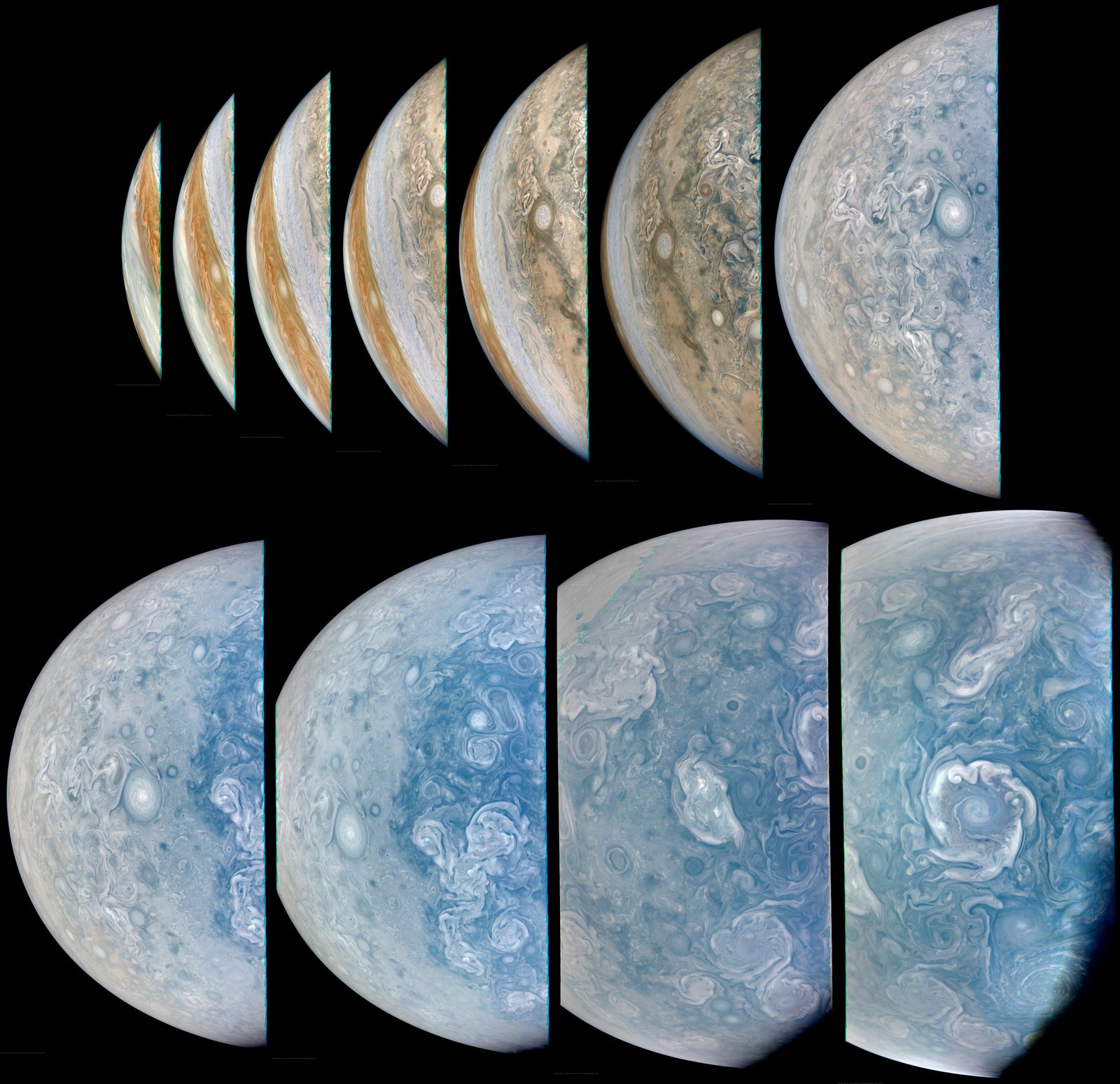
Image (Credit): Jupiter’s north polar region. (Image data: NASA/JPL-Caltech/SwRI/MSSS
Image processing by Brian Swift © CC BY
)

This week’s image comes from NASA’s Juno spacecraft, which captured these images of Jupiter’s north polar region. The spacecraft came within 6,800 miles of the clouds you see.

Launched in August 2011, the Juno spacecraft has been studying Jupiter since 2016 to better understand the origin and evolution of the planet.

You can learn more about the Juno mission here.

Pic of the Week: Jupiter’s Moon Amalthea

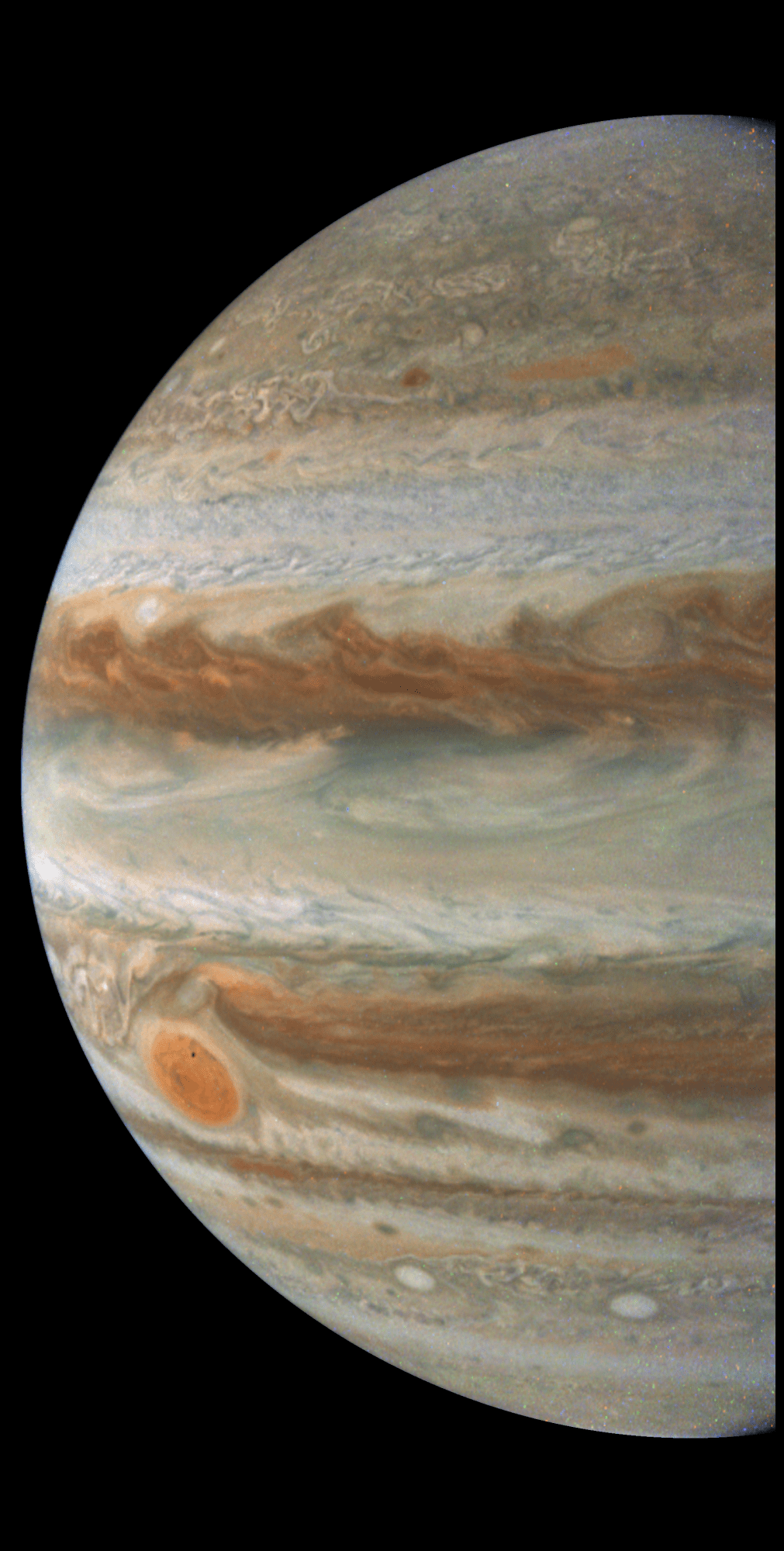
Image (Credit): Jupiter with the small moon Amalthea appearing in its Great Red Spot. (Image data: NASA/JPL-Caltech/SwRI/MSSS. Image processing by Gerald Eichstädt)

This week’s image comes from NASA’s Juno mission during a flyby back in March. It shows Jupiter’s smallest moon Amalthea orbiting Jupiter with the Great Red Spot in the background. The potato-shaped moon has a radius of 52 miles and completes an orbit of the giant planet in about half an Earth day.

You can read more about the photograph at this NASA site.

Image (Credit): Close-up of Jupiter with the small moon Amalthea appearing in its Great Red Spot. (Image data: NASA/JPL-Caltech/SwRI/MSSS. Image processing by Gerald Eichstädt)

Juno Views Lava Lake on Io

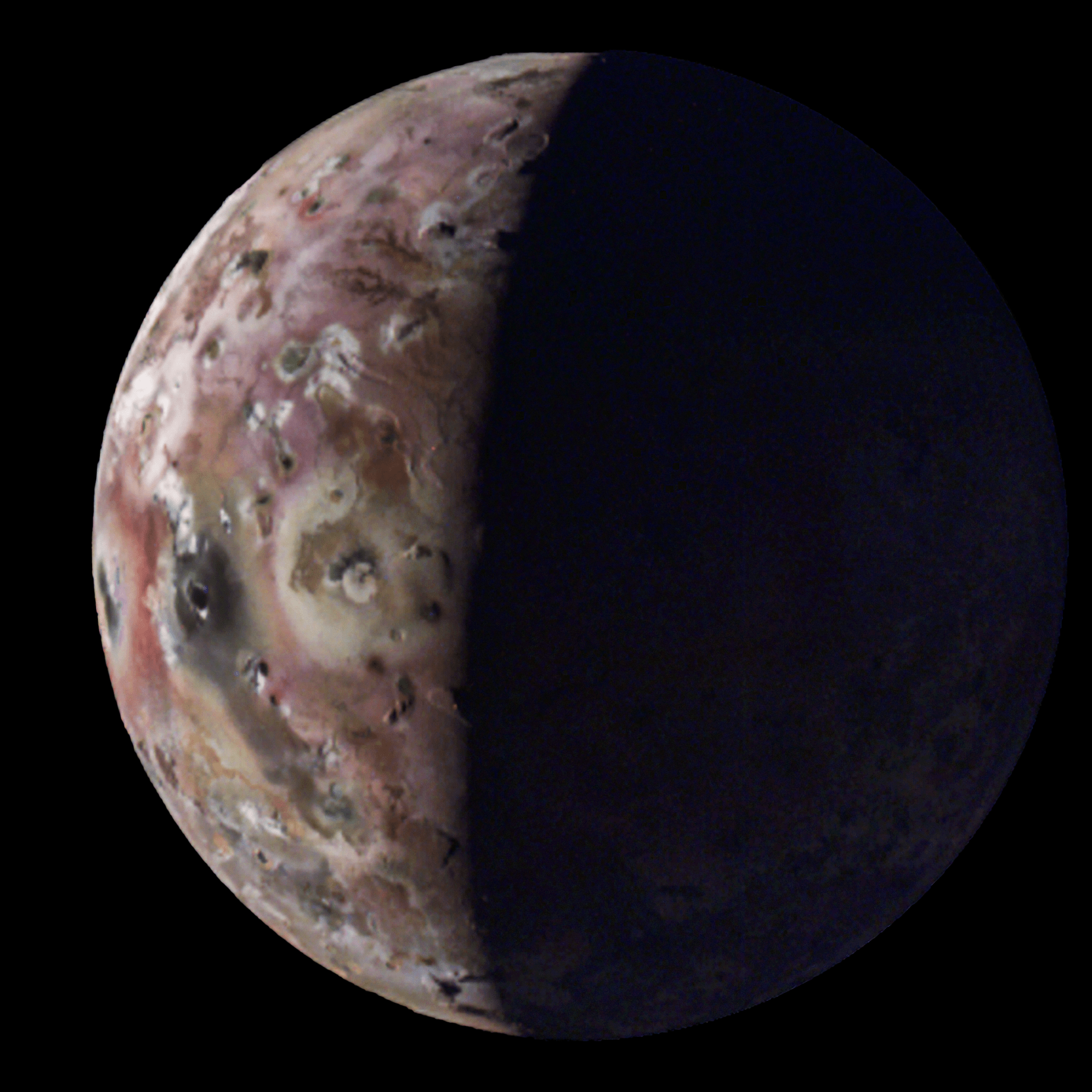
Image (Credit): View of Jupiter’s moon Io as seen by the Juno spacecraft on April 9. It was the first-ever image of the moon’s south polar region. (NASA/JPL-Caltech/SwRI/MSSS. Image processing: Gerald Eichstädt/Thomas Thomopoulos (CC BY))

The Juno spacecraft is still hard a work in the vicinity of Jupiter, with its latest mission being a flyby of the moon Io earlier this month (shown above).

Two recent flybys of the moon were also combined to create an image of a lake of cooling lava (shown below and via the video here). Juno’s principal investigator Scott Bolton explained the new image:

Io is simply littered with volcanoes, and we caught a few of them in action. We also got some great close-ups and other data on a 200-kilometer-long (127-mile-long) lava lake called Loki Patera. There is amazing detail showing these crazy islands embedded in the middle of a potentially magma lake rimmed with hot lava. The specular reflection our instruments recorded of the lake suggests parts of Io’s surface are as smooth as glass, reminiscent of volcanically created obsidian glass on Earth.

Juno has been zipping around Jupiter’s neighborhood since 2016. It’s main task is to study the origin and evolution of Jupiter, believed to be the first planet to have formed in our solar system. By doing so, NASA hopes to learn more about the solar system and the Earth as well.

Image (Credit): An artist’s rendering of Loki Patera, a lava lake on Jupiter’s moon Io, created using data from the JunoCam imager aboard NASA’s Juno spacecraft. (NASA/JPL-Caltech/SwRI/MSSS)

Pic of the Week: Get Ready for Halloween!

Image (Credit): View of Jupiter taken by the NASA’s Juno mission. (NASA/JPL-Caltech/SwRI/MSSS, Vladimir Tarasov)

NASA has an image for all of us just in time for Halloween. The strange face you see above is a view of Jupiter taken on September 7, 2023 by NASA’s Juno spacecraft on its 54th close flyby of the planet.

NASA explains what you are seeing in this northern region of Jupiter:

The image shows turbulent clouds and storms along Jupiter’s terminator, the dividing line between the day and night sides of the planet. The low angle of sunlight highlights the complex topography of features in this region, which scientists have studied to better understand the processes playing out in Jupiter’s atmosphere.

Now I want to see the images from the first 53 flybys to understand what we might have missed.