Voyager 2 is Still Talking to Us

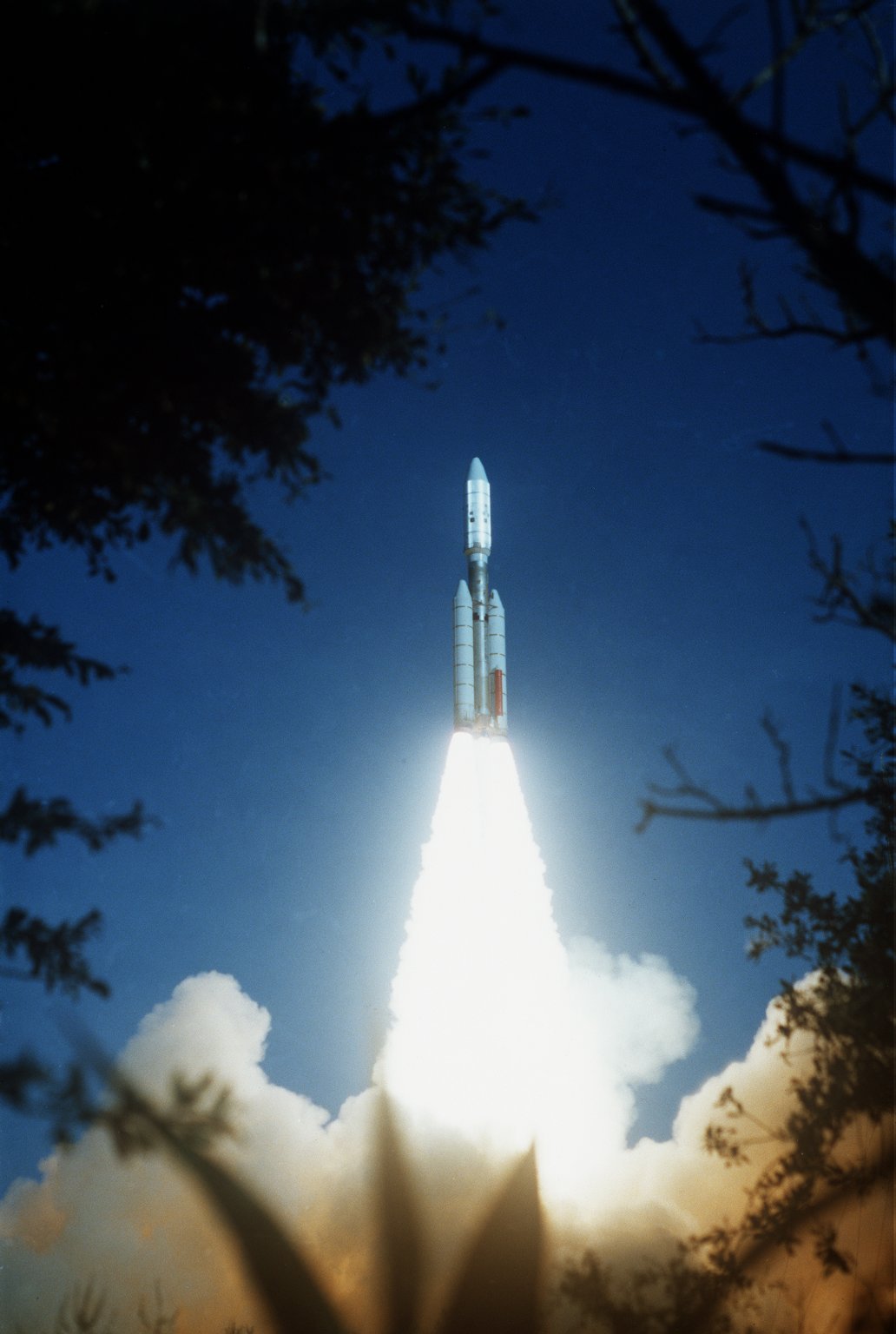
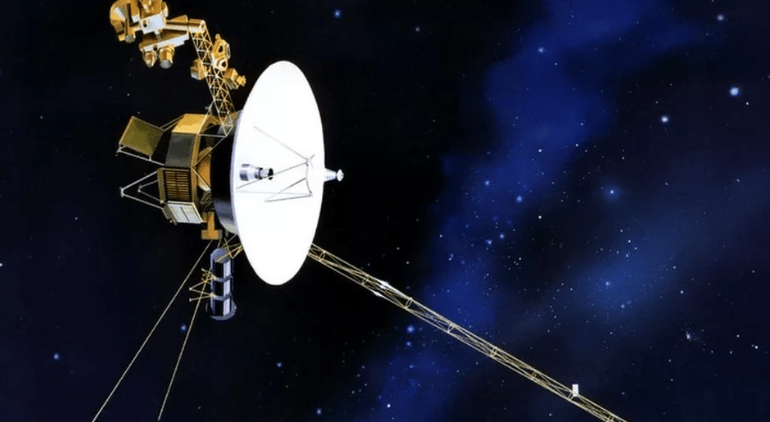
After two weeks with no word, Voyager 2 is back to communicating with us as it continues its journey beyond our solar system. The whole incident started when NASA sent a bad command, but all is well.

Voyager 2 first left Earth back in August 1977 and exited the solar system in December 2018. Like Voyager 1, which is also outside the solar system now, Voyager 2 had the initial task of studying the planets. Voyager 2 focused on Jupiter, Saturn, Uranus and Neptune. It has shown it was capable of much more as it dragged the human race to the bleeding edge of space.

You can read all about Voyager 2’s accomplishments at this NASA site, including:

  • Voyager 2 is the only spacecraft to study all four of the solar system’s giant planets at close range.
  • Voyager 2 discovered a 14th moon at Jupiter.
  • Voyager 2 was the first human-made object to fly past Uranus.
  • At Uranus, Voyager 2 discovered 10 new moons and two new rings.
  • Voyager 2 was the first human-made object to fly by Neptune.
  • At Neptune, Voyager 2 discovered five moons, four rings, and a “Great Dark Spot.”

An impressive list of accomplishments, and the spacecraft is still ticking as it goes into the great unknown.

We need to keep these achievements in mind as we battle over this year’s NASA budget. We also need to remember that there was supposed to be four Voyager-like spacecraft rather than two, but budget cuts nixed the second set. Meaning we can still get some great things done even if we don’t have the budget to fund every piece of a grand vision.

Video: Flyby of Jupiter’s Moon Io

Image (Credit): View of Jupiter’s moon Io. (NASA/JPL-Caltech/SwRI/MSSS)

Last week, NASA released this video showing the Juno spacecraft’s view of Jupiter and its moon Io as it flew by on May 16, 2023. The clip includes music by Vangelis. It is short but stunning video.

Juno was launched back in 2011 and first started orbiting Jupiter in 2016. Sent to study Jupiter, the current flyby is part of the spacecraft’s extended mission.

Juno’s closest approach to Io will occur today, so you can expect more images shortly.

If you want to read more about Io and the mission, visit this NASA site.

A Poem for Europa

Image (Credit): The icy moon Europa. (NASA)

U.S. Poet Laureate Ada Limon was asked by NASA to write a poem for the upcoming Europa Clipper mission. Her new poem, “In Praise of Mystery: a Poem for Europa,” premiered late last week in Washington, DC.

Here is the poem from the Library of Congress (and you can also hear it in the poet’s voice):

Arching under the night sky inky
with black expansiveness, we point
to the planets we know, we

pin quick wishes on stars. From earth,
we read the sky as if it is an unerring book
of the universe, expert and evident.

Still, there are mysteries below our sky:
the whale song, the songbird singing
its call in the bough of a wind-shaken tree.

We are creatures of constant awe,
curious at beauty, at leaf and blossom,
at grief and pleasure, sun and shadow.

And it is not darkness that unites us,
not the cold distance of space, but
the offering of water, each drop of rain,

each rivulet, each pulse, each vein.
O second moon, we, too, are made
of water, of vast and beckoning seas.

We, too, are made of wonders, of great
and ordinary loves, of small invisible worlds,
of a need to call out through the dark.

Amazingly, this poem will be engraved on the exterior of the spacecraft.

NASA has done a great job stimulating scientists, but this is a great stimulus for budding poets as well.

A Day in Astronomy: The Founding of the European Space Agency

On this day in 1975, the European Space Agency (ESA) was founded after the combination of  the European Space Research Organisation (ESRO) and the European Launcher Development Organisation (ELDO). Ten countries were part of this new organization, which has since grown to 22 members (noted below). The Agency also has associate members and other cooperating partners.

You can find a list of the ESA’a past, present, and planned space missions here, which includes:

Note: According to the International Astronautical Federation, the ESA member include Austria, Belgium, the Czech Republic, Denmark, Estonia, Finland, France, Germany, Greece, Hungary, Ireland, Italy, Luxembourg, the Netherlands, Norway, Poland, Portugal, Romania, Spain, Sweden, Switzerland and the United Kingdom. Latvia, Lithuania and Slovenia are Associate Members. Canada takes part in certain programmes under a cooperation agreement. ESA has signed European Cooperating States Agreements with Bulgaria, Cyprus and Slovakia, and cooperation agreements with Croatia and Malta.

NASA TV: Stay Tuned In

If you cannot find anything worthwhile on regular television, don’t forget that NASA continues to broadcast key events on its own television station, including this week’s meeting on UFOs, now called “unidentified anomalous phenomena,” or UAPs.

Here is the latest schedule for NASA TV:

Tuesday, May 30
9 a.m. – Coverage of hatch closure for the Axiom Mission 2 crew aboard the International Space Station. Hatch closure scheduled for approx. 9:10 a.m. 
10:45 a.m. – Coverage of the the Axiom Mission 2 crew undocking from the International Space Station. Undocking scheduled for 11:05 a.m.
12:30 p.m. – ISS Expedition 69 in-flight educational event with the New Mexico Museum of Space History in Alamogordo, NM, and NASA flight engineers Frank Rubio and Steve Bowen
2 p.m. — Media teleconference on the science bound for the International Space Station aboard SpaceX’s 28th commercial resupply services mission

Wednesday, May 31
10:30 a.m. – Coverage of the public meeting of the independent study team on categorizing and evaluating data of unidentified anomalous phenomena (UAP)
3 p.m. – Unidentified anomalous phenomena (UAP) post-meeting media teleconference

Thursday, June 1
12 p.m. – News conference for upcoming spacewalks to install new International Space Station Roll-Out Solar Arrays (IROSAs)
7 p.m. — NASA and U.S. Poet Laureate Ada Limón unveil her poem for Europa