Do You Have Some Ideas for Lunar or Martian Art?

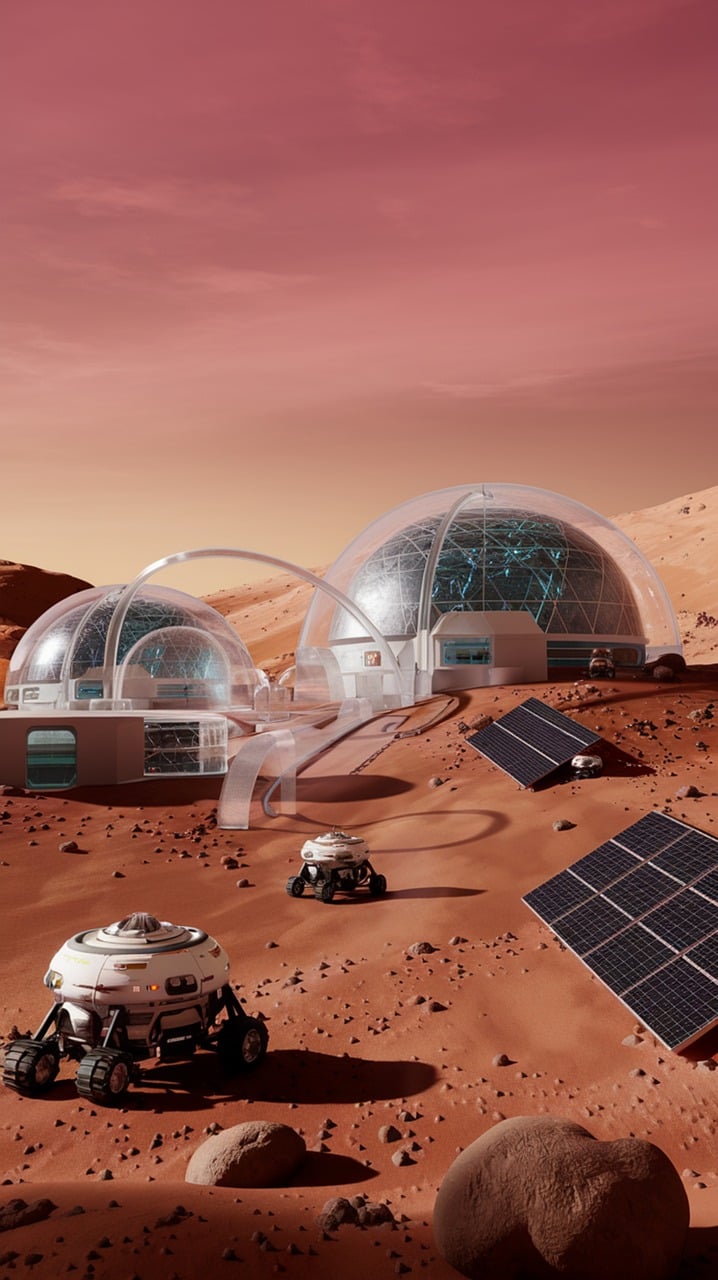
mage (Credit): AI image of a Martian colony. (Yol Gezer from Pixabay)

Do you have some time on your hands? If so, you may want to toss in a submission to the Moon to Mars contest being held by NASA.

Starting this week through October 31, you can submit your artistic interpretation of two topics: “Sustained Lunar Evolution” and “Humans to Mars.” The artist with the best image can win $10,000.

In terms of two categories, more definition from NASA is provided below.

Sustained Lunar Evolution Segment: This segment is an open canvas for exploration of the Moon, embracing new ideas, systems, and partners to grow to a long-term presence on the lunar surface. Sustained lunar evolution means more astronauts on the Moon for longer periods of time, increased opportunities for science, and even the large-scale production of goods and services derived from lunar resources. It also means increased cooperation and collaboration with international partners and the aerospace industry to build a robust lunar economy.

Humans to Mars Segment: This segment will see the first human missions to Mars, building on the lessons we learn from exploring the Moon. These early missions will focus on Martian exploration and establishing the foundation for a sustained Mars presence. NASA architects are examining a wide variety of options for transportation, habitation, power generation, in-situ resource utilization, scientific investigations, and more. How many missions would it take? How many astronauts? What sorts of technologies?

You can learn more about the contest here.

Just in case you were wondering, AI art cannot be submitted. So don’t try to submit something like the image above, nice as it is.
Study Findings: Feasibility of Keeping Mars Warm with Nanoparticles

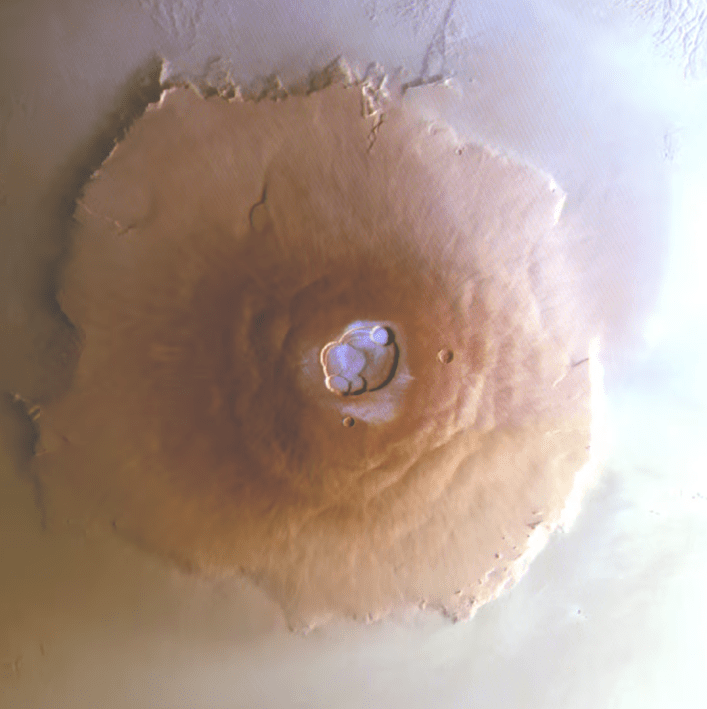
Image (Credit): Frost on Olympus Mons (,shaded in blue). (ESA/DLR/FU Berlin)

Science Advances abstract of the study findings:

One-third of Mars’ surface has shallow-buried H2O, but it is currently too cold for use by life. Proposals to warm Mars using greenhouse gases require a large mass of ingredients that are rare on Mars’ surface. However, we show here that artificial aerosols made from materials that are readily available at Mars—for example, conductive nanorods that are ~9 micrometers long—could warm Mars >5 × 10³ time smore effectively than the best gases. Such nanoparticles forward-scatter sunlight and efficiently block upwelling thermal infrared. Like the natural dust of Mars, they are swept high into Mars’ atmosphere, allowing delivery from the near-surface. For a 10-year particle lifetime, two climate models indicate that sustained release at 30 liters per second would globally warm Mars by ≳30 kelvin and start to melt the ice. Therefore, if nanoparticles can be made at scale on (or delivered to) Mars, then the barrier to warming of Mars appears to be less high than previously thought.

Citation: Ansari S, Kite ES, Ramirez R, Steele LJ, Mohseni H, Feasibility of keeping Mars warm with nanoparticles, Science Advances, (2024).
10.1126/sciadv.adn4650

Study-related stories:

Space.com

Universe Today

Northwestern University

Space Quote: Vast Water Reserves May Exist Within Martian Crust

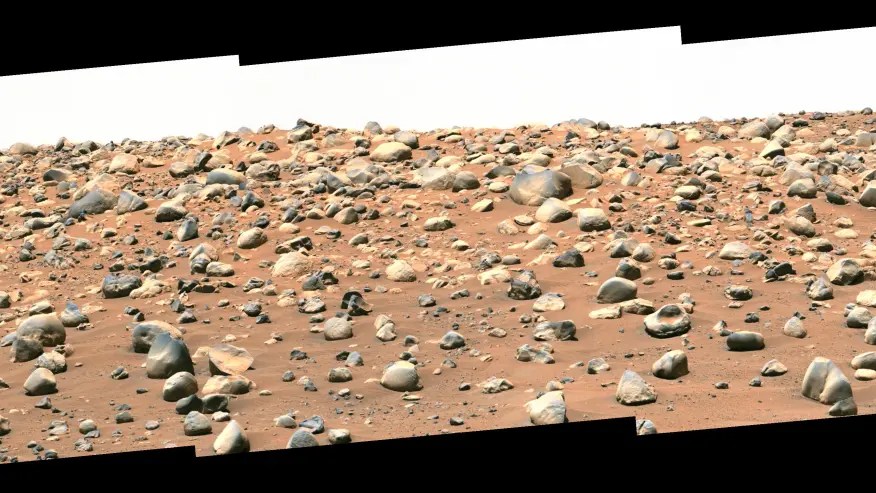
Image (Credit): Martian surface as captured by NASA’s Perseverance Mars rover (NASA/JPL-Caltech/ASU/MSSS)

“These new results demonstrate that liquid water does exist in the Martian subsurface today, not in the form of discrete and isolated lakes, but as liquid water-saturated sediments, or aquifers…On Earth, the subsurface biosphere is truly vast, containing most of the prokaryotic diversity and biomass on our planet. Some investigations even point to an origin of life on Earth precisely deep in the subsurface. Therefore, the astrobiological implications of finally confirming the existence of liquid water habitats kilometers beneath the surface of Mars are truly exciting.”

Statement by Alberto Fairén, a visiting interdisciplinary planetary scientist and astrobiologist within the department of astronomy at Cornell University, regarding a recent study reporting vast quantities of water may reside between 7 and 12 miles beneath the Martian surface. The study utilized data from NASA’s InSight lander.

The End of the Atlas V Rocket

Credit: ULA

Tomorrow’s launch of a classified US Air Force payload will be the last use of the United Launch Alliance (ULA) Atlas V rocket for such missions. It will the rocket’s 100th national security launch.

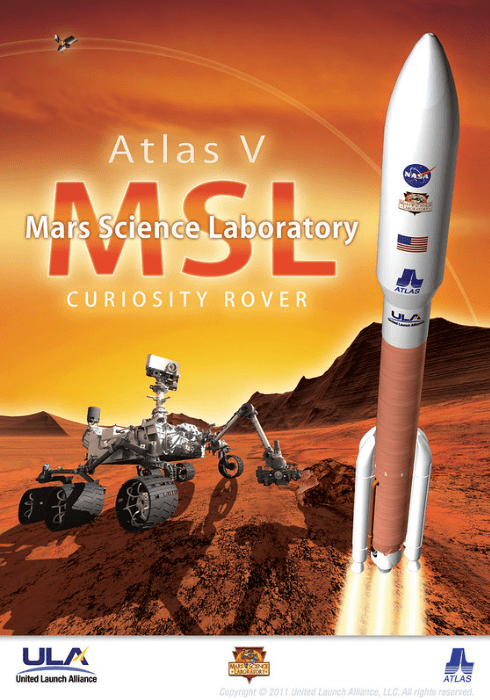
The Atlas rocket, first built in 1957, is America’s longest-serving active rocket. Over the years, the rockets have launched numerous critical government and commercial missions, including NASA missions. For instant, it sent NASA’s Curiosity Rover to Mars. Most recently it sent the Boeing Starliner to the International Space Station (now the Starliner needs to find its own way back).

More Atlas V missions are planned even with the absence of national security missions, but the ULA’s focus is turning towards its new Vulcan rocket, which is still being tested.

The era of the Atlas rocket is quickly coming to a close.

Space Quote: Microscopic Life on Mars?

Image (Credit): NASA’s Perseverance Mars Rover. (NASA)

“Cheyava Falls is the most puzzling, complex, and potentially important rock yet investigated by Perseverance…On the one hand, we have our first compelling detection of organic material, distinctive colorful spots indicative of chemical reactions that microbial life could use as an energy source, and clear evidence that water — necessary for life — once passed through the rock. On the other hand, we have been unable to determine exactly how the rock formed and to what extent nearby rocks may have heated Cheyava Falls and contributed to these features.”

Statement by Ken Farley, Perseverance project scientist of Caltech in Pasadena, regarding a recent finding by the Perseverance rover on Mars. The rock, labeled “Cheyava Falls,” may answer whether Mars was home to microscopic life in the distant past.