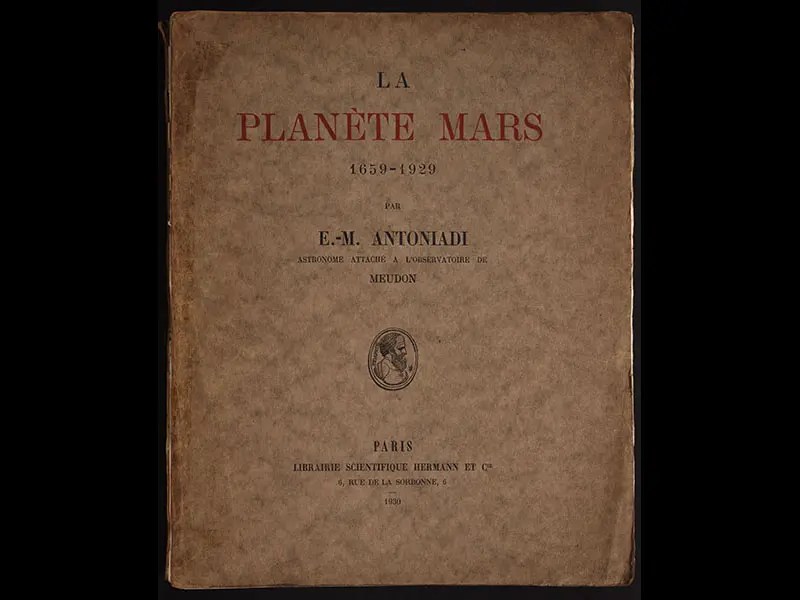
Image (Credit): E.M. Antoniadi’s 1930 book La Planete Mars. (Linda Hall Library)
On this day in 1944, Greek-French astronomer Eugène Michel Antoniadi passed away in Paris, France.
Mr. Antoniadi was one of the astronomers that battled the idea of a civilization creating canals on the surface of Mars, putting him at odds with American astronomer Percival Lowell. While he was initially open to the idea, he later believed the canals to be an optical illusion.
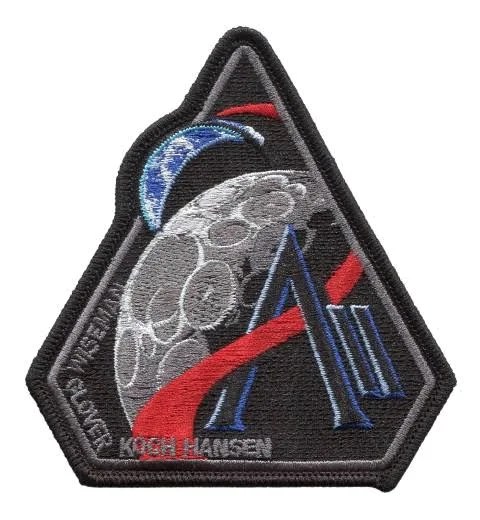
Apple’s iPhone may be one of the most popular phones on Earth, but it’s about to start conquering space as well. According to NASA administrator Jared Isaacman, NASA astronauts are now cleared to take smartphones into space, starting with the SpaceX Crew-12 and Artemis II missions. “We are giving our crews the tools to capture special moments for their families and share inspiring images and video with the world,” he wrote in a tweet.
AES Andes has announced that it will abandon plans to build the INNA industrial complex in Chile’s Atacama Desert. The implementation of this project could jeopardize astronomical observations…On January 23, AES Andes announced that it had decided to discontinue INNA in order to focus on its renewable energy portfolio. “When the cancellation is confirmed, we’ll be relieved that the INNA industrial complex will not be built near Paranal,” said ESO Director General Xavier Barcons. “Due to its planned location, the project would pose a major threat to the darkest and clearest skies on Earth and to the performance of the most advanced astronomical facilities anywhere in the world.”
The current image of Mars as an arid and hostile desert contrasts sharply with the history revealed by its surface. Channels, minerals altered by water, and other geological traces indicate that the Red Planet was, in its early days, a much wetter and more dynamic world. Reconstructing how this water-rich environment disappeared remains one of the great challenges of planetary science. Although several processes are known that can explain some of this loss, the fate of much of Martian water remains a mystery.A new study from an international team of researchers published in Communications: Earth & Environment on February 2, 2026, has brought us a significant step closer to solving this puzzle. For the first time, researchers demonstrated that an anomalous, intense, but localized dust storm was able to drive the transport of water to the upper layers of the Martian atmosphere during the Northern Hemisphere summer – a time when this process was previously considered to be irrelevant.
A hydrogen leak at the base of NASA’s Artemis II moon rocket Monday threw a wrench into a carefully planned countdown “wet dress” rehearsal, but engineers were able to manage a workaround and the test proceeded toward a simulated launch. Whether mission managers will be able to clear the rocket for an actual launch as early as Sunday to propel four astronauts on a flight to the moon will depend on the results of a detailed overnight review and post-test analysis. NASA only has three days — Feb. 8, 10 and 11 — to get the mission off this month or the flight will slip to March.
For more than three decades, the Hubble Space Telescope has collected targeted images to answer specific scientific questions, from mapping galaxies to studying nearby nebulae. Hubble has gathered so much data that despite their best efforts, astronomers haven’t had the time to analyze it all in detail yet…Now, two astronomers have revisited that massive archive with a new plan. They deployed an artificial intelligence system designed to notice when something looks “wrong”. In just 60 hours of computing time, the tool flagged over 1,300 anomalies hidden within 100 million Hubble snapshots. Hundreds of them have never appeared in scientific literature.
NASA’s Perseverance Mars rover has completed the first drives on another world that were planned by artificial intelligence. Executed on Dec. 8 and 10, and led by the agency’s Jet Propulsion Laboratory in Southern California, the demonstration used generative AI to create waypoints for Perseverance, a complex decision-making task typically performed manually by the mission’s human rover planners…During the demonstration, the team leveraged a type of generative AI called vision-language models to analyze existing data from JPL’s surface mission dataset. The AI used the same imagery and data that human planners rely on to generate waypoints — fixed locations where the rover takes up a new set of instructions — so that Perseverance could safely navigate the challenging Martian terrain.
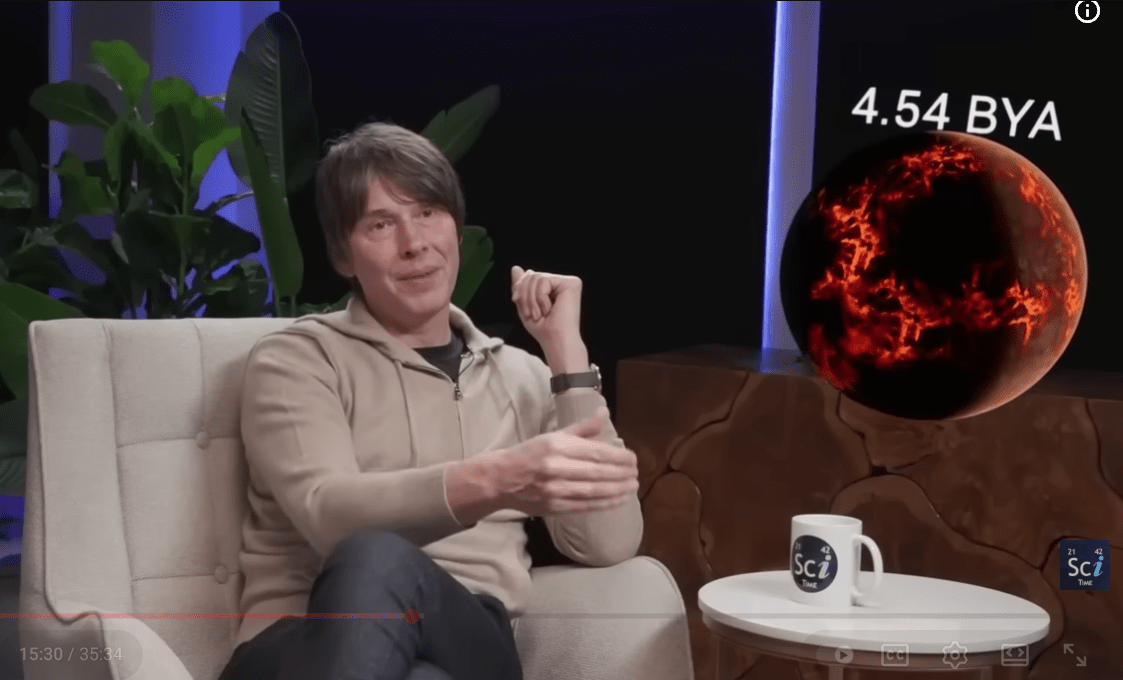
Image (Credit): Professor Brian Cox discussing the evolution of intelligence. (Science Time channel)
If you have followed the career of English physicist Brian Cox, then you know he is a dynamic speaker who has hosted several series on astronomy, including Wonders of the Solar System and Wonders of the Universe.
In this short video from Science Time channel, “Brian Cox Talks About Alien Life – A 2026 Special,” Professor Cox walks the viewer through the chances of finding intelligent life among the 60 billion exoplanets in our galaxy that lie within the habitable zone. To be clear, he is not very optimistic.
The series does not cover much new ground except for some hopeful comments about the James Webb Space Telescope investigating the atmospheres of exoplanet (with Professor Cox wondering whether we will find life on an exoplanet before we find it on Mars). Even so, it is still enjoyable to spend a little bit of time playing around with the Fermi Paradox again.
One of the more intriguing ideas being discussed here and elsewhere is the idea that we may not want to limit our ideas to biological life. The longevity of a civilization may be dependent on its ability to evolve from carbon-based to silicon-based lifeforms. While not explicitly discussed in the video, that could broaden our search beyond a star’s habitable zone yet also frustrate our attempts to find biological signatures in an exoplanet’s atmosphere.
Again, it is worth your time to listen in. I would just ignore the goofy animations that accompany the discussion.



 Our Awesome Universe