Podcast: Getting to Mars and Staying Alive

If you are interested in the future of humanity on Mars, you may want to tune into Red Planet Radio from The Mars Society. A recent podcast, as well as an upcoming podcast, highlight some things to consider before you pack your bags.

Back on June 15, in the podcast titled “Dr. Antonio Paris, Astrophysicist, Author “Mars: Your Personal 3-D Journey!,” we heard from Dr. Antonio Paris, who is the Chief Scientist at the Center for Planetary Science as well as an Assistant Professor of Astronomy and Astrophysics at St. Petersburg College, Florida. In this podcast, Dr. Paris discussed the difficulties of traveling in space as well as the types of structures one might need to build to live safely on Mars. He also discussed his recent book, Mar: Your Personal 3D Journey to the Red Planet.

Tomorrow (July 2) another podcast episode will include a three-person NASA panel discussing topics such as general Mars exploration, strategies for sample returns from the Red Planet, and the architecture supporting Moon to Mars missions.

The three panelists are:

  • Nujoud Merancy: Deputy Associate Administrator, Strategy and Architecture Office, in the Exploration Systems Development Mission Directorate for NASA Headquarters.
  • Eric Ianson: Deputy Director, Planetary Science Division, and Director, Mars Exploration Program and Radioisotope Power Systems Program at NASA Headquarters. 
  • Dr. Lindsay Hays: Program Scientist in the Planetary Science Division at NASA Headquarters and Deputy Program Scientist for the Mars Sample Return Mission. 

I enjoyed the first episode and look forward to tomorrow’s discussion.

And don’t forget that from August 8-11 The Mars Society will hold its 27th Annual International Mars Society Convention at the University of Washington in Seattle, Washington. You can see videos from prior conventions here.

Credit: The Center for Planetary Science, Inc.

Pic of the Week: Frost on Olympus Mons

Image (Credit): Frosty summit of Mar’s Olympus Mons. (ESA/DLR/FU Berlin)

This week’s image is from the European Space Agency (ESA) and shows Olympus Mons on Mars, the tallest volcano in the solar system. Captured by ESA’s Mars Express, it shows water frost close to the planet’s equator, which was unexpected.

Colin Wilson, ESA project scientist for both ExoMars Trace Gas Orbiter and Mars Express, stated:

Finding water on the surface of Mars is always exciting, both for scientific interest and for its implications for human and robotic exploration…Even so, this discovery is particularly fascinating. Mars’s low atmospheric pressure creates an unfamiliar situation where the planet’s mountaintops aren’t usually colder than its plains – but it seems that moist air blowing up mountain slopes can still condense into frost, a decidedly Earth-like phenomenon.

NASA Exploring Mars Sample Return Options

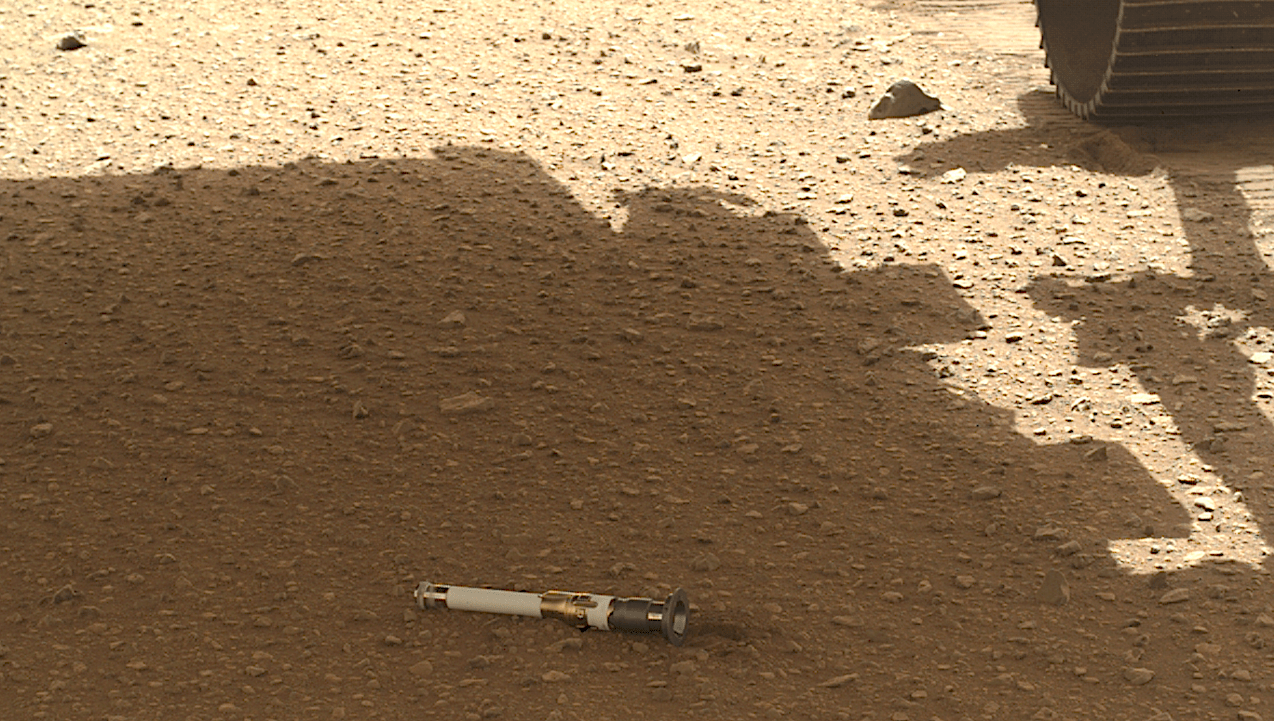
Image (Credit): One of the sample return canisters on the surface of Mars. (NASA)

With the pending budget cuts at NASA, the space agency is exploring new options for getting soil and rock samples back to Earth from MARs. To do this, NASA is setting it sights on 10 studies to identify new approaches to accomplish this mission, 7 of which come from private contractors and the other 3 from NASA centers, the Jet Propulsion Laboratory in Southern California, and Johns Hopkins’ Applied Physics Laboratory.

The seven private sector parties of interest and related proposals from earlier this year are as follows:

  • Lockheed Martin in Littleton, Colorado: “Lockheed Martin Rapid Mission Design Studies for Mars Sample Return”
  • SpaceX in Hawthorne, California: “Enabling Mars Sample Return With Starship”
  • Aerojet Rocketdyne in Huntsville, Alabama: “A High-Performance Liquid Mars Ascent Vehicle, Using Highly Reliable and Mature Propulsion Technologies, to Improve Program Affordability and Schedule”
  • Blue Origin in Kent, Washington: “Leveraging Artemis for Mars Sample Return”
  • Quantum Space in Rockville, Maryland: “Quantum Anchor Leg Mars Sample Return Study”
  • Northrop Grumman in Elkton, Maryland: “High TRL MAV Propulsion Trades and Concept Design for MSR Rapid Mission Design”
  • Whittinghill Aerospace in Camarillo, California: “A Rapid Design Study for the MSR Single Stage Mars Ascent Vehicle”

It is not clear why such a review needed to wait until so late in the game. NASA is always facing budget crunches. Maybe this can be a model for other ventures in the future as well.

Pic of the Week: Forth Starship Test is a Success

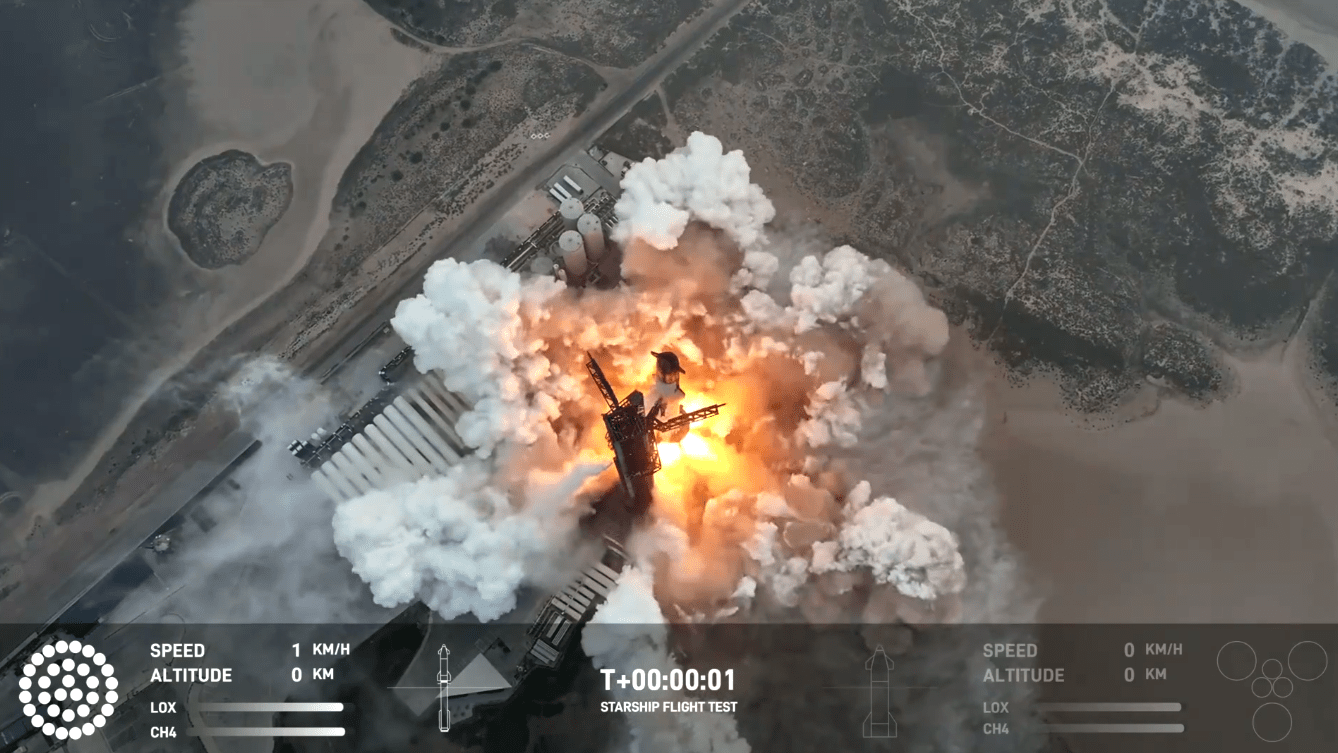
Image (Credit): The Starship rocket lifting off its launch pad in Texas earlier today. (SpaceX)

This week’s image shows the launch of the forth test of SpaceX’s Starship, which went further than any of the tests to date. In it’s summary of the flight, SpaceX noted:

Flight 4 ended with Starship igniting its three center Raptor engines and executing the first flip maneuver and landing burn since our suborbital campaign, followed by a soft splashdown of the ship in the Indian Ocean one hour and six minutes after launch.

You can see the full flight in this video.

As with yesterday’s successful launch of Boeing’s Starliner, today’s successful flight gave NASA greater assurance that the commercial sector is picking up the pace to assist the U.S. with both the International Space Station and Artemis program to the Moon (and eventually Mars).

Note: I like The Economist’s headline on the mission: “Elon Musk’s Starship Makes a Test Flight Without Exploding.”

Space Quote: Congressional Appeal for More NASA Funding

“An improved appropriation for FY 2025 of $9 billion for SMD will give the agency the necessary resources to pursue Decadal priorities such as the Earth System Observatory, Geophysical Dynamics Constellation, Habitable Worlds Observatory, and Mars Sample Return, while maintaining our nation’s highly-skilled workforce and fleet of operating and developing spacecraft including the Chandra X-Ray Observatory, Hubble Space Telescope, Perseverance and Curiosity rovers, among others. These investments in our high-tech STEM workforce and university systems will provide positive value to every congressional district.”

-Statement in a May 1, 2024 letter to the House Appropriations Subcommittee on Commerce, Justice, Science, and Related Agencies from 44 Members of Congress regarding increased funding to NASA related to its Science Mission Directorate (SMD). The letter notes that “…the FY 2025 President’s Budget Request of $7.6 billion for NASA Science represents a $1.1 billion decrease in purchasing power from its peak in FY 2020 and would be the smallest budget in eight years when adjusted for inflation.”