The National Air and Space Museum is Open for Business

Image (Credit): The “Destination Moon” exibition at the refurbished National Air and Space Museum. (Smithsonian Museum)

If you have been awaiting the refurbishing of the Smithsonian’s National Air and Space Museum, then you will be happy to know that the museum reopened on October 14th. Only now you cannot simply stroll into the museum. Instead, you need to obtain a free timed-entry pass. Unfortunately, this seems to be the current system used by numerous museums to control traffic as well as capture all of your personal information so they can swamp you with junk mail and offers. Anyway…

Here are the a few of the new exhibits the museum is highlighting (go here for the full list):

  1. “Walking On Other Worlds”: Experience what it’s like in distant parts of our solar system in the “Walking on Other Worlds” interactive experience in the Kenneth C. Griffin Exploring the Planets Gallery. This immersive media exhibit presents visitors with a seven-minute “tour” of seven different worlds: Venus, Earth’s Moon, Mars, Jupiter, Saturn’s moon Titan, asteroid Ryugu, and comet 67P.
  2. Science Fiction Artifacts: New to display is a full-sized T-70 X-wing Starfighter “flown” by Poe Dameron (Oscar Isaac) in Star Wars: The Rise of Skywalker (2019). The screen-used vehicle is on long-term loan from Lucasfilm and is displayed hanging outside the planetarium. Star Trek is also represented in the new exhibitions. 
  3. ISS Cupola: In the One World Connected gallery, put yourself in the shoes of astronauts on the International Space Station (ISS) with the ISS Cupola interactive. Every 90 minutes, astronauts on board the ISS can see the Sun rise from the station’s Cupola, a European Space Agency-built observatory module. 

Given that NASA’s Artemis 1 mission is shooting for the Moon again, the timing is perfect. Of course, in December 2022 it will have been 50 years since the last human walk on the Moon’s surface, so we have a lot to celebrate as well as a lot of time to make up. Let’s hope a future update to the National Air and Space Museum includes models of spacecraft used to get humans to Mars.

And remember, you can also visit the Steven F. Udvar-Hazy Center outside the Washington Beltway that contains large planes, jets, and spacecraft that cannot fit in the DC museum, including the Space Shuttle Discovery. Last time I went there I could walk right in without using a timed-entry pass.
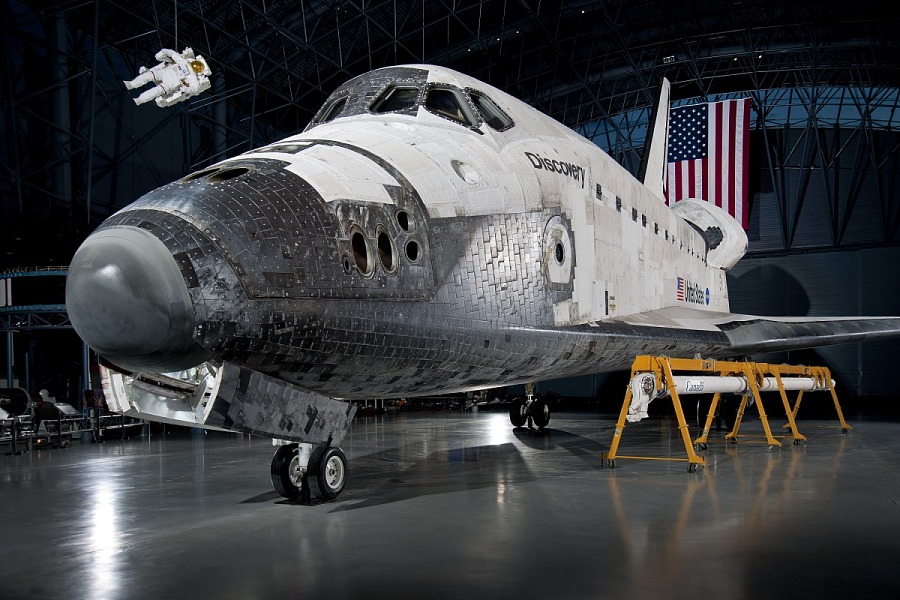
Image (Credit): Space Shuttle Discovery at the Steven F. Udvar-Hazy Center. (Smithsonian Museum)
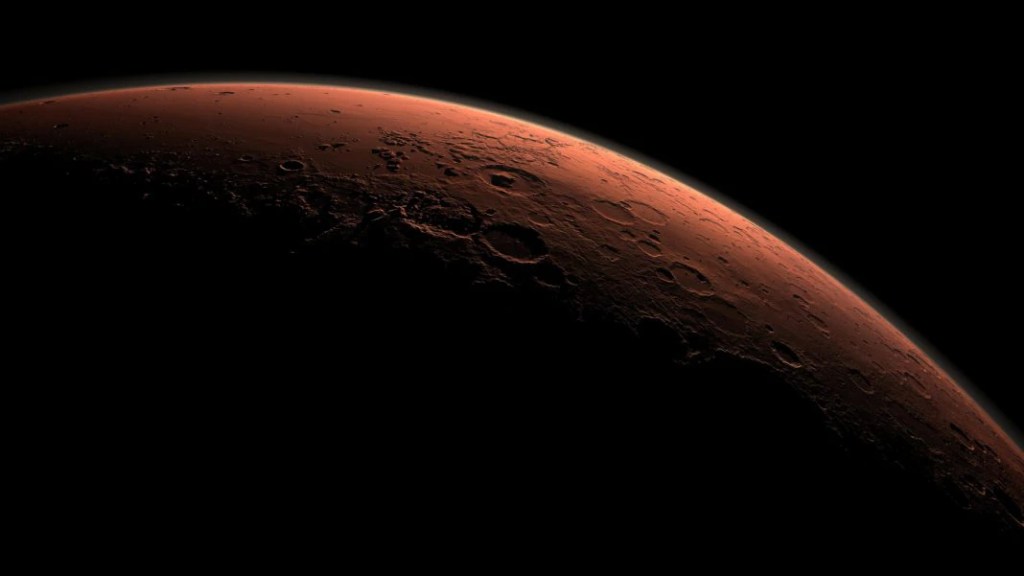
Study Findings: Early Mars Habitability and Global Cooling by H2-based Methanogens

Image (Credit): Image of present day Mars. (NASA)

Nature Astronomy abstract:

During the Noachian, Mars’ crust may have provided a favourable environment for microbial life. The porous brine-saturated regolith would have created a physical space sheltered from ultraviolet and cosmic radiation and provided a solvent, whereas the below-ground temperature and diffusion of a dense, reduced atmosphere may have supported simple microbial organisms that consumed H2 and CO2 as energy and carbon sources and produced methane as a waste. On Earth, hydrogenotrophic methanogenesis was among the earliest metabolisms, but its viability on early Mars has never been quantitatively evaluated. Here we present a probabilistic assessment of Mars’ Noachian habitability to H2-based methanogens and quantify their biological feedback on Mars’ atmosphere and climate. We find that subsurface habitability was very likely, and limited mainly by the extent of surface ice coverage. Biomass productivity could have been as high as in the early Earth’s ocean. However, the predicted atmospheric composition shift caused by methanogenesis would have triggered a global cooling event, ending potential early warm conditions, compromising surface habitability and forcing the biosphere deep into the Martian crust. Spatial projections of our predictions point to lowland sites at low-to-medium latitudes as good candidates to uncover traces of this early life at or near the surface.

Citation: Sauterey, B., Charnay, B., Affholder, A. et al. Early Mars habitability and global cooling by H2-based methanogens. Nat Astron (2022). https://doi.org/10.1038/s41550-022-01786-w

Study-related stories:

Pic of the Week: Martian Polygons

Image (Credit): (NASA/JPL-Caltech/University of Arizona)

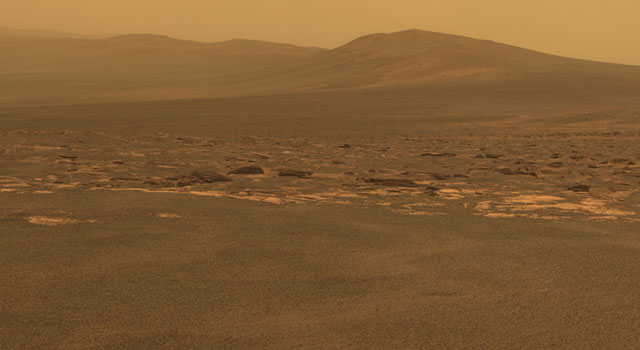
This week’s image is from NASA’s Mars Reconnaissance Observer. The Martian surface looks magical as we see the effects of water and ice. We tend to see Mars in one way – the view from a lander or rover showing a plain desert-like horizon (shown below) – but from above we can see it is so much more.

NASA has this to say:

Both water and dry ice have a major role in sculpting Mars’ surface at high latitudes. Water ice frozen in the soil splits the ground into polygons. Erosion of the channels forming the boundaries of the polygons by dry ice sublimating in the spring adds plenty of twists and turns to them.

Spring activity is visible as the layer of translucent dry ice coating the surface develops vents that allow gas to escape. The gas carries along fine particles of material from the surface further eroding the channels. The particles drop to the surface in dark fan-shaped deposits. Sometimes the dark particles sink into the dry ice, leaving bright marks where the fans were originally deposited. Often the vent closes, then opens again, so we see two or more fans originating from the same spot but oriented in different directions as the wind changes.

Image (Credit): The view from NASA’s Mars Exploration Rover Opportunity showing a portion of the west rim of Endeavour crater. (NASA/JPL-Caltech/Cornell/ASU)

A Fitting Tribute to Nichelle Nichols

Credit: Celestis

United Launch Alliance has announced that it will be sending the remains of Nichelle Nichols, also known as Star Trek’s Lt. Uhura, into space on a Vulcan Centaur rocket later this year in conjunction with the Celestis memorial program. About 150 memorial capsules in all with be part of what is named the “Enterprise Flight” (see the mission logo above). Others joining Ms. Nichols’ capsule include capsules for Star Trek creator Gene Roddenberry and his wife, as well as James Doohan, who played Scotty on the original Star Trek series.

The Enterprise Flight will launch from Cape Canaveral in Florida, with the capsules going more that 250 million miles into space. The Celestis website notes that more missions are being planned and memorial prices start at $2,495. However, if you want to be on the same flight as Lt. Uhura, prices start at $12,500 and you need to make your reservation by September 15th.

Mr. Roddenberry and others have been similarly honored as part of NASA’s space program. For instance, back in 1992 the remains of Gene Roddenberry were carried into space on Space Shuttle Columbia and later returned to Earth. It is not clear whether these same remains are now part of the Celestis mission. And let’s not forget the Carl Sagan Memorial Station on Mars, named back in 1997 (see below).

Image (Credit): NASA Mars Pathfinder mission site on Mars named the Carl Sagan Memorial Station. (NASA)

A Day in Astronomy: Curiosity Rover Arrives on Mars

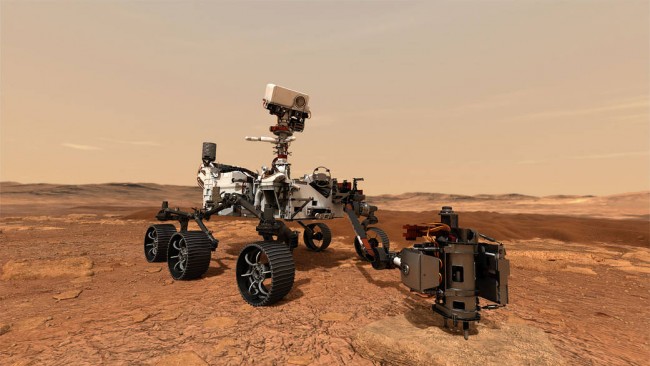
Image (Credit): Artist’s illustration of the Curiosity rover using its drill to core a rock sample on Mars. (NASA/JPL-Caltech)

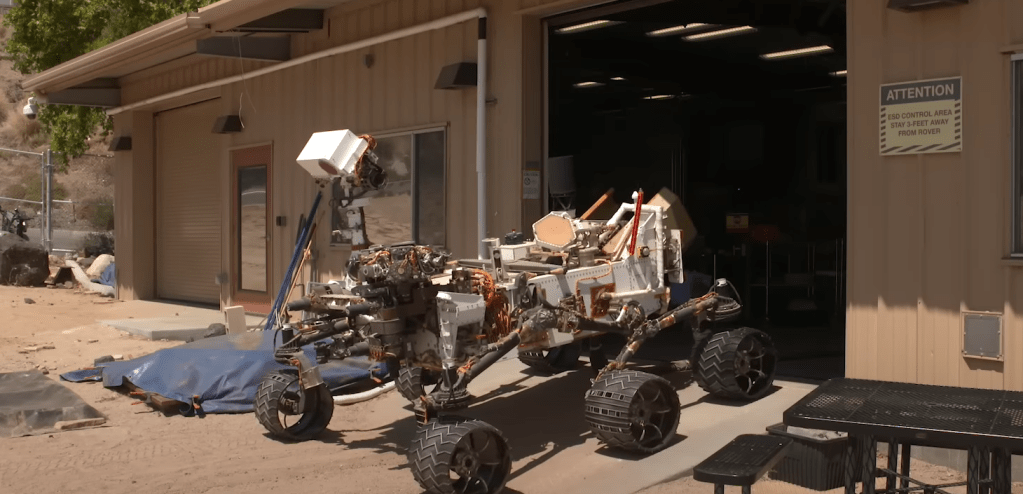
On this day in 2012, the Mars rover Curiosity landed on Mars (using Eastern Time). The rover was sent to the Red Planet to to explore the Gale crater and look for evidence that Mars had the conditions needed to support microscopic life in its past. A video from NASA walks you through the rover’s exploration to date and also highlights Maggie, Curiosity’s duplicate here on Earth.

An anniversary posting from NASA explains more about the mission, including issues with the rover’s drilling arm, wheels, and power supply. Life on Mars can be tough.

That said, the rover has already learned a lot after 10 years and it is expected to continue exploring in the years to come. NASA noted:

…most important, Curiosity has determined that liquid water as well as the chemical building blocks and nutrients needed for supporting life were present for at least tens of millions of years in Gale Crater. The crater once held a lake, the size of which waxed and waned over time. Each layer higher up on Mount Sharp serves as a record of a more recent era of Mars’ environment.

You can track the progress of the Curiosity rover using this website.

Image (Credit): NASA’s duplicate Mars rover called Maggie. (NASA/JPL-Caltech/ASU/MSSS/JHU-APL)