Television: More Space Stories This Summer

Image (Credit): The eight plants of our solar system. (NOVA)

If you are looking for space series beyond the Moon, PBS has a few more shows for you. With the James Webb Space Telescope releasing the first photos next week, now is the time to brush up on the mission with a NOVA special. And check out the earlier NOVA piece on the planets as well. Dates and times may vary by region.

NOVA: Ultimate Space Telescope, July 13 at 9pm (28 minutes):

How did NASA engineers build and launch the most ambitious telescope of all time? Follow the dramatic story of the James Webb Space Telescope—the most complex machine ever launched into space. If it works, scientists believe that this new eye on the universe will peer deeper back in time and space than ever before to the birth of galaxies, and may even be able to “sniff” the atmospheres of exoplanets as we search for signs of life beyond Earth. But getting it to work is no easy task. The telescope is far bigger than its predecessor, the famous Hubble Space Telescope, and it needs to make its observations a million miles away from Earth—so there will be no chance to go out and fix it. That means there’s no room for error; the most ambitious telescope ever built needs to work perfectly. Meet the engineers making it happen and join them on their high stakes journey to uncover new secrets of the universe.

NOVA: The Planets, July 7 & 14 at 8pm (5 episodes)

Among the stars in the night sky wander the eight-plus worlds of our own solar system—each home to truly awe-inspiring sights. Volcanoes three times higher than Everest, geysers erupting with icy plumes, cyclones larger than Earth lasting hundreds of years. Each of our celestial neighbors has a distinct personality and a unique story. In this five-part series, NOVA will explore the awesome beauty of “The Planets,” including Saturn’s 175,000-mile-wide rings, Mars’ ancient waterfalls four times the size of any found on Earth, and Neptune’s winds—12 times stronger than any hurricane felt on our planet. Using unique special effects and extraordinary footage captured by orbiters, landers and rovers, we’ll treat viewers to an up-close look at these faraway worlds. We’ll stand on the dark side of Pluto, lit only by the reflected light of its moons, watch the sun set over an ancient Martian waterfall, and witness a storm twice the size of Earth from high above Saturn. And, we’ll reveal how each of them has affected our own planet: Earth. 

Whatever Happened to NASA’s Mariner 8?

Image (Credit): The planet of Mars. (NASA)

An earlier post noted the anniversary of NASA’s Mariner 9 spacecraft to Mars, launched on May 30, 1971, but what about Mariner 8? What happened to that Mars bound spacecraft?

Both Mariner 8 and 9 we developed together so one could replace the other if needed, which was pretty smart. The Russians did the same thing with their first trip to Mars in 1971, successfully sending Mars 2 (launched May 19) and Mars 3 (launched May 28).

Mariner 8 was supposed to be the first U.S. spacecraft to orbit Mars. It was launched on May 8, 1971 but never achieved Earth orbit due to a launch vehicle failure. Instead, it fell into the Atlantic Ocean.

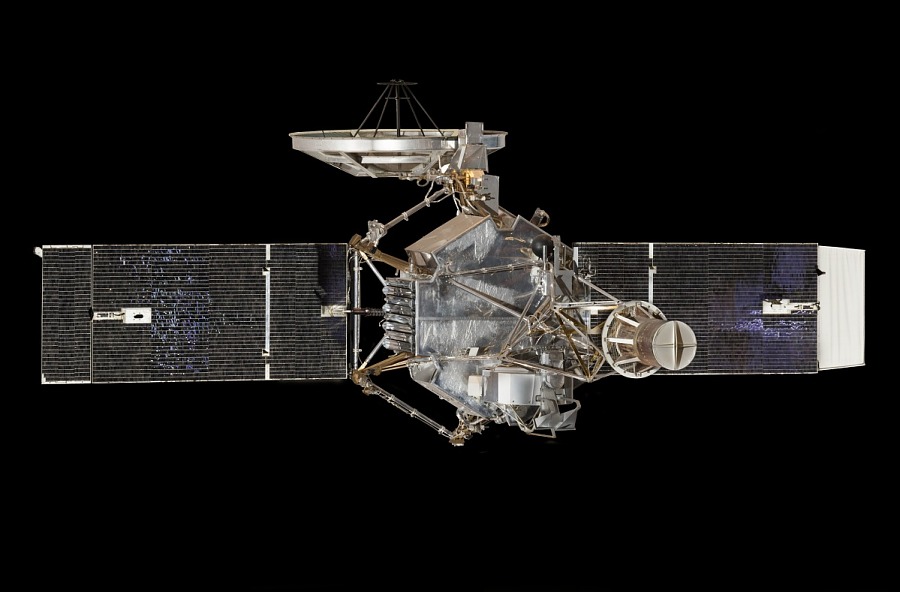
Of the 10 Mariner missions, 7 were successfully took space craft to Mars, Venus, and Mercury. Unfortunately, like Mariner 8, Mariner 1 failed after launch. Fortunately, like Mariner 9, Mariner 2 was a back up spacecraft that ensure mission success. Mariner 3 failed after launch because of a battery issue, but its double Mariner 4 was successful. Here are the 10 missions (you can find more about them here):

  • Mariner 1: Venus mission launched on July 22, 1962. — Failed
  • Mariner 2: Venus mission launched on August 27, 1962. — Success
  • Mariner 3: Mars mission launched on November 5, 1964. — Failed
  • Mariner 4: Mars mission launched on November 28, 1964. — Success
  • Mariner 5: Venus mission launched on June 14, 1967. — Success
  • Mariner 6: Mars mission launched on February 25, 1969. — Success
  • Mariner 7: Mars mission launched on February 25, 1969. — Success
  • Mariner 8: Mars mission launched on May 8, 1971. — Failed
  • Mariner 9: Mars mission launched on May 30, 1971. — Success
  • Mariner 10: Mercury and Venue mission launched on November 3, 1973. — Success

While three spacecraft failed, all of the missions were successful because of the redundancy built into the system. We do not seem to have such luxuries anymore, though NASA’s Mars Exploration Rover (MER) mission had two Mars rovers, Spirit and Opportunity, to increase the chances of success. 

Image (Credit): Mariner 2 spacecraft. (Smithsonian National Air and Space Museum)

A Day in Astronomy: Orbiting Mercury

Image (Credit): Artist’s image of MESSENGER orbiting Mercury (NASA).

On this day in 2011, NASA’s MErcury Surface, Space ENvironment, GEochemistry, and Ranging (MESSENGER) probe became the first spacecraft to orbit Mercury. NASA prepared the 10-year summary below explaining MESSENGER’s accomplishments from the time it was launched on August 3, 2004 through August 1, 2014. The probe later impacted the surface of Mercury on April 30, 2015.

NASA issued this high-level summary of the mission:

The MESSENGER spacecraft fundamentally changed our understanding of Mercury during its four-year orbital exploration of the planet, returning nearly 300,000 photographs and a wealth of information from its instruments. The formatted data totaling more than 10 terabytes reside in NASA’s Planetary Data System archive. Among the major findings were that Mercury harbors water ice and organic compounds at its north pole, that volcanism played a major role in shaping the planet’s surface, and that Mercury’s surface materials are more volatile-rich and chemically reduced than expected.

Image (Credit): 10-Year Summary of MESSENGER’s activities as of August 1, 2014. (NASA)