NASA Accomplishments in 2024

NASA has plenty of good news to share from 2024, as highlighted in its NASA: Best of 2024 video and accompanying press release.

Just a few of these accomplishments include:

  • In February, the first Moon landing through the agency’s Commercial Lunar Payload Services initiative brought NASA science to the lunar surface on Intuitive Machines’ Nova-C lander successfully capturing data that will help us better understand the Moon’s environment and improve landing precision and safety.
  • After launching into space in February, NASA’s Plankton, Aerosol, Cloud, ocean Ecosystem (PACE) satellite mission is successfully transmitting first-of-their-kind measurements of ocean health, air quality, and the effects of a changing climate.
  • In June, NASA astronauts Butch Wilmore and Suni Williams safely arrived at the space station aboard Boeing’s Starliner spacecraft following launch of their flight test. With Starliner’s arrival, it was the first time in station history three different spacecraft that carried crew to station were docked at the same time. Starliner returned uncrewed in September following a decision by NASA. Wilmore and Williams, now serving as part of the agency’s Crew-9 mission, will return to Earth in February 2025.
  • Deployed NASA’s Advanced Composite Solar Sail System in space, marking a successful test of its composite boom technology.
  • Awarded nearly $45 million to 21 higher-education institutions to help build capacity for research, and announced the recipients of grants that will support scientific and technical research projects for more than 20 universities and organizations across the United States.

The long list from which this was taken is impressive. However, we also need to note a few of the problems this year. This includes troubled commercial missions to the Moon, a Boeing crew stranded on the International Space Station after a problematic Starliner test, delays in the SpaceX Starship rocket tests, a cancelled Moon rover, budget cuts at NASA as well as layoffs at JPL, cost overruns on the Mars Sample Return mission, and a delay in the Artemis II and III launch dates.

This does not override the accomplishments, but it puts them into context at a time of changing administrations in Washington. This will come with hard questions about the viability of current missions as well as the cost of future missions.

I agree 2024 has plenty of proud moments. That said, 2025 will be a very challenging year for NASA. The agency will need solid answers to hard questions, cost effective options for struggling missions, and plenty of public support to weather calls for additional budget cuts.

I have confidence NASA will come out of this even stronger, even if it is a bit bruised in the process.

Space Stories: Firefly Wins Another NASA Contract, Commercial Space Station Progress, and Another Starliner Delay

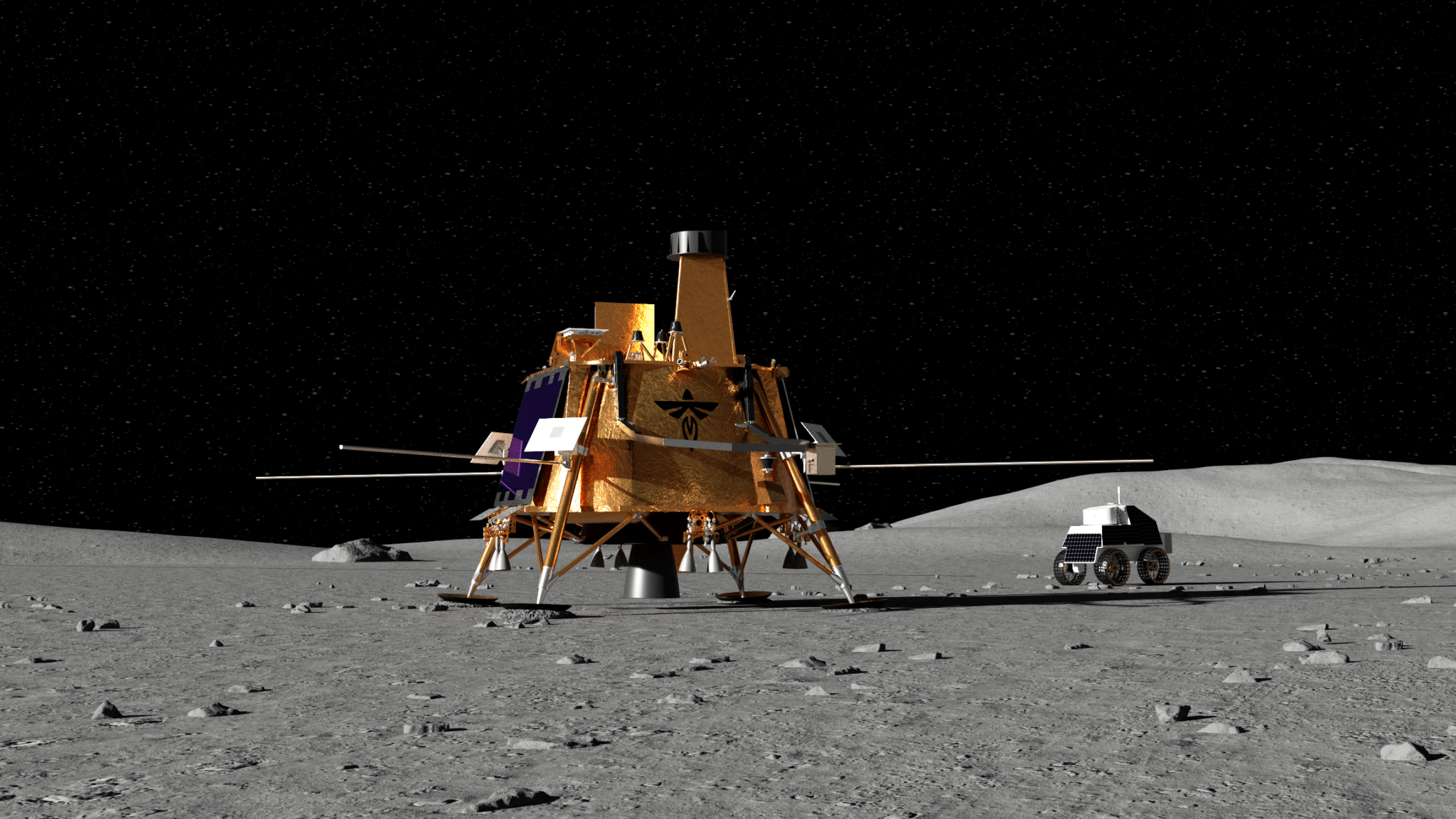
Image (Credit): Firefly’s Blue Ghost lunar lander and a rover on the lunar surface. (Firefly Aerospace)

Here are some recent stories of interest.

Firefly AerospaceFirefly Awarded $179 Million NASA Contract for Moon Delivery to Gruithuisen Domes

Firefly Aerospace, Inc., the leader in end-to-end responsive space services, was awarded an approximately $179.6 million NASA contract to deliver and operate six NASA instruments in the Gruithuisen Domes on the Moon’s near side in 2028. As part of NASA’s Commercial Lunar Payload (CLPS) initiative, the mission will utilize Firefly’s Blue Ghost lunar lander, Elytra Dark orbital vehicle, and a rover from an industry provider to investigate the unique composition of the Gruithuisen Domes – a part of the Moon that has never been explored.

NASANASA Sees Progress on Starlab Commercial Space Station Development

A NASA-funded commercial space station, Starlab, recently completed four key developmental milestones, marking substantial progress in the station’s design and operational readiness. The four milestones are part of a NASA Space Act Agreement awarded in 2021 and focused on reviews of the habitat structural test article preliminary design, systems integration, integrated operations, and a habitat structural test plan. “These milestone achievements are great indicators to reflect Starlab’s commitment to the continued efforts and advancements of their commercial destination,” said Angela Hart, program manager for NASA’s Commercial Low Earth Orbit Development Program. “As we look forward to the future of low Earth orbit, every successful milestone is one step closer to creating a dynamic and robust commercialized low Earth orbit.”

Associated PressNASA’s 2 stuck Astronauts Face More Time in Space with Return Delayed Until at Least Late March

NASA’s two stuck astronauts just got their space mission extended again. That means they won’t be back on Earth until spring, 10 months after rocketing into orbit on Boeing’s Starliner capsule. NASA announced the latest delay in Butch Wilmore and Suni Williams’ homecoming on Tuesday. The two test pilots planned on being away just a week or so when they blasted off June 5 on Boeing’s first astronaut flight to the International Space Station. Their mission grew from eight days to eight months after NASA decided to send the company’s problem-plagued Starliner capsule back empty in September.

Additional Comments by the NASA Nominee

Credit: Hanna-Barbera Productions

According to a story in Chron, a few years back the current nominee for NASA administrator, Jared Isaacman, made the following statement:

I truly want us to live in a world 50 or 100 years from now where people are jumping in their rockets like the Jetsons and there are families bouncing around on the moon with their kid in a spacesuit.

Given the difficulty was are having getting back to the moon 50 years after we dropped such travel, his time frame and expectations may be a little ambitious. I would be happy to have a few astronauts on the surface and the beginning of some type of rudimentary lunar station within 10 years, but something like The Jetsons in the near future or even 50 years out does not seem to be likely.

We heard stories about The Jetsons and flying cars long ago. Though some of the ideas in the television series were workable, if we cannot get to everyday flying cars just yet, I think everyday rockets to the Moon with the whole family are even further away.

Somehow he watched The Jetsons in his youth but seemed to miss Space: 1999 and even the original Lost in Space.

I expect his discussions with NASA will be pretty eye-opening and may temper his expectations.

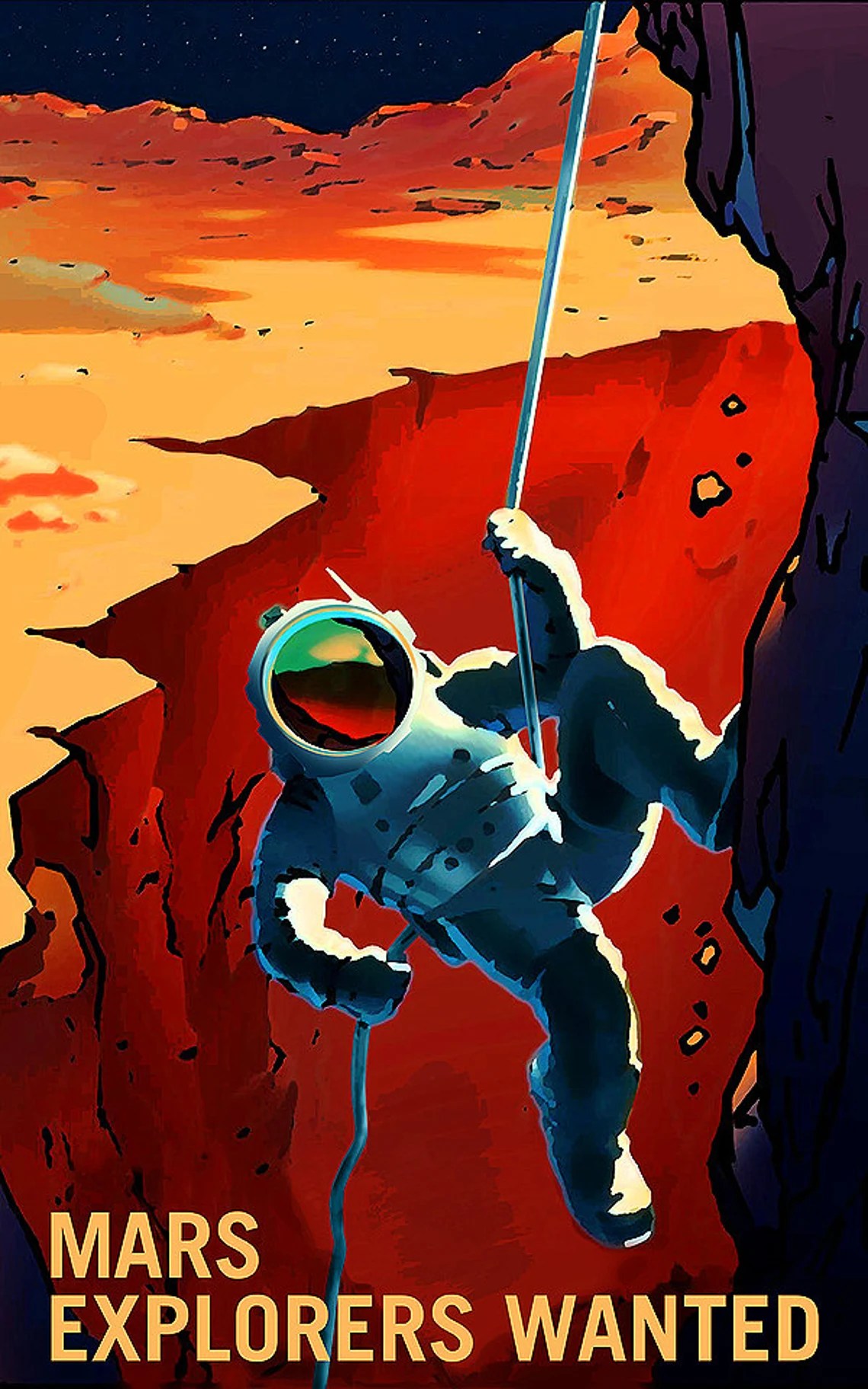
We need to nail down the basics again before we issue travel posters to the Moon.

Space Quote: SLS or Bust

Image (Credit): NASA Administrator Bill Nelson discussing the Artemis program at a press conference last week. (NASA)

“Are they going to axe Artemis and insert the Starship? First of all, there is one human-rated spacecraft that is flying and has already flown beyond the moon, farther than any other human-rated spacecraft, and that’s the SLS combined with Orion.”

-Statement by NASA Administrator Bill Nelson at the agency’s press conference last week at the NASA Artemis Campaign Leadership News Conference. He was making reference to the SpaceX Starship replacing the Space Launch System (SLS) in the Artemis program. It was a solid answer to a question that many may have these days.

Nominee Jared Isaacman’s Statement

Credit: Image by OpenClipart-Vectors from Pixabay

This is what Mr. Isaacman posted on Twitter/X after being nominated to be the next administrator of NASA:

I am honored to receive President Trump’s…nomination to serve as the next Administrator of NASA. Having been fortunate to see our amazing planet from space, I am passionate about America leading the most incredible adventure in human history.

On my last mission to space, my crew and I traveled farther from Earth than anyone in over half a century. I can confidently say this second space age has only just begun. Space holds unparalleled potential for breakthroughs in manufacturing, biotechnology, mining, and perhaps even pathways to new sources of energy. There will inevitably be a thriving space economy—one that will create opportunities for countless people to live and work in space. At NASA, we will passionately pursue these possibilities and usher in an era where humanity becomes a true spacefaring civilization.

I was born after the Moon landings; my children were born after the final space shuttle launch. With the support of President Trump, I can promise you this: We will never again lose our ability to journey to the stars and never settle for second place. We will inspire children, yours and mine, to look up and dream of what is possible. Americans will walk on the Moon and Mars and in doing so, we will make life better here on Earth.

It is the honor of a lifetime to serve in this role and to work alongside NASA’s extraordinary team to realize our shared dreams of exploration and discovery.

Grateful to serve,

Jared

I find it interesting that his first mention of space accomplishments was his own private flight into orbit rather than the amazing things NASA has already accomplished and plans to do. He also seems to think his space venture brought on the second space age, maybe unaware that the movement towards commercial partnerships started with the Obama administration.

And the statement “Americans will walk on the Moon and Mars” should probably be “Americans will walk on the Moon again and Mars as well.” He admitted that he missed the Moon landing and his kids missed the space shuttle, but let’s treat them like milestones rather than missed opportunities.

I am skeptical that this will be good for NASA, but maybe having a buddy running the agency will give Mr. Musk second thoughts about stripping it down for parts like a Jawa sandcrawler.

Maybe.