Image (Credit): Artist’s rendering of a lunar base. (NASA)
“We believe once governments and the Artemis missions have re-established human presence on the moon, commercial services will follow that…every operation on the moon will require power”.
-Statement by Jake Thompson, director of novel nuclear and special projects at Rolls-Royce, in a Financial Times article. Rolls Royce is working on a micro nuclear reactor for use on space missions.
Image (Credit): The return of the Starship booster on November 19, 2024. It splashed down in the Gulf of Mexico. (SpaceX)
The sixth test of SpaceX’s Starship was a success this past Tuesday, even without the repeated stunt of a tower capturing the booster rocket. The launch from the Starbase pad in Brownsville, Texas allowed SpaceX to test additional features related to the rocket, including igniting one of its Raptor engines while in space. Overall, it was a quick turnaround from another successful test flight last month.
SpaceX also received additional good news this week when it learned that Colorado-based Lunar Outpost selected SpaceX’s Starship as the party to deliver its lunar rover to the Moon. Lunar Outpost is one of several companies working with NASA to ensure a rover is on the lunar surface as part of the Artemis mission. NASA has yet to select one or more companies to build and test the rovers on the Moon.
All of this is good news for SpaceX and NASA, assuming the Starship stays on schedule, NASA funding of Artemis continues, and a new administration in DC continues to support the Artemis approach.
The graphic above highlights the party platforms on space, showing a lot of similarity between the two parties. If you also consider the fact that the Artemis program was started under the first Trump Administration, as well as the close association between Trump and Elon Musk (at the moment), then one sees an even stronger indication that the Moon and Mars will remain a large part of the new administration’s focus.
The article notes:
For former President Trump, maintaining U.S. preeminence is a major component of his campaign rhetoric. To that end, a second Trump Administration would likely view space as a key arena for competition with China, and would therefore prioritize initiatives aimed at maintaining American dominance in the space domain. This could include bolstering programs that accelerate the development of commercial space capabilities, like Artemis and the Commercial Lunar Payload Services program. Mars Sample Return is an example of a program that offers an opportunity to leverage the burgeoning commercial space industry to accomplish something that no other nation has: returning scientifically significant samples from another planet.
All of this should offer some protection for NASA in a new administration that is already talking about downsizing government and eliminating at least one department. Besides, I doubt a cost-cutting panel headed by Mr. Musk will cut off the hand that feeds him. NASA has been good to SpaceX, and that is likely to continue.
We will see many more papers and opinion pieces on potential changes in the days and weeks to come.
A new study suggests Uranus’ moon Miranda may harbor a water ocean beneath its surface, a finding that would challenge many assumptions about the moon’s history and composition and could put it in the company of the few select worlds in our solar system with potentially life-sustaining environments. “To find evidence of an ocean inside a small object like Miranda is incredibly surprising,” said Tom Nordheim, a planetary scientist at the Johns Hopkins Applied Physics Laboratory (APL) in Laurel, Maryland, a study co-author, and the principal investigator on the project that funded the study. “It helps build on the story that some of these moons at Uranus may be really interesting — that there may be several ocean worlds around one of the most distant planets in our solar system, which is both exciting and bizarre.”
NASA expects to determine by early next year the next steps for a lunar rover mission it canceled in July amid some confusion over the timing of that decision. Speaking at an Oct. 28 meeting of the Lunar Exploration Analysis Group (LEAG), Joel Kearns, deputy associate administrator for exploration in NASA’s Science Mission Directorate, said the agency was reviewing responses to a request for information (RFI) the agency issued in August seeking alternative uses for its Volatiles Investigating Polar Exploration Rover (VIPER) spacecraft.
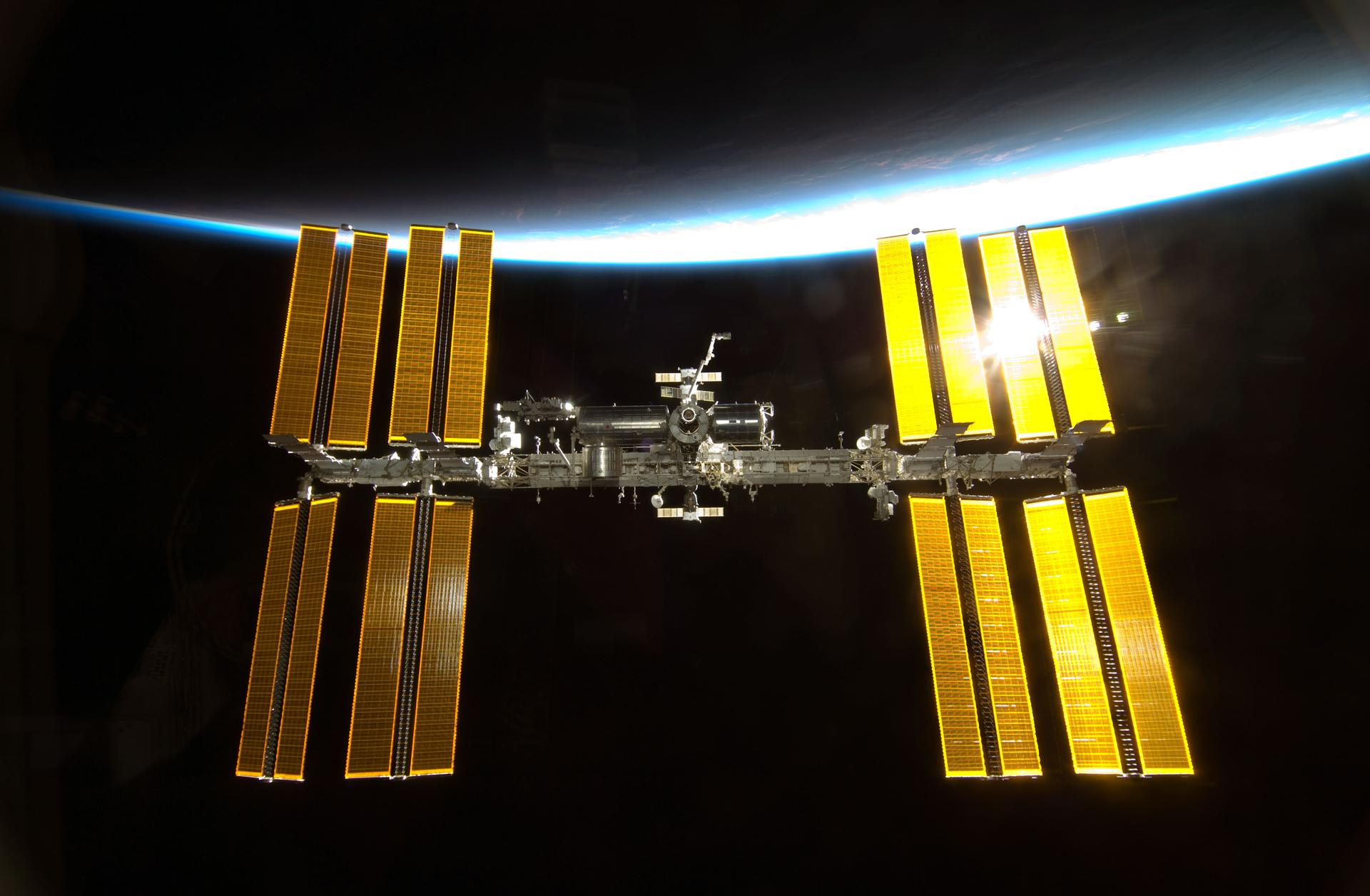
In the hostile conditions beyond Earth, a spacecraft is all that stands between an astronaut and certain death. So having yearslong seemingly unfixable leaks on the International Space Station (ISS) sounds like a nightmare scenario. It’s also a reality, one that a recent agency report calls “a top safety risk.” Amid months of headlines about astronauts stranded by Boeing’s Starliner vehicle and NASA’s announcement of a contract with Elon Musk’s SpaceX to destroy the ISS early next decade, the ongoing concerns about the leaks come as another reminder that supporting a long-term population in space is a challenge that’s quite literally out of this world.
NASA will use SpaceX’s Crew Dragon for its two crew rotation missions to the International Space Station in 2025 as it continues to evaluate if it will require Boeing to perform another test flight of its Starliner spacecraft. In an Oct. 15 statement, NASA said it will use Crew Dragon for both the Crew-10 mission to the ISS, scheduled for no earlier than February 2025, and the Crew-11 mission scheduled for no earlier than July. Crew-10 will fly NASA astronauts Anne McClain and Nichole Ayers along with astronaut Takuya Onishi from the Japanese space agency JAXA and Roscosmos cosmonaut Kirill Peskov. NASA has not yet announced the crew for the Crew-11 mission.
There are government boondoggles, and then there’s NASA’s Artemis program. More than a half century after Neil Armstrong’s giant leap for mankind, Artemis was intended to land astronauts back on the moon. It has so far spent nearly $100 billion without anyone getting off the ground, yet its complexity and outrageous waste are still spiraling upward. The next US president should rethink the program in its entirety.
An international team led by three researchers from the CNRS1 , the European Southern Observatory (ESO, Europe), and Charles University (Czech Republic) has successfully demonstrated that 70% of all known meteorite falls originate from just three young asteroid families. These families were produced by three recent collisions that occurred in the main asteroid belt 5.8, 7.5, and about 40 million years ago. The team also revealed the sources of other types of meteorites; with this research, the origin of more than 90% of meteorites has now been identified. This discovery is detailed in three papers, a first published on 13 September 2024 in the journal Astronomy and Astrophysics, and two new papers published on 16 October 2024 in Nature.


 Our Awesome Universe