Should We Name the Moon’s New Crater After Mr. Musk?

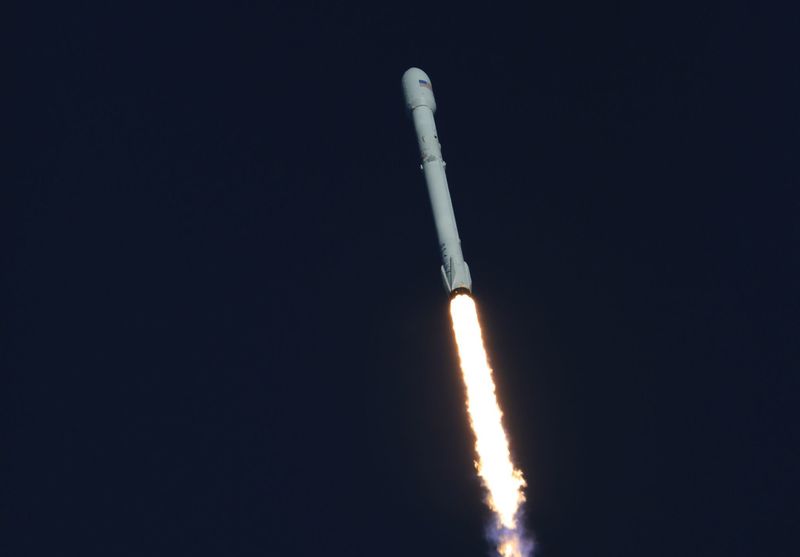
Source: SpaceX Rocket from NASA.

In the early days of March, a SpaceX rocket booster is expected to crash into the surface of the Moon just north of its equator. Part of a rocket launched in 2015, the booster has been floating around ever since.

In general, the Moon has not been used for trash storage beyond the lunar missions. Moreover, SpaceX likes to be known for landing its boosters back on Earth rather than sending them off into the wild blue (or black) yonder.

This could be an opportunity for SpaceX to claim it has created one of the first unintentional man-made craters on the Moon. The small crater could be known as the Musk Mini-Basin.

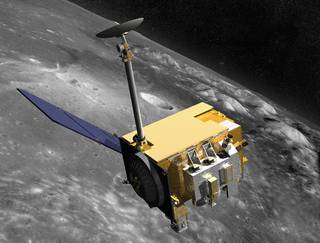
Luckily, Mr. Musk’s Tesla Roadster, launched in 2018, made it past the Moon with little incident (and then overshot Mars). We did not need an Elon Musk Parking Lot on the moon, yet the little red car would have been quite a sight for NASA’s Lunar Reconnaissance Orbiter (LRO).  

Source: LRO from NASA.

Extra: Visit this Sky & Telescope story for LRO images of the six Apollo landing sites on the Moon.

Update: Recent news indicates that the object about to hit the Moon is not a SpaceX rocket booster but rather a Chinese rocket part from the Long March 3C that launched the Chang’e 5-T1 lunar mission. I guess we will need to rethink the naming of that new crater.

Is the U.S. Running Low on Astronauts?

Source: NASA OIG.

Does NASA need more astronauts than it has for upcoming missions? The Office of Inspector General’s (OIG) office believes NASA may have a problem. In a January 11, 2022 OIG report, NASA’s Management of its Astronaut Corps, the auditors found:

The processes NASA uses to size, train, and assign astronauts to specific missions are primarily calibrated toward meeting the current needs of the [International Space Station]. For example, NASA’s process for sizing the astronaut corps is designed to ensure that a sufficient number of astronauts are available to meet the Agency’s flight manifest needs, which includes maintaining a planned crew of between three and four astronauts on the Station over the next 5 years. However, the astronaut corps is projected to fall below its targeted size or minimum manifest requirement in fiscal year (FY) 2022 and FY 2023 due to attrition and additional space flight manifest needs. More concerning, the Astronaut Office calculated that the corps size would exactly equal the number of flight manifest seats NASA will need in FY 2022. As a result, the Agency may not have a sufficient number of additional astronauts available for unanticipated attrition and crew reassignments or ground roles such as engaging in program development, staffing Astronaut Office leadership and liaison positions, and serving as spokespeople for the Agency. In light of the expanding space flight opportunities anticipated for the Artemis missions, the corps might be at risk of being misaligned in the future, resulting in disruptive crew reorganizations or mission delays.

The real point it that bad human resource management may lead to mission delays, including the Artemis lunar landing mission. So what does the OIG recommend? The report states:

To ensure the training process for future Artemis missions is developed with sufficient time for implementation and revision, the Director of the Flight Operations Directorate and the Chief of the Astronaut Office should coordinate with Artemis program offices to complete the development and chartering of the framework of Artemis boards and panels to ensure alignment with future mission training needs for new vehicles and missions, including Orion, next-generation spacesuits, [human landing system], and Gateway.

NASA management agreed with all four recommendations in the OIG report aimed at resolving this shortage issue. I know these back office management issues can be dry, but without a solid pipeline of talent into the space program we will simply have a diminished program. Luckily, the auditors are doing their job and alerting management. Now is it NASA’s job to turn all of this around.

Podcast: A New Space Age?

Source: BBC.

If you are looking for a new podcast, or just want to listen to an interesting conversation, I recommend BBC’s recent Inside Science episode about human travel to the Moon and Mars. Titled “A New Space Age?,” the December 30, 2021 episode discusses NASA’s Artemis lunar program, the timetable for travel to Mars, and whether or not we even need to send humans into space.

Dr. Kevin Fong leads a panel of experts to discuss these topics:

— Dr. Mike Barratt, a senior NASA astronaut and medical doctor based at the Johnson Space Center;

— Dr. Anita Sengupta, Research Associate Professor in Engineering at the University of Southern California; and

— Oliver Morton, Briefings editor at the Economist and author of several books on the Moon and Mars.

If you enjoy the conversation, you may want to look around a few of the other episodes as well, such as the December 16, 2021 episode on the James Webb Space Telescope.

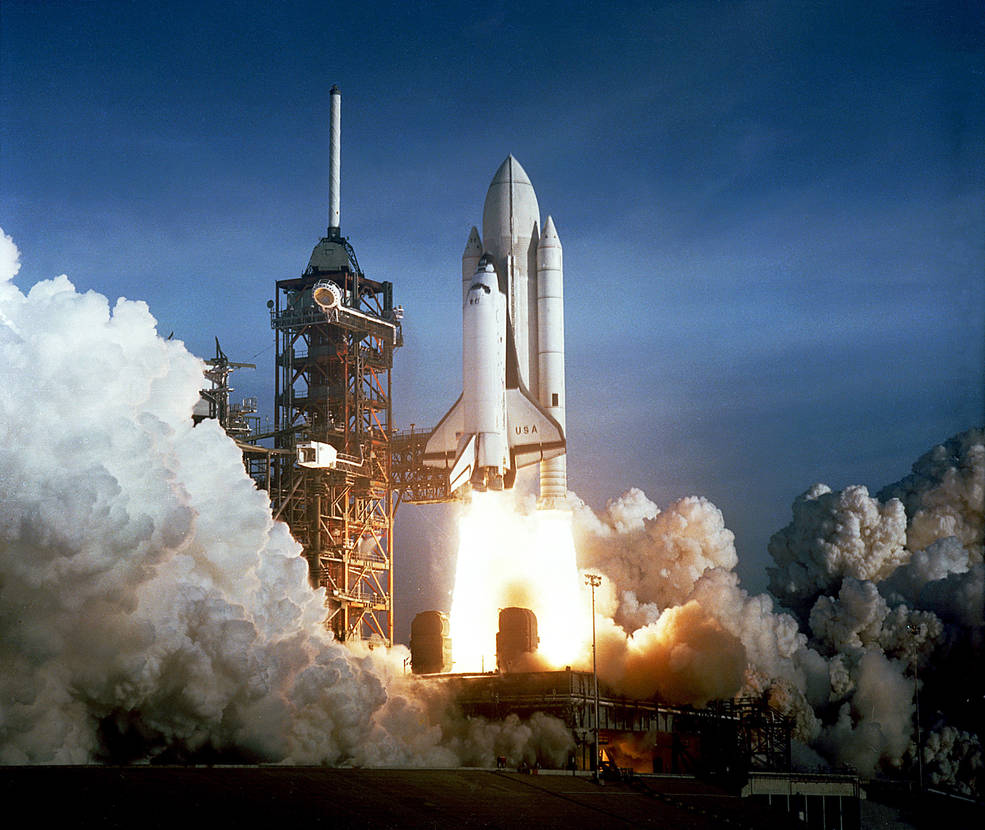
Nixon and the Space Shuttle

Source: NASA imagine showing Space shuttle Columbia lifting off from Launch Pad 39A on April 12, 1981, to begin STS-1.

Earlier his week NASA highlighted the 50 year anniversary of President Nixon’s decision to initiate a space shuttle program to follow the success of the Apollo Moon missions. The story states:

In January 1972, he directed NASA to develop and build a reusable space transportation system, commonly known as the space shuttle. The reusability of the shuttle’s components was expected to provide regular access to space to many customers, while at the same time reducing costs.

The space shuttle was proposed by the National Aeronautics and Space Council, which also proposed a trip to Mars. The Council’s report states:

As a focus for the development of new capability, we recommend the United States accept the long-range option or goal of manned planetary exploration with a manned Mars mission before the end of this century as the first target.

While the space shuttle was eventually operational by 1981, we still await a clear timeline for a trip to Mars. NASA said it will start with a trip back to the Moon first. Let’s hope we do not need to wait another 50 years before a manned trip to Mars.