Has Star Trek Gone Negative?

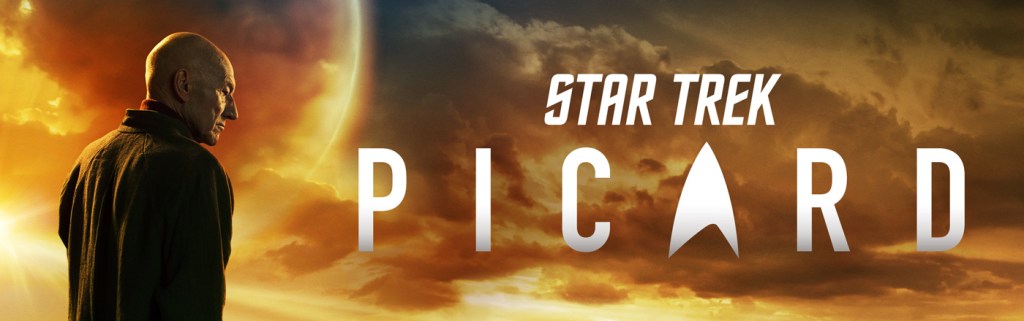
Source: Paramount+.

If you are a Trekkie, you have probably gained inspiration from the multitude of Star Trek series spawned from the original 1966 show. Star Trek: The Next Generation continues to be my favorite, yet I have also enjoyed all of the other earlier series and made it through at least one season of the latest Star Trek: Discovery. I admit it can be a little dark, but you still see hope for a better future around the edges.

Reason magazine believes the latest series is not up to par with the others. In a recent article, “Even if Modern Star Trek Doesn’t Think So, the World Is Getting Better,” the author states:

…Star Trek now seeks to reinforce the trepidation and existential doubt that is a hallmark of our modern culture. Instead of showing the potential of what humanity can become, Discovery seems to reflect more on what the feelings of the human condition are today.

The author also complains about Star Trek: Picard, but that is unfair. I found the series focused on Captain Picard to be both hopeful and fun. Maybe the author forgets about the dark role of Q in The Next Generation where all of humanity was a plaything. And what about the Borg? They were not exactly a sunny group of explorers. I left some of the Borg episodes with about as much hope as I did after seeing the Joker in The Dark Knight.

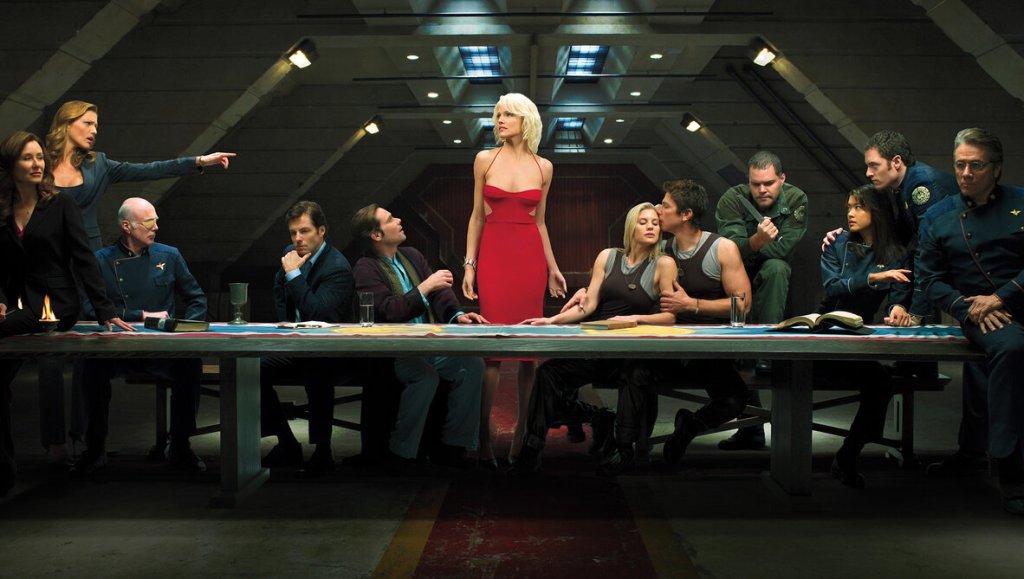
As far as the human conditions of today, the idea of a show paralleling present day reality is not all that new. I remember when the remake of Battlestar Galactica had episodes mirroring events taking place during the war with Iraq. The writers do live in the real world as well. I am not opposed to a little reflection with my viewing. Not even Sesame Street can escape the ongoing vaccine wars.

So I suggest viewers take a breath and pull up whatever version of the galaxy they can handle. I believe there is a Star Trek series for every season and every mood.

Source: Battlestar Galactica on SyFy.

National Science Fiction Day

January 2nd is National Science Fiction Day, or at least it is recorded as such on the nationaltoday.com website. Whatever you think about such national days, it is nice to consider the role of science fiction in creating interest in science overall.

Here are a few facts recorded on the official page for this special day:

— January 2nd was chosen as the day to celebrate National Science Fiction Day because it is the recorded birth date of the great science fiction writer Isaac Asimov.

— Mary Shelly’s book Frankenstein from 1818 is considered to be the first science fiction book.

— Other science fiction books and stories from the 1800s include Jules Verne’s Journey to the Center of the Earth and H.G. Wells’ The Time Machine and The War of the Worlds.

— Georges Melies’ 1902 film A Trip to the Moon is considered to be the first science fiction film.

I am a fan of science fiction, as you will learn from this site, so I appreciate a separate day to consider all of the great works of this genre.

Source: War of the Worlds from the Best in Film website.

Movies: Look Up at NASA’s Work

Source: Leonardo DiCaprio shown in Netflix’s Don’t Look Up.

You may have already watched the star-studded movie Don’t Look Up released by Netflix over the holidays about a comet on its way to destroy our planet. It is an amusing film. Hopefully, it will also move people towards NASA and away from politicians, not that politicians really have much of a following. The more interesting story that should capture the public’s attention pertains to a little NASA spacecraft, part of the Double Asteroid Redirection Test (DART) mission, that will crash into a real asteroid next fall to determine whether or not we are able to nudge one of these monsters in a new direction – that is, away from Earth. The asteroid in question is called Dimorphos, which is about 160 meters in diameter and would create an explosion equivalent to approximately 500 megatons of TNT should it strike our planet. The atomic bomb dropped on Hiroshima was equivalent to about 16,000 tons of TNT. So this test is pretty important in terms of long term planning as well as survival. Check out the DART link above to read more about the mission.

Source: NASA.

Extra: Astronomy.com has an interesting story worth checking out – “Astronomer Amy Mainzer spent hours chatting with Leonardo DiCaprio for Netflix’s Don’t Look Up.”