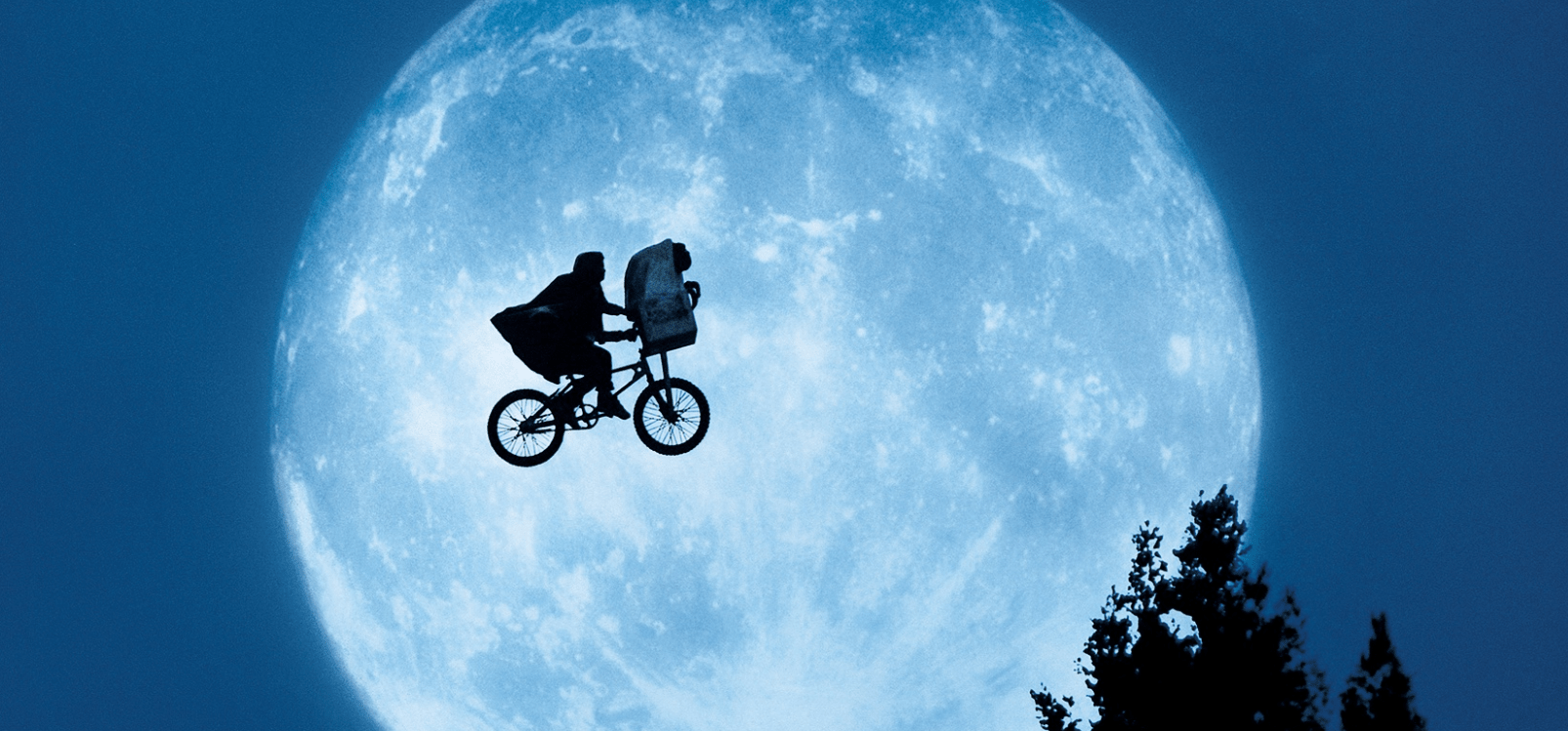
A Day in Astronomy: Birth of Steven Spielberg

Image (Credit): Scene from the film E.T. the Extra-Terrestrial. (Universal Studios)

On this day in 1946, Steven Spielberg was born in Cincinnati, Ohio. The American film director is best known for his many science fiction films, such as Jaws as well as the Indiana Jones and Jurassic Park series. However, he has a special place in the hearts of space fans for his other films, including:

  • Close Encounters of the Third Kind (1977);
  • E.T. the Extra-Terrestrial (1982); and
  • War of the Worlds (2005).

You may wonder what he plans to work on next. So does he. In a Deadline interview earlier this year, Mr. Spielberg stated this when asked about his next project:

It’s kind of a nice feeling. And it’s also a horrible feeling. It’s nice that I can actually have control of my life again and makes my own choices in my real life. But I need to work and I love to work and that’s the biggest question I’m going to have with the rest of the year trying to figure this out.

Let’s hope he considers something space-related again.

Movie: Dune, Part Two Not Due Until Next Year

Image (Credit): Scene from Dune, Part Two. (Warner Bros. Pictures)

I had been posting the planned November 3, 2023 date for the premiere of the film Dune, Part Two, but the movie has had some issues and it is not planned for March 15, 2024. Yes, I know, it’s a big disappointment.

Many of you probably already know this. I guess I haven’t been watching the press on this one because Variety magazine and others reported on the delay back in August, attributing it to the writer’s strike.

The last official trailer from Warner Bros. Pictures was three months ago, but it is worth watching again if only to prepare for what is to come (you can see a variety of other more recent trailers floating around from various parties, such as this one from Screen Culture).

I am glad the second film is coming, regardless of the delay. I will just have to re-watch the first part a few more times to get ready for the big battle.

Movie: A Million Miles Away

Credit: Amazon Prime

I recently watched the movie A Million Miles Away after experiencing a summer with no blockbuster films addressing anything interesting related to space travel or alien life. I was happy that this new movie (available on Amazon Prime last month) addressed both, but the “alien” life related to migrant farmers seeking a better life in America.

You will quickly become hooked on the dreams of future astronaut José Hernández as he winds a narrow path to become a NASA flight engineer. You can see a clip of the film here.

The first hour of the film covers the story of his youth, education, and start of a family. After that, you are with him as he is tested by NASA trainers in a way that few of us can imagine. His story intertwines with the Shuttle Columbia disaster, which add another interesting and somber layer to his story.

The film is later interlaced with images of the actors and real persons, including images of José Hernández as he worked on the International Space Station.

Its a great story for the entire family. Yes, it is old story about following your dreams, but it also shows what other may sacrifice along the way to make the dreams of a child or spouse possible.

Rotten Tomatoes shows an Audience Score of 96 percent. I agree with the audience on this one.

Image (Credit): Astronaut José Hernández. (NASA)

RIP: Marilyn Lovell, Wife of Apollo 13 Commander

Image (Credit): Astronaut James Lovell and Marilyn Lovell at a 1969 news conference. (Paul Shane/AP)

Marilyn Lovell died on August 27th in Lake Forest, Illinois at the age of 93. She is the wife of astronaut James A. Lovell Jr., who commanded the troubled Apollo 13 mission. You can read her full obituary at the Washington Post site.

I just wanted to highlight one interesting piece from the obituary. It relates to the Lovell’s viewing the 1969 film Marooned shortly before the 1970 Apollo 13 crisis. The film, starring Gregory Peck and Gene Hackman, was a fictional account of three astronauts in a capsule facing possible destruction after a rocket failure. A short time later her husband would be one of the three astronauts facing a real crisis in a crippled capsule, while she worried below.

They say life is stranger than fiction. Luckily, Apollo 13 ended better for the crew. You way want to check out this trailer for Marooned and even rent it one of these days.

As for Marilyn Lovell, she led an amazing life here on Earth with her husband (now 95) and large family.

Rest in peace.

Podcast: Should We Be Talking to the Stars (or Exoplanets, to be More Precise)?

I recommend you tune into another episode from The Planetary Society’s podcast Planetary Radio. In the episode, Space Policy Edition: The Policy Implications of Active SETI, we hear a discussion about the advantages and disadvantages of an active SETI program, and whether we can even cease outreach to the neighboring systems given what has already been transmitted and the nature of our world today.

The guest on the episode is Jacob Haqq Misra, Senior Research Investigator at the Blue Marble Space Institute of Science. He is the author of a new book, Sovereign Mars: Transforming Our Values Through Space Settlement, though his main points related to our SETI program.

For instance, whether or not people support an active or passive SETI program often depends on whether we believe in benevolent or destructive aliens. Of course, the matter is unknowable until it happens, yet fraught with fears based on what we know about ourselves and our own exploration.

The discussion also discussed the presentation of SETI in films, such as Contact, as well as the definition of intelligence itself, be it whales (remember Star Trek IV: The Voyage Home?) or even ChatGPT. And we are already past the point of turning off our “active outreach” given that interested aliens are probably looking for both bio-signatures and techno-signatures, which we are creating without any thought. Astronomers are currently searching for such signatures among the exoplanets, so it would make sense the same type of search is being focused on our solar system.

Plenty of food for thought. Enjoy the show.

Credit: University Press of Kansas