Rocket Launches: Good and Bad News for Lunar Launches

Image (Credit): Chandrayaan-3 launch on July 14, 2023. (Aijaz Rahi/AP)

First, the good news is that India successfully launched a rocket to the Moon last Friday. The Chandrayaan-3 mission, or “moon craft,” includes an orbiter as well as a rover that will explore the southern pole of the Moon. This is India’s second attempt to land on the lunar surface after a failed attempt back in 2019.

The Indian rover is expected to land on the Moon on August 23rd. You can read more about the mission on the Indian government’s mission page.

The other rocket news involves a setback with the United Launch Alliance’s (ULA) new heavy-lift rocket. The launch of the new rocket, the Vulcan Centaur, was delayed until later this year after it was determined that “minor reinforcements” were still needed with the rocket’s upper stage. The upper stage failed back in March.

The Vulcan Centaur is the successor to ULA’s Atlas V and Delta IV rockets. It’s planned first launch includes Astrobotic’s Peregrine Lunar Lander (shown below). NASA notes that the lander’s scientific objectives for the upcoming Moon mission include:

…to study the lunar exosphere, thermal properties and hydrogen abundance of the lunar regolith, magnetic fields, and the radiation environment. It will also test advanced solar arrays. 
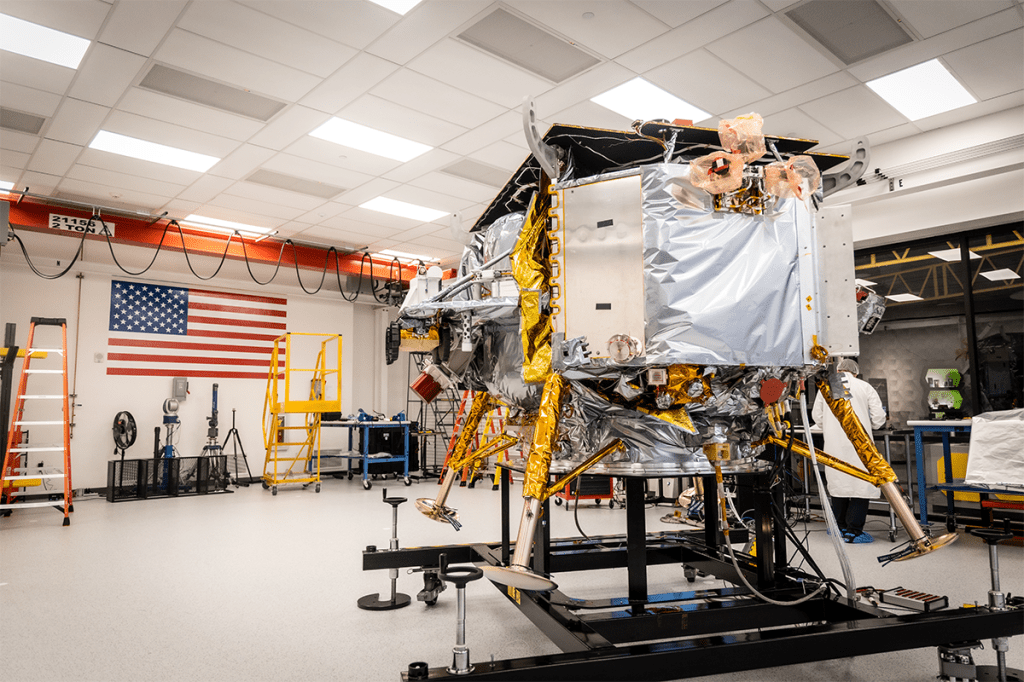
Image (Credit): Newly assembled Peregrine lunar lander being readied for its journey to Florida for integration with the Vulcan Centaur. (Astrobiotic)

Study Findings: Diverse Organic-mineral Associations in Jezero Crater, Mars

Image (Credit): NASA’s Mars Perseverance rover selfie with its Ingenuity helicopter in the background. (NASA/JPL-Caltech/MSSS)

Nature abstract of the study findings:

The presence and distribution of preserved organic matter on the surface of Mars can provide key information about the Martian carbon cycle and the potential of the planet to host life throughout its history. Several types of organic molecules have been previously detected in Martian meteorites and at Gale crater, Mars. Evaluating the diversity and detectability of organic matter elsewhere on Mars is important for understanding the extent and diversity of Martian surface processes and the potential availability of carbon sources. Here we report the detection of Raman and fluorescence spectra consistent with several species of aromatic organic molecules in the Máaz and Séítah formations within the Crater Floor sequences of Jezero crater, Mars. We report specific fluorescence-mineral associations consistent with many classes of organic molecules occurring in different spatial patterns within these compositionally distinct formations, potentially indicating different fates of carbon across environments. Our findings suggest there may be a diversity of aromatic molecules prevalent on the Martian surface, and these materials persist despite exposure to surface conditions. These potential organic molecules are largely found within minerals linked to aqueous processes, indicating that these processes may have had a key role in organic synthesis, transport or preservation.

Citation: Sharma, S., Roppel, R.D., Murphy, A.E. et al. Diverse organic-mineral associations in Jezero crater, Mars. Nature (2023).
https://doi.org/10.1038/s41586-023-06143-z

Study-related stories:

A Day in Astronomy: The Anniversary of JWST

Tomorrow, July 12th, is the first anniversary of the James Webb Space Telescope (JWST). As a result, NASA has a few events planned that you may want to attend.

Here is the schedule from NASA:

  • 6 a.m.: Release of a new Webb image online
  • 6 a.m.: Live interview opportunities begin
    • Webb mission experts will be available to conduct live, remote interviews with broadcast media, in both English and Spanish. Details about scheduling these interviews are available online. Webb experts also are available for interviews outside of this window upon request.
  • 4 p.m.: NASA Science Live online
    • Two Webb experts will be featured on a NASA Science Live episode, discussing how Webb has made an impact in its first year on exploring the distant universe, characterizing exoplanet atmospheres, and understanding the solar system. The show will air live on the NASA Science Live website, as well as YouTubeFacebook, and Twitter. Viewers of this episode can submit questions on social media using the hashtag #UnfoldtheUniverse or by leaving a comment in the chat section of the Facebook or YouTube stream.

Space Stories: Ingenuity Mars Helicopter is Back, Reclaiming More Water on the ISS, and Directly Imaging an Exoplanet

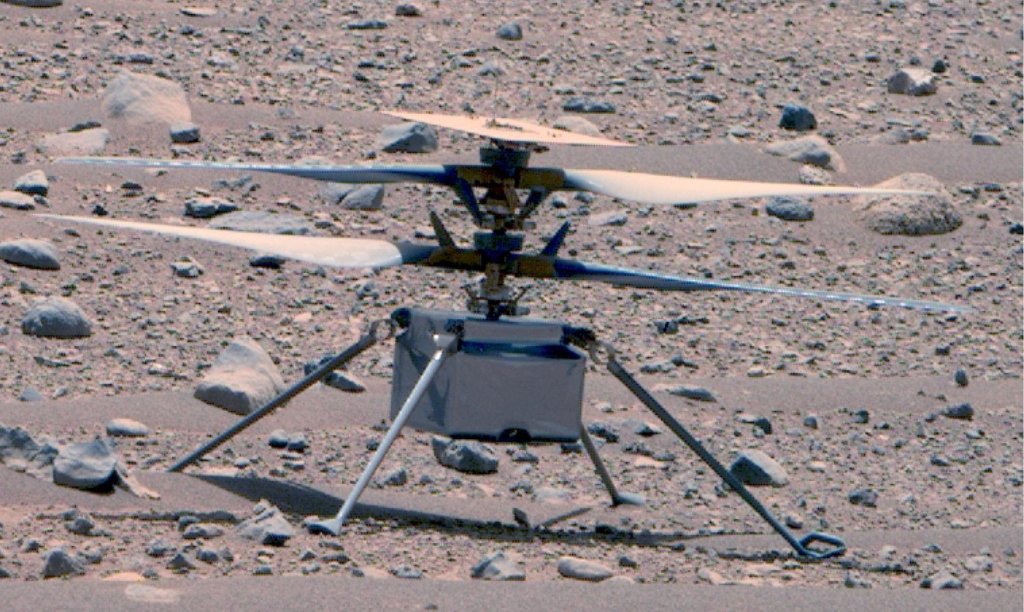
Image (Credit): NASA’s Ingenuity Mars Helicopter. (NASA/JPL-Caltech/ASU/MSSS)

Here are some recent stories of interest.

NASA: “NASA’s Ingenuity Mars Helicopter Phones Home

The 52nd flight of NASA’s Ingenuity Mars Helicopter is now in the official mission logbook as a success. The flight took place back on April 26, but mission controllers at NASA’s Jet Propulsion Laboratory in Southern California lost contact with the helicopter as it descended toward the surface for landing. The Ingenuity team expected the communications dropout because a hill stood between the helicopter’s landing location and the Perseverance rover’s position, blocking communication between the two. 

Phys.org: “NASA Achieves Water Recovery Milestone on International Space Station

Astronauts on interplanetary missions will be a bit less thirsty after a new NASA system succeeded at reclaiming 98% of waste water aboard the International Space Station (ISS) by converting things like urine into a drinkable state. Future crewed deep space missions that will last months or even years will be very different from any that have come before. Until now, astronauts have either carried their own supplies along or relied on regular visits from cargo ships. As to waste products, these were simply disposed of in a variety of ways. Unfortunately, deep space missions don’t have that luxury.

SCI.News: “Astronomers Directly Image Jupiter-Like Exoplanet around Nearby Young Star

AF Leporis is a bright F8V star located about 87.5 light-years away from Earth in the constellation of Lepus. Also known as AF Lep, HD 35850, HIP 25486 and HR 1817, the star has an age of 24 million years and a mass of 1.2 solar masses. The star hosts a young exoplanet, AF Leporis b (AF Lep b), which is located about 8 times the Earth-Sun distance and is among the first ever discovered using a technique called astrometry. This method measures the subtle movements of a host star over many years to help astronomers determine whether hard-to-see orbiting companions, including planets, are gravitationally tugging at it.

Space Quote: NASA’s Mars Simulator Has Long-term Guests

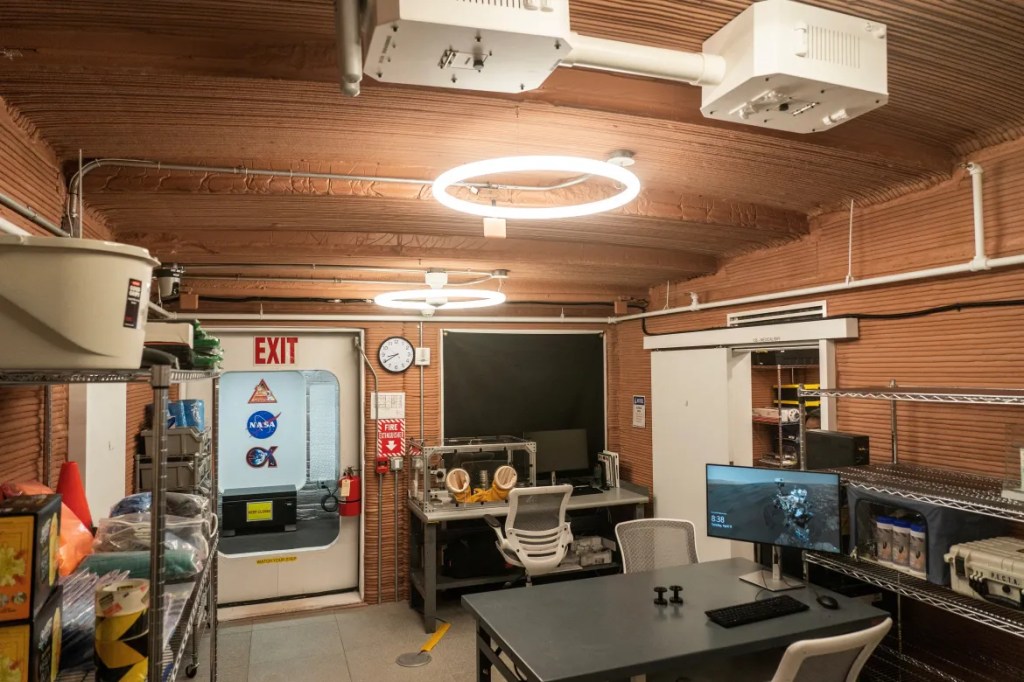
Image (Credit): Interior of NASA’s Mars Simulator, the Mars Dune Alpha. (NASA)

“They are about to embark on an analog mission that encompasses operations, logistics, and research of living and working on Mars. The importance of this study cannot be overstated…NASA scientists will learn critical insights on the physical and behavioral aspects of a mission on Mars.”

-Statement by Judith Hayes, NASA’s Chief Science Officer in the Human Health and Performance Directorate, as quoted in Universe Today. The four member “crew” entered the simulator last week and will live in the 1,700 square foot facility for the next year. The year-long mission is one of three planned by NASA at the Johnson Space Center in Texas.