NASA Claims U.S. in a Space Race with China, Again

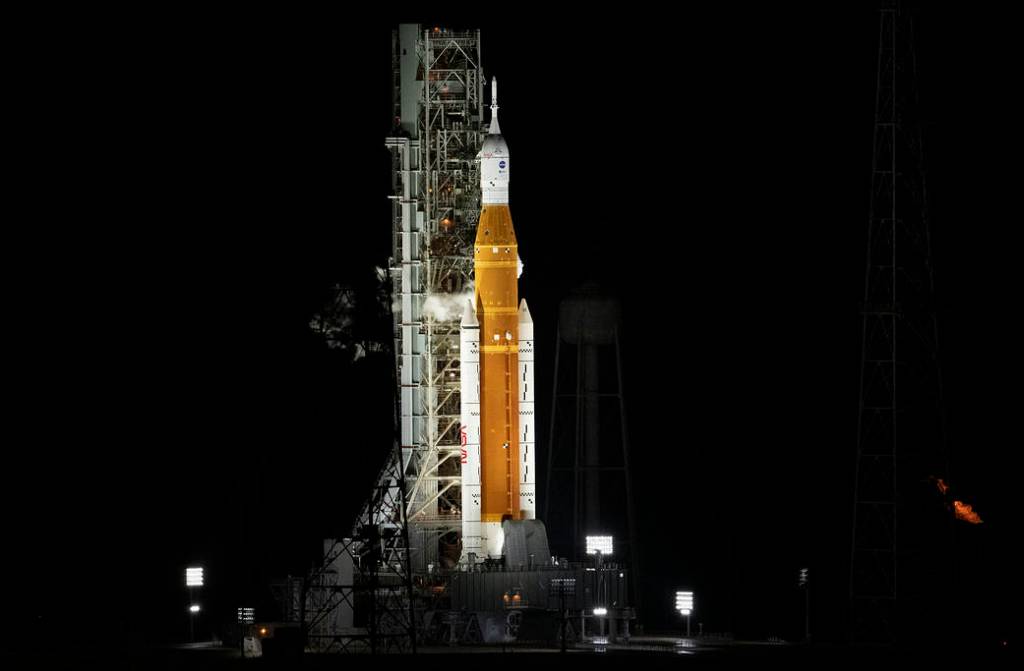
Image (Credit): The Space Launch System (SLS) rocket with the Orion spacecraft aboard is seen atop the mobile launcher at Launch Pad 39B, Monday, August 29, 2022. (NASA)

A recent Politico interview with NASA Administrator Bill Nelson covered old ground about the Chinese taking possession of the Moon and yet seemed to get some media play in the quiet post-holiday period. As I said, it is nothing new (see this earlier news clip) nor should it be a surprise. Yes, the U.S. is in a space race again, and it is a good thing. We needed the pressure in the 1960s and apparently we need it again today, 50 years after the last man stepped on the lunar surface.

For some reason, Administrator Nelson has a thousand excuses for why the Chinese may get to the Moon first – the Orion capsule from Artemis I needs to be reused for Artemis II (which should be seen as a good thing, at least by those that want to reduce costs and increase efficiencies), the space suits may not be ready, SpaceX may need more time, and on and on. Get a grip, man!

And then the Administrator has this comment regarding Chinese behavior: “If you doubt that, look at what they did with the Spratly Islands.” That is not the only model available. One only needs to look the Outer Space Treaty to see that China and others have agreed not to make claims on the Moon. Another treaty worth viewing is the Antarctic Treaty that relates to real exploration on a cold, distant body. About 50 permanent active research stations representing 32 countries are already conducting science on Antarctica without issue. China, the U.S., Russia and others have shown that they can play well together.

So maybe we need less chest-pounding and more attention to the Artemis project at hand. The U.S. dropped the ball 50 years ago. It seems a little silly to get all upset now when other nations have shown an interest all these years later.

Image: Emblem represents the Antarctic Treaty System.

A Day in Astronomy: Birth of Astronomer Johannes Kepler

Credit: NASA

It was on December 27, 1571 that German astronomer, mathematician, and astrologer Johannes Kepler was born in the Free Imperial City of Weil der Stadt. He is best remembered for his laws of planetary motion, though he had many discoveries, including:

  • The first to formulate eyeglass designing for nearsightedness and farsightedness;
  • The first to explain the principles of how a telescope works;
  • The first to develop integral calculus;
  • The first to explain that the tides are caused by the Moon; and
  • The first to derive the birth year of Christ (a date that is now universally accepted).

Kepler’s name is also attached to a NASA space telescope launched into space in 2009 that was designed to detect exoplanets, which it did with great success. Thanks to the Kepler Space Telescope, we now know that planets are common throughout the galaxy, including Earth-sized planets. As of today, NASA reports there are 5,235 confirmed exoplanets, and more than 9,000 are still being reviewed. However, using the small patch of sky studied by the Kepler telescope as a start, scientists now estimate the Milky Way may contain over 100 billion exoplanets.

Credit: NASA Exoplanet Exploration

Passengers on the “Uncrewed” Orion

Image (Credit): Orion Lego passengers. (NASA)

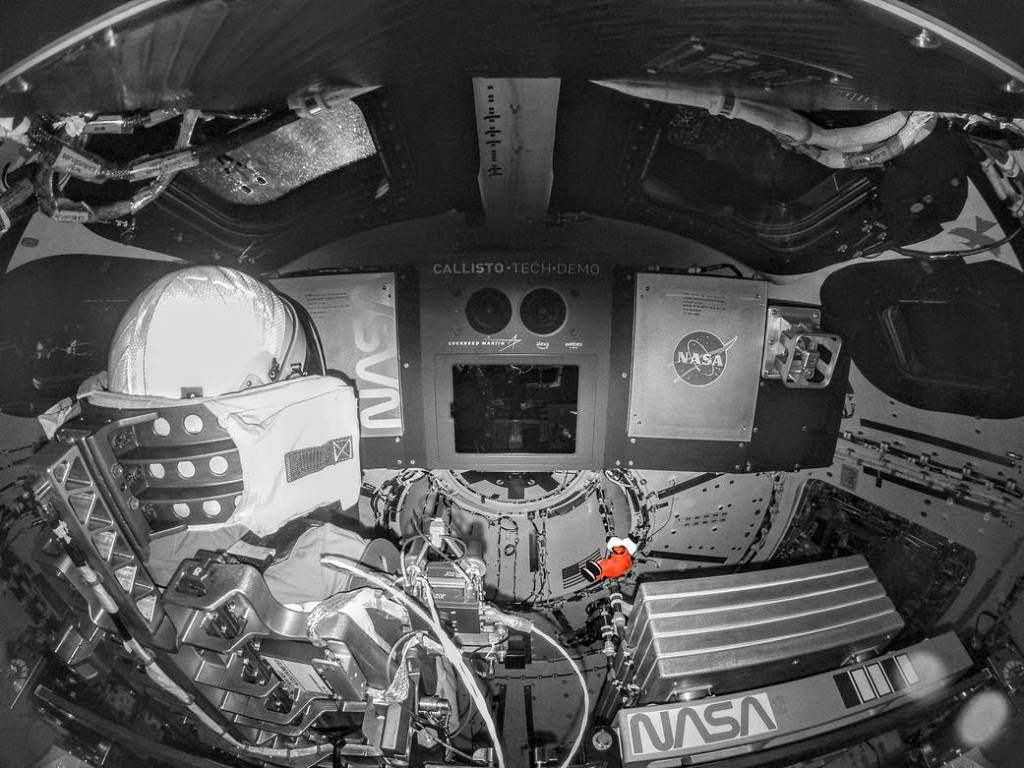
Much has been discussed about the test dummies used on the Orion capsule during the recent Artemis I mission. And stories abound about the snoopy doll (show below) being the “zero-gravity” indicator on the Orion. But have you heard about the four Danish passengers on the capsule?

The Danish company Lego had four toy astronauts on the Orion capsule as well – Kate, Kyle, Julia, and Sebastian. It’s part of an educational series for children. NASA and Lego have been educational partners for a while now.

Are these the first toys in Space? Absolutely not. For instance, space shuttle astronauts have brought a teddy bear and Star Wars light saber into into orbit, among other things. And last year a SpaceX capsule sent to the International Space Station contained a stuffed penguin, which was also used as a “zeroed-gravity” indicator.

I support any endeavors to excite children about the space program. Soon enough we will see what else the Artemis program might have in store for children as well as the kids at heart.

Image (Credit): Snoopy doll floating on the Orion (color adjusted to highlight Snoopy). (NASA)

The Space Station Needs a New Life Raft

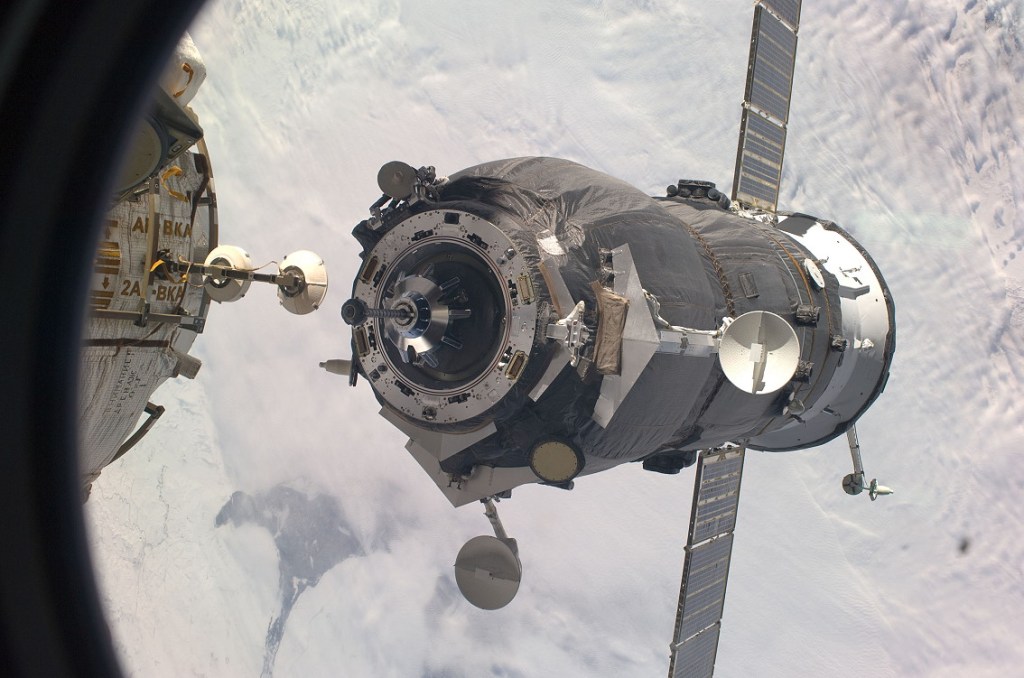
Image (Credit): Russian Soyuz capsule outside the International Space Station. (Spacefacts.de)

Fortunately, we now know the source of the leak in the extra Soyuz Crew Return Vehicle attached to the International Space Station (ISS). However, we do not know the cause of this radiator coolant leak, which creates risk should the capsule be used early next year to bring two cosmonauts and an astronaut back to Earth. Hence, it may be better to bring another capsule up to the ISS for the change in crew and send the damaged one back empty for repairs.

The ISS doesn’t technically have an escape pod. Instead, a Crew Return Vehicle more or less serves this purpose. It has been used more than once to host astronauts and cosmonauts fleeing space junk, so maybe it’s time to think over these procedures again. You would think a $100 billion orbiting space station could ensure the survival of its passengers.

A Day in Astronomy: The Last Lunar Footprint

Image (Credit): Official emblem of the Apollo 17 lunar landing mission. (NASA)

On this day in 1972, Apollo 17 commander Eugene Cernan was the last human to be on the Moon. He was the eleventh human to ever step on the Moon.

Here is the full crew of Apollo 17:

  • Eugene A. Cernan, Commander
  • Harrison H. Schmitt, Lunar Module Pilot
  • Ronald E. Evans, Command Module Pilot

Mr. Cernan, who passed away in 2017, was also part of the Apollo 10 mission that orbited the moon without landing (similar to the upcoming Artemis II mission).

With the successful orbit of the Orion spacecraft around the Moon this month, let’s hope the 50 year dryspell is finally over and the United States can again be the nation putting humans back on the lunar surface. Of course, we will be followed by others, including the Chinese. Yet it’s important the first space-faring nation get back in the game and restart the human exploration of the Moon, and then Mars soon thereafter.