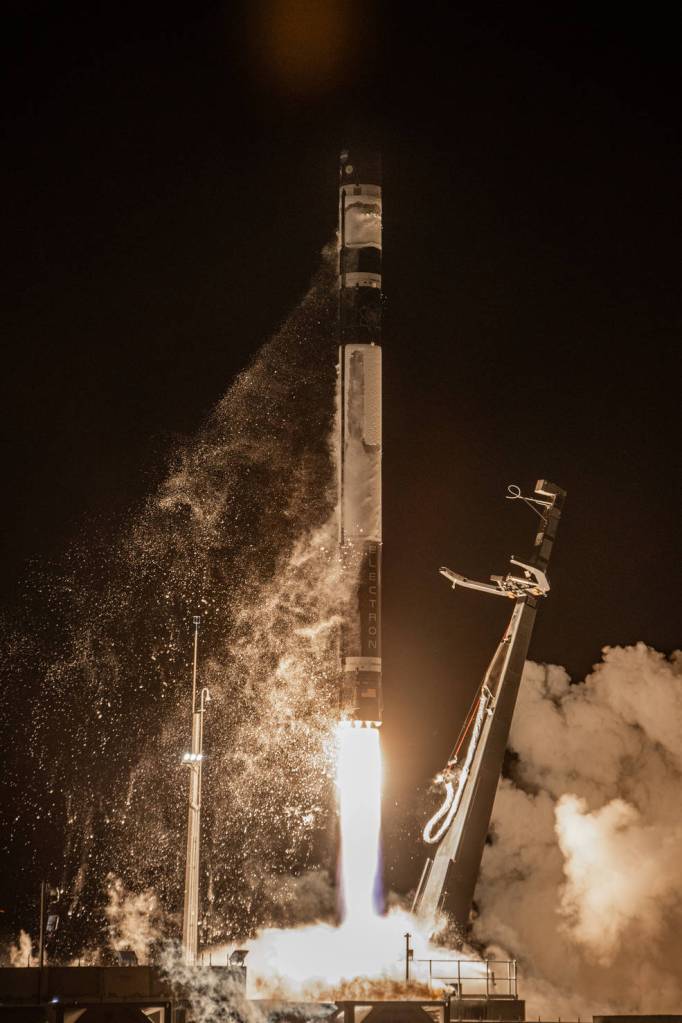
One of the Artemis Rocket Launches

Image (Credit): June 28th launch of CAPSTONE aboard Rocket Lab’s Electron rocket from the Rocket Lab Launch Complex 1 on the Mahia Peninsula of New Zealand. (Rocket Lab)

While we are awaiting the launch of the uncrewed Artemis phase-one rocket later this summer to test the waters for a crewed mission, other related missions are ongoing. NASA’s Cislunar Autonomous Positioning System Technology Operations and Navigation Experiment (CAPSTONE) was launched earlier in the week from New Zealand and will take about four months before it orbits the Moon for another six months. The miniaturized satellite, or CubeSat, is designed to test the future lunar orbit of Gateway, a lunar space station being planned by NASA and its commercial and international partners to support NASA’s Artemis program, including astronaut missions.

Here are CAPSTONE’s mission objectives:

  • Verify the characteristics of a cis-lunar near rectilinear halo orbit for future spacecraft;
  • Demonstrate entering and maintaining this unique orbit that provides a highly-efficient path to the Moon’s surface and back;
  • Demonstrate spacecraft-to-spacecraft navigation services that allow future spacecraft to determine their location relative to the Moon without relying exclusively on tracking from Earth;
  • Lay a foundation for commercial support of future lunar operations; and
  • Gain experience with small dedicated launches of CubeSats beyond low-Earth orbit, to the Moon, and beyond.

In a press release, Elwood Agasid, project manager for CAPSTONE at NASA’s Ames Research Center in California’s Silicon Valley, stated:

CAPSTONE is a pathfinder in many ways, and it will demonstrate several technology capabilities during its mission timeframe while navigating a never-before-flown orbit around the Moon…CAPSTONE is laying a foundation for Artemis, Gateway, and commercial support for future lunar operations.

We forget about all of the smaller missions (literally, in this case) that make the full mission possible. CAPSTONE is a key mission to test some ideas and reduce risk for future astronauts.

Image (Credit): Artist’s impression of CAPSTONE in orbit near the Moon. (Illustration by NASA/Daniel Rutter)

A Day in Astronomy: Cassini Orbits Saturn

Image (Credit): On July 29, 2011, Cassini captured five of Saturn’s moons in a single frame with its narrow-angle camera. This is a full-color look at a view that was originally published in September 2011. Moons visible in this view: Janus is on the far left; Pandora orbits just beyond the thin F ring near the center of the image; brightly reflective Enceladus appears above center; Saturn’s second largest moon, Rhea, is bisected by the right edge of the image; and the smaller moon Mimas is seen just to the left of Rhea.. (NASA/JPL-Caltech/Space Science Institute)

On this day 2004, the Cassini spacecraft entered the orbit of Saturn. A collaboration of NASA, the European Space Agency (ESA), and the Italian Space Agency, the mission containing NASA’s Cassini space probe and ESA’s Huygens probe was launched in October 15, 1997. Cassini remained in orbit around Saturn from 2004 to 2007. The Cassini spacecraft spent 20 years in space – 13 of them exploring Saturn and its moons.

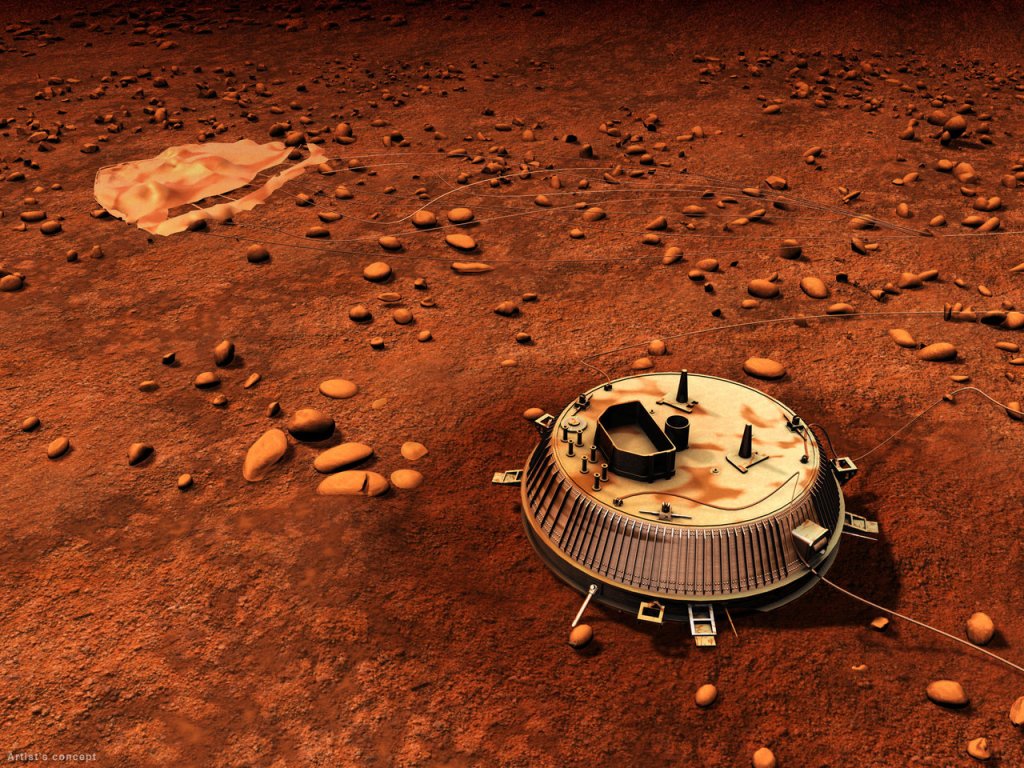
The ESA’s Huygen’s probe entered the atmosphere of Saturn’s largest moon Titan on January 14, 2005 to study the moon’s smog-like atmosphere and take pictures from the surface. The probe was not designed to survive past landing, though it was able to take photos for about three hours before it died. You can watch the probe enter Titan’s atmosphere in this video from ESA.

Image (Credit): An artist’s concept of the Huygens probe on Titan. (NASA)

Space Quote: Early View of the Cosmos

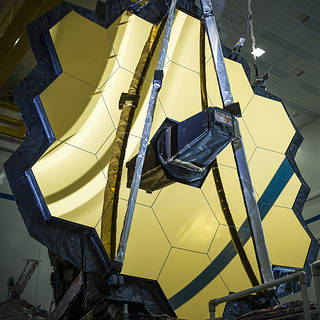
Image (Credit): James Webb Space Telescope mirrors. (NASA)

“It’s really hard to not look at the universe in a new light and not just have a moment that is deeply personal…It’s an emotional moment when you see nature suddenly releasing some of its secrets, and I would like you to imagine and look forward to that.”

-Statement by Thomas Zurbuchen, who leads NASA’s scientific programs, regarding the James Webb Space Telescope’s early images, which should be released to the public on July 12, 2022. He was quoted in an Arstechnica story, “NASA Scientists Say Images from the Webb Telescope Nearly Brought Them to Tears.”

Help Wanted to Sift Through Martian Clouds

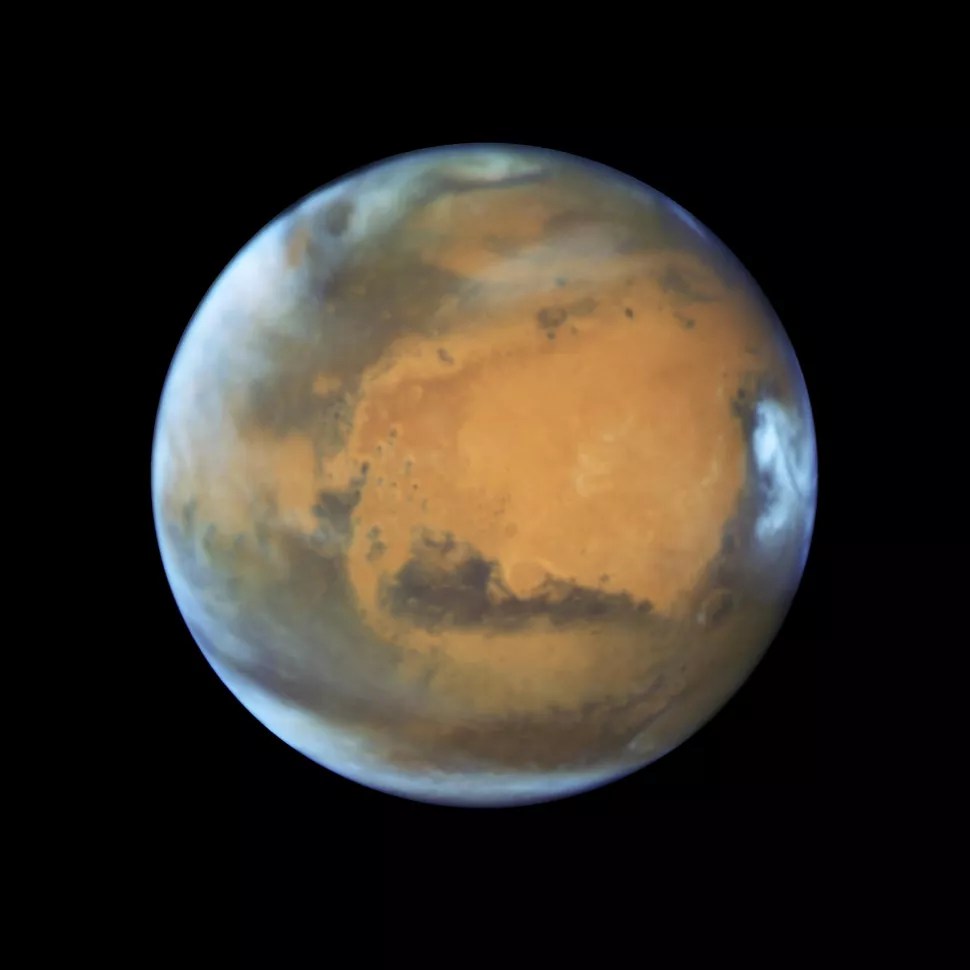
Image (Credit): Hubble space telescope image of the icy blue clouds swirling over the Martian mountain Syrtis Major (far right). (NASA Goddard)

NASA is looking for assistance to answer a few questions about Martian clouds:

  1. What causes the atmosphere to get cold enough for carbon-dioxide to freeze out?
  2. How do clouds change from day to night, or during different seasons, or in some years more than others?
  3. What are the clouds made of?

You can help by searching through data acquired by the Mars Climate Sounder (MCS) on the Mars Reconnaissance Orbiter (MRO) collected during Mars Year 29, which was from December 2007 to October 2009. Using an entire Martian year of identified clouds will allow NASA to determine how mesospheric clouds change during different seasons on Mars, and assist with future machine-learning algorithms for other years’ worth of data.

Visit the Cloudspotting on Mars website to learn more about how you can help. It’s a fun way to be part of the scientific community as it gains a greater understanding of the one planet in the solar system we hope to visit in person in the near future.

New Double Crater on the Moon

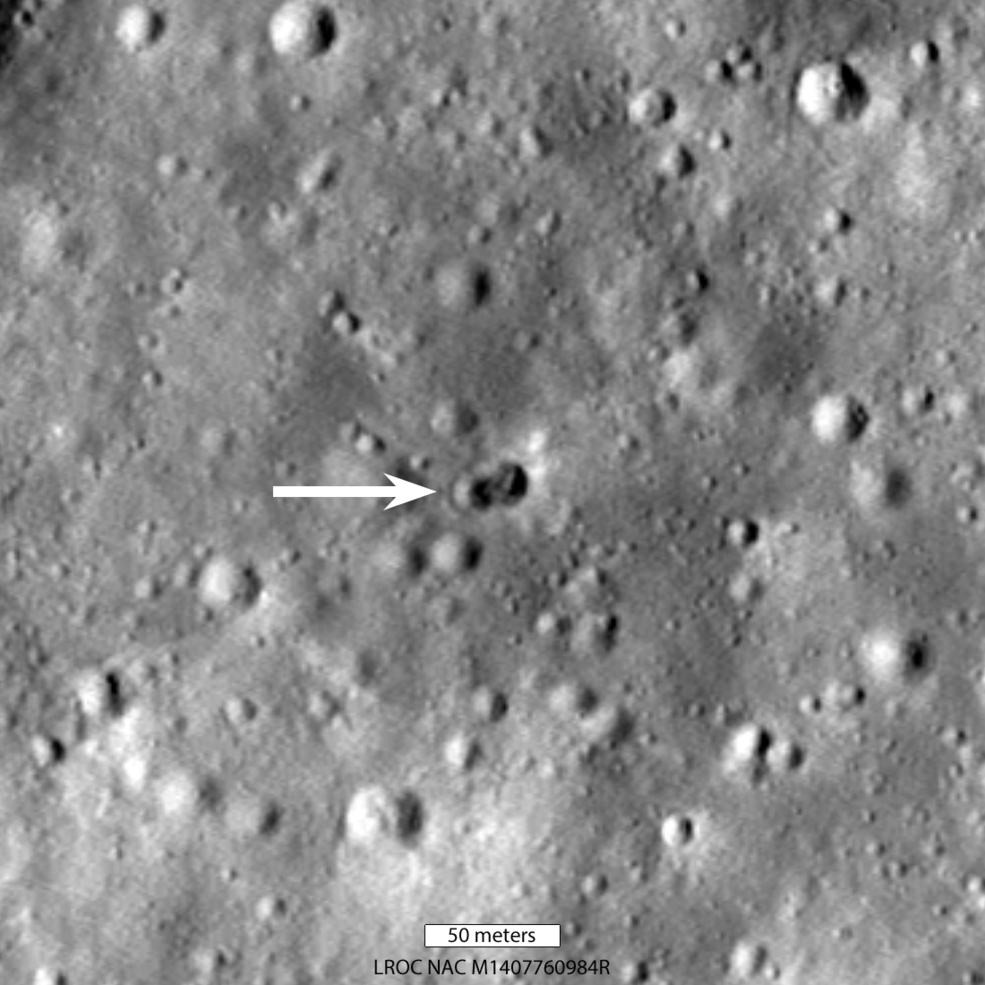
Image (Credit): Double crater from a rocket body that impacted the Moon on March 4, 2022, near Hertzsprung crater. (NASA/Goddard/Arizona State University)

Remember all of the chatter earlier this year about whether a SpaceX or Chinese rocket booster was about read to hit the Moon? Well, NASA’s Lunar Reconnaissance Orbiter recently located the crater created by this object – a strange double crater. NASA reported it found an eastern crater (18-meter diameter, about 19.5 yards) superimposed on a western crater (16-meter diameter, about 17.5 yards).

While NASA has not seen double craters when other booster rockets hit the Moon’s surface (yes, it does happen occasionally), it tried to explain this one:

The double crater was unexpected and may indicate that the rocket body had large masses at each end. Typically a spent rocket has mass concentrated at the motor end; the rest of the rocket stage mainly consists of an empty fuel tank. Since the origin of the rocket body remains uncertain, the double nature of the crater may indicate its identity.

Now we just need to go back to Space X and the Chinese and ask a few more questions about the rocket booster in question. It is still doubtful we have an Elon Musk crater on the Moon. Time will tell.