Should We Name the Moon’s New Crater After Mr. Musk?

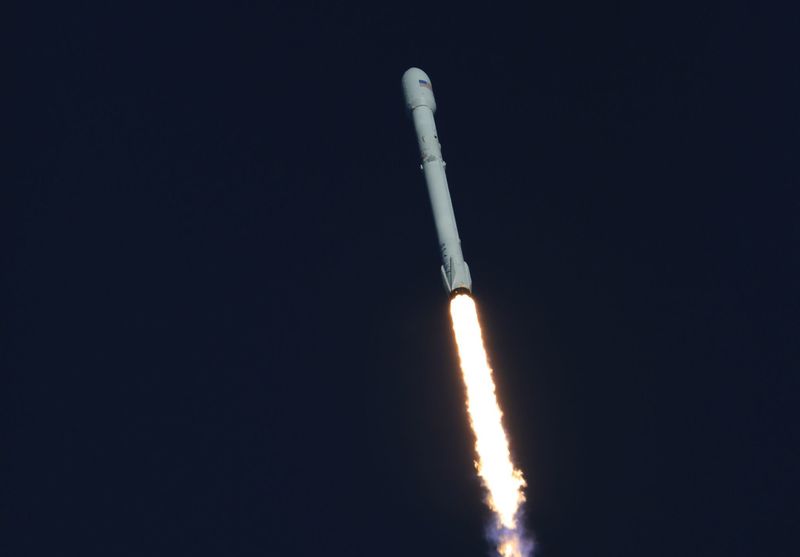
Source: SpaceX Rocket from NASA.

In the early days of March, a SpaceX rocket booster is expected to crash into the surface of the Moon just north of its equator. Part of a rocket launched in 2015, the booster has been floating around ever since.

In general, the Moon has not been used for trash storage beyond the lunar missions. Moreover, SpaceX likes to be known for landing its boosters back on Earth rather than sending them off into the wild blue (or black) yonder.

This could be an opportunity for SpaceX to claim it has created one of the first unintentional man-made craters on the Moon. The small crater could be known as the Musk Mini-Basin.

Luckily, Mr. Musk’s Tesla Roadster, launched in 2018, made it past the Moon with little incident (and then overshot Mars). We did not need an Elon Musk Parking Lot on the moon, yet the little red car would have been quite a sight for NASA’s Lunar Reconnaissance Orbiter (LRO).  
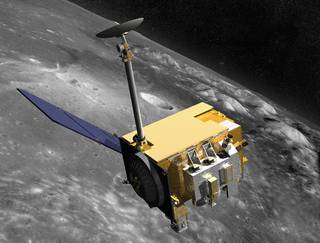
Source: LRO from NASA.

Extra: Visit this Sky & Telescope story for LRO images of the six Apollo landing sites on the Moon.

Update: Recent news indicates that the object about to hit the Moon is not a SpaceX rocket booster but rather a Chinese rocket part from the Long March 3C that launched the Chang’e 5-T1 lunar mission. I guess we will need to rethink the naming of that new crater.


Sidebar: Naming the James Webb Space Telescope

Source: James Webb Space Telescope from NASA.

Now that the James Webb Space Telescope (JWST) is settling in at its new location 1 million miles away, we will be hearing that name for at least a decade every time NASA has new findings related to distant planets. It is worth noting that some people are not so pleased with the spacecraft’s designated name.

A recent article in Scientific American magazine highlighted some resistance to allowing former NASA administrator James Webb’s name to be part of the new space telescope. In the article, “NASA Won’t Rename the James Webb Space Telescope—and Astronomers Are Angry,” we are told that more than 1,200 individuals, “including scientists,” signed a petition asking for a new name. The petition stated that Mr. Webb was in key government positions during a period when gay and lesbian federal employees were fired due to their sexual orientation.  NASA later reported it did not have any evidence to support such a name change and considered the matter closed.

I will admit that I liked the name Hubble for the space telescope being replaced by the JWST. It seemed appropriate to name the telescope after Edwin Hubble, who proved there were galaxies beyond our Milky Way. That is an impressive accomplishment, whereas Mr. Webb was a successful Washington bureaucrat. Maybe another scientist would have been more appropriate.

That said, getting space programs funded is no easy task, so even if they want to name a space telescope after a U.S. Senator I will not issue an objection if that senator can get the job done. And let’s remember that we do have many perfect people for naming rights. Even Edwin Hubble, for all of his great accomplishments, was under a cloud of suspicion regarding a questionable redaction of part of a translation of George’s Lemaître’s 1927 paper that first reported what is today know as Hubble’s Law. While Hubble was eventually cleared of any questionable deeds, had it been raised at the time NASA was naming the space telescope it could have become an issue.

You may recall that NASA has used other questionable names for its missions in the past. For example, the god Apollo has many misadventures involving innocent women. Just ask Cassandra. And Mercury was far from innocent. The pesky god was known for rape and even Pandora’s Box. For some reason, I do not believe any of the gods would pass the test today.

Source: “Pandora” by Charles Edward Perugini, 1839-1918.

NASA and MIT Found More Than 5,000 Exoplanet Candidates

Source: NASA’s TESS.

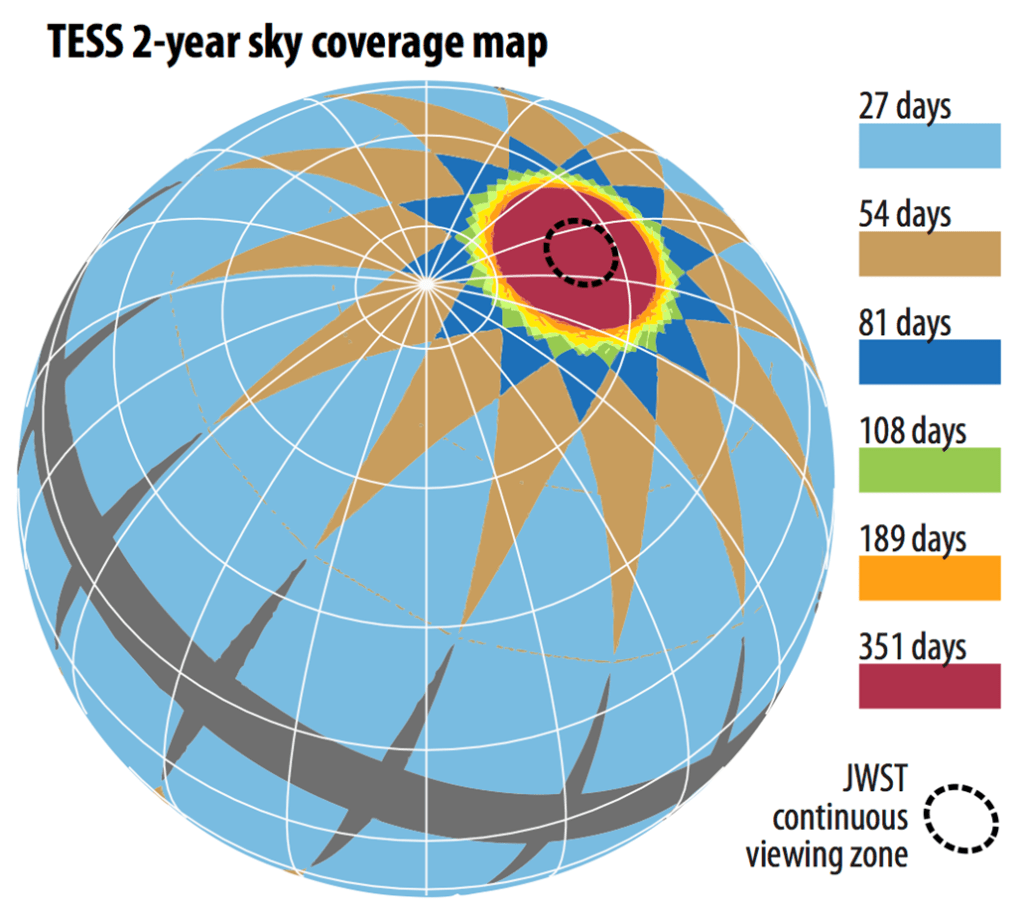
The volume of possible new worlds continues to expand with the work of the MIT-led NASA mission to observe the heavens for potential exoplanet candidates. Since 2018, the Transiting Exoplanet Survey Satellite (TESS) program has been monitoring stars for temporary drops in brightness caused by planetary transits (the mapping of the initial two years of viewing is provided above). With the addition of new candidates from July 2020 to June 2021, the count of potential exoplanets now exceeds 5,000. Potential candidates will be studied to learn more about their characteristics. TESS’s mission goal has been to discover 50 planets of size less than 4 Earth radii with measured masses.

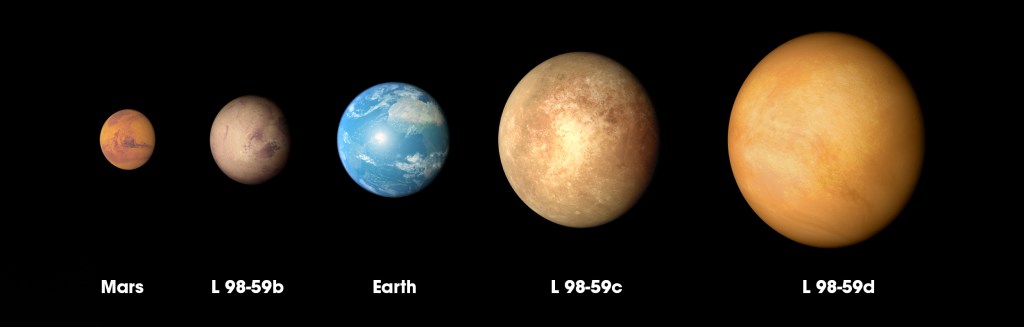
You can read more about some of TESS’s earlier exoplanet discoveries (shown below and here). For instance, L 98-59b is about 80 percent Earth’s size and orbits L 98-59, an M dwarf about one-third the mass of the Sun. L98-59 is about 35 light-years away. 

Source: NASA’s TESS.

NASA’s Travel Agency

Source: NASA’s Jet Propulsion Laboratory.

If you are getting tired of staying home these days, NASA has some fun destinations in mind for you. Late last year, NASA’s Jet Propulsion Laboratory (JPL) put together “Visions of the Future” to show you where the space agency hopes to go someday. You may not want to pack just yet, but whether it is this solar system or some other solar system, NASA wants to help.

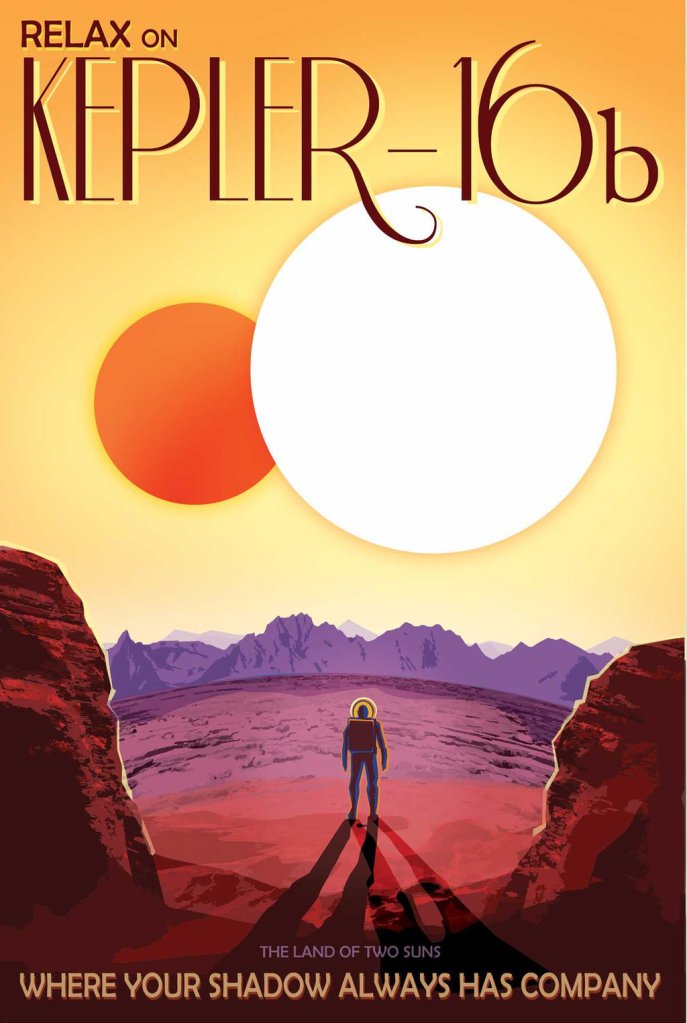
The poster above for Kepler-16b comes with this enticing description:

Like Luke Skywalker’s planet “Tatooine” in Star Wars, Kepler-16b orbits a pair of stars. Depicted here as a terrestrial planet, Kepler-16b might also be a gas giant like Saturn. Prospects for life on this unusual world aren’t good, as it has a temperature similar to that of dry ice. But the discovery indicates that the movie’s iconic double-sunset is anything but science fiction.

You might also enjoy this NASA video showing some space activities in these prime locations.

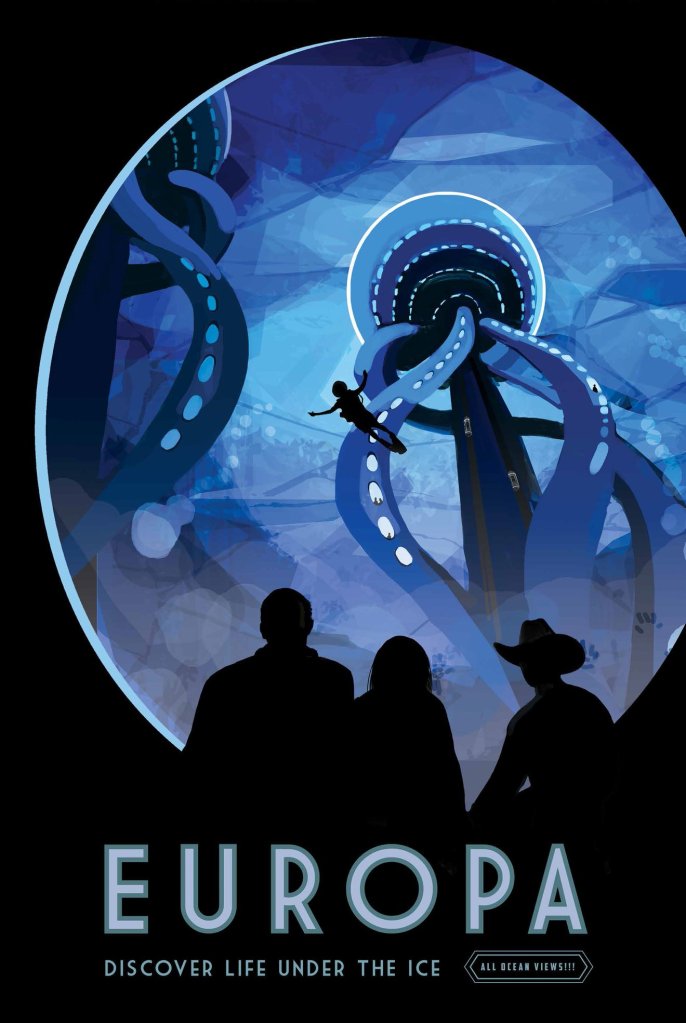
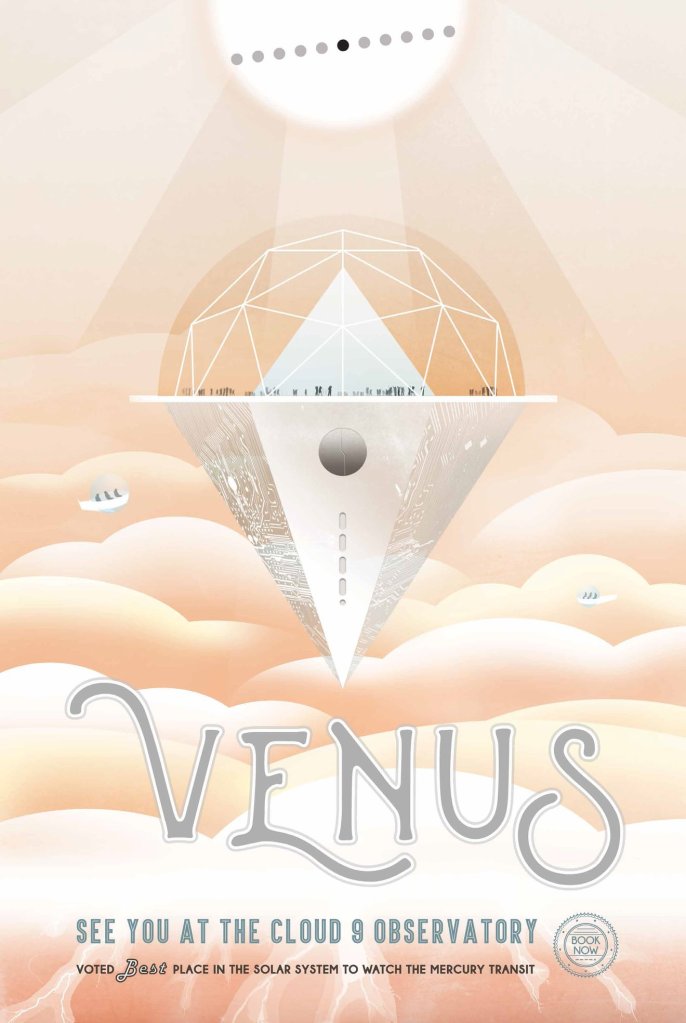
I dropped in a few more posters below, but be sure to check out all of them. A big thanks also to the folks at JPL for these fun images. The 14 posters were created by nine artists, designers, and illustrators.

Of course, these free photos are already being sold on Etsy.com and elsewhere as posters and t-shirts.

Source: NASA’s Jet Propulsion Laboratory.