Nixon and the Space Shuttle

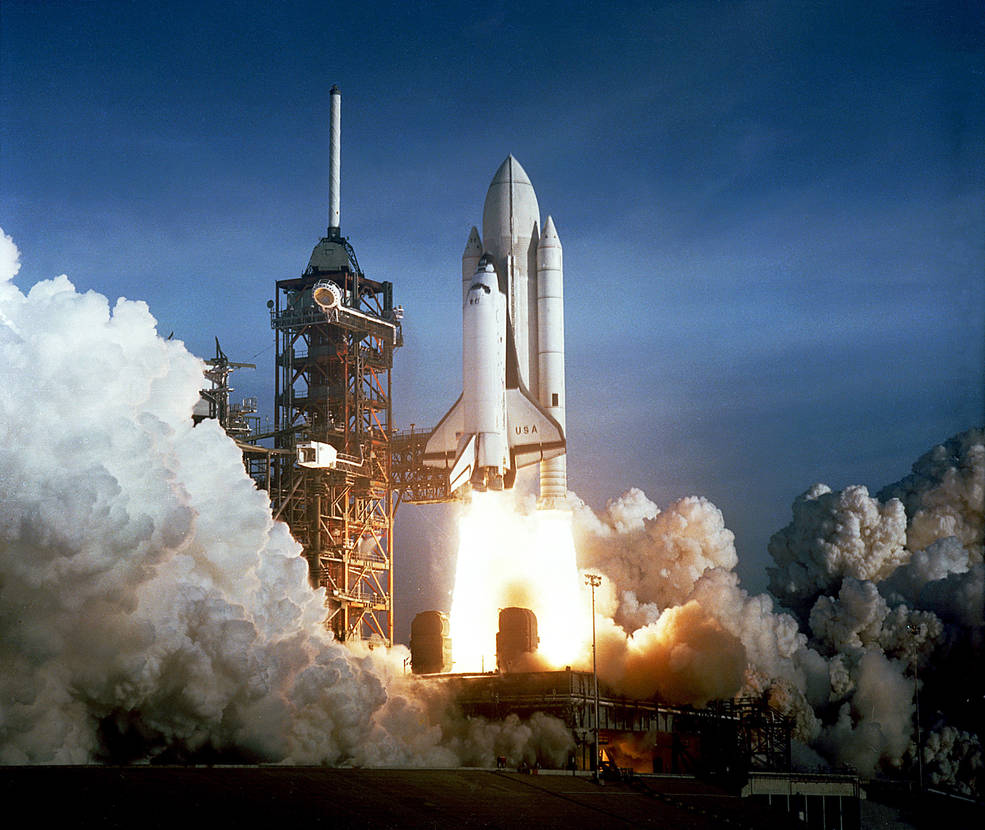
Source: NASA imagine showing Space shuttle Columbia lifting off from Launch Pad 39A on April 12, 1981, to begin STS-1.

Earlier his week NASA highlighted the 50 year anniversary of President Nixon’s decision to initiate a space shuttle program to follow the success of the Apollo Moon missions. The story states:

In January 1972, he directed NASA to develop and build a reusable space transportation system, commonly known as the space shuttle. The reusability of the shuttle’s components was expected to provide regular access to space to many customers, while at the same time reducing costs.

The space shuttle was proposed by the National Aeronautics and Space Council, which also proposed a trip to Mars. The Council’s report states:

As a focus for the development of new capability, we recommend the United States accept the long-range option or goal of manned planetary exploration with a manned Mars mission before the end of this century as the first target.

While the space shuttle was eventually operational by 1981, we still await a clear timeline for a trip to Mars. NASA said it will start with a trip back to the Moon first. Let’s hope we do not need to wait another 50 years before a manned trip to Mars.
Top 10 Astronomy Stories from 2021

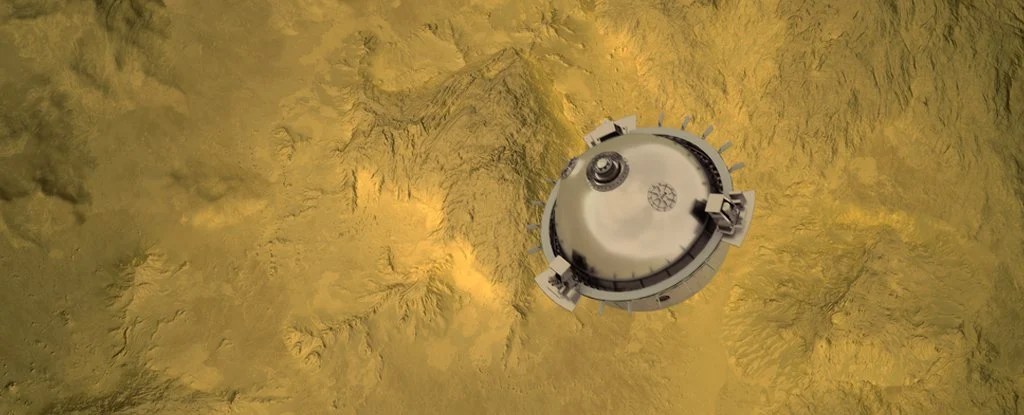
Source: Sciencealert.com webpage – “We’re Going Back to Venus! NASA Announces Two New Missions by 2030.”

Before we get too far into 2022, it is worth considering some of the top astronomy stories from 2021. Space.com put together a nice list that I highlighted below.

  1. Discovery of Comet Bernardinelli-Bernstein: “…It may be 10 times wider and 1,000 times more massive than a typical comet.”
  2. Amateur astronomer discovers a new moon around Jupiter: “The new moon, called EJc0061, belongs to the Carme group of Jovian moons.”
  3. NASA will return to Venus this decade: “…NASA has not launched a dedicated mission to the planet since 1989.”
  4. The sun is reawakening: “In early November, for instance, a series of solar outbursts triggered a large geomagnetic storm on our planet.”
  5. James Webb Space Telescope flies into space: “…JWST is heading to an observational perch located about a million miles from our planet.”
  6. Event Horizon Telescope takes high-resolution image of black hole jet: “The end result is a resolution that is 16 times sharper and an image that is 10 times more accurate than what was possible before.”
  7. Scientists spot the closest-known black hole to Earth: “Just 1,500 light-years from Earth…”
  8. Earth’s second ‘moon’ flies off into space: “…the object, known as 2020 SO, is a leftover fragment of a 1960s rocket booster from the American Surveyor moon missions.”
  9. Parker Solar Probe travels through the sun’s atmosphere: “The probe managed to get as low as 15 solar radii, or 8.1 million miles (13 million km) from the sun’s surface.”
  10. Perseverance begins studying rocks on Mars: “Perseverance is taking its observations from the 28-mile-wide (45 kilometers) Jezero Crater, which was home to a river delta and a deep lake billions of years ago.”

Visit the Space.com website for more details on each of these astronomy science stories.

Space Investments are No Guarantee

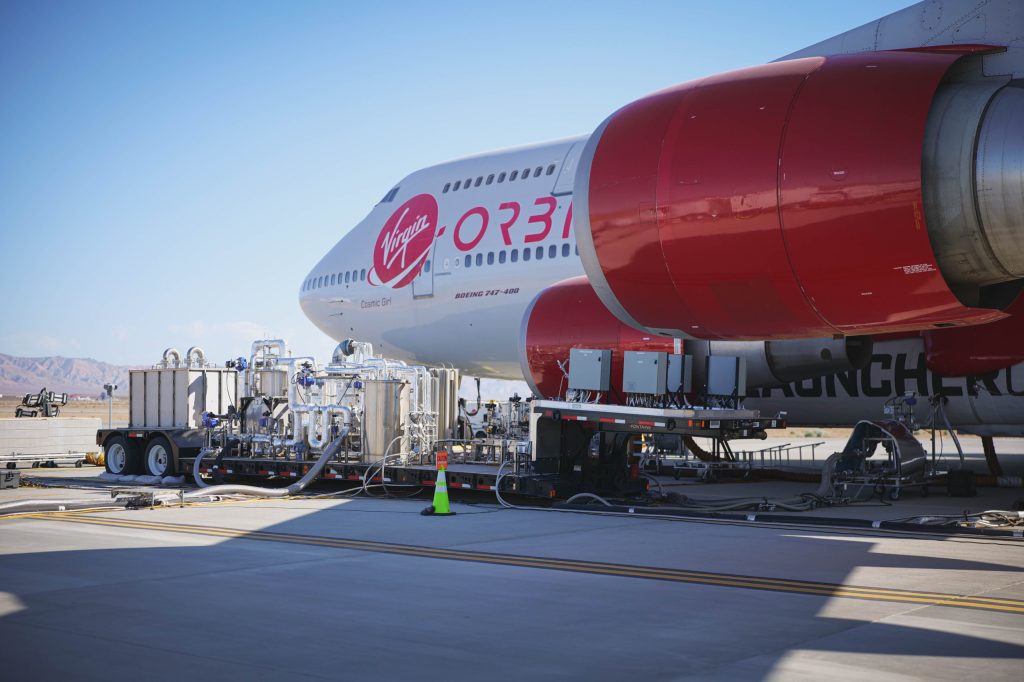
Source: Virgin Orbit.

The recent initial public offering for Virgin Orbit, a commercial space launch company that spun-off from Richard Branson’s Virgin Galactic, did not go as well as planned. IG International reported that Virgin Orbit had hoped to raise $483 million as part of the public offering, but only raised $228 million. Moreover, the stock is down about 20 percent.

Virgin Orbit has already had some successfully launches from its modified Boeing 747, but the space launch industry is getting crowded and risky.

In June 2021, Virgin Orbit’s Tubular Bells: Part One mission for the US Department of Defense placed seven satellites to Low Earth Orbit – four R&D CubeSats for the US Department of Defense, two optical satellites for SatRevolution, and the Royal Netherlands Air Force’s first military satellite.  You can learn more about the past and planned US Department of Defense and NASA launches here.

Source: Virgin Orbit.

Meteor Watch: Time to Look Up

Looking up may have been useless the other day in Pennsylvania because of the cloud cover, but shaking houses were evidence enough of a meteor exploding in the atmosphere. On New Year’s Day, the incoming meteor exploded over southwestern Pennsylvania with the force of 30 tons of TNT.

The Facebook page for the National Weather Service in Pittsburgh, PA explained the initial situation (image below):

We have been getting a lot of questions about a loud explosion that was heard over southwest Pennsylvania earlier today. Data from GOES-16 may provide a clue.

This image is a product of the satellite’s Geostationary Lightning Mapper function, showing Total Optical Energy (basically, a measure of flash intensity). You can see the flash showing up here in the area of western Washington County, PA at 16:22Z (11:22 EST). This flash does not appear to be connected to any lightning activity in the area. One possible explanation is that a meteor exploded at some level above the ground. We do not have any confirmation of this at this time, but it seems to be the most likely explanation.

Later on, NASA Meteor Watch confirmed it was a meteor breaking up in the atmosphere. The meteor was estimated to be about a yard in diameter and weigh approximately half a ton.

Movies: Look Up at NASA’s Work

Source: Leonardo DiCaprio shown in Netflix’s Don’t Look Up.

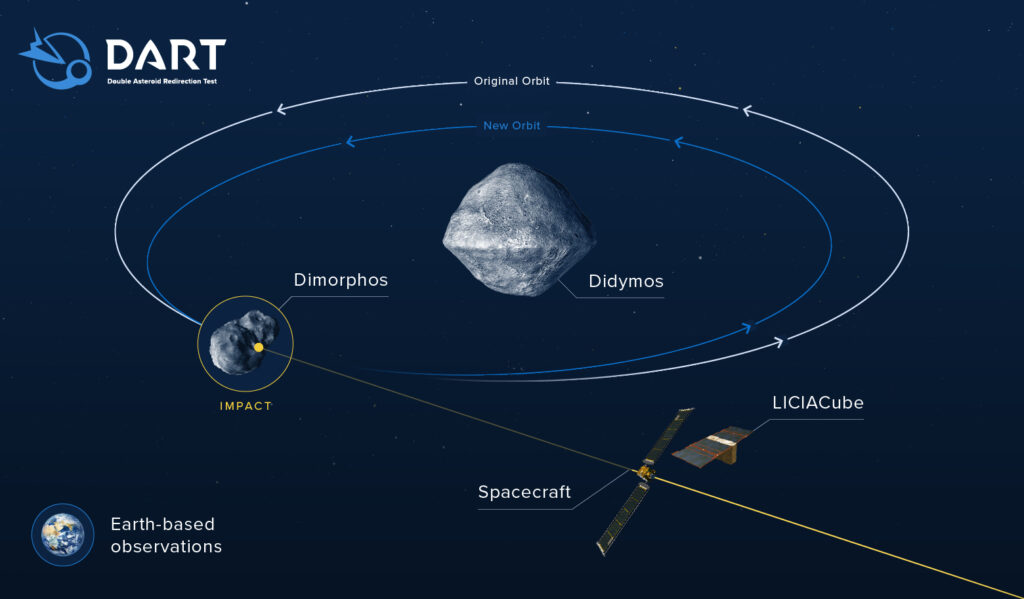
You may have already watched the star-studded movie Don’t Look Up released by Netflix over the holidays about a comet on its way to destroy our planet. It is an amusing film. Hopefully, it will also move people towards NASA and away from politicians, not that politicians really have much of a following. The more interesting story that should capture the public’s attention pertains to a little NASA spacecraft, part of the Double Asteroid Redirection Test (DART) mission, that will crash into a real asteroid next fall to determine whether or not we are able to nudge one of these monsters in a new direction – that is, away from Earth. The asteroid in question is called Dimorphos, which is about 160 meters in diameter and would create an explosion equivalent to approximately 500 megatons of TNT should it strike our planet. The atomic bomb dropped on Hiroshima was equivalent to about 16,000 tons of TNT. So this test is pretty important in terms of long term planning as well as survival. Check out the DART link above to read more about the mission.

Source: NASA.

Extra: Astronomy.com has an interesting story worth checking out – “Astronomer Amy Mainzer spent hours chatting with Leonardo DiCaprio for Netflix’s Don’t Look Up.”