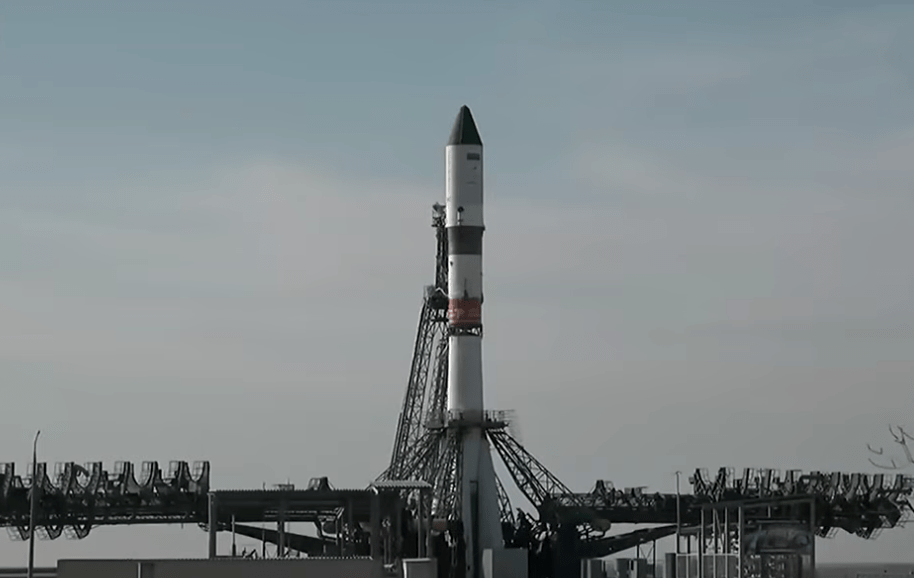
Image (Credit): The Soyuz rocket carrying the Progress 94 mission just prior to launch. (Roscosmos)
The Russians successfully launched a cargo shipment of food, fuel, and supplies to the International Space Station (ISS) earlier today. The Roscosmos Progress 94 spacecraft left the Baikonur Cosmodrome in Kazakhstan aboard a Soyuz rocket.
Not everything was perfect, but there is no need to worry. An antenna issue may compromise the unmanned attaching to the ISS on Tuesday morning, but manual controls are available. The Russians are more than able to perform this tasks.
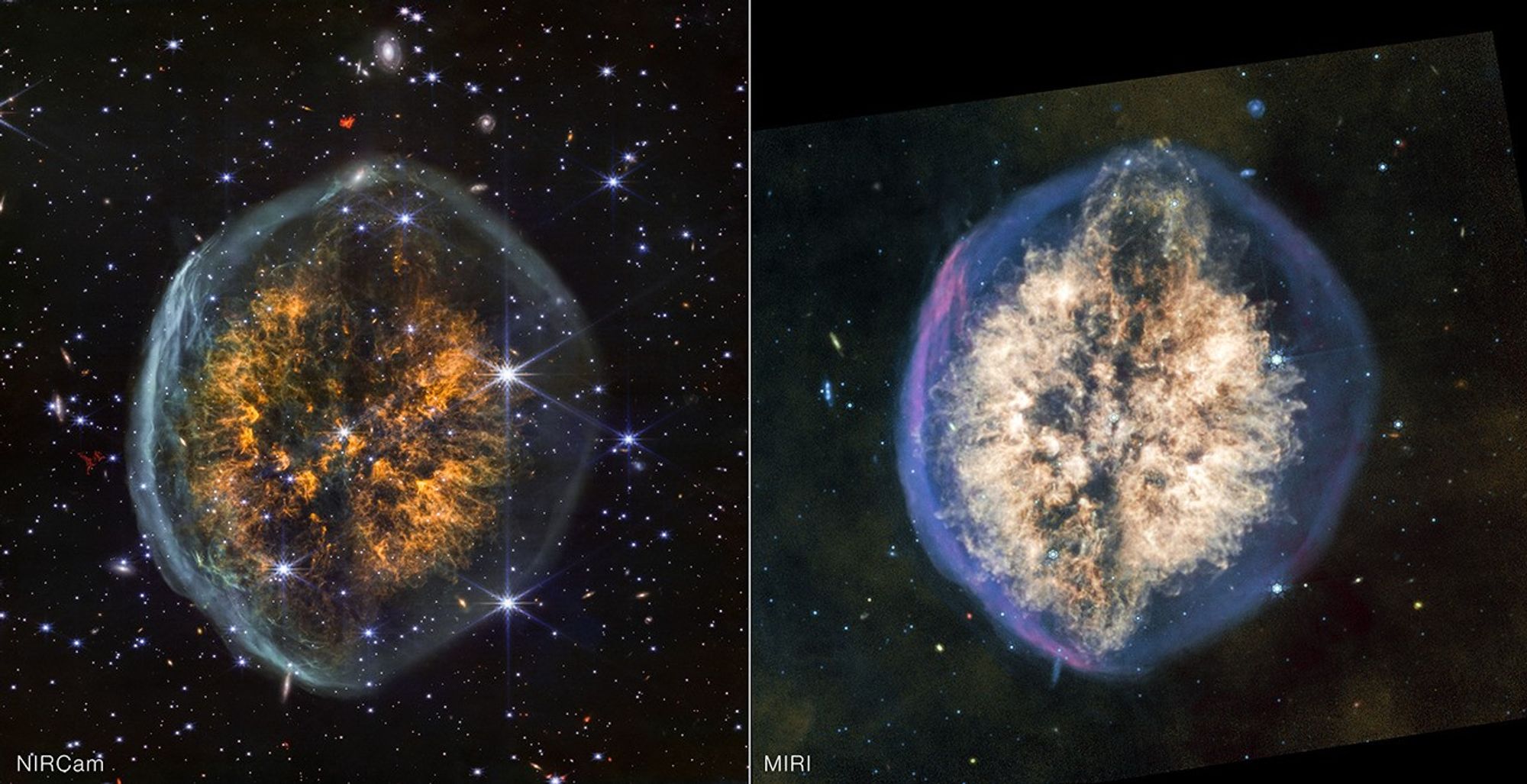
Image (Credit): Side-by-side view of the Cranium nebula using two instruments on the JWST. You can see more stars and galaxies shining through with the NIRCam’s view, but you get a nice cosmic dust glows with the MIRI’s mid-infrared. (NASA, ESA, CSA, STScI; Image Processing: Joseph DePasquale (STScI))
This week’s images come from the James Webb Space Telescope (JWST). Each image shows a different view of the Cranium nebula depending on the JWST instrument being used. It is also called the “Exposed Cranium” Nebula because it looks like a brain in a see-through skull.
The nebula appears to have distinct regions that capture different phases of its evolution — an outer shell of gas that was blown off first and consists mostly of hydrogen, and an inner cloud with more structure that contains a mix of different gases. Both Webb’s NIRCam (Near-Infrared Camera) and MIRI (Mid-Infrared Instrument) show a distinctive dark lane running vertically through the middle of the nebula that defines its brain-like look of left and right hemispheres. Webb’s resolution shows that this lane could be related to an outburst or outflow from the central star, which typically occurs as twin jets burst out in opposite directions. Evidence for this is particularly notable at the top of the nebula in Webb’s MIRI image, where it looks like the inner gas is being ejected outward.
A loud “boom” was reported across Northeast Ohio just before 9 a.m. on Tuesday. People around Northeast Ohio flooded the FOX 8 newsroom with reports of what heard like a “large explosion” lasting several seconds and causing homes and businesses to “shake.”NASA has confirmed a 6-foot, 17,000-pound meteor traveled 44,000 miles per hour over northeast Ohio. It was 50 miles above Lake Erie when the first flash was detected.
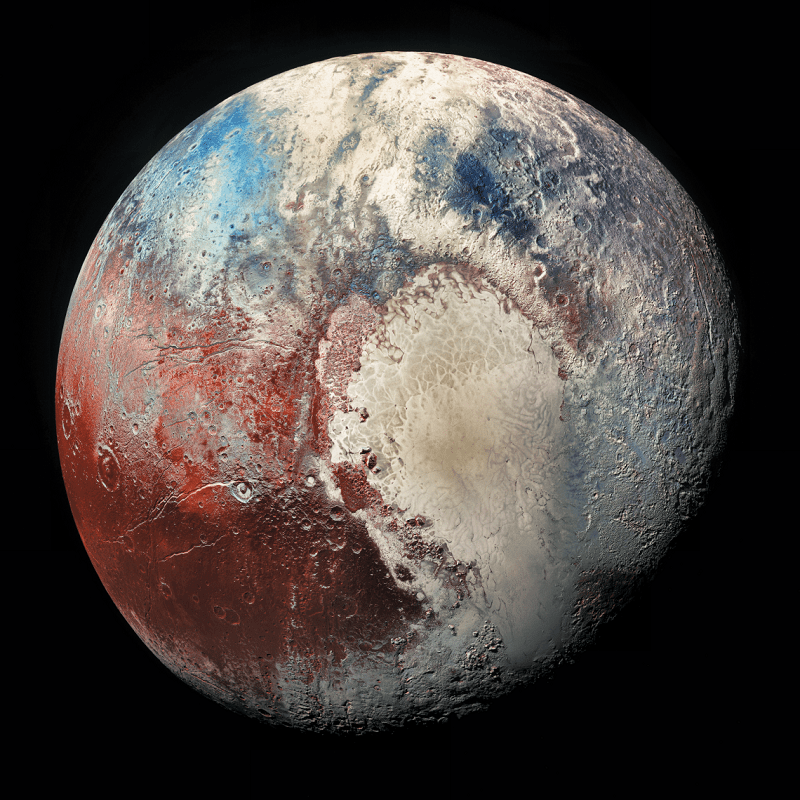
President Donald Trump campaigned on “America first,” but some of his supporters and appointees apparently want Pluto to once again be … ninth. The ninth planet in our solar system, that is. Ever since Pluto was infamously stripped of its planetary status two decades ago, debate has raged for years over the distant icy world – half the size of the United States – and just what sort of cosmic body it should be classified as. Now, Jared Isaacman, NASA’s new chief, has appeared to signal his support for Trump to designate Pluto as a planet once again through executive order.
The Royal Astronomical Society (RAS) has issued a stark warning over proposals by Elon Musk’s SpaceX and the California-based startup Reflect Orbital, saying the plans could cause lasting damage to ground‑based astronomy and dramatically alter the night sky for skywatchers. In comments submitted to U.S. regulators, the RAS said the scale and brightness of the proposed satellite constellations risk overwhelming astronomical observations from Earth. The society, alongside the European Southern Observatory (ESO), has formally opposed both projects in filings to the Federal Communications Commission (FCC), where the companies have sought approval.
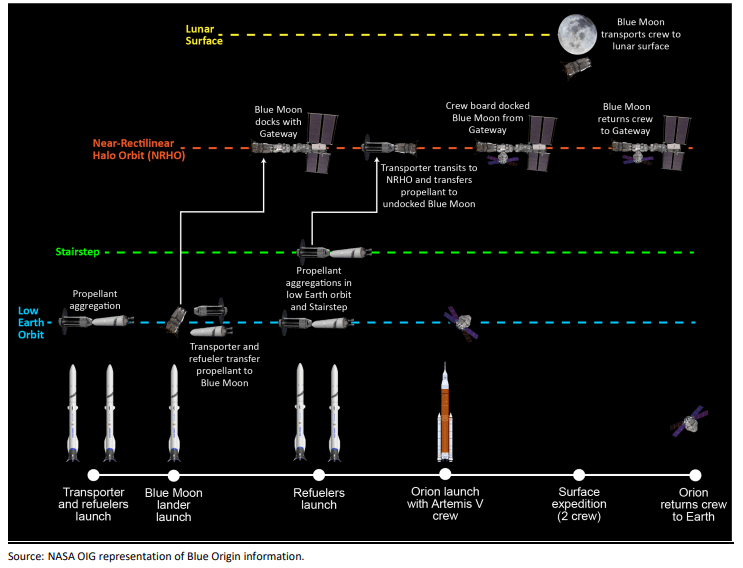
The image above is from a NASA Office of the Inspector General audit report on the Human Landing System. It shows the complexity of the Blue Origin process for getting a crew on the Moon. It is complex, and has one more step than the SpaceX plan, which already seems close to impossible.
This is how the audit report explained the graphic you see above:
For the Artemis V mission, Blue Origin is developing its Blue Moon lander. Standing 52 feet tall, Blue Moon will launch on Blue Origin’s reusable New Glenn heavy-lift rocket from Cape Canaveral Space Force Station in Florida. The lander will utilize Blue Origin’s BE-7 engines, which are fueled by liquid oxygen and liquid hydrogen. Prior to the Artemis V mission, Blue Origin will launch a transporter to low Earth orbit, essentially serving as a propellant depot. From there a fleet of refuelers will launch, rendezvous with the transporter, and transfer propellant. The Blue Moon lander will then launch to low Earth orbit to receive fuel from both a refueler and the transporter before traveling to NRHO to dock with Gateway for the Lunar Orbit Checkout Review. The transporter, left in low Earth orbit, will receive additional propellant there before traveling to a higher “stairstep” orbit for final propellant aggregation.14 Once the transporter has traveled to NRHO, Blue Moon will undock with Gateway to receive its final propellant transfer and then dock with Gateway a second time. Next, Orion will deliver the astronauts to Gateway, who will then transfer to Blue Moon for transit to the lunar surface and back to the station. At the end of the mission, Orion will return the astronauts to Earth and the lander will transition to another orbit for disposal or later reuse.

 Our Awesome Universe