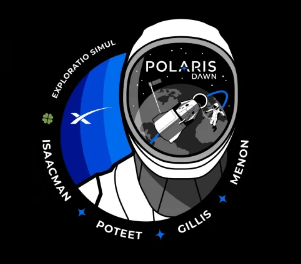
SpaceX Grounded Before Start of the Polaris Dawn Mission

For the second time in two months, a SpaceX Falcon 9 rocket launch has had problems, leading to a temporary grounding of the rocket by the Federal Aviation Administration. In the latest case, a rocket booster crashed into the Atlantic Ocean after a successful launch of Starlink satellites.

As a result of the malfunction, the privately-funded Polaris Dawn mission scheduled for this Friday will most likely need to be delayed. One of the goals for the Polaris Dawn mission is a spacewalk, which will be the first private space walk to date.

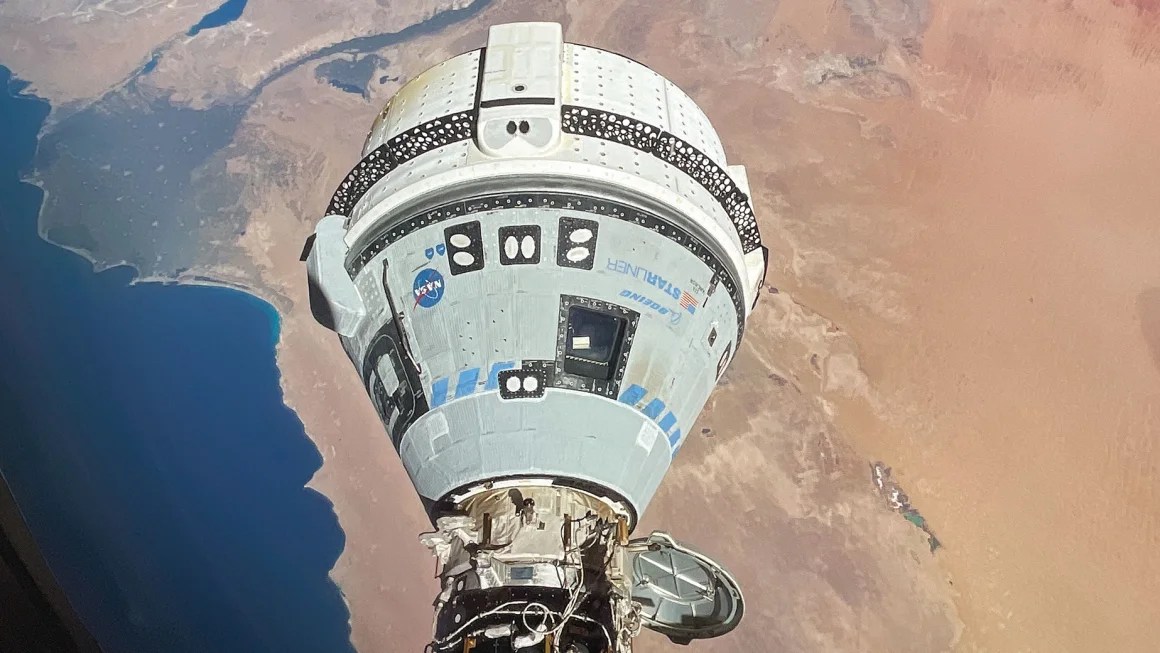
Of greater concern is the role of the Falcon 9 in upcoming International Space Station launches, be it crewed or uncrewed. With the Boeing capsule stuck at the station, SpaceX is currently the one game in town for NASA’s station needs.
Space Quote: NASA’s North Star Means Boeing Astronauts to Return to Earth on SpaceX Capsule

Image (Credit): Boeing Starliner attached to the ISS. (NASA)

“Spaceflight is risky, even at its safest and most routine. A test flight, by nature, is neither safe, nor routine. The decision to keep Butch and Suni aboard the International Space Station and bring Boeing’s Starliner home uncrewed is the result of our commitment to safety: our core value and our North Star…I’m grateful to both the NASA and Boeing teams for all their incredible and detailed work.

Statement by NASA Administrator Bill Nelson regarding NASA’s decision to return Boeing’s Starliner to Earth without astronauts Butch Wilmore and Suni Williams aboard the spacecraft. Instead the two astronauts will remain on the International Space Station (ISS) until February 2025 when they will return to Earth aboard a SpaceX Dragon capsule.

Pic of the Week: Sparkling Candy Floss

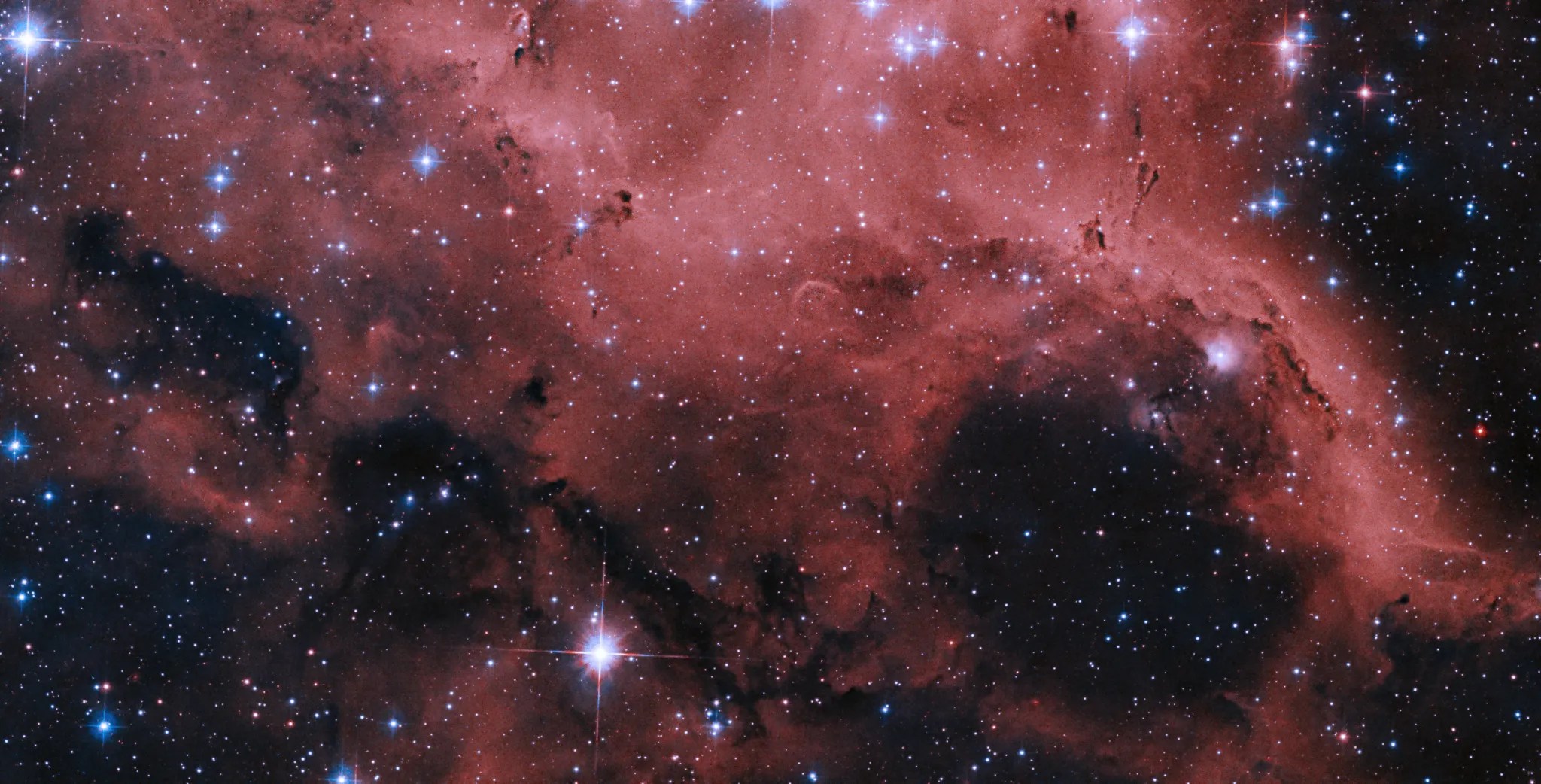
Image (Credit): The complex cluster of emission nebulae is known as N11. (NASA, ESA, J. M. Apellaniz from the Centro de Astrobiologia (CSIC/INTA Inst. Nac. de Tec. Aero., and Gladys Kober from NASA/Catholic University of America)

This week’s image is from the Hubble Space Telescope. It shows a cluster of stars that are about 160,000 light-years away in the Large Magellanic Cloud that orbits our Milky Way.

Here is the full story from NASA:

A bubbling region of stars both old and new lies some 160,000 light-years away in the constellation Dorado. This complex cluster of emission nebulae is known as N11, and was discovered by American astronomer and NASA astronaut Karl Gordon Henize in 1956. NASA’s Hubble Space Telescope brings a new image of the cluster in the Large Magellanic Cloud (LMC), a nearby dwarf galaxy orbiting the Milky Way.

About 1,000 light-years across, N11’s sprawling filaments weave stellar matter in and out of each other like sparkling candy floss. These cotton-spun clouds of gas are ionized by a burgeoning host of young and massive stars, giving the complex a cherry-pink appearance. Throughout N11, colossal cavities burst from the fog. These bubbles formed as a result of the vigorous emergence and death of stars contained in the nebulae. Their stellar winds and supernovae carved the surrounding area into shells of gas and dust.

One More Wrinkle Related to the Starliner Delay

Credit: NASA

As if NASA needed another issue with the Boeing Starliner stranded at the International Space Station (ISS), the media (particularly the Indian media) is now reporting that one of the Starliner astronauts is having eyesight issues.

According to one media source, Astronaut Sunita Williams is experiencing eyesight problems that may be linked to her exposure to microgravity. The issue, called Spaceflight Associated Neuro-ocular Syndrome (SANS), is not an uncommon symptom related to space flight. It can lead to blurred vision over time and worsens over time.

NASA has noted that:

Most astronauts’ eyes and brain structure change in space…Weightlessness causes blood and cerebrospinal fluid to shift toward the head. This fluid shift is believed to be the underlying cause of the eye and brain structural changes…The longer they are in space, the more they may be impacted. Many astronauts only experience effects in space, but some changes may be permanent in some astronauts.

This has only become an issue now that an 8-day tour has turned into a potential 8-month tour. This Gilligan’s Island tour needs to come to an end so that the ISS can return to regular operations.

Image (Credit): Scene from the television show Gilligan’s Island. (CBS Television Network)

Volunteer Work Pays Off: Sighted Star on Course to Escape the Milky Way

Credit: NASA’s Backyard Worlds: Planet 9

NASA’s Backyard Worlds: Planet 9 program allows interested volunteers to search earlier data to potentially locate an extra planet or new brown dwarfs near our solar system. Well, one of these volunteers found something unusual – an object with a mass similar to or less than that of a small star that was traveling fast enough to eventually escape the Milky Way’s gravity and enter intergalactic space. This object was clocked at approximately 1 million miles per hour.

You can read about this object and other efforts by visiting this NASA link. You might want to look into becoming part of the citizen scientists looking for more interesting objects.