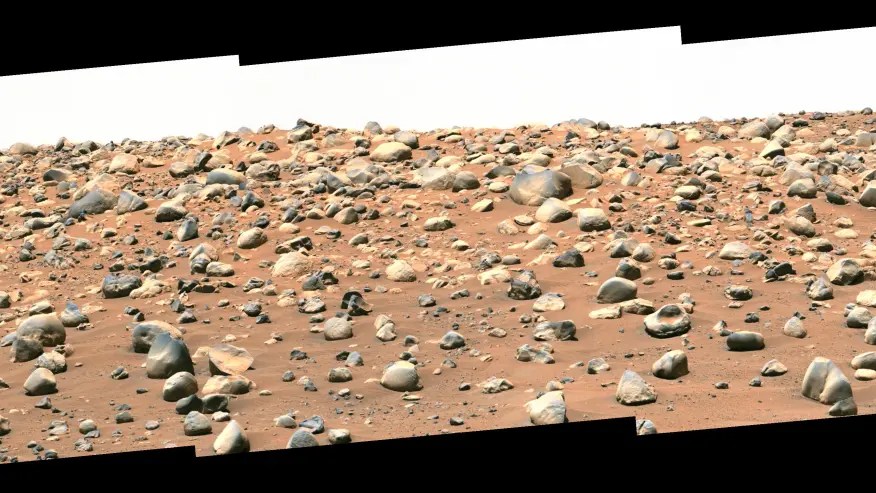
Image (Credit): Martian surface as captured by NASA’s Perseverance Mars rover (NASA/JPL-Caltech/ASU/MSSS)
“These new results demonstrate that liquid water does exist in the Martian subsurface today, not in the form of discrete and isolated lakes, but as liquid water-saturated sediments, or aquifers…On Earth, the subsurface biosphere is truly vast, containing most of the prokaryotic diversity and biomass on our planet. Some investigations even point to an origin of life on Earth precisely deep in the subsurface. Therefore, the astrobiological implications of finally confirming the existence of liquid water habitats kilometers beneath the surface of Mars are truly exciting.”
–Statement by Alberto Fairén, a visiting interdisciplinary planetary scientist and astrobiologist within the department of astronomy at Cornell University, regarding a recent study reporting vast quantities of water may reside between 7 and 12 miles beneath the Martian surface. The study utilized data from NASA’s InSight lander.
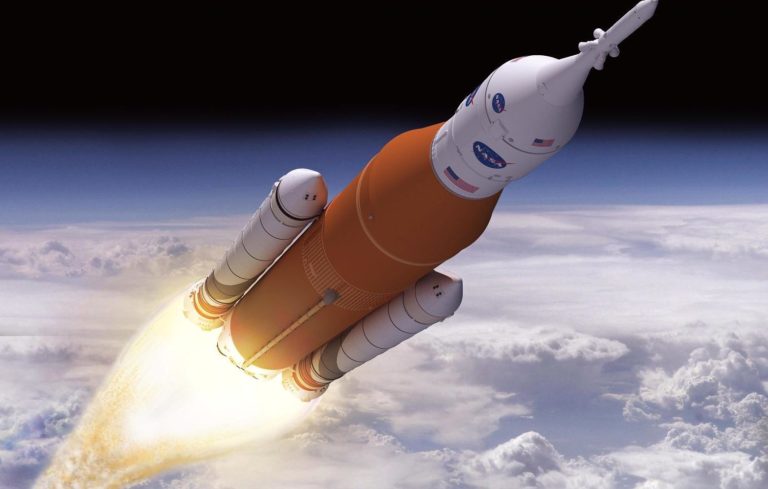
The report, released Thursday by NASA’s Office of Inspector General, calls into question Boeing’s standards and quality control for its part in NASA’s efforts to return astronauts to the moon. In NASA’s development of its next-generation megarocket, known as the Space Launch System, it gave Boeing the contract to build the rocket system’s powerful upper stage. But according to the report, Boeing’s quality control systems fall short of NASA’s requirements, and some known deficiencies have gone unaddressed. What’s more, the workers on the project are not, as a whole, sufficiently experienced or well trained, according to the inspector general.
A NASA payload will hitch a ride to the moon on Blue Origin’s first lunar lander mission, scheduled to launch as soon as next March. In an Aug. 6 procurement filing, NASA revealed it selected Blue Origin to fly a camera system to study how engine plumes interact with regolith at south polar regions of the moon, collecting data to support future crewed landing missions. The payload, called Stereo Cameras for Lunar Plume Surface Studies (SCALPSS), will fly through NASA’s Commercial Lunar Payload Services (CLPS) program.
NASA’s upcoming flagship astrophysics missions, the Nancy Grace Roman Space Telescope and the Habitable Worlds Observatory, will study planets outside our solar system, known as exoplanets. Over 5,000 exoplanets have been confirmed to date — and given that scientists estimate at least one exoplanet exists for every star in the sky, the hunt has just begun. Exoplanet discoveries from Roman and the Habitable Worlds Observatory may not be made only by professional researchers, but also by interested members of the public, known as citizen scientists.
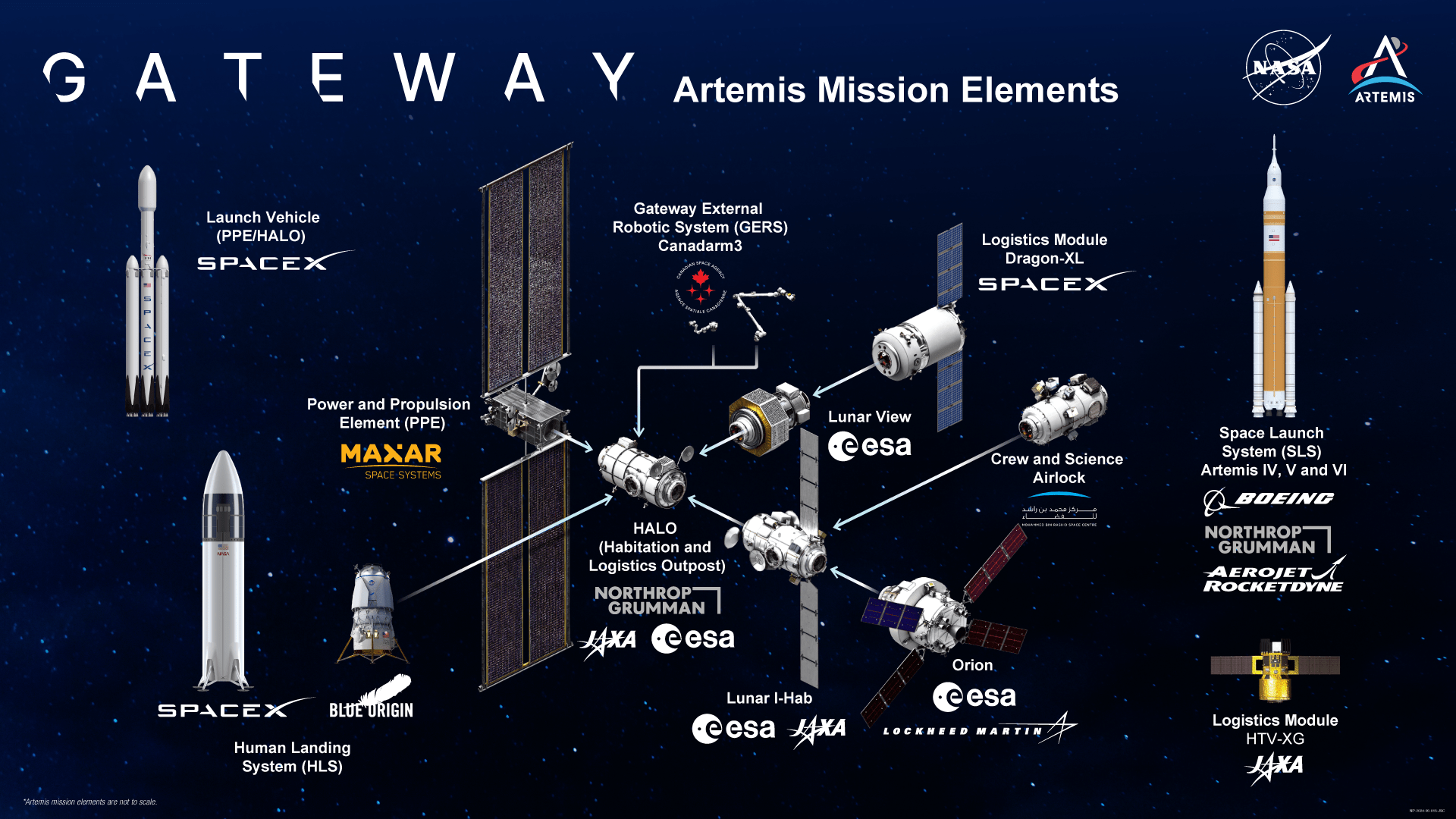
In a recent audit report, Artemis Programs: NASA Should Document and Communicate Plans to Address Gateway’s Mass Risk, the Government Accountability Office (GAO) expressed some concerns about NASA’s Gateway space station, which will orbit the moon as part of Artemis IV . Specifically, the concerns relate to the first components of the space station to be launched in December 2027 —the Power and Propulsion Element (PPE) and the Habitation and Logistics Outpost (HALO).
In the report, GAO states:
The Gateway program’s projects—including PPE and HALO—made varying degrees of progress over the last year. However, the PPE and HALO projects face several significant challenges. For example, their combined mass is greater than their mass target. Mass is one of many factors that the program considers in its overall design. If they cannot meet their mass target, it may affect their ability to reach the correct lunar orbit.
The report goes on to state:
For example, program officials estimate that the mass of the lunar lander Starship is approximately 18 times greater than the value NASA used to develop the PPE’s controllability parameters.
NASA agrees with the single GAO recommendation in this report, which recommends that a mass management be ready for an upcoming review in September 2024.
There is a lot to read in the 52 page report, but the real question is whether NASA will be ready for the 2027 Gateway launch. This is a ongoing concern given that we are already seeing delays in other parts of the Artemis program.
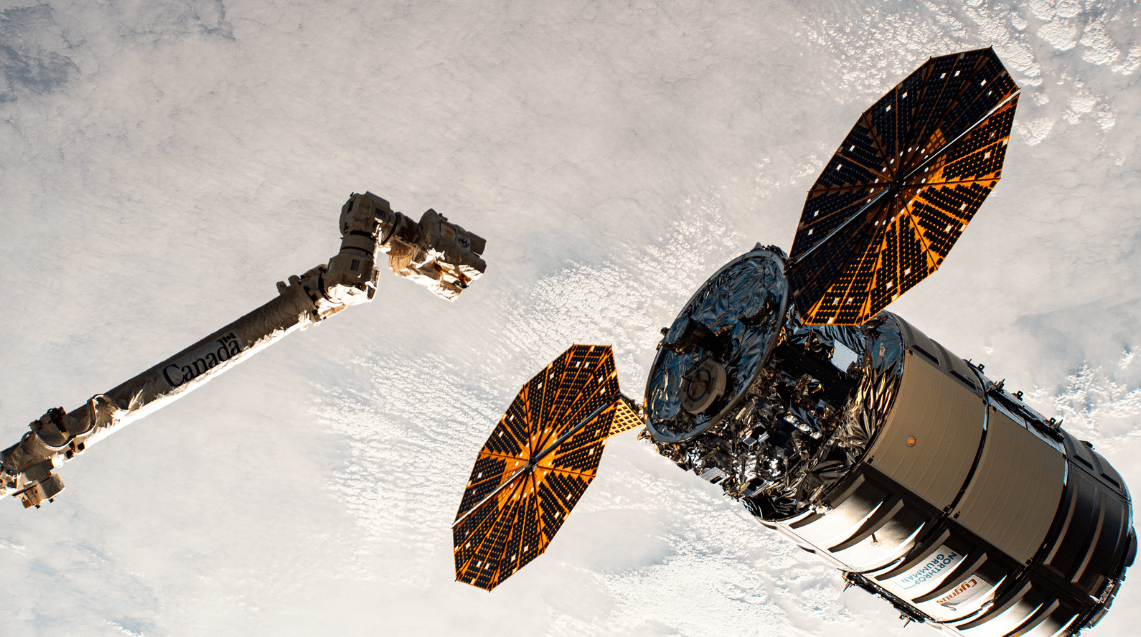
Image (Credit): The Cygnus cargo craft outside the ISS this week. (NASA)
This week’s image is from the International Space Station (ISS). It shows Northrop Grumman’s Cygnus resupply capsule on August 6, 2024 as the International Space Station’s (ISS) Canadarm2 robotic arm attempts to capture it. NASA noted that this Canadarm2 maneuver marked the 50th free-flying capture for the robotic arm.
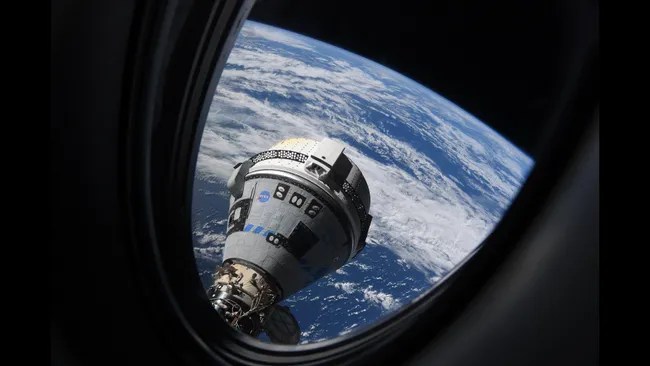
Image (Credit): Boeing’s Starliner capsule viewed from the ISS. (ESA)
I did not think it could get worse, but it has. NASA has announced that Boeing’s Starliner capsule attached to the International Space Station (ISS) might not return until next year, making it an unwanted appendage on a busy space station.
At a press conference today, NASA discussed leaving the two Boeing astronauts on the ISS until February 2025 and cutting in half the planned crew for the September 24 SpaceX Dragon mission. This would keep the number of astronauts on the space station to its normal number. There was also discussion about bringing the Boeing astronauts back on another capsule if the Starliner was not ready.
This looks bad for Boeing and NASA’s commercial space efforts. Boeing does not agree with NASA’s assessment, stating in an August 2 mission update:
Boeing remains confident in the Starliner spacecraft and its ability to return safely with crew. We continue to support NASA’s requests for additional testing, data, analysis and reviews to affirm the spacecraft’s safe undocking and landing capabilities. Our confidence is based on this abundance of valuable testing from Boeing and NASA. The testing has confirmed 27 of 28 RCS thrusters are healthy and back to full operational capability. Starliner’s propulsion system also maintains redundancy and the helium levels remain stable. The data also supports root cause assessments for the helium and thruster issues and flight rationale for Starliner and its crew’s return to Earth.
All of this is happening while the ISS crew are unloading supplies from a recently arrived Northrop Grumman Cygnus cargo capsule launched over the weekend. It does make you wonder whether Grumman should be the next best hope for a crewed capsule rather than Boeing. Grumman has a proven track record of more than 20 resupply runs. Clearly, crewed capsule are different, but it is something to consider.
Sierra Space is also testing its Dream Chaser next month, which is also expected to make cargo runs to the ISS. It this another potential crew option down the road?
The purpose of commercial involvement was greater options. Let’s work on expanding those options as quickly as possible. Placing all of our eggs in the Elon Musk SpaceX basket makes me nervous as he calls for civil war in the United Kingdom.

 Our Awesome Universe