Remember asteroid 2024 MK from last Saturday? Well, NASA has some nice shots (shown above) of the asteroid as it made it close approach to the Earth. It shows the 500 foot-wide asteroid in all of its scary glory. We were lucky to be nothing but observers that day.
Another asteroid that shot by the Earth on June 27th at a distance that was about 17 time the distance between the Earth and the Moon was asteroid UL21. This asteroid was not a surprise, having been spotted back in 2011. However, it had a surprise when viewed up close. The asteroid had its own moon (shown below).
I’m impressed we have these amazing images, but if they price for these images is a risky rendezvous then I can live without them.
Note: Another asteroid is coming our way next week – asteroid 2024 MT1. The asteroid is 260 feet in diameter and will be come much closer than UL21, or about four times the distance between the Earth and the Moon.
Image (Credit): Asteroid UL21 captured by NASA’s Goldstone Solar System Radar. You can see its moon as the small speck at the bottom of the image. (NASA, JPL-Caltech)
“Selecting a U.S. Deorbit Vehicle for the International Space Station will help NASA and its international partners ensure a safe and responsible transition in low Earth orbit at the end of station operations. This decision also supports NASA’s plans for future commercial destinations and allows for the continued use of space near Earth…The orbital laboratory remains a blueprint for science, exploration, and partnerships in space for the benefit of all.”
–Statement by Ken Bowersox, associate administrator for Space Operations Mission Directorate at NASA Headquarters in Washington, regarding NASA announcement that SpaceX has been selected to develop and deliver the U.S. Deorbit Vehicle under a contract worth $843 million. This expensive Deorbit Vehicle should help to avoid problems on the ground as well as orbiting debris impacting space missions, as was the case on the International Space Station (ISS) a few days ago. The ISS is expected to continue operation until 2030.
While Matt Damon relied on potatoes cultivated in crew biowaste to survive in the hit film The Martian, researchers say it is a humble desert moss that might prove pivotal to establishing life on Mars. Scientists in China say they have found Syntrichia caninervis – a moss found in regions including Antarctica and the Mojave desert – is able to withstand Mars-like conditions, including drought, high levels of radiation and extreme cold.
Hundreds of basketball-size space rocks slam into Mars each year, leaving behind impact craters and causing rumblings across the red planet, according to new research. Mission planners could use the revelations, recorded in data collected by a now-retired NASA mission, as they determine where to land future robotic missions as well as astronaut crews on the red planet. NASA’s InSight mission ended when the stationary lander lost a battle to an accumulation of Martian dust on its solar panels in December 2022, but the wealth of data the spacecraft collected is still fueling new research.
The first volunteer crew, to live for more than a year inside NASA’s Mars habitat at the Johnson Space Center in Houston, will exit the simulated Red Planet ground mission on Saturday…The crew entered CHAPEA on June 25, 2023, and enacted Mars mission operations, including virtual reality “Mars-walks” while growing and harvesting vegetables to supplement their shelf food. They also spent their time maintaining equipment while being tested with stressors, including isolation and communication delays with Earth.
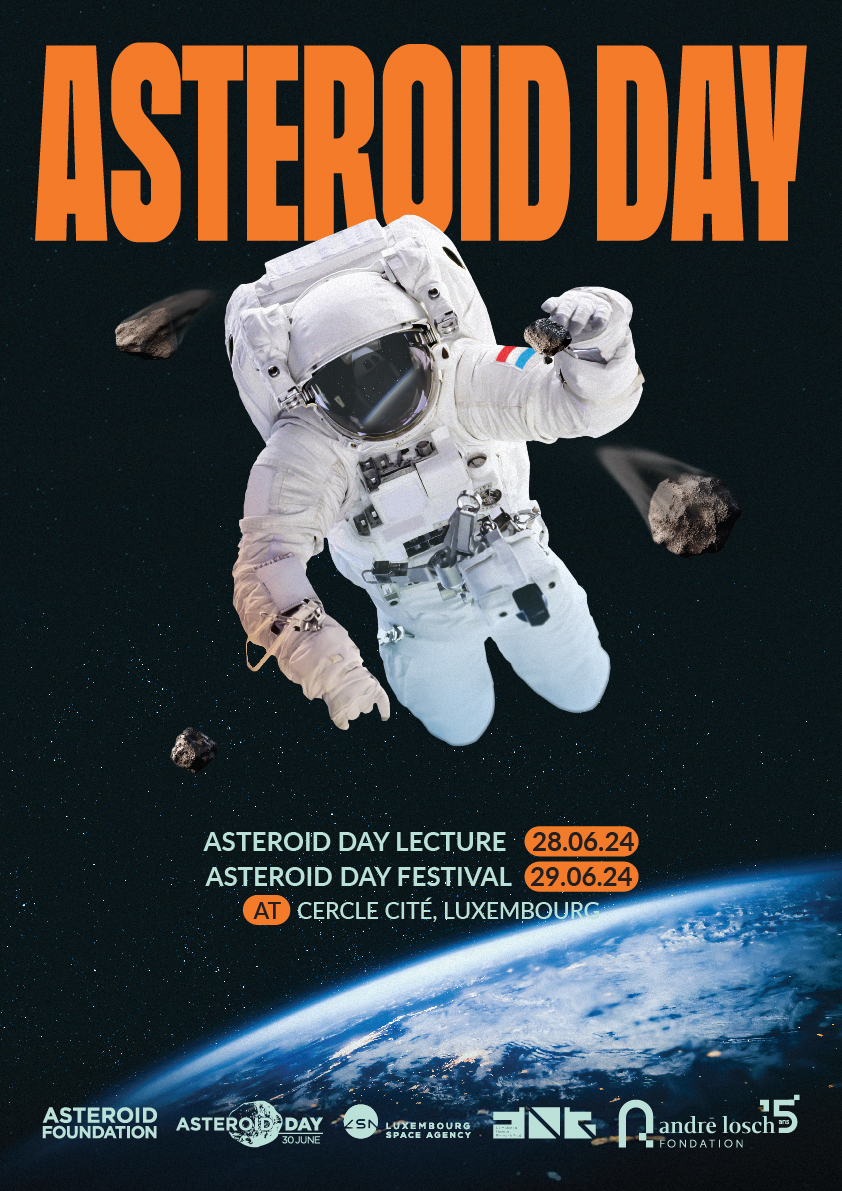
Tomorrow we recognize Asteroid Day around the world, but today we witnessed an asteroid coming so close to the Earth that it was within the Moon’s orbit.
Asteroid 2024 MK flew past the Earth earlier today with no incident, but it was pretty close. Its closest approach was about 75 percent of the distance between Earth and the Moon. The asteroid, about the size of a skyscraper, would have made quite a mess had it hit us.
What is somewhat disturbing is that we have set up systems and processes to detect Near Earth Objects (NEO) to better prepare for potential collisions, yet this particular asteroid was first detected this month. Had it been on a collision course, we would have had less than two weeks to prepare.
NASA and others continue with efforts to step up NEO detection. One planned improvement is the NEO Surveyor, which will be the first space telescope specifically designed to locate potentially hazardous NEOs. The NEO Surveyor is scheduled to launch in June 2028.
Better detection, as well as defenses, can help to ensure we have many more Asteroid Days far into the future.
What is that strange brown ribbon on the sky? When observing the star cluster NGC 4372, observers frequently take note of an unusual dark streak nearby running about three degrees in length. The streak, actually a long molecular cloud, has become known as the Dark Doodad Nebula. (Doodad is slang for a thingy or a whatchamacallit.) Pictured here, the Dark Doodad Nebula sweeps across the center of a rich and colorful starfield. Its dark color comes from a high concentration of interstellar dust that preferentially scatters visible light. The globular star cluster NGC 4372 is visible as the fuzzy white spot on the far left, while the bright blue star gamma Muscae is seen to the cluster’s upper right. The Dark Doodad Nebula can be found with strong binoculars toward the southern constellation of the Fly (Musca).




 Our Awesome Universe

.jpg)