Pic of the Week: The Dorado Group

Image (Credit): The Dorado group in the southern hemisphere. (ESA/Euclid/Euclid Consortium/NASA)

This week’s image was captured by the European Space Agency’s (ESA) Euclid space telescope. Launched last summer to create a 3D map of the universe, it has been pretty busy sending back some impressive images. This particular image shows the Dorado group of galaxies, one of the richest group of galaxies in the southern hemisphere. The grouping of approximately 70 galaxies is about 62 million light-years away.

Space Stories: OSIRIS-APEX Survives Sun Flyby, Nearby Exoplanet May Be Habitable, and More Rogue Planets Rolling About

Here are some recent stories of interest.

NASA: NASA’s OSIRIS-APEX Unscathed After Searing Pass of Sun

Mission engineers were confident NASA’s OSIRIS-APEX (Origins, Spectral Interpretation, Resource Identification – Apophis Explorer) spacecraft could weather its closest ever pass of the Sun on Jan. 2, 2024. Their models had predicted that, despite traveling 25 million miles closer to the heat of the Sun than it was originally designed to, OSIRIS-APEX and its components would remain safe. The mission team confirmed that the spacecraft indeed had come out of the experience unscathed after downloading stored telemetry data in mid-March. The team also tested OSIRIS-APEX’s instruments in early April, once the spacecraft was far enough from the Sun to return to normal operations. 

USA Today: NASA Discovers Potentially Habitable Exoplanet 40 Light Years from Earth

NASA announced the discovery of a planet 40 light years from Earth that orbits every 12.8 days and is possibly even habitable. Gliese 12 b is a “super Earth exoplanet” that is nearly the same size as Earth or slightly smaller, according to a NASA news release. Exoplanets are planets outside of our solar system, NASA’s website says. “We’ve found the nearest, transiting, temperate, Earth-size world located to date,” Masayuki Kuzuhara, a project assistant professor at the Astrobiology Center in Tokyo, said in a statement. “Although we don’t yet know whether it possesses an atmosphere, we’ve been thinking of it as an exo-Venus, with similar size and energy received from its star as our planetary neighbor in the solar system.”

Phys.org: Starless and Forever Alone: More ‘Rogue’ Planets Discovered

The Euclid space telescope has discovered seven more rogue planets, shining a light on the dark and lonely worlds floating freely through the universe untethered to any star. Without being bound to a star, as the Earth is to the sun, there are no days or years on these planets, which languish in perpetual night. Yet scientists believe there is a chance they could be able to host life—and estimate there may be trillions dotted throughout the Milky Way.

The Launch of PREFIRE to Monitor the Poles

NASA has more eyes in the skies after the launch on Saturday of its Polar Radiant Energy in the Far-InfraRed Experiment (PREFIRE) mission. One of Rocket Lab’s Electron rocket place the satellites into orbit from the launch facility in New Zealand.

The pair of CubeSats will spend 10 months monitoring the two poles of the Earth and help NASA to better better predict changes to the climate based on changes in the Earth’s ice, seas, and weather.

Tristan L’Ecuyer, PREFIRE’s principal investigator at thebUniversity of Wisconsin in Madison stated:

Our planet is changing quickly, and in places like the Arctic, in ways that people have never experienced before…NASA’s PREFIRE will give us new measurements of the far-infrared wavelengths being emitted from Earth’s poles, which we can use to improve climate and weather models and help people around the world deal with the consequences of climate change.

The name of the mission, PREFIRE, is a little scary given the fires throughout the world said to be associated with climate change. Sadly, we are far from pre-fire and more like mid-fire. We can only hope that better information from the satellites can help us to steer a safer path.

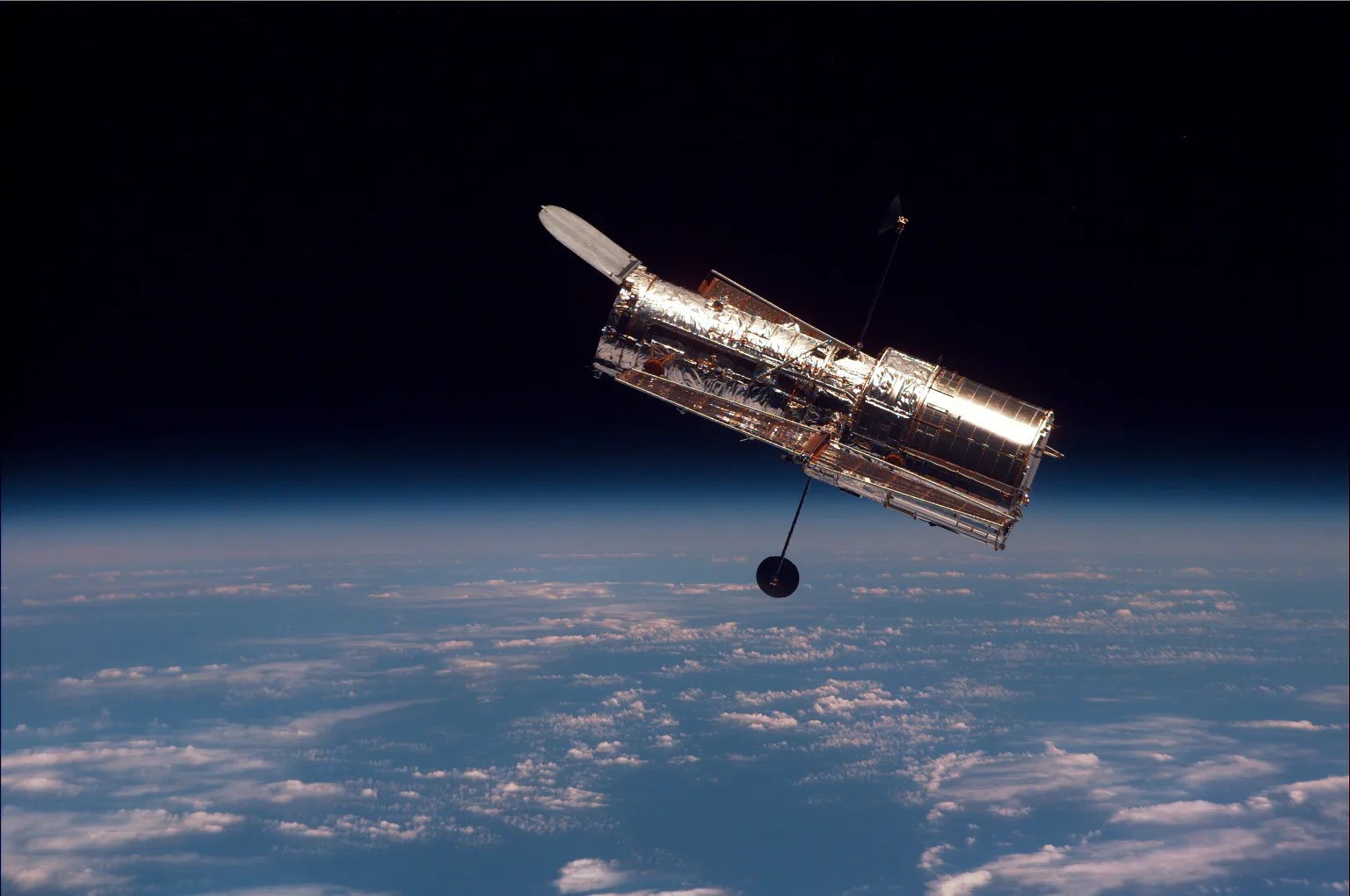
Space Quote: A Private Mission to Save Hubble?

Image (Credit): The Hubble Space Telescope returning to orbit after its second servicing mission in February 1997. (NASA)

“Perhaps the opportunity with Polaris won’t be there, but NASA can work with Congress and the Administration to request funds for a Hubble reboost or enhancement mission, using a commercial partner where NASA is in the drivers [sic] seat, and the maturity of the space systems is higher and lower risk.”

-Statement by John Grunsfeld, an astronaut who operated on Hubble multiple times, in an NPR story regarding an offer by businessman Jared Isaacman to privately fund a mission to move the Hubble Space Telescope to a higher orbit and conduct necessary repairs to extend the telescope’s life. His offer has been met with some skepticism due to the difficulty of such a mission.

ISS May Soon Have an Indian Astronaut

Image (Credit): India’s Vikram lander on the Moon’s surface. (India Space Research Organization)

A U.S. official speaking in India promised that an Indian astronaut would be on the International Space Station (ISS) soon, maybe by year end. The Hindustan Times reports that the comments were made by U.S. Envoy Eric Garcetti at the US-India Commercial Space Conference: Unlocking Opportunities for US & Indian Space Startups.

Mr. Garcetti was quoted as stating:

NASA will soon provide advanced training to Indian astronauts, with the goal of mounting a joint effort to the International Space Station, hopefully, this year or shortly thereafter, which was one of the promises of our leaders’ visit together.

India already has a growing space program, including last year’s rover mission on the Moon, yet this is a smart move by the U.S. It is similar to Russian efforts to expand the list of visitors to the ISS.