Northrop Grumman Cargo Ship Heads to ISS

Image (Credit): Launch of the Cygnus spacecraft earlier today on its way to the ISS. (NASA)

Earlier today, Northrop Grumman launched a resupply spacecraft via a SpaceX Falcon 9 rocket to the International Space Station (ISS). The Cygnus spacecraft is conducting its 20th mission to the station, making it reliable workhorse as NASA awaits even more commercial partners to come online.

According to NASA, the resupply spacecraft contains numerous experiments, including:

  • the first surgical robot on the space station;
  • an orbit re-entry platform that collects thermal protection systems data;
  • a 3D cartilage cell culture that maintains healthy cartilage in a lower gravity; and
  • a metal 3D printer, an autonomous semiconductor manufacturing platform.

A surgical robot you ask? You can read more about this Miniaturized In-vivo Robotic Assistant (MIRA) by visiting this Gizmodo site.
Space Stories: The ISS Succession Plan, Privately-built Moon Landers, and Working with Moonquakes

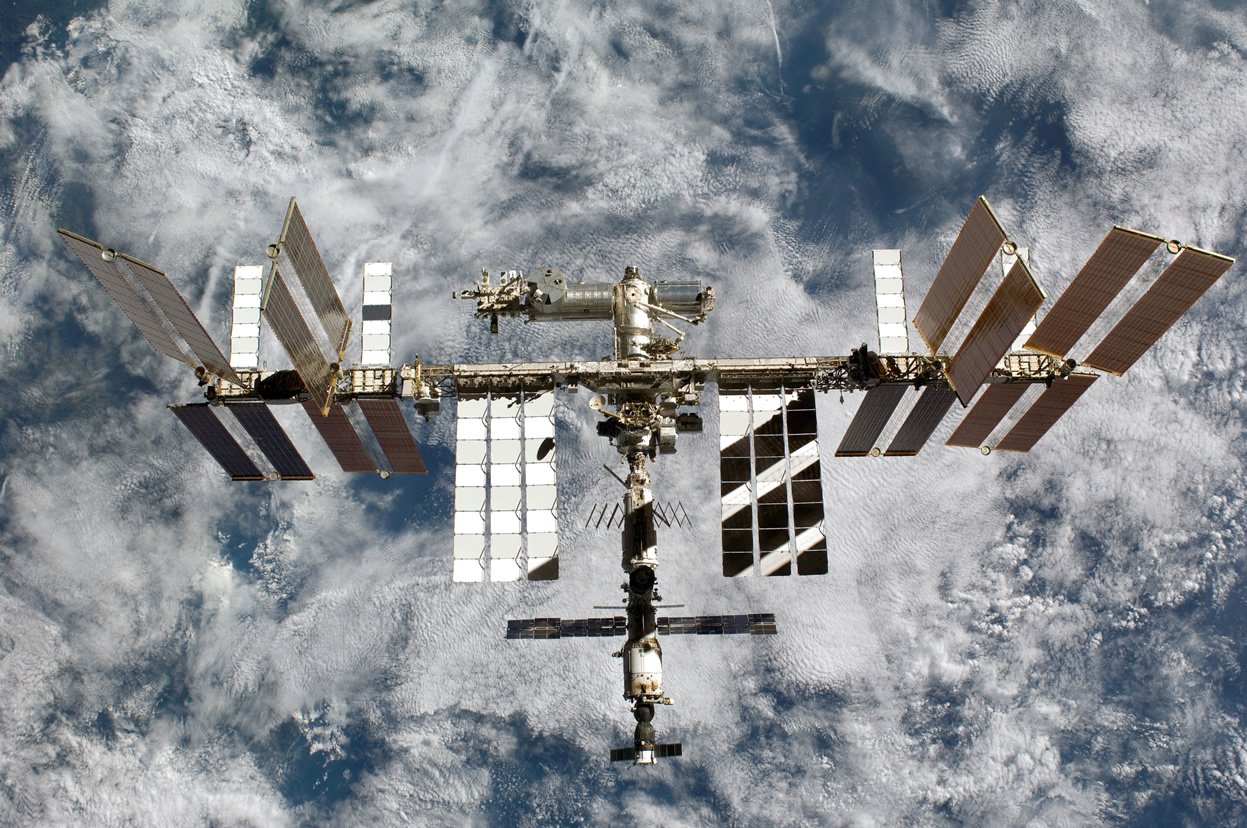
Image (Credit): View of the International Space Station. (NASA)

Here are some recent stories of interest.

Aviation Week Network: Safety Panel Raises Commercial Space Station Transition Concerns

Concerns over a “very tight” timeline for NASA to transition human low-Earth-orbit operations from the International Space Station (ISS) to commercial successors tops a list of seven concerns raised by an agency safety panel. The latest annual report by NASA’s Aerospace Safety Advisory Panel’s (ASAP) was released Jan. 25. The 56-page report expresses concerns over sufficient evidence of a viable business case to make NASA one of multiple tenants of at least one ISS successor. The effort is currently supported by NASA and the European, Japanese, Russian and Canadian space agencies.

Astronomy.com: Vertex Moon Mission Getting Closer to Launch

 A new era in lunar research is coming, and Lunar Vertex is getting ready to lead the way. Lunar Vertex is NASA’s first so-called PRISM mission (Payloads and Research Investigations on the Surface of the Moon). PRISM taps into the Commercial Lunar Payload Services program that uses privately built landers to deliver NASA science and other payloads to the lunar surface. PRISM missions are meant to be lower-cost, faster-to-flight programs. There is a mass limit of just over 100 pounds (45 kilograms) — so the science instruments have to be small — and the budget for the first PRISM suite is just $30 million (excluding the lander and the launch vehicle). Lunar Vertex is first in line, and recently has hit a number of major milestones on its way to a June 2024 launch.

NASA: Shrinking Moon Causing Moonquakes and Faults Near Lunar South Pole

As NASA continues to make progress toward sending astronauts to the lunar South Pole region with its Artemis campaign, data from a NASA-funded study is helping scientists better understand this strategic part of the Moon. The study presents evidence that moonquakes and faults generated as the Moon’s interior gradually cools and shrinks are also found near and within some of the areas the agency identified as candidate landing regions for Artemis III, the first Artemis mission planned to have a crewed lunar landing.

A Day in Astronomy: Loss of the Apollo 1 Astronauts

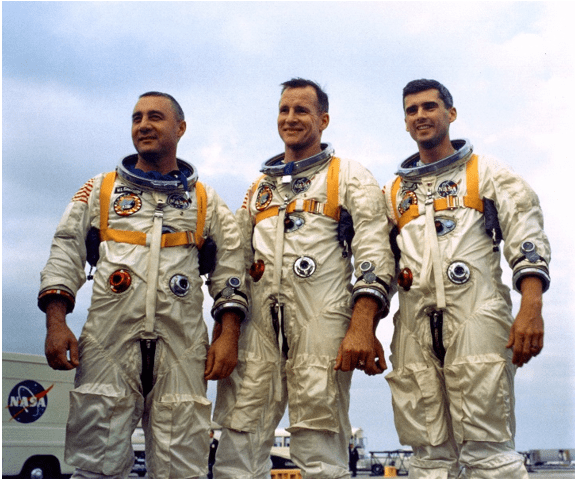
Image (Credit): Apollo 1 astronauts Virgil I. “Gus” Grissom, left, Edward H. White, and Roger B. Chaffee. (NASA)

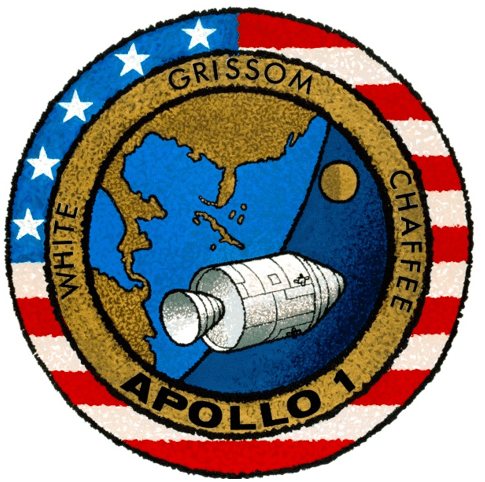
On this day in 1967, the Apollo 1 capsule caught fire on the launchpad, killing the three astronauts in the capsule – Virgil “Gus” Grissom, Ed White, and Roger Chaffee.

A frustrated Gene Kranz, NASA flight director, had this to say shortly after the fire and tragic loss of three astronauts:

Spaceflight will never tolerate carelessness, incapacity, and neglect. Somewhere, somehow, we screwed up. It could have been in design, build or test. Whatever it was, we should have caught it. We were too gung-ho about the schedule, and we locked out all of the problems we saw each day in our work. Every element of the program was in trouble and so were we. The simulators were not working, Mission Control was behind in virtually every area, and the flight and test procedures changed daily. Nothing we did had any shelf life. Not one of us stood up and said, “Dammit, stop!” I don’t know what Thompson’s committee will find as the cause, but I know what I find. We are the cause! We were not ready! We did not do our job. We were rolling the dice, hoping that things would come together by launch day, when in our hearts we knew it would take a miracle. We were pushing the schedule and betting that the Cape would slip before we did.

Did the Apollo space program recover? Absolutely. Did NASA avoid deaths on future space missions. Not at all. Do we give up on human space missions or keep moving forward? I think you know the answer to that one.

Credit: NASA

Pic of the Week: The End of Ingenuity

Image (Credit): Shadow of the Ingenuity helicopter’s rotor blade on the surface of Mars. (NASA, JPL-Caltech)

This week’s image shows the shadow of little helicopter that could and continued to do so for 72 flights on Mars. The photo taken by NASA’s Ingenuity Mars helicopter shows one of its rotor blades after it finished its last flight on January 18, 2024. During the landing, one of the blades was damaged, permanently grounded the helicopter forever more.

The amazing little helicopter surpassed all expectations and became a very helpful buddy to the Perseverance rover. It may be the end of Ingenuity, but it should also be seen as the start of more missions that pair rovers and helicopters on Mars.

NASA Administrator Bill Nelson has some final words regarding this unique helicopter in a video that you can watch here.

In addition, Teddy Tzanetos, Ingenuity’s project manager at NASA JPL, had this to say:

It’s humbling Ingenuity not only carries onboard a swatch from the original Wright Flyer, but also this helicopter followed in its footsteps and proved flight is possible on another world.

Space Stories: Finding Water on Mars, Mini Solar Sails, and a Balloon-borne Telescope

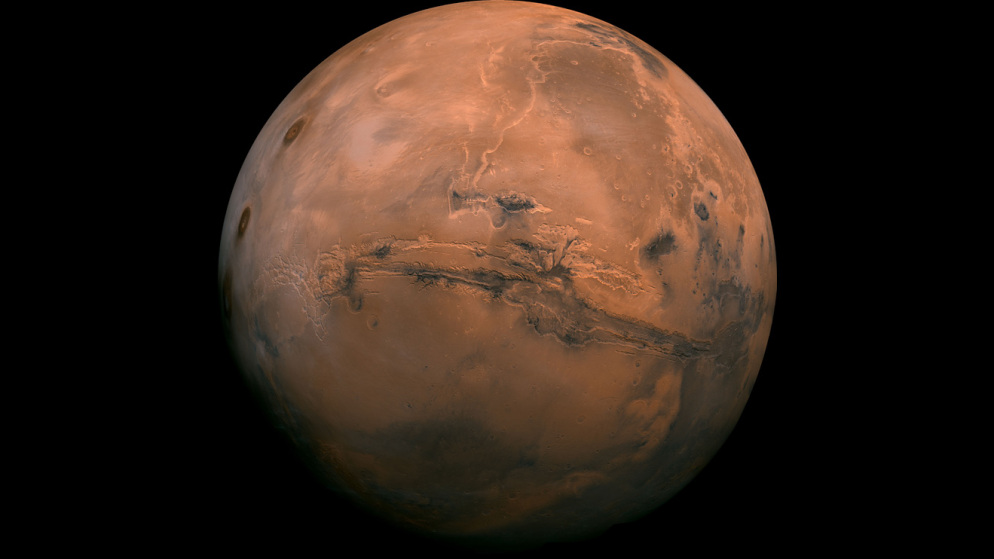
Image (Credit): Image of Mars. (NASA)

Here are some recent stories of interest.

Planetary Science Institute: Vast, Potential Ice-Rich Deposit Found in Martian Equatorial Region

A potential ice-rich portion of the Medusae Fossae Formation deposits may contain the largest volume of water in the equatorial region of Mars. Data from the Mars Advanced Radar for Subsurface and Ionospheric Sounding (MARSIS) –  a subsurface radar sounder on the Mars Express orbiter searching for water and studying the Martian atmosphere – reveals layering in the Medusae Fossae Formation (MFF) deposits. These layers are likely due to transitions between mixtures of ice-rich and ice-poor dust, analogous to those in Polar Layered Deposits, according to the paper “Evidence of Ice-Rich Layered Deposits in the Medusae Fossae Formation of Mars” in Geophysical Research Letters. 

University of California: “Small Solar Sails Could be the Next ‘Giant Leap’ for Interplanetary Space Exploration

Nearly 70 years after the launch of the first satellite, we still have more questions than answers about space. But a team of Berkeley researchers is on a mission to change this with a proposal to build a fleet of low-cost, autonomous spacecraft, each weighing only 10 grams and propelled by nothing more than the pressure of solar radiation. These miniaturized solar sails could potentially visit thousands of near-Earth asteroids and comets, capturing high-resolution images and collecting samples.

NASA: “NASA’s GUSTO Prepares to Map Space Between the Stars

On a vast ice sheet in Antarctica, scientists and engineers are preparing a NASA experiment called GUSTO to explore the universe on a balloon. GUSTO will launch from the Ross Ice Shelf, near the U.S. National Science Foundation’s McMurdo Station research base, no earlier than Dec. 21. GUSTO, which stands for Galactic/Extragalactic ULDB Spectroscopic Terahertz Observatory, will peer into the space between stars called the interstellar medium. The balloon-borne telescope will help scientists make a 3D map of a large part of the Milky Way in extremely high-frequency radio waves. Examining a 100-square-degree area, GUSTO will explore the many phases of the interstellar medium and the abundances of key chemical elements in the galaxy.