Starship Self-Destructs on Second Launch Attempt

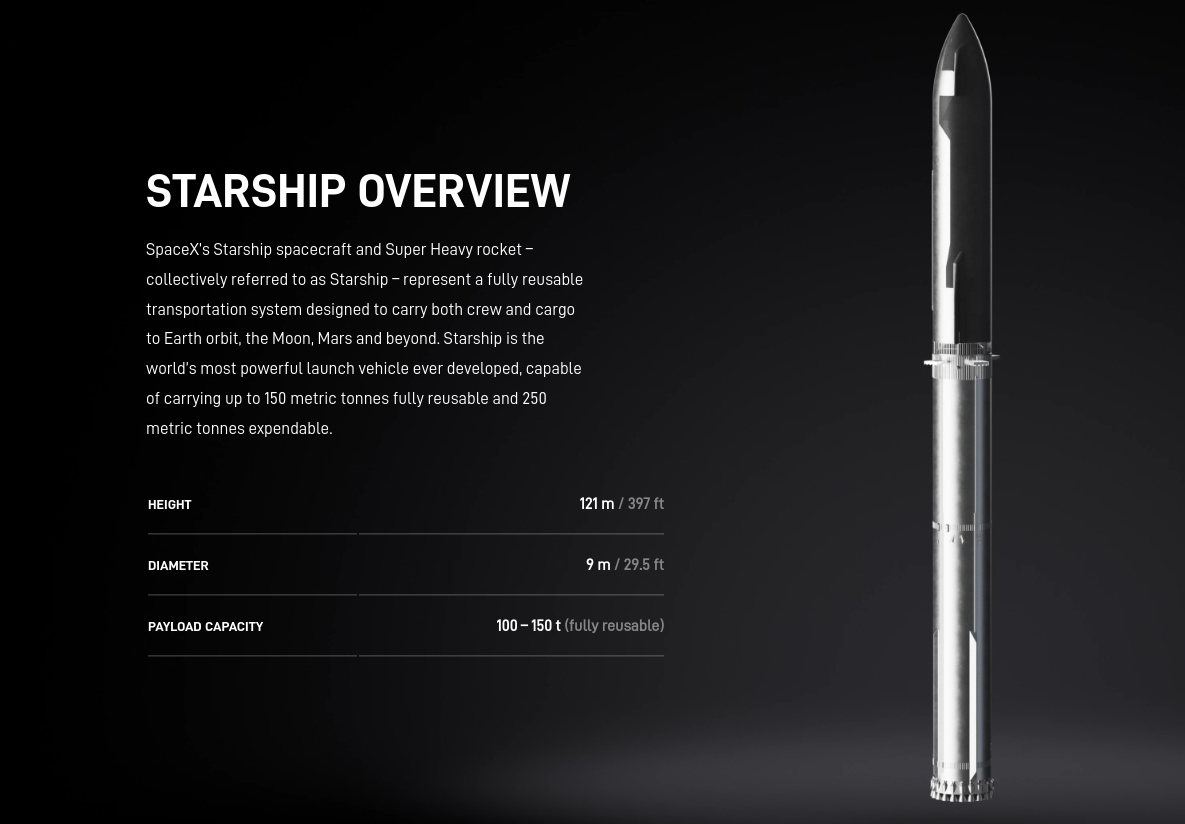
Image (Credit): Starship hot-staging separation earlier today. (SpaceX)

Earlier today, SpaceX lost contact with its Starship rocket about 10 minutes into the launch. This happened after the second-stage separation, so while a successful landing of the rocket did not occur, the rocket had more success than the launch earlier this year.

After what appeared to be a self-detonation of the Starship rocket, the Federal Aviation Administration stated, “The anomaly resulted in a loss of the vehicle. No injuries or public property damage have been reported.” That includes the launchpad, which was basically destroyed during the last launch.

Baby steps.

It is not clear if this latest incident will lead to another long delay before another attempt is possible. And such tests are increasingly expensive when your reusable parts continue to blow up rather than land.

A lot is riding on these launches, as well as the reusable feature, given that NASA is estimating that as many as 20 Starship launches will be necessary under the Artemis III moon mission. Of course, if someone asked NASA to schedule 20 Space Launch System launches in this way, I doubt we would even be talking about an Artemis program.

Mr. Musk has promised a lot to the US space program. We need his full attention on this project.
AI Shown to be Useful for a Mars Mission

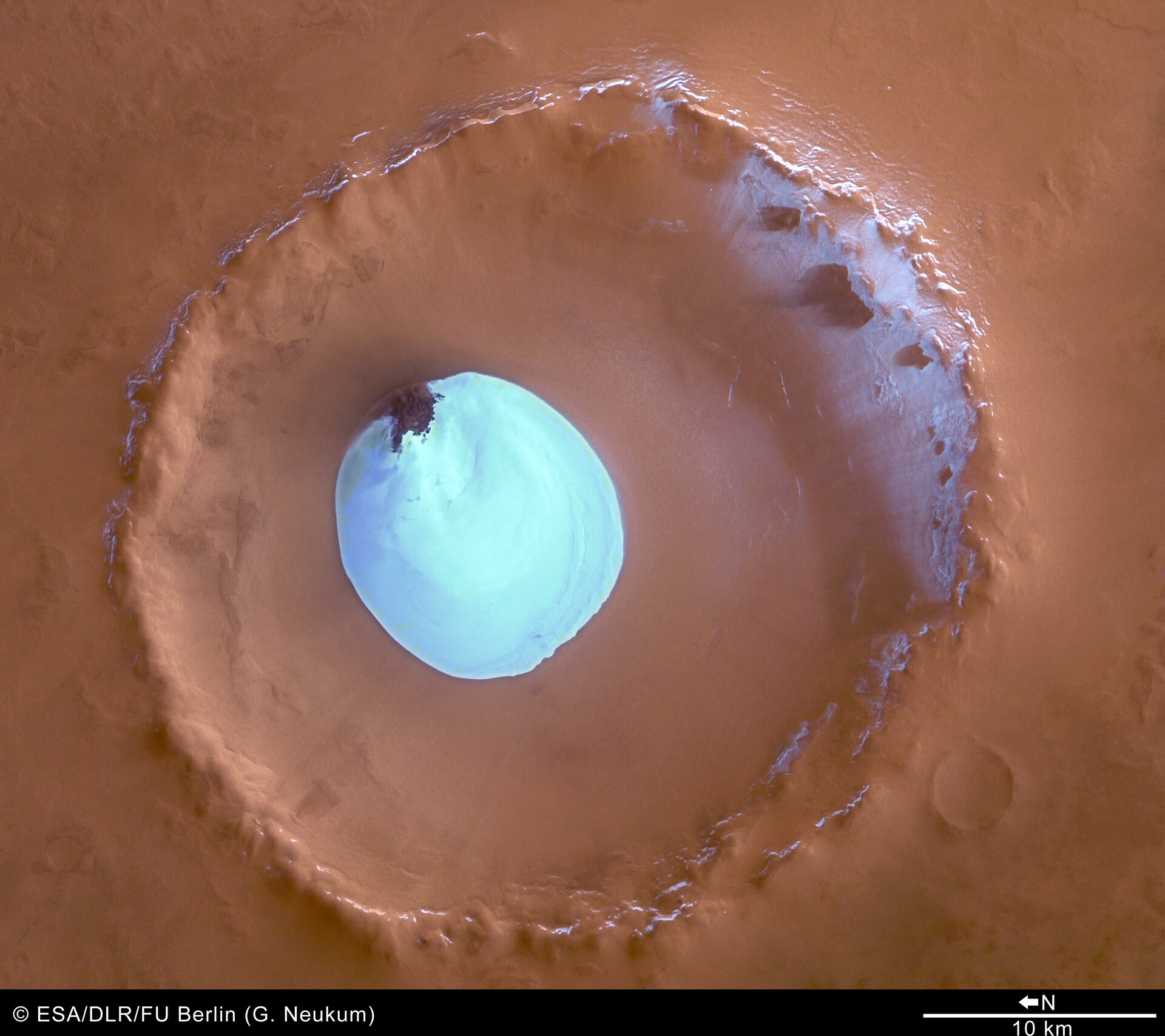
Image (Credit): Martian impact crater located on Vastitas Borealis with residual water ice. (ESA/DLR/FU Berlin (G. Neukum))

While the media is continually writing about artificial intelligence (AI) doing a kid’s homework and then destroying the world, maybe AI does have some utility in preparing us for a second world.

A study published in Nature Synthesis found that AI may be useful in finding ways to extract oxygen from water on Mars. Scientists from China used AI to analyze about 3.7 million formulae to identify a chemical that could break down water. A single researcher would have needed about 2,000 years to perform similar analysis.

While other programs are also looking at ways to extract oxygen from the Martian surface or atmosphere (such as NASA’s MOXIE), this study demonstrates the power of AI and its ability to potentially produce other needed material for survival on Mars.

Mr. Musk may not like AI, but he may want to have it on hand if he ever finds himself on Mars.

Starship May Launch on Saturday

Credit: SpaceX

The Federal Aviation Administration has given SpaceX a green light to move forward with its next test of the Starship rocket. SpaceX may attempt the launch as soon as Saturday.

Let’s hope SpaceX can get back on track with its rocket. NASA is counting on the Starship as part of its Artemis III mission returning humans to the Moon, though recent delays have concerned all parties and may push off the Moon mission.

Space Stories: Name-dropping on Europa, Flying Toolboxes, and Space Veggies

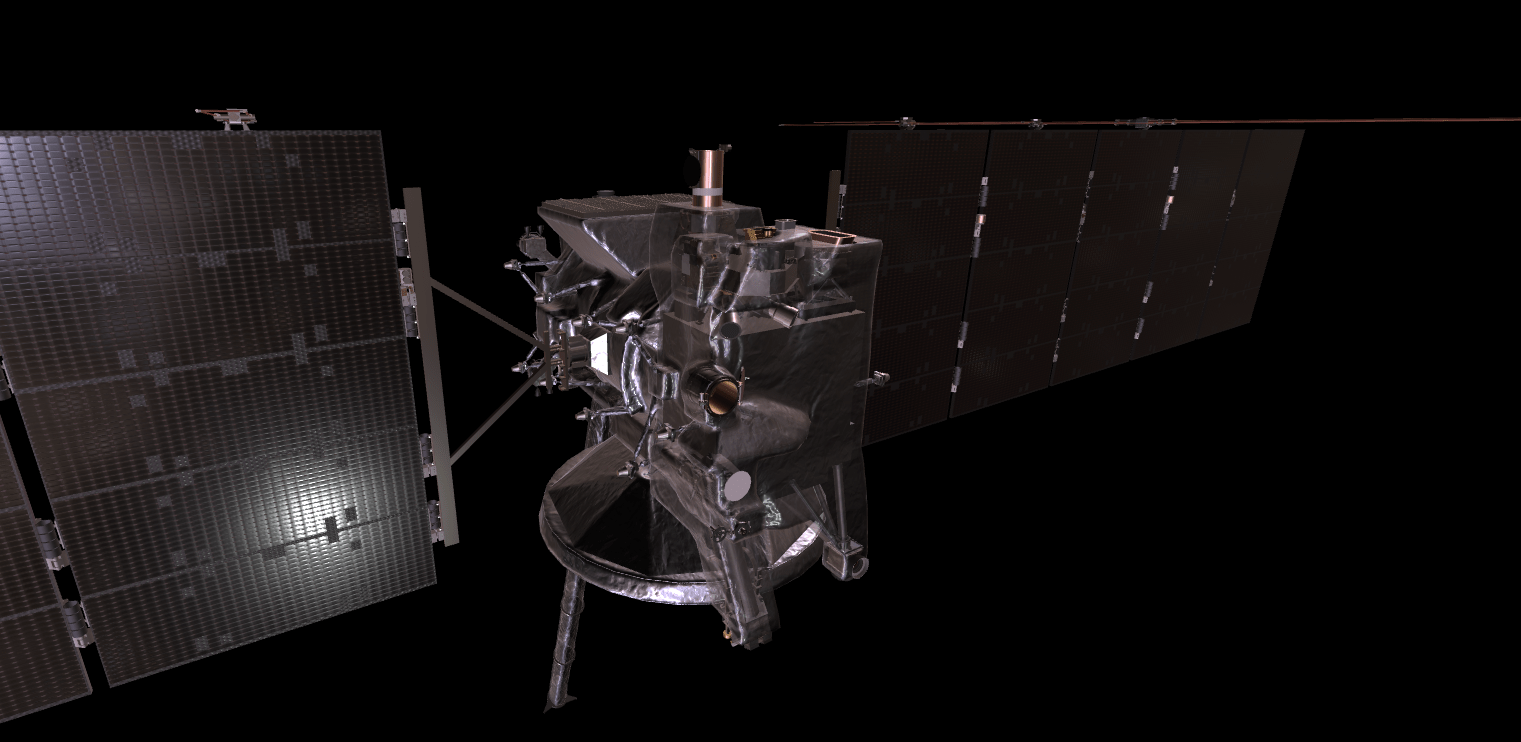
Image (Credit): NASA’s Europa Clipper. (NASA)

Here are some recent stories of interest.

NASA JPL: “Time is Running Out to Add Your Name to NASA’s Europa Clipper

Six weeks remain for you to add your name to a microchip that will ride aboard the spacecraft as it explores Jupiter’s moon Europa. It’s not every day that members of the public have the chance to send their names into deep space beyond Mars, all the way to Jupiter and its moon Europa. But with NASA’s Europa Clipper, you have that opportunity: Names will ride aboard the spacecraft as it journeys 1.8 billion miles (2.6 billion kilometers) to this icy moon, where an ocean hides beneath a frozen outer shell. The deadline to join the mission’s “Message in a Bottle” campaign is only six weeks away. The campaign closes at 11:59 p.m. EST, Dec. 31, 2023.

NBC News: “Look! Up in the sky! It’s a bird! It’s a plane! It’s … a tool bag?

That’s no moon. An astronaut’s tool bag that accidentally floated away during a routine spacewalk at the International Space Station is now orbiting Earth and may be bright enough to spot by keen-eyed skywatchers. The bag drifted away from the space station this month when NASA astronauts Jasmin Moghbeli and Loral O’Hara were performing maintenance on the exterior of the orbiting outpost.

LiveScience: “China Successfully Grows Lettuce and Tomatoes Aboard Tiangong Space Station

China’s Shenzhou 16 astronauts have been growing vegetables aboard the Tiangong space station, as part of plans for future deep space exploration. Mission commander Jing Haipeng and rookie astros Zhu Yangzhu and Gui Haichao have been aboard Tiangong since late May and are due to return to Earth on Oct. 31, after handing over control of the station to the newly arrived Shenzhou 17 mission crew. Jing and company have spent time cultivating veggies using two sets of specialized equipment. The first started operation in June and has reaped four batches of lettuce. The second one was put into operation in August for growing cherry tomatoes and green onions.

Video: Be Sure to Download the NASA+ App

If you are trying to learn more about the space programs at NASA, you can download the recently updated NASA+ app, which has a variety of videos and astronomy series to please anyone’s curiosity. For instance, check out the videos under “Scientific Wonders” to learn more about the James Webb Space Telescope, the New Horizons mission to Pluto, the Hubble Space Telescope, the Kepler Space Telescope, the OSIRIS-REx asteroid sample return, and much more.

This free app can bring you up to speed on the earlier space programs as well as provide updates on the latest missions. For example, you can watch the video showing yesterday’s docking of the SpaceX CRS-29 Cargo Dragon Resupply Craft with the International Space Program.

You cannot go wrong with this free app. You can read more about the updated NASA+ app here.