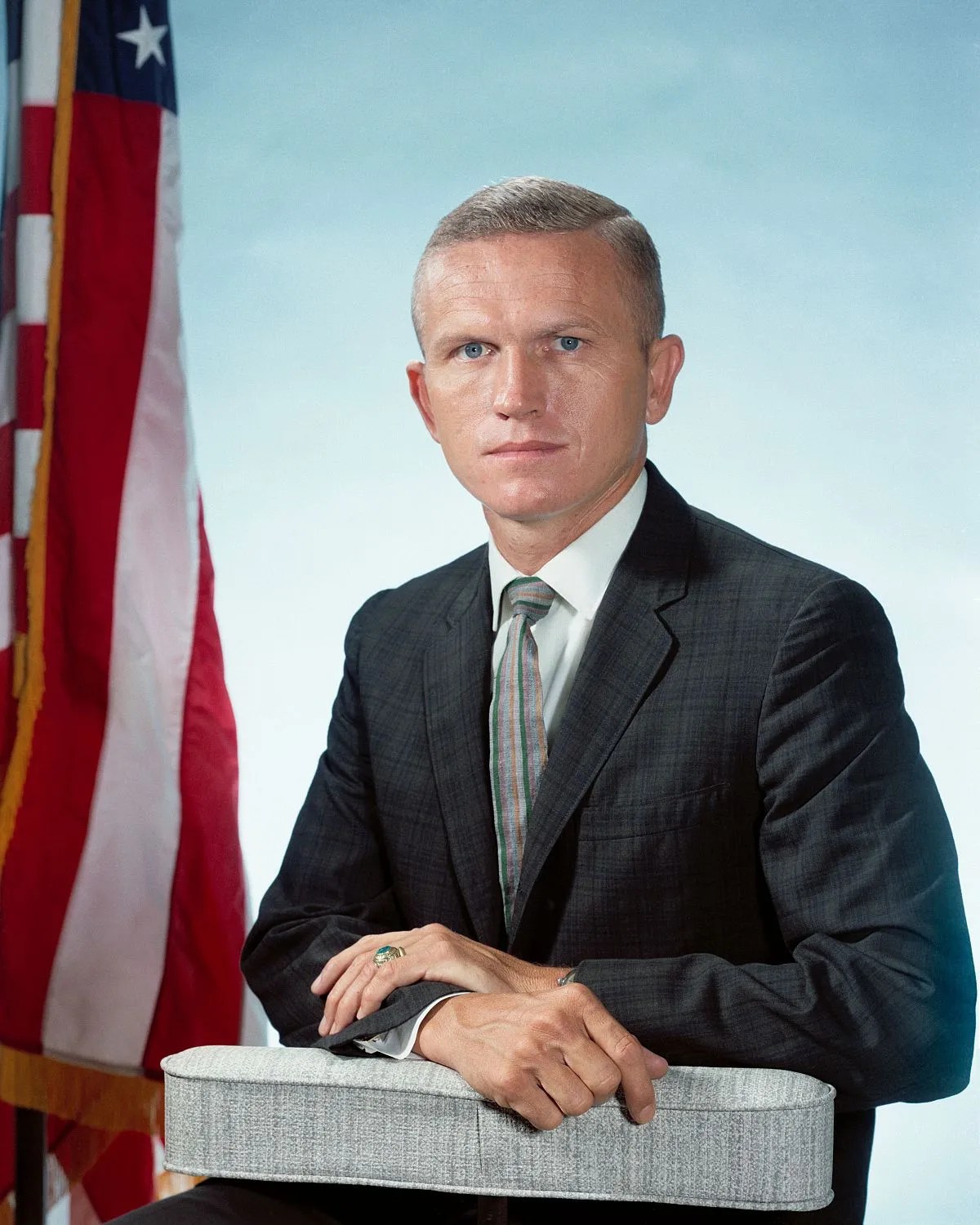
RIP: Frank Borman, Apollo Astronaut

Image (Credit): Former NASA astronaut Col. (ret.) Frank Borman. (NASA)

Earlier this week, former astronaut Frank Borman, age 95, passed away at his home in Billings, Montana. He was most famous for his role as Commander of the 1968 Apollo 8 Mission, which was the first manned mission to circle the Moon.

He was NASA’s oldest living astronaut.

Here is one of Mr. Borman’s observations that was never answered years ago, nor can it be answered today:

When you’re finally up on the moon, looking back at the earth, all these differences and nationalistic traits are pretty well going to blend and you’re going to get a concept that maybe this is really one world and why the hell can’t we learn to live together like decent people?

You can read more on Mr. Borman’s life and career at these sites:

Rest in peace.
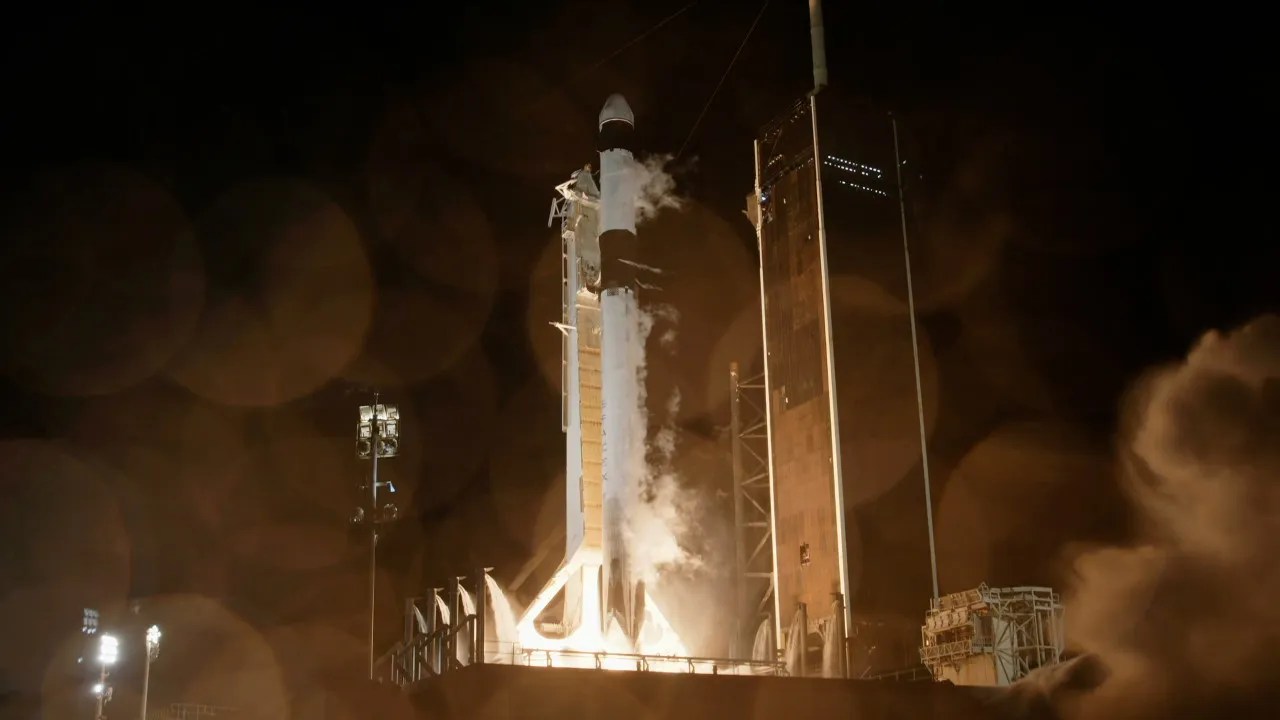
Another Mission to Resupply the ISS Underway

Image (Credit): The launch of the CRS-19 resupply mission to the ISS on Thursday, November 9. (NASA)

Yesterday, NASA sent another resupply mission to the International Space Station (ISS) aboard a SpaceX Dragon spacecraft. It will not rendezvous with the ISS until early Saturday morning (no sleeping in for the crew).

This mission, CRS-29, will be SpaceX’s 29th supply mission to the ISS. The next most frequent resupplier is Northrop Grumman, which has sent 19 resupply missions to the ISS.

If you are interested in the material being brought to the station, NASA discusses some of the contents here.

You can also follow the progress of the latest mission here.

Volunteer to Become a NASA Ambassador

Credit: NASA

What kind of ambassador, you ask? Well, NASA is looking for what are called “Partner Eclipse Ambassadors.” Volunteers for this position will assist NASA as it prepares communities for the April 2024 solar eclipse.

NASA promises the following to support volunteer ambassadors:

  • A supportive network of enthusiasts who regularly share eclipse support;
  • A partner in your community (each partnership consists of an undergraduate and an eclipse enthusiast);
  • Materials including solar viewing glasses, activities, handouts, and more;
  • Connections to local community centers reaching underserved audiences;
  • Regular social hours and presentations from experts in eclipses and communication; and
  • Opportunities to continue your journey with NASA through collaborations with partners in heliophysics, education, and communication.

You have plenty of time to prepare for this event, so check it out. You can get all of the details at this link.

Space Quote: The Return of the Space Shuttle

Image (Credit): Sierra Space employees in front of the new Dream Chaser. (Sierra Nevada)

“I am reminded of a comment made by Steve Jobs that every once in a while, a revolutionary product comes along that changes everything. I think Dream Chaser is that product. This breakthrough shifts paradigms and redefines space travel. The Dream Chaser is not just a product; it’s a testament to human spirit, determination and the relentless pursuit of what lies beyond.”

-Statement by Sierra Space CEO Tom Vice in a company press release announcing the completion of the first Dream Chaser, said to be the “world’s sole commercial runway-capable spaceplane.” Its next stop is NASA’s Neil A. Armstrong Test Facility in Ohio for environmental testing. It is basically an advanced version of the earlier space shuttles that will be launched on a rocket and return by landing on a runway. NASA plans to use the spaceplane to bring cargo to the ISS. As with the initial space shuttle, the reusable craft makes a lot of sense and should help with overall costs. Of course, it is not clear why we had to go without a shuttle for 12 years.

Look What Lucy Found

Image (Credit): A view of the newly discovered second asteroid behind asteroid Dinkinesh. (NASA/Goddard/SwRI/Johns Hopkins APL/NOIRLab)

NASA’s Lucy spacecraft encountered a surprise last Wednesday as it approached the target asteroid Dinkinesh, located in the asteroid belt. Instead of finding a single asteroid, it found a binary pair. Early data indicated that asteroid Dinkinesh is about 0.5 miles wide and its orbiting partner is only 0.15 miles wide.

Lucy did not have time to stick around, but it captured enough images during its fly by to keep astronomers busy for some time. The spacecraft was flying about 10,000 mph as it passed the pair.

Lucy’s primary mission is the Trojan asteroids (that is, asteroids that share Jupiter’s orbit around the Sun). And why are they of interest? NASA mission page tells us:

Planet formation and evolution models suggest that the Trojan asteroids are likely to be remnants of the same primordial material that formed the outer planets (Jupiter, Saturn, Uranus, and Neptune), and thus serve as time capsules from the birth of our solar system over four billion years ago.

We may have many more surprises before Lucy finishes her 12-year mission.