Image (Credit): Alan Alda’s podcast Clear & Vivid (Amazon)
I wanted to highlight another astronomy interview from Alan Alda’s Clear+Vividpodcast, in this case involving a mother and daughter team. Astronomers Natalie and Natasha Batalha discuss “Looking for Life on Alien Worlds” using the new James Webb Space Telescope. The two guests discuss upcoming efforts to better understand the 5,000+ planets that have already been discovered. One of their favorites among the exoplanet systems is the TRAPPIST-1 system, noting the parent red star is about the size of Jupiter. This small star has seven exoplanets, with the “Goldilocks zone” being much closer in than is the case in our system.
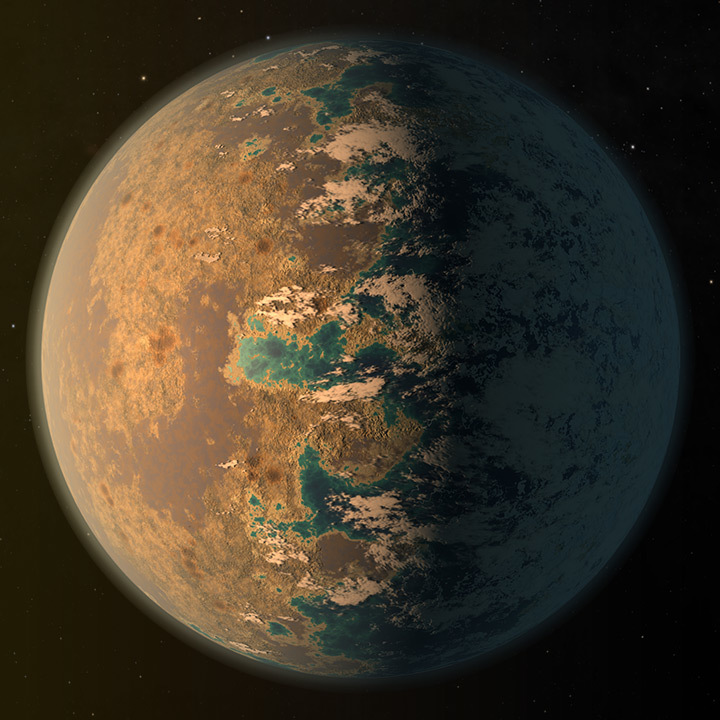
NASA describes one of the exoplanets in the “Goldilocks zone,” TRAPPIST-1d, in this way:
TRAPPIST-1d is one of seven Earth-sized planets in the TRAPPIST-1 system. About 40 light-years from Earth, TRAPPIST-1 is unusual both for its number of small rocky planets and the number in the habitable zone. Several of the artist’s illustrations…portray possible water or ice in the system– the proximity of the planets to their red dwarf star may indicate that any of them could have water on their surface. This artist’s concept shows TRAPPIST-1d with a narrow band of water near the terminator, the divide between a hot, dry day and an ice-covered night side.
You can read more about the TRAPPIST-1 system here.
Image (Credit): Artist’s image of exoplanet TRAPPIST-1d. (NASA)
Alan Alda recently interviewed Canadian astronaut Chris Hadfield to discuss his space work, singing career, and recent book. You can catch all of it on Mr. Alda’s podcast Clear+Vivid. For instance, Mr. Hadfield notes that he used duct tape on the International Space Station (ISS) to cover over bullet-sized holes in the station’s exterior handrails torn up by space debris. This is not exactly a high-tech solution, but it works and prevents the rough edges of the damaged rails from tearing into this space suit.
Mr. Hadfield also shares his story about the time he was blinded during an ISS space walk. Amazingly, he continued with the eight-hour space walk after a quick fix bled air from his suit and restored his vision.
You can also learn about the work that went into his now famous space-based version of David Bowie’s “Space Oddity” (see below). He notes that he had plenty of time on the ISS to write his own songs as well.
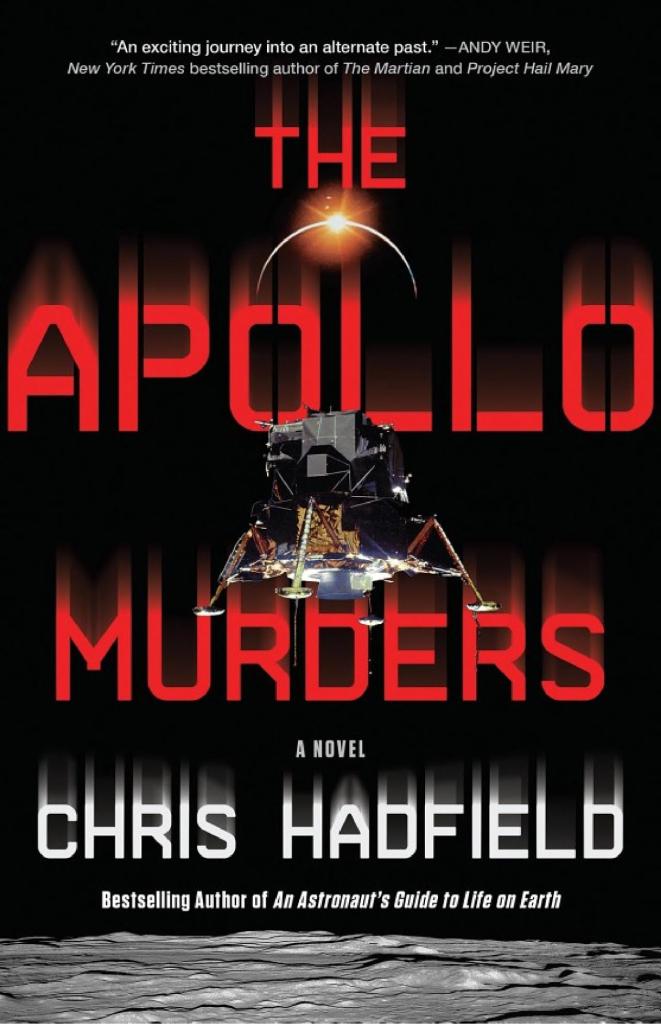
And should you be looking for a good adventure book, Mr. Hadfield book The Apollo Murdersmay solve that craving. It has enough real space stories intertwined within this thriller to keep it interesting. Here is the blurb for the book:
1973: a final, top-secret mission to the Moon. Three astronauts in a tiny spaceship, a quarter million miles from home. A quarter million miles from help.
NASA is about to launch Apollo 18. While the mission has been billed as a scientific one, flight controller Kazimieras “Kaz” Zemeckis knows there is a darker objective. Intelligence has discovered a secret Soviet space station spying on America, and Apollo 18 may be the only chance to stop it.
But even as Kaz races to keep the NASA crew one step ahead of their Russian rivals, a deadly accident reveals that not everyone involved is quite who they were thought to be. With political stakes stretched to the breaking point, the White House and the Kremlin can only watch as their astronauts collide on the lunar surface, far beyond the reach of law or rescue.
Full of the fascinating technical detail that fans of The Martian loved, and reminiscent of the thrilling claustrophobia, twists, and tension of The Hunt for Red October, The Apollo Murders is a high-stakes thriller unlike any other. Chris Hadfield captures the fierce G-forces of launch, the frozen loneliness of space, and the fear of holding on to the outside of a spacecraft orbiting the Earth at 17,000 miles per hour as only someone who has experienced all of these things in real life can.
Strap in and count down for the ride of a lifetime.
Alan Alda calls Mr. Hadfield a great communicator for space programs. Given all of his efforts and talents, it is hard to disagree.
Image (Credit): Chris Hadfield’s video singing “Space Oddity” on the ISS. (Canadian Space Agency)
Image (Credit): Chris Hadfield’s latest book. (Mulholland Books)
Yes, the title is bleak, but it is worth going through this earlier podcast to ponder the future of mankind in a universe that has not shown any other inhabitants to date. Is this because of some internal or external filtering mechanism, such as nuclear war or the dangers or space travel? Is there something special about humans here on Earth? Josh Clark, who you may know from the podcast Stuff You Should Know, does a nice job narrating this inquiry. He discusses his new show here.
The Great Filter hypothesis says we’re alone in the universe because the process of evolution contains some filter that prevents life from spreading into the universe. Have we passed it or is it in our future? Humanity’s survival may depend on the answer.
Interviewees: Robin Hanson, George Mason University economist (creator of the Great Filter hypothesis); Toby Ord, Oxford University philosopher; Donald Brownlee, University of Washington astrobiologist (co-creator of the Rare Earth hypothesis); Phoebe Cohen, Williams College paleontologist.
—Episode 7: Biotechnology
Natural viruses and bacteria can be deadly enough; the 1918 Spanish Flu killed 50 million people in four months. But risky new research, carried out in an unknown number of labs around the world, are creating even more dangerous humanmade pathogens.
Interviewees: Beth Willis, former chair, Containment Laboratory Community Advisory Committee; Dr Lynn Klotz, senior fellow at the Center for Arms Control and Non-Proliferation.
Just think of it as a long investigation of the Fermi Paradox – the conflict between the expectation that intelligent life can be found throughout the universe and the lack of any clear evidence that this is so. Are we the issue, or is it something out there?
The podcast came out in 2018 (before COVID, so the biotechnology episode missed the latest crisis), but the points in each episode remain relevant. Josh Clark gives you a lot to ponder.
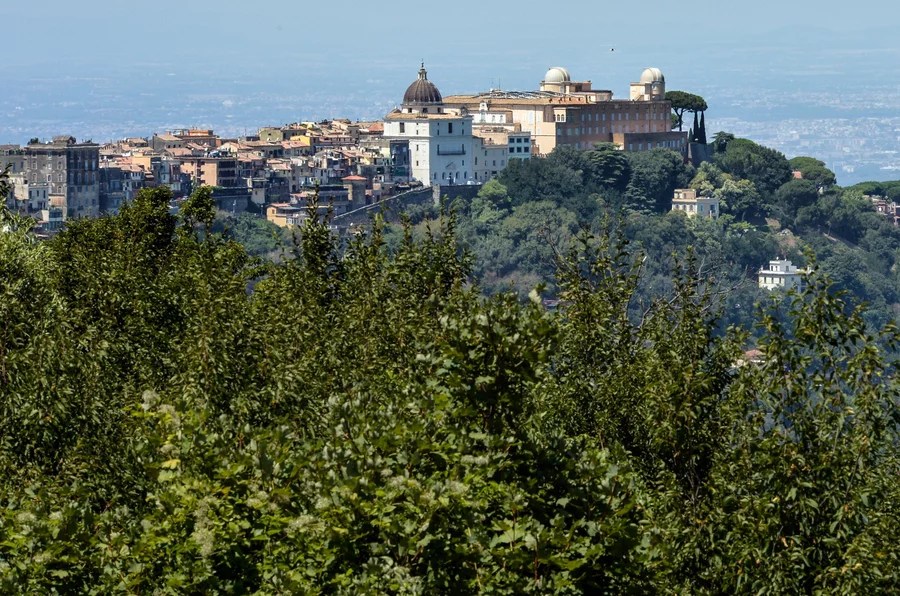
Source/Credit: The telescope domes on the roof of the Vatican Observatory, at the Apostolic Palace in Castel Gandolfo from Andreas Solaro/AFP via Getty Images.
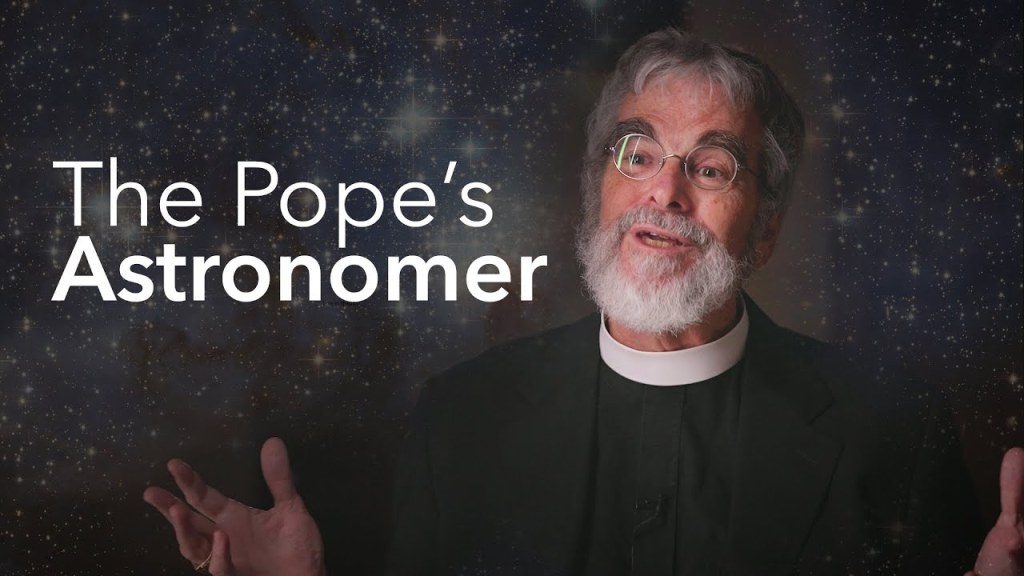
Just in case you missed it, I recommend you read NPR’s June 2021 article, “The Vatican’s Space Observatory Wants To See Stars And Faith Align.” You can read about the interplay of astronomy and the Catholic Church. For instance, did you know the idea of the Big Bang originated with a Belgian priest? Or that the Vatican Observatory coordinates with NASA on space issues?
You can learn more from the article. You might also want to visit the Vatican Observatory’s website or listen to one of the podcasts from the Observatory.
Click the image of Brother Guy Consolmagno for a video.
Source/Credit:The Joe Rogan Experience on YouTube.
While Joe Rogan has been in some hot water recently, I think we can agree that many of his broadcasts were less controversial and simply fun. He is a good host with plenty of though-provoking questions. I do not want to get into politics, but rather focus on science. And in that case, his two-and-a-half hour discussion on January 28, 2019 with Professor Brian Cox, English physicist and Professor of Particle Physics in the School of Physics and Astronomy at the University of Manchester in the UK, was a terrific way to go over both astronomy and physics.
Some of the topics covered during their talk included the size and complexity of the universe, black holes, wormholes, time travel, the Fermi Paradox, unknown objects at the edge of our solar system, space travel, lasers in space, and the role of artificial intelligence in society. The forum provided plenty of time to cover a large range of topics. It is well worth dropping in and listening.
Some other discussions worth watching include Joe Rogan’s August 22, 2018 discussion with Neil deGrasse Tyson and his May 7, 2020 discussion with Elon Musk.




 Our Awesome Universe