Image (Credit): Artist’s rendering of a proposed Planet Nine. (NASA/JPL-Caltech)
I listened to a recent Cool Worlds Lab podcast where Professor David Kipping interviewed Professor Malena Rice from Yale University’s Department of Astronomy. The episode, titled Planet Nine, Oumuamua, Misaligned Exoplanets, covered a good range of topics, as the title suggests.
Of greatest interest to me was the continued search for a ninth planet in our solar system (sorry, Pluto). Professor Rice was noncommittal on the likelihood of such a planet, but she is hoping NASA’s Transiting Exoplanet Survey Satellite (TESS) can help to bring more light to the topic.
She discussed how this ninth planet is estimated to be a sub-Neptune sized planet, which appears to be common in many other solar systems we have observed. Planet Nine is estimated to be a gas giant about 5-10 times the mass of Earth yet smaller than Neptune lying 300-800 astronomical units from the Sun (or about 10 times more distant that Pluto).
Professor Rice noted that it is pretty amazing that we can discover distant galaxies but not potential planets in our backyard. She attributes this difficulty to the lack of light on such a planet.
The podcast episode dives deep in this topic, and then continues into other fascinating topics such as visitors to our solar system and strange solar systems elsewhere. It is a lot to take in, but well worth the time even if you need to play it more than once.
Note: Of course, it may not be a planet at all. One theory is that it is a black hole at the edge of our solar system. I would like to hear that podcast as well.
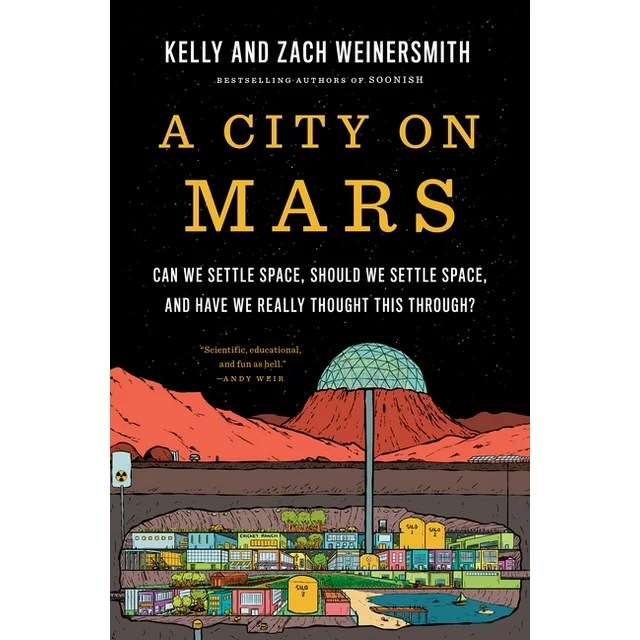
The bottom line is that we should not rush towards permanent settlements at either location until we know more about the human body, the human mind, and human politics (good luck with the last one).
The conversation covers a variety of risks, including the effects of gravity on the human body, the ability to procreate in space, and the effectiveness of treaties as nations plan to settle and mine the Moon and Mars. The authors note that we have not had ample time to study all of these issues even with the International Space Station (ISS) in orbit because this has not been the focus of many space efforts to date. For instance, the ISS does not test the impact of radiation on humans because it is in low Earth orbit within the protection of the planet’s magnetic field.
Overall, the authors advise time and more study before jumping into a settlement. This may mean putting off permanent settlements for a few hundred years.
And what about Elon Musk’s plan to start shipping colonists to Mars in his lifetime? As with many things related to Mr. Musk, he does oversell ideas. His energy in the infrastructure realm is good, but his predictions related to humanity in general are usually unreliable.
Image (Credit): Artist’s rendering of a Martian space city. (SpaceX)
You may know Bill Maher from his TV show Real Time, but he really lets loose on his podcast Club Random, which can be found in the form of a podcast or Youtube video. If you are interested, then there is not better place to start than with his recent sit down with astrophysicist Neil deGrasse Tyson.
The two friends discuss just about everything, with Bill sometimes barking at Neil, but it is all in good fun (and the drinks probably helped). You can hear about politics, a little bit of science, the state of the world today, and more.
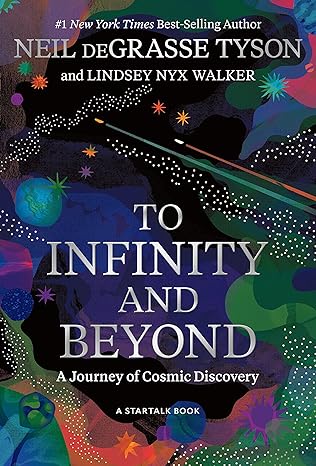
Neil deGrasse Tyson also brought his latest book to the program, To Infinity and Beyond: A Journey of Cosmic Discovery, but the two spend very little time covering the book and its contents. This was a podcast without a clear agenda, which is common for Bill Maher in these settings.
So if you just want to see Neil deGrasse Tyson relaxing with a friend, it is a great show.
Last month there were a few podcasts worth checking out on our search for intelligent life elsewhere in the galaxy.
The first was an episode from The Planetary Society’s podcast Planetary Radio titled Alone but not lonely with Louis Friedman. Dr. Friedman, co-founder of The Planetary Society, is very skeptical about the Search for Extraterrestrial Life (SETI) efforts, believing we are most likely alone in the universe in terms of intelligent life and, even if there were other lifeforms out there, they are too far away for us to engage with it. That said, he does have ideas for studying exoplanets, such as a solar gravity lens that could significantly magnify the objects we are viewing.
He also discusses The Planetary Society’s solar sail spacecraft and how it could be left floating in our solar system awaiting and then inspecting incoming objects from outside our solar system. Its a great idea. You can read more about his ideas in his latest book (shown above).
The second episode is from Cool Worlds Lab titled Adam Frank – Technosignatures, Semantic Information, Galactic Colonization. Dr. Frank, a Professor of Physics and Astronomy at Rochester University, is much more optimistic about our ability to eventually find intelligent life in the galaxy and discusses the methods being used today to do so (going beyond the decades old SETI approach). He agrees with Dr. Friedman that we are dealing with great distances that may preclude human travel to these locations.
Dr. Frank even discusses the idea that maybe we were visited by alien civilizations in the past and we don’t know it because we were not here at the time. He discussed this very topic an much more in an earlier Scientific American article, “Alone in a Crowded Milky Way,” stating:
Perhaps long, long ago aliens came and went. A number of scientists have, over the years, discussed the possibility of looking for artifacts that might have been left behind after such visitations of our solar system. The necessary scope of a complete search is hard to predict, but the situation on Earth alone turns out to be a bit more manageable. In 2018 another of my colleagues, Gavin Schmidt of the NASA Goddard Institute for Space Studies, together with Frank, produced a critical assessment of whether we could even tell if there had been an earlier industrial civilization on our planet.
As fantastic as it may seem, Schmidt and Frank argue—as do most planetary scientists—that it is actually very easy for time to erase essentially all signs of technological life on Earth. The only real evidence after a million or more years would boil down to isotopic or chemical stratigraphic anomalies—odd features such as synthetic molecules, plastics or radioactive fallout. Fossil remains and other paleontological markers are so rare and so contingent on special conditions of formation that they might not tell us anything in this case.
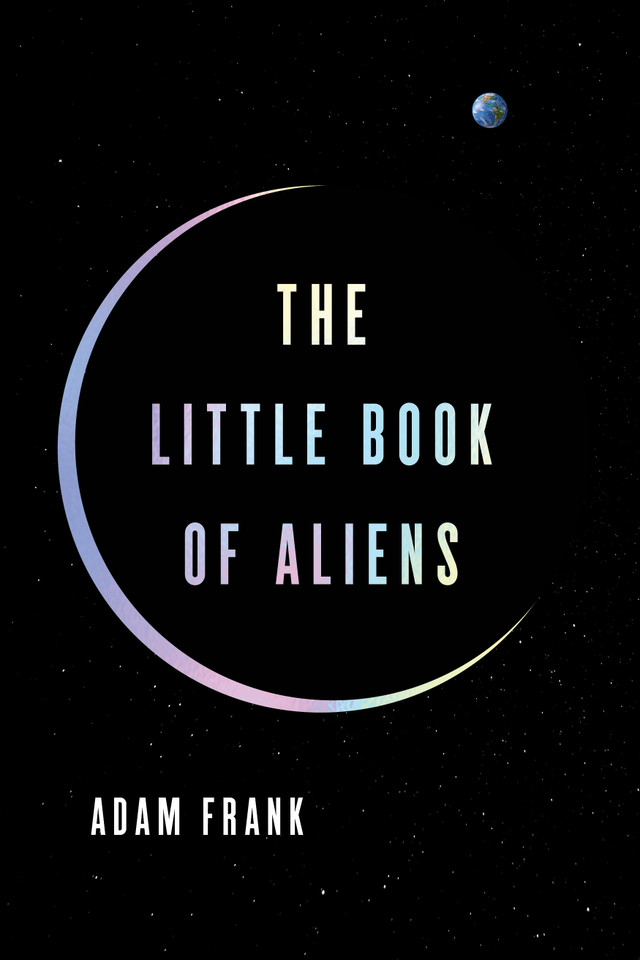
It’s a terrific article that also argues that we may be in a part of the galaxy that gets fewer visitors. I recommend listening to the podcast and then reading the article (or checking out his book on the topic, shown below).
Image (Credit): Earlier SN10 Starship prototype bursting into flames and exploding soon after landing. (NASASpaceflight)
Last week, The Wall Street Journal had a good story on Elon Musk titled “Elon Musk’s Latest Antics Have Some Asking: Is He Out of Touch?” It discuses his frat-like behavior challenging Meta’s Mark Zuckerberg to a fight, his strange behavior at Twitter, and the shrinking set of friends and colleagues able to keep him from going adrift in his own bubble. The story notes:
Such antics are leading some Musk supporters to worry aloud that he has lost touch, saying he is ensconced in a distorted reality that is warping his perspective and threatening his businesses at a time when he is trying to oversee multiple companies in different industries.
Of course, one of those companies is SpaceX, which has become the backbone of NASA and the US satellite industry. SpaceX also runs Starlink, which is now a key part of the battle against Russia as it supplies Internet services to the Ukrainian military.
Musk has styled himself as the Trump of Technology – breaking established rules, failing to pay his bills, attacking critics (in-house, as well), and generally seeing what he can get away with before it all collapses.
Can one distracted man manage all of these companies? Should one distracted man manage all of these companies? And should our government be so reliant on him in the space and defense arenas? Or is SpaceX becoming the next Wagner Group, a government-funded satellite that is starting to think it is smarter than its paymaster? We all know how that ended.
We’re talking about Elon – again – but this time we’re looking at the big picture: the tech titan’s “unprecedented power” over our the federal government and national security, as encapsulated in Pulitzer Prize-winning reporter Ronan Farrow’s latest New Yorker profile. William Cohan, a financial journalist and founding partner of Puck News, also joins to break down the varying fortunes of SpaceX, Tesla and Twitter, and the sustainability of those companies under a leader that is ambitious, but capricious. Stay til the end to hear Kara tell Nayeema why, despite his shenanigans, she still has empathy for Elon Musk.
You should also check out Ronan Farrow’s The New Yorker article, “Elon Musk’s Shadow Rule.” While acknowledging that some industrialists have had inordinate influence over US politics in the past, the piece notes:
But Musk’s influence is more brazen and expansive. There is little precedent for a civilian’s becoming the arbiter of a war between nations in such a granular way, or for the degree of dependency that the U.S. now has on Musk in a variety of fields, from the future of energy and transportation to the exploration of space.
This really doesn’t sound all that sustainable, or wise. I hope Uncle Sam has a Plan B should Musk run it all into the ground or walks away with all of his marbles (assuming has has any left).






 Our Awesome Universe