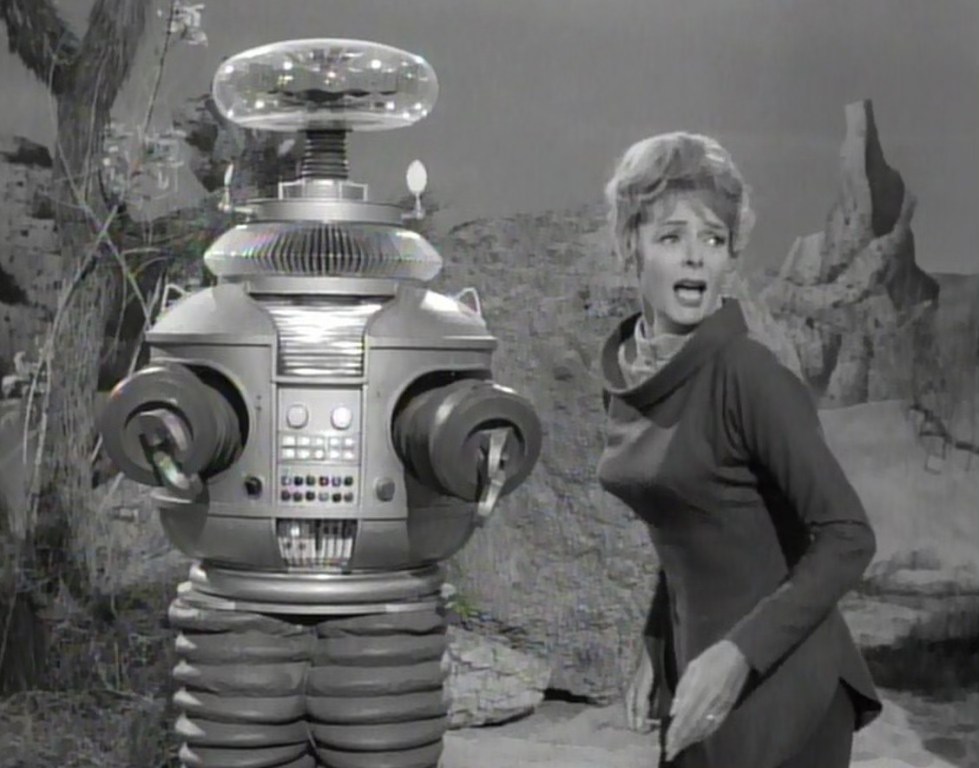
RIP: June Lockhart, Actress

Image (Credit): June Lockhart in the television series Lost in Space. (20th Century Fox Television)

Actress June Lockhart passed away last Thursday at the age of 100. She had a storied career in both movies and television, including the 1960s television shows Lassie and Lost in Space.

Lost in Space was a somewhat silly story about the Robinson family migrating from an overpopulated Earth to a exoplanet orbiting Alpha Centauri. Of course, just like the story in Gilligan’s Island, the five-and-a-half year tour turned into a new adventure among the stars.

The show was best known for the robot always spouting “Danger, Will Robinson!” in reference to the son whose mother was played by June Lockhart. Of course, Star Trek premiered during that same period with some of the same silliness. It seems we did not achieve our darker sentiments about humans in space until somewhat later.

With regard to her time with Lost in Space, Ms. Lockhart stated to Fox News:

I was over the moon – pun intended. … I have been told that my contribution inspired many astronauts to pursue a career in space science and exploration … it is lovely to know that I touched so many people by doing things that interested me!

The 1998 movie Lost in Space did little to revive interest in the series (or space from what I can tell), but the Neflix television series of the same name did a nice job bringing the Robinson family back to life. If you are looking for a great updated adventure story about a boy and his robot traveling through space, you might want to start with the Netflix version.

You can read more on Ms. Lockhart’s life and career at these sites:

BBC
CBS News
The New York Times

Rest in peace.

Image (Credit): Poster for the 1998 movie Lost in Space. (New Line Cinema)
Image (Credit): Poster for the 2018 television series Lost in Space. (Netflix)

RIP: Jim Lovell, Apollo Astronaut

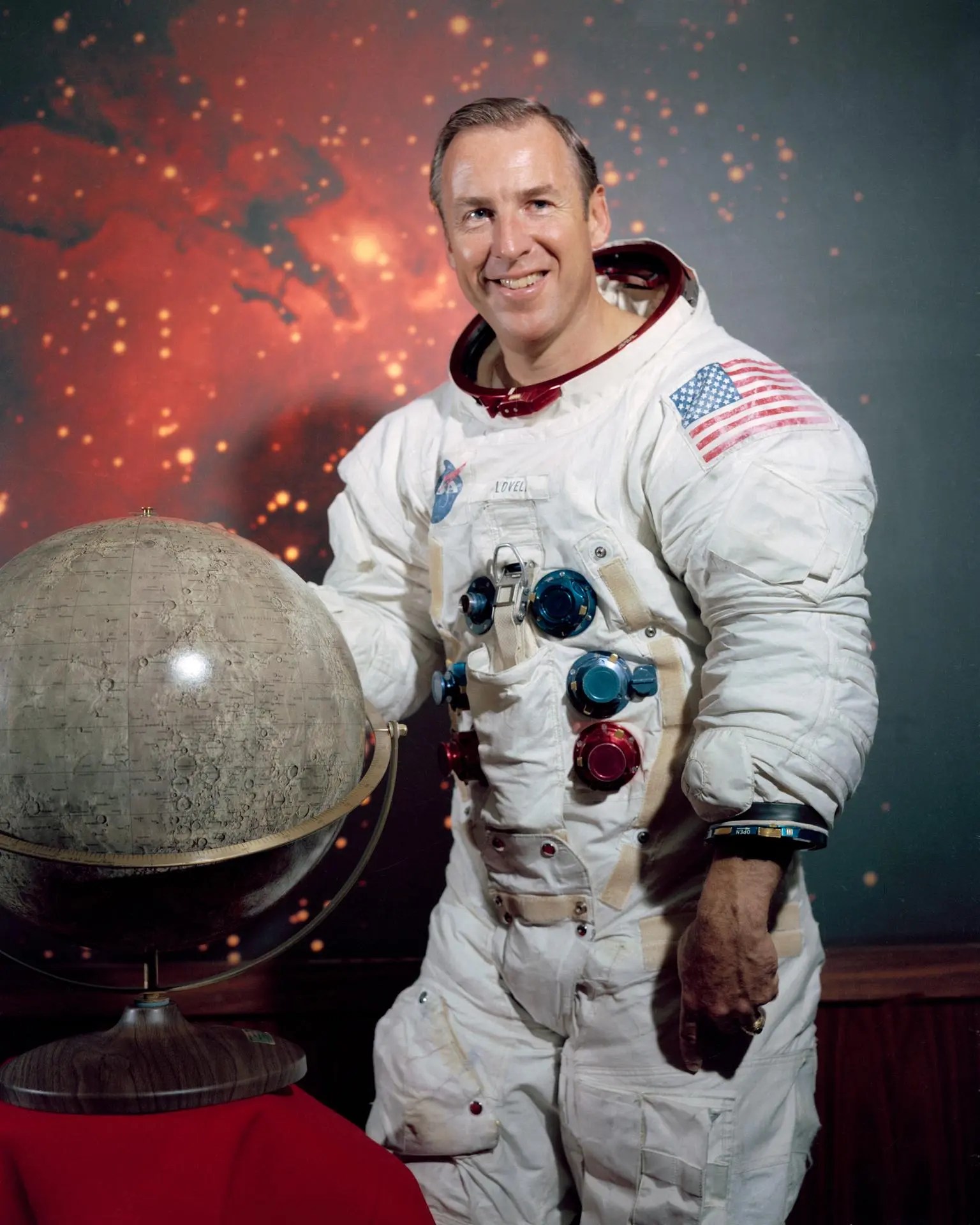
Image (Credit): NASA astronaut Jim Lovell. (NASA)

Last Thursday, former NASA astronaut Jim Lovell passed away at the age of 97. Mr. Lovell was one of the first astronauts to orbit the Moon in Apollo 8, and he also commanded the Apollo 13 mission around the Moon under great stress after the onboard explosion of an oxygen canister. While the crew was unable to complete its mission by landing on the Moon, he was able to safely bring his crew back to Earth.

In commenting on the Apollo 13 mission, Mr. Lovell later said ““It was plagued by bad omens and bad luck from the very beginning.” Even so, he was part of a long tradition of trial and error as the U.S. stretched itself and eventually ferried men and supplies to the lunar surface. The deaths of three astronauts in the Apollo 1 capsule had shown the world that a mission to the Moon was a dangerous gamble.

Mr. Lovell took his chances and we are all the better for it. He also stated:

There are people who make things happen, there are people who watch things happen, and there are people who wonder what happened. To be successful, you need to be a person who makes things happen.

He made things happen.

You can read more on Mr. Lovell’s life and career at these sites:

NASA
BBC
The New York Times

Rest in peace.

RIP: Ed Smylie, NASA Engineer

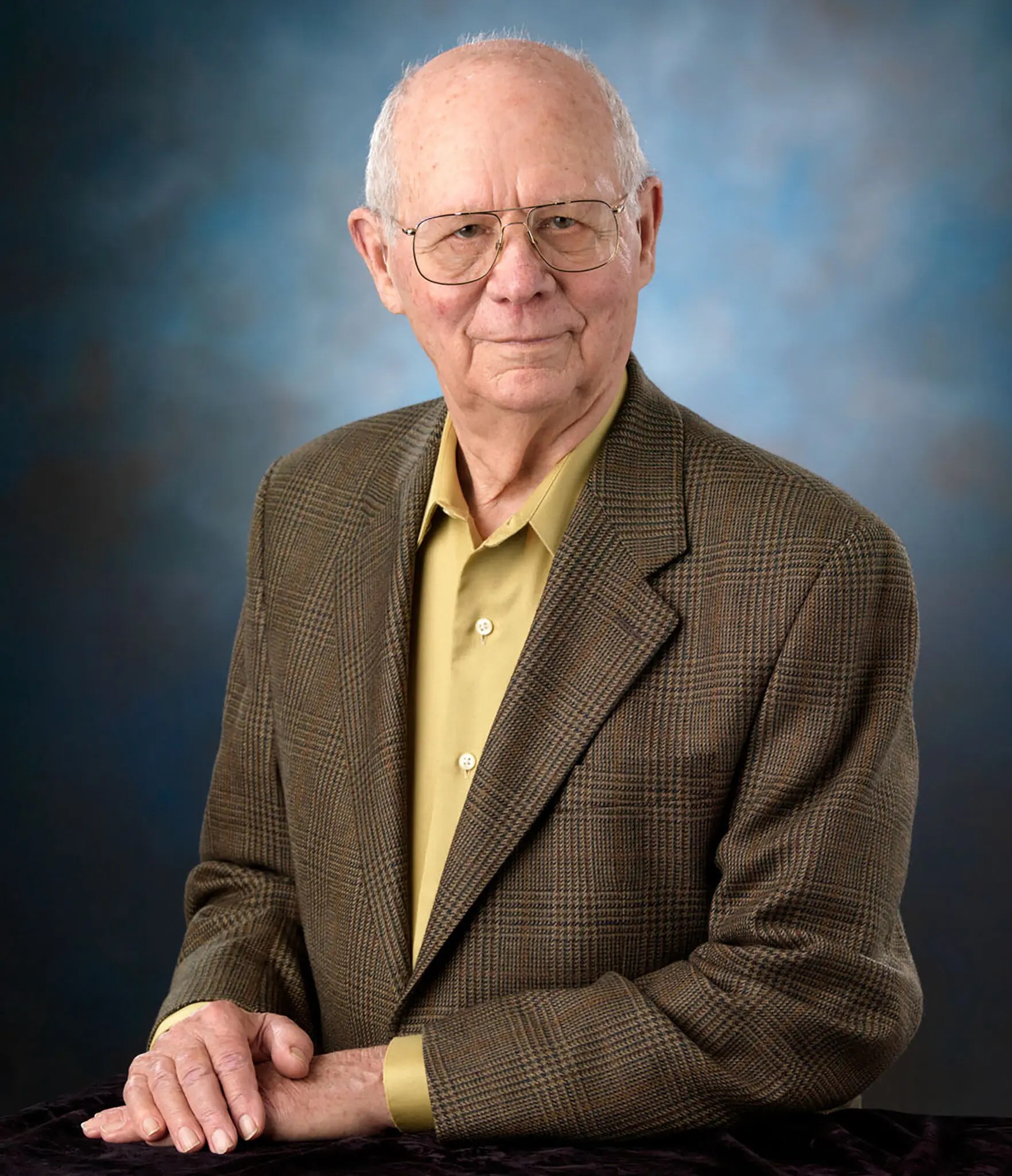
Image (Credit): Former NASA engineer Ed Smylie. (Bill Stafford/NASA)

Last month, former NASA engineer Ed Smylie passed away at the age of 95. He is best known for his efforts leading a NASA team that saved the Apollo 13 crew after the capsule experienced the onboard explosion of an oxygen canister. His quick efforts saved the crew, allowing them to return home safely. You can see it all in color by watching the film Apollo 13.

Mr. Smylie left Douglas Aircraft Company and joined NASA after President Kennedy made it clear that the nation would put a man on the Moon. Luckily, he was there at NASA when he was needed.

In a 1999 interview about his efforts to save the Apollo 13 mission, he was very self-effacing about his role in the entire effort:

It was pretty straightforward, even though we got a lot of publicity for it and [President Richard M.] Nixon even mentioned our names. I always argued that that was because that was one you could understand nobody really understood the hard things they were doing. Everybody could understand a filter. I said a mechanical engineering sophomore in college could have come up with it. It was pretty straightforward. But it was important.

You can also read more on Mr. Smylie’s life and career at these sites:

Rest in peace.
RIP: Bill Anders, Apollo 8 Astronaut

Image (Credit): The Earth and Moon as captured by Apollo 8 in 1968. (NASA)

This week Apollo astronaut Bill Anders, age 90, passed away. He died during a plane crash in Washington state.

He was part of an Apollo team that was the first humans to leave low Earth orbit in 1968. He was best known for his Christmas Eve photo of the Earth rising over the surface of the Moon (shown above).

Born in Hong Kong on October 17, 1933, he would graduate from the Naval Academy in 1955, obtain a masters in nuclear engineering, and then serve as a fighter pilot in the US Air Force. In 1964, he was selected by NASA to be an astronaut, serving as a backup pilot for both the Gemini XI and Apollo 11 flights, and most famously serving as lunar module pilot for Apollo 8.

Regarding his “Earthrise” image, Mr. Anders said:

The only color that we could see and contrasted by this really unfriendly, stark lunar horizon, made me think, ‘You know, we really live on a beautiful little planet.’

You can watch a NASA video on Mr. Stafford’s accomplishments here as well as more information on his life here.

You can also read more on Mr. Anders’ life and career at these sites:

Rest in peace.

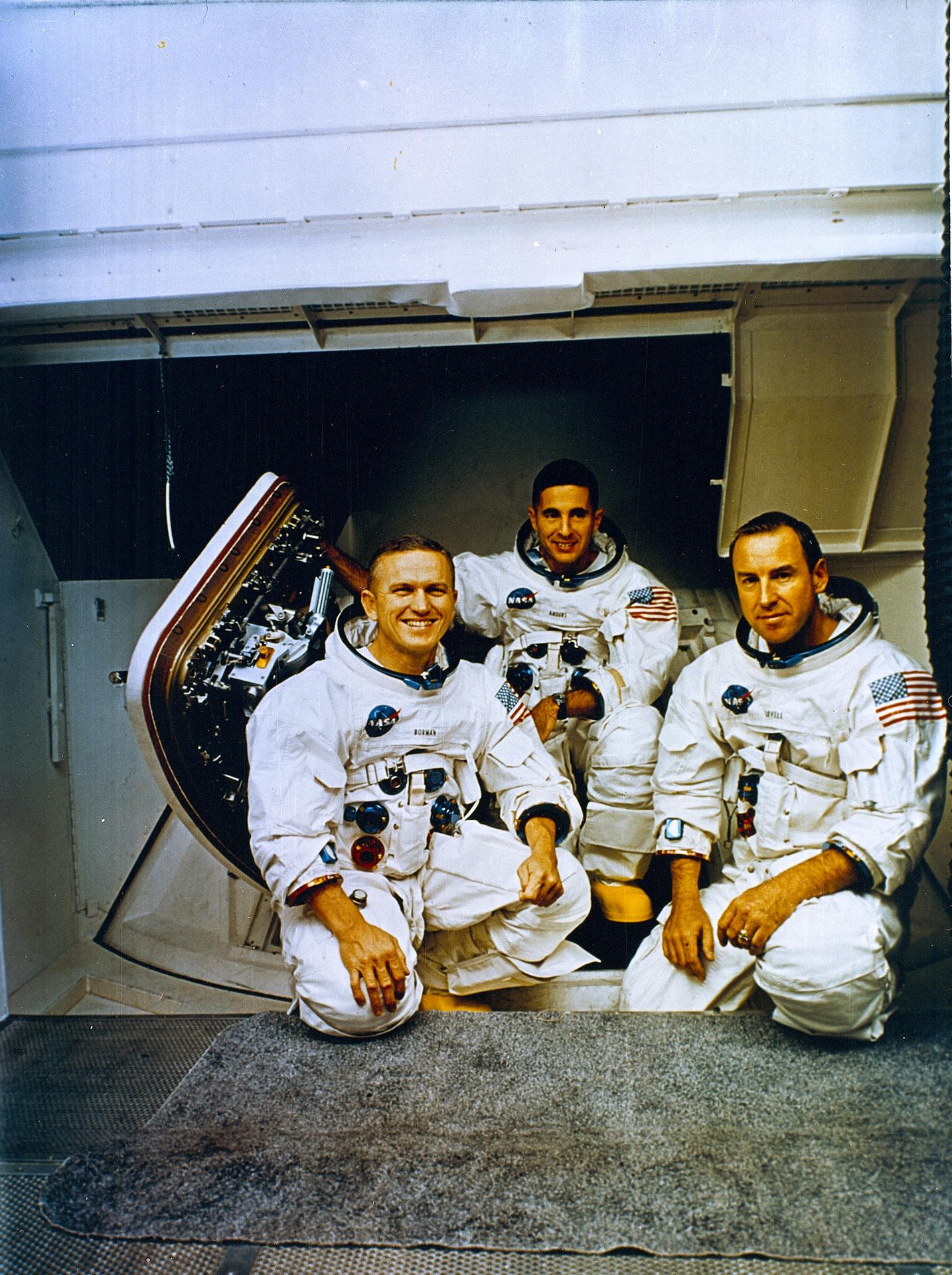
Image (Credit): The Apollo 8 Crew (left to right) Frank Borman, commander; William Anders, Lunar Module Pilot; and James Lovell, Command Module pilot pose in front of the Apollo mission simulator during training. (NASA)

RIP: Thomas Stafford, Apollo 10 Astronaut

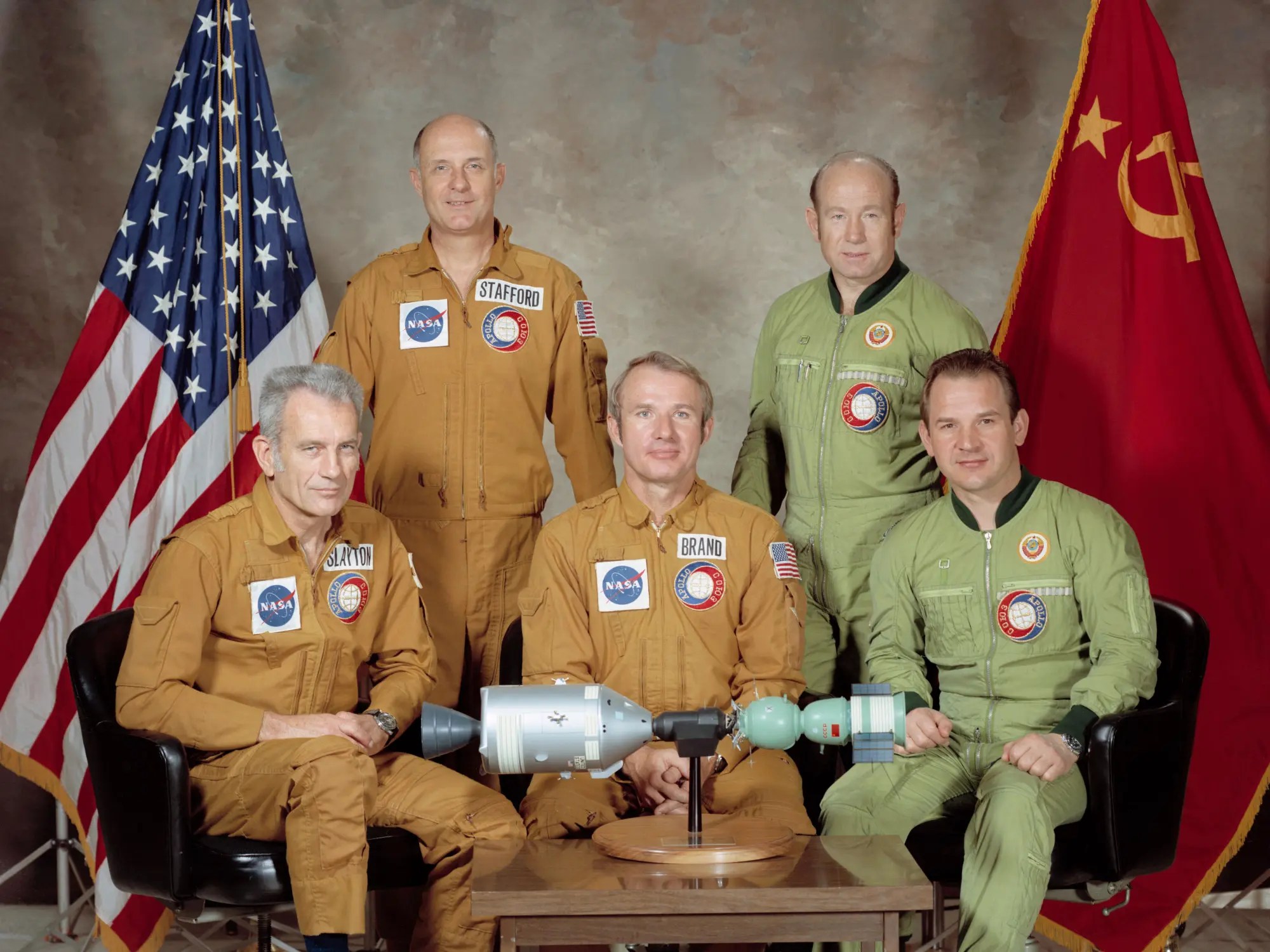
Image (Credit): The joint U.S.-USSR crew for the Apollo Soyuz Test Project. Astronaut Thomas P. Stafford (standing on left), commander of the American crew; Cosmonaut Aleksey A. Leonov (standing on right), commander of the Soviet crew; Astronaut Donald K. Slayton (seated on left), docking module pilot of the American crew; Astronaut Vance D. Brand (seated in center), command module pilot of the American crew; and Cosmonaut Valeriy N. Kubasov (seated on right), engineer on the Soviet crew. (NASA)

As we plan our return to the Moon, we cannot forget the Apollo astronauts who showed us the way last century. One of those astronauts, Thomas Stafford, died today at the age of 93.

Among his many achievements, including his Apollo 10 mission that prepared the way for the first Moon landing by Apollo 11, he may be most remembered for his 1975 space encounter with the U.S.S.R. cosmonauts.

The Apollo-Soyuz Test Project was the first international mission in space. It involved an Apollo spacecraft (crew of three) connecting with a Soyuz spacecraft (crew of two) in Earth orbit. The two days of joint activities created a precedent that was later followed by the International Space Station (ISS).

We were in the middle of the Cold War in 1975, so any cooperation with the U.S.S.R. was pretty amazing. It is just as surprising to witness SpaceX bringing cosmonauts to the ISS while the U.S. maintains severe sanctions on Russia.

Thomas Stafford died knowing that his early efforts to blaze a path to the Moon and cooperate with the Russians were still going strong today. That must have provided him with a little bit of peace in his final days.

You can watch a NASA video on Mr. Stafford’s accomplishments here.

You can also read more on Mr. Stafford’s life and career at these sites:

Rest in peace.