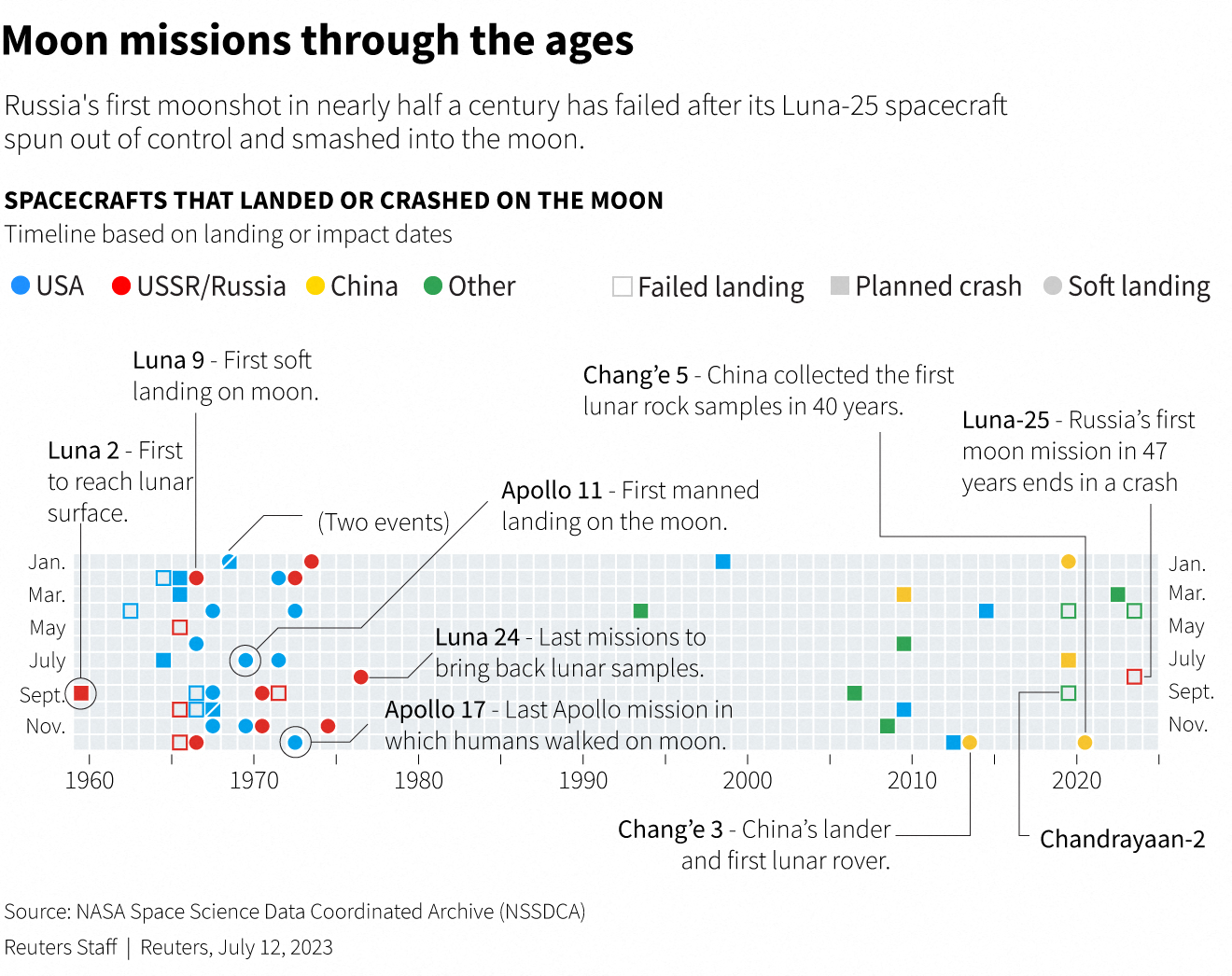
Space Quote: Russia Moves Past Moon Crash and Readies for a New Space Station

Image (Credit): View of the International Space Station from  a Crew Dragon spacecraft. (NASA)

“Mistakes are mistakes. It is a shame for all of us. This is space exploration and everyone understands that. It is experience that we can use in the future.”

-Statement by Russia’s President Putin, as reported by Reuters, addressing the Luna-25 crash on the Moon in August. He added that the lunar missions will continue. He also said Russia also hopes to have its first segment of a new space station in operation by 2027, stating, “As the resources of the International Space Station run out, we need not just one segment, but the entire station to be brought into service.”

India Has Even Greater Space Ambitions

Image (Credit): Logo of the Indian Space Research Organization. (ISRO)

After recently sending a rover to the Moon and a spaceship to the Sun, India announced plans to build its own space station by 2035 and also send its own astronaut to the Moon by 2040. It also wants to start work on missions to Venus and Mars. How is that for ambitious?

In a press release this week, India’s Prime Minister Shri Narendra Modi stated the following:

Building on the success of the Indian space initiatives, including the recent Chandrayan-3  and Aditya L1 Missions, Prime Minister directed that India should now aim for new and ambitious goals, including setting up ‘Bharatiya Antariksha Station’ (Indian Space Station) by 2035 and sending first Indian to the Moon by 2040.

To realize this Vision, the Department of Space will develop a roadmap for Moon exploration. This will encompass a series of Chandrayaan missions, the development of a Next Generation Launch Vehicle (NGLV), construction of a new launch pad, setting up human-centric Laboratories and associated technologies.

Prime Minister also called upon Indian scientists to work towards interplanetary missions that would include a Venus Orbiter Mission and a Mars Lander.

The space race continues with India showing itself as a strong player in space, potentially replacing Russia as one of the key space-faring nations. It benefits everyone to have more nations studying our solar system. It is unfortunate that Russia has concerned itself with less dignified matters back here on Earth. Maybe it will look to the stars again one day soon.

Space Stories: Fancy Space Suits, Giant Blinding Satellites, and More Russian Space Station Leaks

Credit: Dezeen

Here are some recent stories of interest.

Dezeen: “Prada Designing Lunar Spacesuits for NASA Moon Mission

Fashion house Prada has teamed up with commercial space company Axiom Space to create lunar spacesuits for NASA’s Artemis III mission, which will be the first crewed moon landing since 1972. Called Axiom Extravehicular Mobility Unit (AxEMU), the suits will be designed to give astronauts “advanced capabilities for space exploration,” Prada said. They are an evolution of NASA’s Exploration Extravehicular Mobility Unit (xEMU) spacesuit design and will use “innovative technologies and design” to be more flexible and provide more protection against the harsh lunar environment, according to the brand.

Scientific American: “Giant Satellite Outshines Most Stars in the Sky

On some nights, one of the brightest objects in the sky is neither a planet nor a star. It is a telecommunications satellite called BlueWalker 3, and at times it outshines 99% of the stars visible from a dark location on Earth, according to observations reported today in Nature. BlueWalker 3 is the most brilliant recent addition to a sky that is already swarming with satellites. The spaceflight company SpaceX alone has launched more than 5,000 satellites into orbit, and companies around the globe have collectively proposed launching more than half a million satellites in the coming years — a scenario that astronomers fear could hamper scientific observations of the Universe.

The Guardian: “Third Space Station Leak in a Year Prompts Doubts About Russia’s Programme

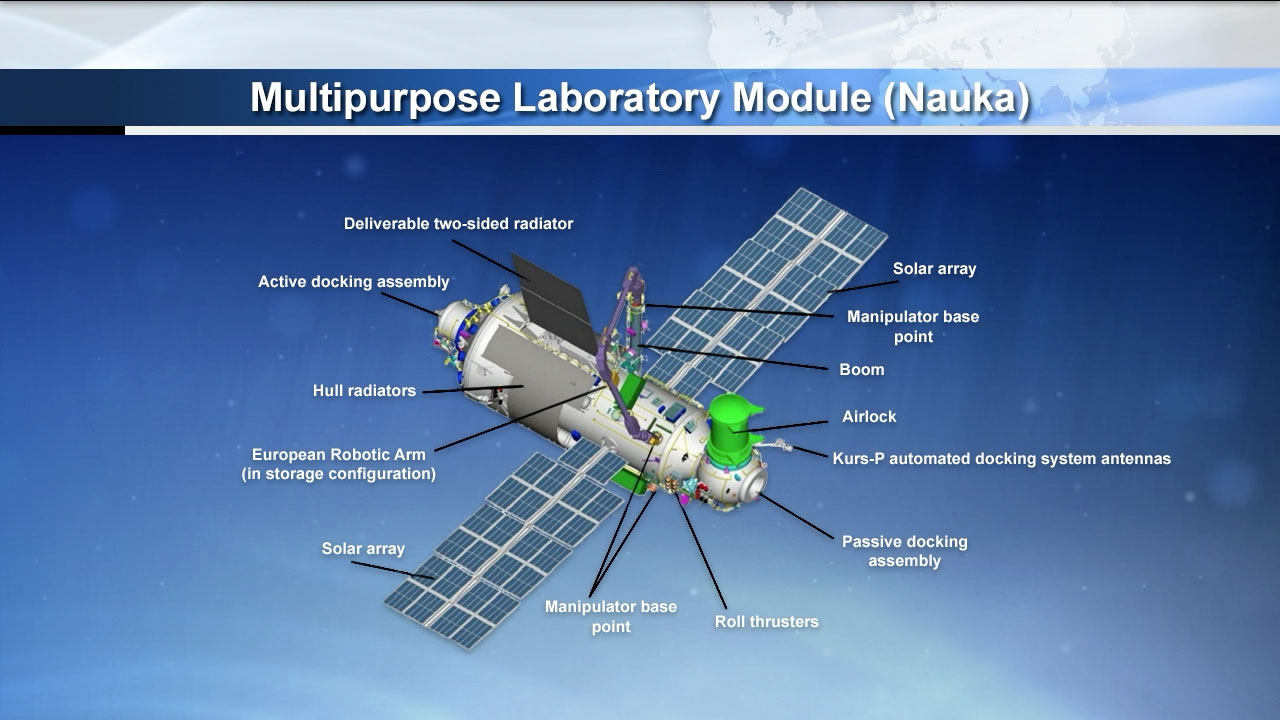
The Russian segment of the International Space Station (ISS) has sprung its third coolant leak in under a year, raising new questions about the reliability of the country’s space programme even as officials said crew members were not in danger. Flakes of frozen coolant spraying into space were seen in an official live feed of the orbital lab provided by Nasa on Monday, and confirmed in radio chatter between US mission control and astronauts. “The Nauka module of the Russian segment of the ISS has suffered a coolant leak from the external (backup) radiator circuit, which was delivered to the station in 2012,” Russian space agency Roscosmos said on Telegram, adding temperatures remained normal in the affected unit.

Space Quote: Venezuela Aims for the Moon

Image (Credit): Artist’s concept of a Chinese Moon base. (South China Morning Post)

“…scientific, technological, industrial and aerospace cooperation will sooner rather than later (send) the first Venezuelan man and woman to the moon in a Chinese spacecraft.”

Statement by Venezuelan President Nicolas Maduro in reference to an agreement with China that would train Venezuelan astronauts in China in preparation for a future Moon mission. China has previously stated its plans to land humans on the lunar surface by 2030 and establish a Moon base in the 2030s. Other countries have already signed agreements with China related to the lunar base, including Russia, Pakistan, and the United Arab Emirates.

Another Crew Heads for the ISS

Image (Credit): The Soyuz MS-24 spacecraft blasts off to the ISS from the Baikonur Cosmodrome, Kazakhstan on September 15, 2023. (Maxim Shemetov/Reuters)

Earlier today, US astronaut astronaut Loral O’Hara as well as Roscosmos cosmonauts Oleg Kononenko and Nikolai Chub departed from Kazakhstan on a Soyuz rocket that will take them to the International Space Station (ISS). The space station will be crowded again until the three relieved crew members, including US astronaut Frank Rubio, can return to Earth.

You can watch today’s launch at this NASA site on YouTube. You can also follow the mission via NASA’s blog.