A Day in Astronomy: The Arrival of the Expedition 1 Crew at the ISS

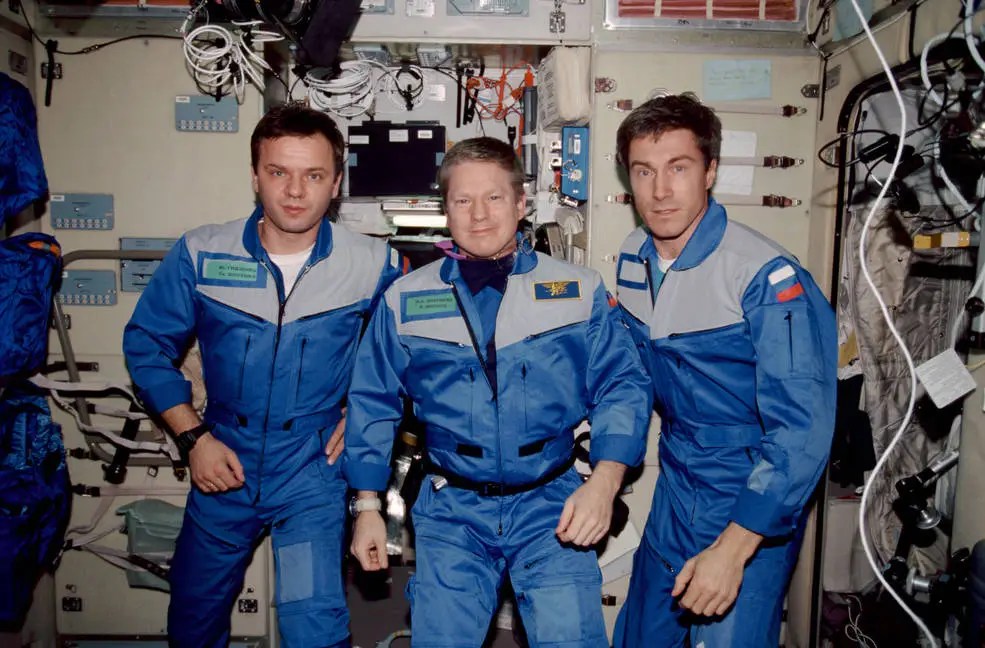
Image (Credit): The Expedition 1 crew of Yuri P. Gidzenko (left), William M. Shepherd, and Sergei K. Krikalev in the ISS’s Zvezda Service Module. (NASA)

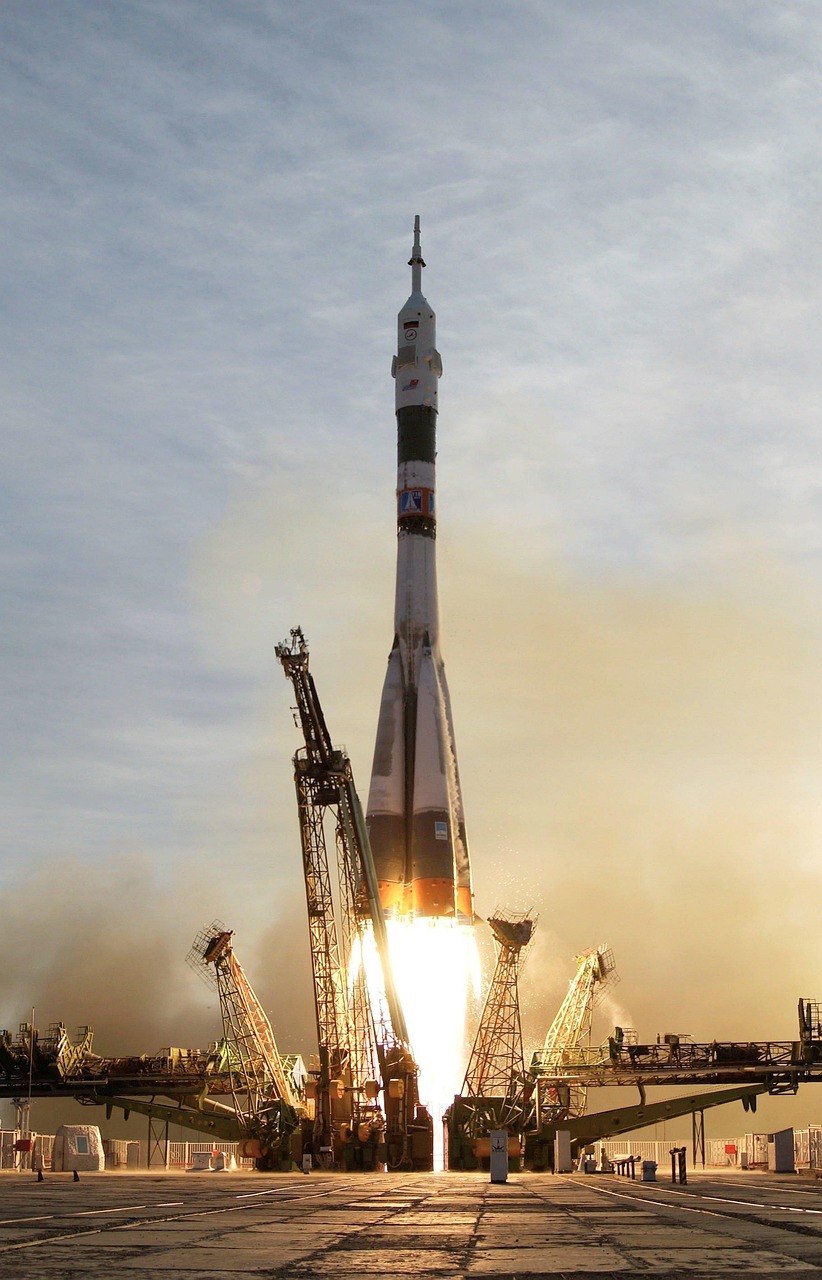
It was 25 years ago on this day that the Expedition 1 crew arrived at the International Space Station (ISS), which marked the beginning of very successful space collaboration between five space agencies from the United States, Russia, the European Union, Japan, and Canada.

The Expedition 1 crew, arriving at the ISS aboard a Russian Soyuz capsule, consisted of NASA astronaut William M. Shepherd and Russian cosmonauts Yuri P. Gidzenko and Sergei K. Krikalev. This first mission of four months focused on the continued assembly of the station, with the Expedition 2 crew arriving in March 2001 aboard Space Shuttle Discovery.

Some of the key facts related to the ISS include:

  • In 24 hours, the space station makes 16 orbits of Earth, traveling through 16 sunrises and sunsets.
  • The living and working space in the station is larger than a six-bedroom house (and has six sleeping quarters, two bathrooms, a gym, and a 360-degree view bay window).
  • A spacecraft can arrive at the space station as soon as four hours after launching from Earth.
  • The space station travels an equivalent distance to the Moon and back in about a day.
Image (Credit): Drawing of the International Space Station with all of the elements labeled. (NASA)

A Day in Astronomy: Letter to General Secretary Brezhnev

Image: USSR 1991 Yuri A. Gagarin Stamps.

The U.S. has plenty of issues regarding the pace of its space programs in the face of Chinese achievements, as noted multiple times in posts on this site. We should not see this as anything new. U.S. politicians and citizens had plenty of similar complaints during the space race with the USSR, and we also have evidence of similar complaints within the USSR.

For instance, on this day in 1965, Yuri Gagarin, the first man in space, wrote a letter with other cosmonauts to the USSR’s General Secretary Brezhnev with a list of concerns. The letter stated, in part:

The USA have not only caught up with us, but even surpassed us in certain areas. The flights of space vehicles Ranger-7, Ranger-8, Mariner-4, Gemini-5, and others are serious achievements of American scientists. This lagging behind of our homeland in space exploration is especially objectionable to us, cosmonauts, but it also damages the prestige of the Soviet Union and has a negative effect on the defense efforts of the countries from the socialist camp…Why is the Soviet Union losing its leading position in space research? A common answer to this question answer is as follows: the USA have developed a very wide front of research in space; they allocate enormous funds for space research. In the past 5 years they spent more than 20 billion dollars, and in 1965 alone 7 billion dollars. This answer is basically correct. It is well known that the USA spend on space exploration much more than does the USSR.

The letter covers other issues, including battles between the various organizations involved in space affairs as well as a stated preference by some for robotic flights rather than manned-flights.

It is an interesting reminder that the same issues constantly crop up to potentially cripple space initiatives, and today’s leader in space can quickly fall behind.

We Need More Ukrainian Initiative in the Space Industry

Image (Credit): The Ukrainian Flamingo cruise missile. (Fire Point)

It is a sad truth that war can create some useful items that propel mankind forward. Maybe these inventions would have occurred anyway, but the desire to survive can certainly stimulate the mind.

Ukraine is a perfect example. Recent stories about its Flamingo cruise missile indicate that the same Ukranian know-how that created the drones was also used to design a cruise missile that costs $500,000 a piece and can penetrate deep into Russian territory. Such quick innovation by Fire Point, the Ukrainian defense firm that created the new cruise missile, puts even Elon Musk to shame (remember, Musk tried to start SpaceX with old Russian rockets).

Ukraine has already knocked about 20 percent of Russia’s petroleum producing capacity offline, and now this. With a range of approximately 1,800 miles, the Flamingo has plenty of military targets that can severely damage Russia’s war-making capabilities.

Just think if all of this ingenuity had been put towards a peaceful space program. Of course, this war too shall end, and Ukraine may have some promising industries that can be quickly retooled for a space program.

Ukraine had a strong space industry when it was part of the USSR, and these latest foolhardy efforts by Putin to reestablish that Soviet empire may instead only reestablish the Ukranian space industry.

A Day in Astronomy: Luna 16 Lunar Sample Return

Image (Credit): USSR postage stamp commemorating the Luna 16 mission. (USSR Post)

On this day in 1970, the USSR’s Luna 16 spacecraft returned to Earth with a lunar sample. The Luna 16 spacecraft landed on the Moon on September 20 to collect a 3.5 ounce sample before returning to Earth.

While the Apollo 11 and 12 missions had already returned with more than 120 pounds of lunar material, it was still an important milestone for the USSR’s space program. Two more Luna missions would bring back additional lunar samples in the 1970s.

The Russian’s last attempt to send a spacecraft to study the Moon’s surface was in 2023 with Luna 25, which ended in failure.

Russia Has One Less Space Asset

Image (Credit): Earlier photo of the RT-70 radio telescope. (PickPic)

The Urania newspaper Euromaiden Press recently noted the success of its navy in taking out Russian assets, including:

  • the Utios-T radar system;
  • the RT-70 radio telescope;
  • the GLONASS satellite navigation system in its dome;
  • the coastal radar station MR-10M1 “Mys” M1; and
  • the 96L6-AP radar of the S-400 missile system.

One of those items is not like the others, that being the Yevpatoria RT-70 radio telescope.

This Soviet-era radio telescope was one of the largest in the world, assisted with the study of Mars and Venus, and was used for messaging extraterrestrial intelligence, also known as METI.

Now it is rubble due to the ongoing war between Ukraine and Russia (the destroyed radio telescope is located in Russian-occupied Ukrainian territory).

We saw World War II introduce the power of rocket technology that sent us around the solar system, and now we are watching another war show how all that we have built can quickly crumble.