Space Stories: JWST Confirms Earth-Size Exoplanet, Russia Sending Rescue Mission to ISS, and IO Erupts

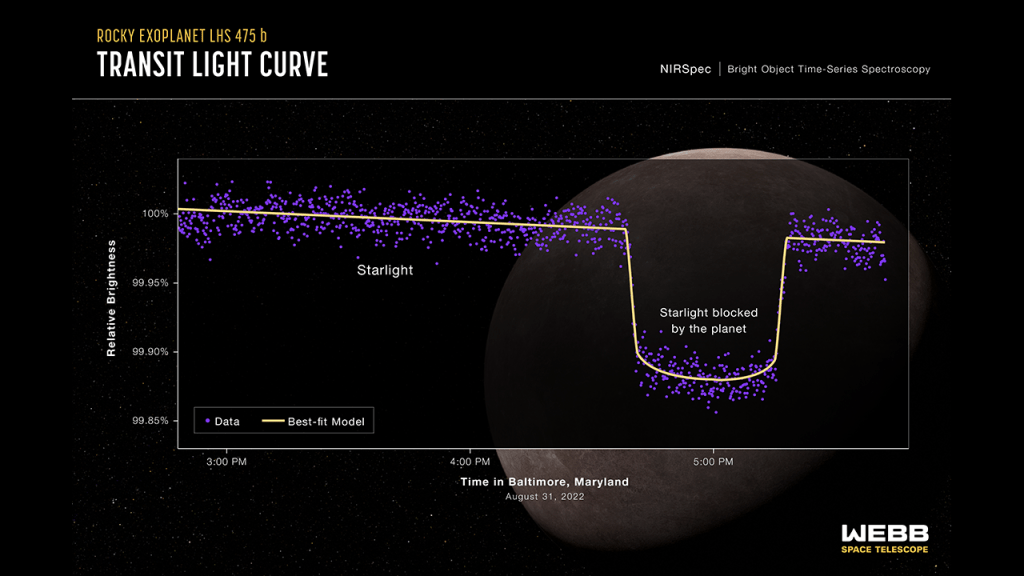
Image (Credit): James Webb Space Telescope (JWST) data associated with exoplanet LHS 475 b. (NASA, ESA, CSA, Leah Hustak (STScI))

Here are some recent stories of interest.

Webb Space Telescope: “NASA’s Webb Confirms Its First Exoplanet

Researchers confirmed an exoplanet, a planet that orbits another star, using NASA’s James Webb Space Telescope for the first time. Formally classified as LHS 475 b, the planet is almost exactly the same size as our own, clocking in at 99% of Earth’s diameter. The research team is led by Kevin Stevenson and Jacob Lustig-Yaeger, both of the Johns Hopkins University Applied Physics Laboratory in Laurel, Maryland.

ABC News: “Russia Will Launch New Capsule to Return Space Station Crew

Russia will send up a new capsule next month to bring back three space station crew members whose original ride home was damaged, officials said Wednesday. The two Russians and one American will stay several extra months at the International Space Station as a result of the capsule switch, possibly pushing their mission to close to a year, NASA and Russian space officials told reporters.

MSN Science Alert: “Massive Volcanic Outburst Detected on Jupiter’s Hellish Moon Io

In the space around Jupiter, a torus of plasma created and fed by Io’s volcanic emissions grew significantly richer between July and September of last year and persisted until December, showing the moon underwent a spate of volcanic activity that released a huge amount of material. For something that’s just a little bit bigger than Earth’s Moon, Io is an absolute beast of volcanism. It’s bristling with volcanoes, with around 150 of the 400 known volcanoes erupting at any given time, creating vast lakes of molten lava.

Top Astronomy Stories in 2022

Image (Credit): The stellar nursery 30 Doradus, nickname of the Tarantula Nebula, captured by the James Webb Space Telescope. (webb.nasa.gov)

Given that 2022 was a busy year, I thought I would highlight the top astronomy stories on the site – the good and the bad covering space missions to TV shows. Unlike other websites, I waited until the new year to create the list just in case we were visited by extraterrestrials. In this way, we now have a full catalog of the 2022 happenings.

Here is the list in no particular order other than science first, politics and commercial space second, and entertainment third.

  1. James Webb Space Telescope begins operation – see site link here;
  2. Double Asteroid Redirection Test (DART) successfully shifts the course of an asteroid pair – see site link here;
  3. Artemis I Orion capsule successfully orbits the Moon – see site link here;
  4. Commercial satellites become an increasing threat to Earth-based telescopes – see site link here;
  5. China completes its first space station – see site link here;
  6. Boeing is closer to being the second U.S. company to send astronauts to the International Space Station – see site link here;
  7. Ukraine invasion derails the Russian space program – see site link here;
  8. Russia reconfirms support for International Space Station – see site link here;
  9. Star Trek gets it right by returning to the past with Strange New Worlds – see site link here; and
  10. Star Wars gets it right with its new Andor series. – see site link here.

I cannot wait to see what 2023 will bring.

The Space Station Needs a New Life Raft

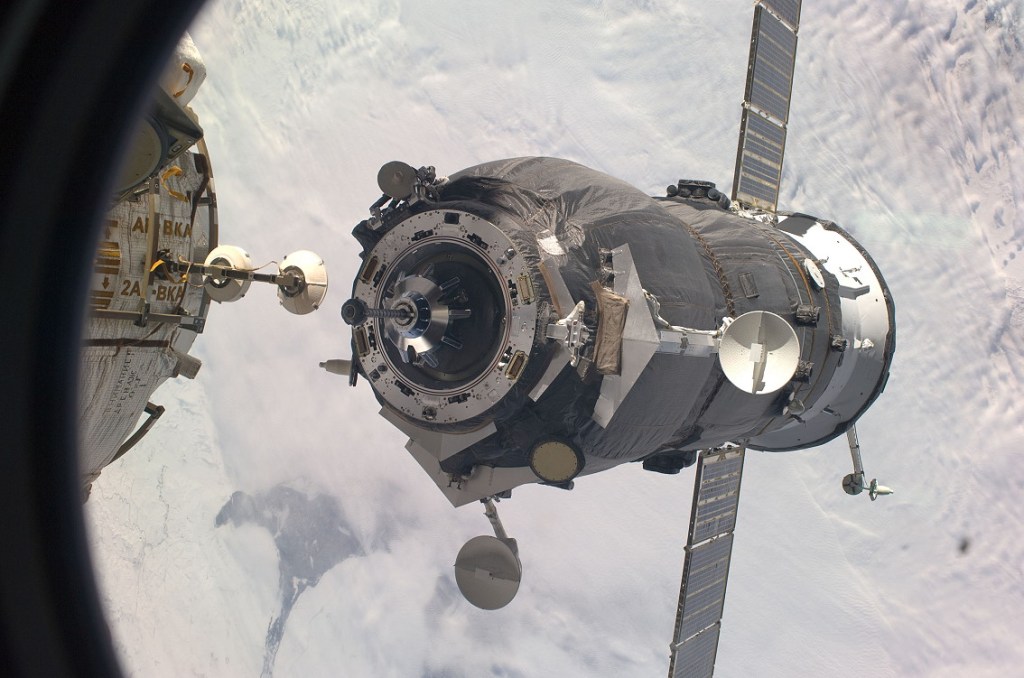
Image (Credit): Russian Soyuz capsule outside the International Space Station. (Spacefacts.de)

Fortunately, we now know the source of the leak in the extra Soyuz Crew Return Vehicle attached to the International Space Station (ISS). However, we do not know the cause of this radiator coolant leak, which creates risk should the capsule be used early next year to bring two cosmonauts and an astronaut back to Earth. Hence, it may be better to bring another capsule up to the ISS for the change in crew and send the damaged one back empty for repairs.

The ISS doesn’t technically have an escape pod. Instead, a Crew Return Vehicle more or less serves this purpose. It has been used more than once to host astronauts and cosmonauts fleeing space junk, so maybe it’s time to think over these procedures again. You would think a $100 billion orbiting space station could ensure the survival of its passengers.

Space Quote: A Thank You From Russia

Image (Credit): Roscosmos head Yuri Borisov. (Dogruso.com)

Say hello to the entire American team. They proved themselves to be very worthy in this situation and lent us a helping hand…You set an example for the whole world on how to work together in the most challenging and difficult situation. Let many politicians learn from you.

-Statement by Yuri Borisov, head of Russian space agency Roscosmos, on Tuesday praising Russia-U.S. cooperation at the International Space Station (ISS) following a major coolant leak from a Soyuz crew capsule. The transcript was quoted in The Moscow Times. The ISS remains one of the limited areas where the U.S. and Russia are still cooperating given the situation in Ukraine.

Space Stories: ISS Leak, Revamped Space Council, and Asteroid Space Stations

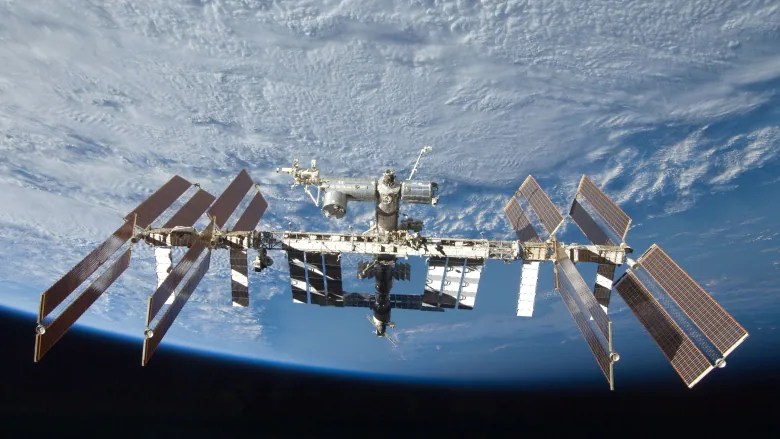
Image (Credit): International Space Station. (Canadian Space Agency)

Here are some recent stories of interest.

CBS News: “Soyuz Ferry Ship Temperatures Remain Within Limits Despite Major Coolant Leak

Temperatures in a Russian Soyuz crew ferry ship docked at the International Space Station — a lifeboat for three of the lab’s seven crew members — remain within safe limits despite a dramatic overnight leak in the spacecraft’s cooling system, officials said Thursday. The leak developed around 7:45 p.m. EST Wednesday amid preparations for a planned 6-hour and 40-minute spacewalk by cosmonauts Sergey Prokopyev and Dmitri Petelin to move a radiator from the Rassvet module, where the Soyuz MS-22/68S spacecraft is docked, to the new Nauka laboratory module.

SpaceNews.com: “White House Revamps Membership of National Space Council Advisory Group

The White House announced the new membership of an advisory group of the National Space Council Dec. 16 with wholesale changes in the roster reflecting a new emphasis on climate change and workforce issues. Vice President Kamala Harris, chair of the National Space Council, announced a roster of 30 members of the Users’ Advisory Committee (UAG), the advisory group that supports the council on various space topics. Their membership on the committee is pending a formal appointment by the NASA administrator, a formality linked to NASA’s role in hosting the UAG.

Phys.org: “Rubble Pile Asteroids Might be the Best Places to Build Space Habitats

There has long been a dream of building a massive rotating space station to call home, such as the one featured in “2001: A Space Odyssey,” but the challenges of construction are huge, not to mention the logistics of lifting such large quantities of steel and other materials into space. A rotating station would need to be at least hundreds of feet across to make artificial gravity practical The bigger the better. So engineers have proposed spinning up asteroids as a kind of ready-built station. We would need to dig out the interior, but this would give us materials we could use.