Image (Credit): Roscosmos head Yuri Borisov. (Dogruso.com)
“Say hello to the entire American team. They proved themselves to be very worthy in this situation and lent us a helping hand…You set an example for the whole world on how to work together in the most challenging and difficult situation. Let many politicians learn from you.“
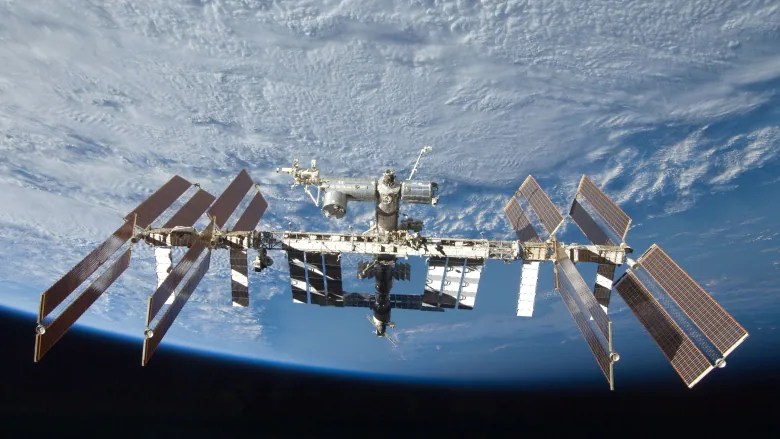
-Statement by Yuri Borisov, head of Russian space agency Roscosmos, on Tuesday praising Russia-U.S. cooperation at the International Space Station (ISS) following a major coolant leak from a Soyuz crew capsule. The transcript was quoted in The Moscow Times. The ISS remains one of the limited areas where the U.S. and Russia are still cooperating given the situation in Ukraine.
Temperatures in a Russian Soyuz crew ferry ship docked at the International Space Station — a lifeboat for three of the lab’s seven crew members — remain within safe limits despite a dramatic overnight leak in the spacecraft’s cooling system, officials said Thursday. The leak developed around 7:45 p.m. EST Wednesday amid preparations for a planned 6-hour and 40-minute spacewalk by cosmonauts Sergey Prokopyev and Dmitri Petelin to move a radiator from the Rassvet module, where the Soyuz MS-22/68S spacecraft is docked, to the new Nauka laboratory module.
The White House announced the new membership of an advisory group of the National Space Council Dec. 16 with wholesale changes in the roster reflecting a new emphasis on climate change and workforce issues. Vice President Kamala Harris, chair of the National Space Council, announced a roster of 30 members of the Users’ Advisory Committee (UAG), the advisory group that supports the council on various space topics. Their membership on the committee is pending a formal appointment by the NASA administrator, a formality linked to NASA’s role in hosting the UAG.
There has long been a dream of building a massive rotating space station to call home, such as the one featured in “2001: A Space Odyssey,” but the challenges of construction are huge, not to mention the logistics of lifting such large quantities of steel and other materials into space. A rotating station would need to be at least hundreds of feet across to make artificial gravity practical The bigger the better. So engineers have proposed spinning up asteroids as a kind of ready-built station. We would need to dig out the interior, but this would give us materials we could use.
Image (Credit): A trasch bag lying beneath the Apollo Lunar Module in 1969. (NASA)
Back in July 2019, Vox had a great article about the waste astronauts left behind on the Moon. In the article, “Apollo Astronauts Left Their Poop on the Moon. We Gotta Go Back for That Shit.,” we learn about approximately 96 bags of human waste left behind on the moon. The topic is relevant today because (1) we are talking about returning to the Moon under the Artemis mission and (2) we probably want to learn more about the lifespan of this waste before we continue to deposit it on the Moon, Mars, and elsewhere. So maybe it is time to revisit the poop.
Earlier, The Atlantic had another article that listed much more human debris on the Moon than just the 96 bags (of urine, feces, and vomit, mind you). Here is the incomplete list:
more than 70 spacecraft, including rovers, modules, and crashed orbiters;
5 American flags;
2 golf balls;
12 pairs of boots;
TV cameras;
film magazines;
96 bags of urine, feces, and vomit;
numerous Hasselbad cameras and accessories;
several improvised javelins;
various hammers, tongs, rakes, and shovels;
backpacks;
insulating blankets;
utility towels;
used wet wipes;
personal hygiene kits;
empty packages of space food;
a photograph of Apollo 16 astronaut Charles Duke’s family;
a feather from Baggin, the Air Force Academy’s mascot falcon, used to conduct Apollo 15’s famous “hammer-feather drop” experiment;
a small aluminum sculpture, a tribute to the American and Soviet “fallen astronauts” who died in the space race—left by the crew of Apollo 15;
a patch from the never-launched Apollo 1 mission, which ended prematurely when flames engulfed the command module during a 1967 training exercise, killing three U.S. astronauts;
a small silicon disk bearing goodwill messages from 73 world leaders, and left on the moon by the crew of Apollo 11;
a silver pin, left by Apollo 12 astronaut Alan Bean;
a medal honoring Soviet cosmonauts Vladimir Komarov and Yuri Gagarin; and
a cast golden olive branch left by the crew of Apollo 11.
In the 2022 movie Moonshot, we sent Martian trash back to Earth. But that was not the case with the Moon. And now China and Russia are clamoring to do the same in the near future. Will the Moon someday be marked with more trash heaps than craters?
One might argue that explorers throughout time have had to leave something behind. Think of the piles of trash as well as corpses left on the top of Mount Everest. The great sea explorers also left plenty of men, material, and ships at the bottom of the sea where they would remain unclaimed.
But the interesting part of the Vox story is the potential of life remaining in that trash and even producing new life. If such biological material can seed new life, then who can say whether the Earth was simply a rest stop for aliens on their way somewhere else, and we are the product of their poop.
One more thing. If we do manage to let the Earth slip away from us and flip into another Venusian nightmare, the Moon poop may be the only human biology for a future alien to analyze. We sent the Voyager and other spacecraft out into the void with recordings and data, but no one thought about adding a biological component. Well, now we have that surviving piece on the Moon should it be needed. If we can figure out what a Tyrannosaurus was eating millions of years ago, maybe future visitors can figure out what the astronauts were eating in 20th century Texas.
Intense stuff, and worth reading about when you have a moment.
China is developing a nuclear system that will be used to power its lunar station planned to be developed on the Moon’s South Pole. Wu Weiren, chief designer of the Chinese lunar exploration programme, told Chinese broadcaster CCTV that this new system will fulfill the ‘high-power energy demands’ of the station, the South China Morning Post (SCMP) reported. Notably, the station is being developed by the China National Space Administration (CNSA) and the Russian space agency Roscosmos and is expected to complete by 2028.
For centuries, no one knew if we were alone in the universe—or if there were even other planets like ours. But thanks to new telescopes and methods in the past decades, we now know there are thousands and thousands of planets out there circling faraway stars, and they come in all sorts of shapes and sizes—large and small, rocky and gaseous, cloudy or icy or wet. A study by scientists with the University of Chicago, the University of Michigan and the University of Maryland suggests another for the list: planets with helium atmospheres. Moreover, the discovery may suggest a new step in our understanding of planet evolution. Their simulations found that it’s likely that helium would build up in the atmospheres of certain types of exoplanets over time. If confirmed, this would explain a decades-long puzzle about the sizes of these exoplanets.
The United Arab Emirates’ fledgling space program took another step forward last month, securing an agreement to collaborate on China’s planned Chang’e 7 lunar mission, set to land near the Moon’s south pole in 2026. The Mohammed bin Rashid Space Center (MBRSC) in Dubai will build a small robotic rover, which will hitch a ride on the Chang’e 7 lander, according to the agreement signed Sept. 16 between MBRSC and the China National Space Administration (CNSA).
Image (Credit): Lego Lunar Research Base playset. (Lego)
While we await the Artemis III crew landing on the Moon and related lunar base, you might want to create your own mission with the Lego Lunar Research Base (shown above), which has “NASA-inspired” details. The playset has almost 800 Lego pieces, so you can build it yourself (to NASA specs, of course).
The playset comes with a “… lunar lander, VIPER rover and a domed accommodation module with laboratories, garage and air lock, plus 6 astronaut minifigures. I’m assuming the rocket that gets the astronaut minifigures to the Moon is sold separately.
It’s great to see that Lego is allowing kids to build their own space missions at home.
Image (Credit): Lego International Space Station playset. (Lego)
Some of you may have played with Star Wars and Star Trek sets as kids, but at least these latest Lego set have a ring of credibility. Star Wars helped you destroy the galaxy, whereas Star Trek seemed more interest in exploration and at least had the veneer of Artemis CXXV.
The Jiuquan Satellite Launch Center playset comes with a Long March 2F rocket and an authentic warning sign stating, “Those stealing secrets will be caught, once they’re caught they will be killed [decapitated].”
Maybe even reality is not always the best model for play.
Extra: You can find more Lego space models at the NASA gift shop.




 Our Awesome Universe