A Day in Astronomy: Luna 16 Lunar Sample Return

Image (Credit): USSR postage stamp commemorating the Luna 16 mission. (USSR Post)

On this day in 1970, the USSR’s Luna 16 spacecraft returned to Earth with a lunar sample. The Luna 16 spacecraft landed on the Moon on September 20 to collect a 3.5 ounce sample before returning to Earth.

While the Apollo 11 and 12 missions had already returned with more than 120 pounds of lunar material, it was still an important milestone for the USSR’s space program. Two more Luna missions would bring back additional lunar samples in the 1970s.

The Russian’s last attempt to send a spacecraft to study the Moon’s surface was in 2023 with Luna 25, which ended in failure.

Russia Has One Less Space Asset

Image (Credit): Earlier photo of the RT-70 radio telescope. (PickPic)

The Urania newspaper Euromaiden Press recently noted the success of its navy in taking out Russian assets, including:

  • the Utios-T radar system;
  • the RT-70 radio telescope;
  • the GLONASS satellite navigation system in its dome;
  • the coastal radar station MR-10M1 “Mys” M1; and
  • the 96L6-AP radar of the S-400 missile system.

One of those items is not like the others, that being the Yevpatoria RT-70 radio telescope.

This Soviet-era radio telescope was one of the largest in the world, assisted with the study of Mars and Venus, and was used for messaging extraterrestrial intelligence, also known as METI.

Now it is rubble due to the ongoing war between Ukraine and Russia (the destroyed radio telescope is located in Russian-occupied Ukrainian territory).

We saw World War II introduce the power of rocket technology that sent us around the solar system, and now we are watching another war show how all that we have built can quickly crumble.

NASA Delivery to the ISS Delayed

Image (Credit): Northrop Grumman’s insignia for the flight of its first Cygnus XL. (Northrop Grumman)

The Russian’s cargo spaceship arrived without incident at the International Space Station (ISS) over the weekend, but the NASA cargo spaceship has not been as smooth. The Northrop Grumman Cygnus XL cargo ship has experienced engine issues, which will delay its arrival. It was originally supposed to unload its cargo tomorrow morning (September 17).

This latest mission, labeled NG-23, is the first to use the Cygnus XL spacecraft, which has 33 percent more cargo capacity than the spacecraft it replaces.

Northrop Grumman’s vice president of civil space systems, Ryan Tintner, stated:

Our Cygnus XL is another step towards a thriving commercial space economy. The spacecraft carries more cargo, making each mission more efficient. We’ve supported NASA and the space station for decades, and we know what it takes to develop advanced capabilities for exploring space.

This is not a good start for the new spacecraft. Hopefully, the glitch will be quickly resolved. The spacecraft carries 11,000 pounds of needed supplies.

Update: The Cygnus XL mission is back on track. The spaceship is expected to arrive at the ISS on Thursday morning.

Second Update: The Cygnus XL mission was a success with supplies delivered successully to the ISS.

Russian Progress 93 Mission Underway to Resupply the ISS

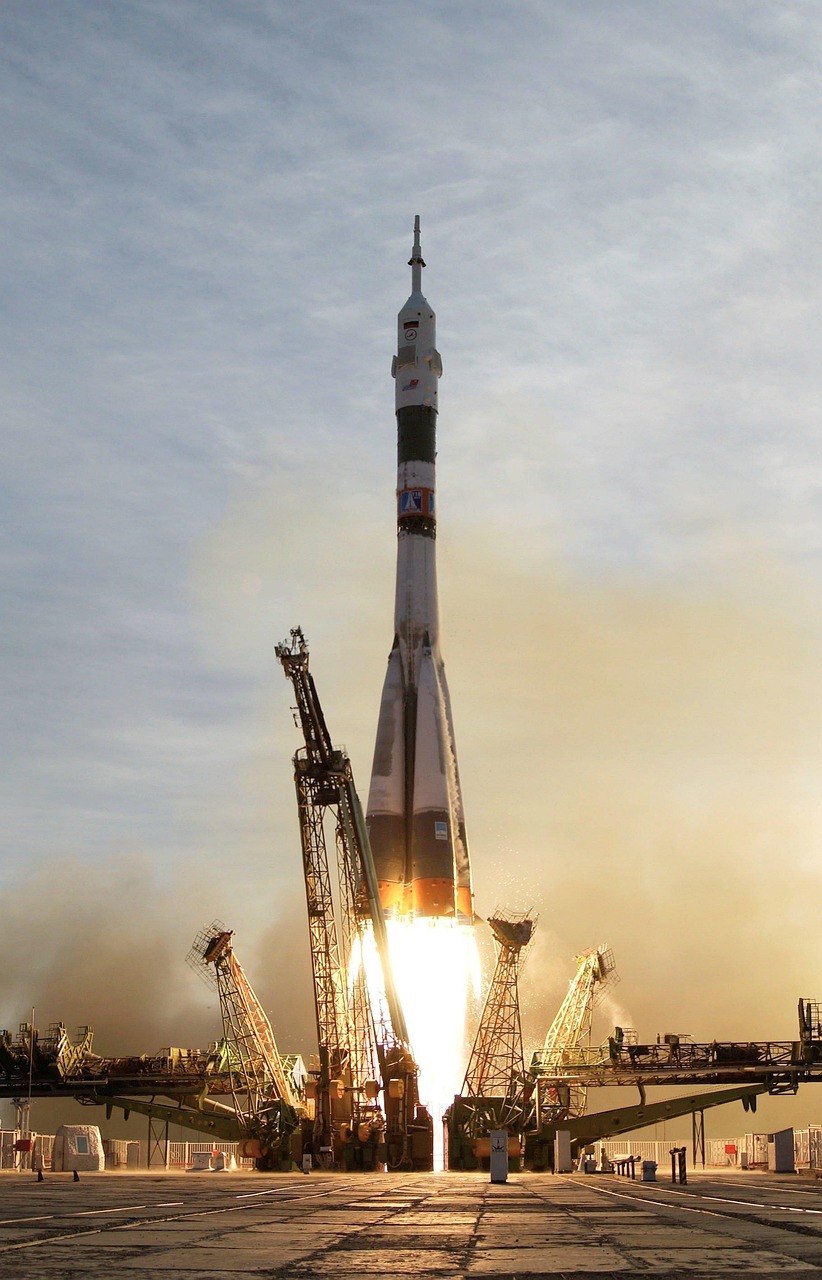
Image (Credit): Russia’sProgress 93 cargo spacecraft launches from the Baikonur Cosmodrome in Kazakhstan. (NASA+)

Even with the recent Russian drones invading Polish airspace, things are on schedule at the International Space Station (ISS). A Russian Soyuz rocket successfully launched the Progress 93 cargo spaceship into orbit yesterday to resupply the ISS on Saturday.

A similar NASA resupply mission will take place on Sunday to resupply the Expedition 73 crew. Northrop Grumman’s Cygnus XL cargo spacecraft will be launched from Florida aboard a SpaceX rocket.

Things may still be a bit crazy here on Earth, but the ISS mission continues.

Update: The Grumman Cygnus XL cargo spacecraft safely launched on Sunday, September 14. The spacecraft is scheduled to dock with the ISS on Wednesday, September 17.

The X37-B Mini-Shuttle Returns to Orbit

Image (Credit): The X37-B space plane. (US Space Force)

While the space shuttles are all safely stored in space museums around the country, the U.S. Space Force’s X37B space plane (or uncrewed mini-shuttle) is still in business.

The spacecraft returned to Earth orbit late last week, launched from the Kennedy Space Center. The X-37B can stay in orbit for multiple years, powered by both batteries and solar cells. The latest launch is the eighth such mission.

While the missions are generally classified, they are thought to be basic experiments to enhance the U.S. Space Forces capabilities. For example, the latest mission is testing a quantum navigation sensor that can detect a spacecraft’s location without GPS. Of course, other have said the spacecraft are spying on the Chinese space station and Russian satellites. It is certainly possible that the little shuttle has been busy with all of this.

The two X-37Bs, called autonomous, reusable orbital test vehicles, were built by Boeing and started flying in 2010, one year before the end of the crewed space shuttles servicing the International Space Station (ISS).

It is odd that Boeing has done so well with this shuttle yet so poorly getting a manned capsule safely to and from the ISS, but maybe it has more to do with the skills of Rockwell International, which build the manned shuttles and was later acquired by Boeing.