SpaceX Rockets: The Good and Bad News

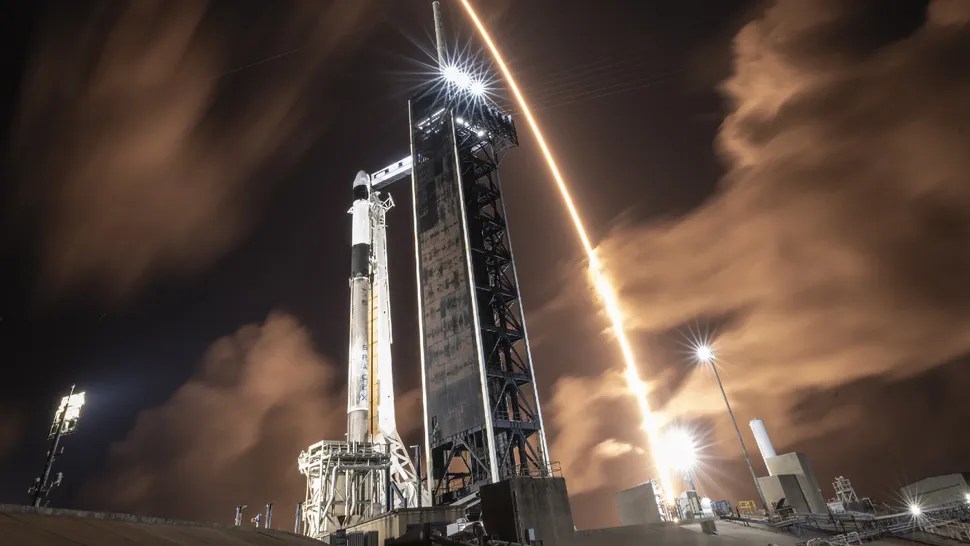
Image (Credit): Launch of a SpaceX Falcon 9 rocket on August 31, 2024. (SpaceX)

First the good news. SpaceX is able to launch its Falcon 9 rockets following a booster issue last week. That led to the immediate launch yesterday of two back-to-back launches of Starlink satellites.

Now the bad news. Russian scientists have reported that SpaceX’s second launch of its Starship rocket last November created a hole in the ionosphere. Specifically, an exploding engine generated the shock wave that created this hole. The scientists claim this is the first time a “human-caused explosion” has had this impact on the ionosphere.

This is the “plain language summary” from the Russian study:

On 18 November 2023, SpaceX launched the Starship, the tallest and the most powerful rocket ever built. About 2 min and 40 s after the liftoff, the Super Heavy engine separated from the Starship spacecraft and exploded at an altitude of 90 km. The main core Starship continued to rise to 149 km and exploded as well. The rocket launch and explosion produced an unexpected response in the ionosphere—the ionized part of the Earth’s atmosphere. The Starship flew at a velocity, exceeding the local sound speed, and generated cone-like atmospheric shock-acoustic waves. Most unexpectedly, the observed disturbances represented long and intensive multi-oscillation wave structures that propagated northward, which is unusual for disturbances driven by a rocket launch. The Starship explosion also generated a large-amplitude total electron content depletion that could have been reinforced by the impact of the spacecraft’s fuel exhaust in the lower atmosphere. This study appears to be the first-time detection of a non-chemical ionospheric hole produced by a man-made explosion.

I like the fact that Russian’s can share results in plain language. However, it is a little disturbing that we needed the Russians to fill us in on the destructive impact of the Starship rockets. Nature noted that “Ionospheric disturbances can affect not only satellite navigation but also communications and radio astronomy.”

We have seen the mess that the rockets can leave on the ground, but this is something else. We need to understand the impact of such launches and related issues if this is to become the new way of doing things. The FAA and NASA should be looking into this matter.

Senate Bill to Assist Astronomers with the Night Sky

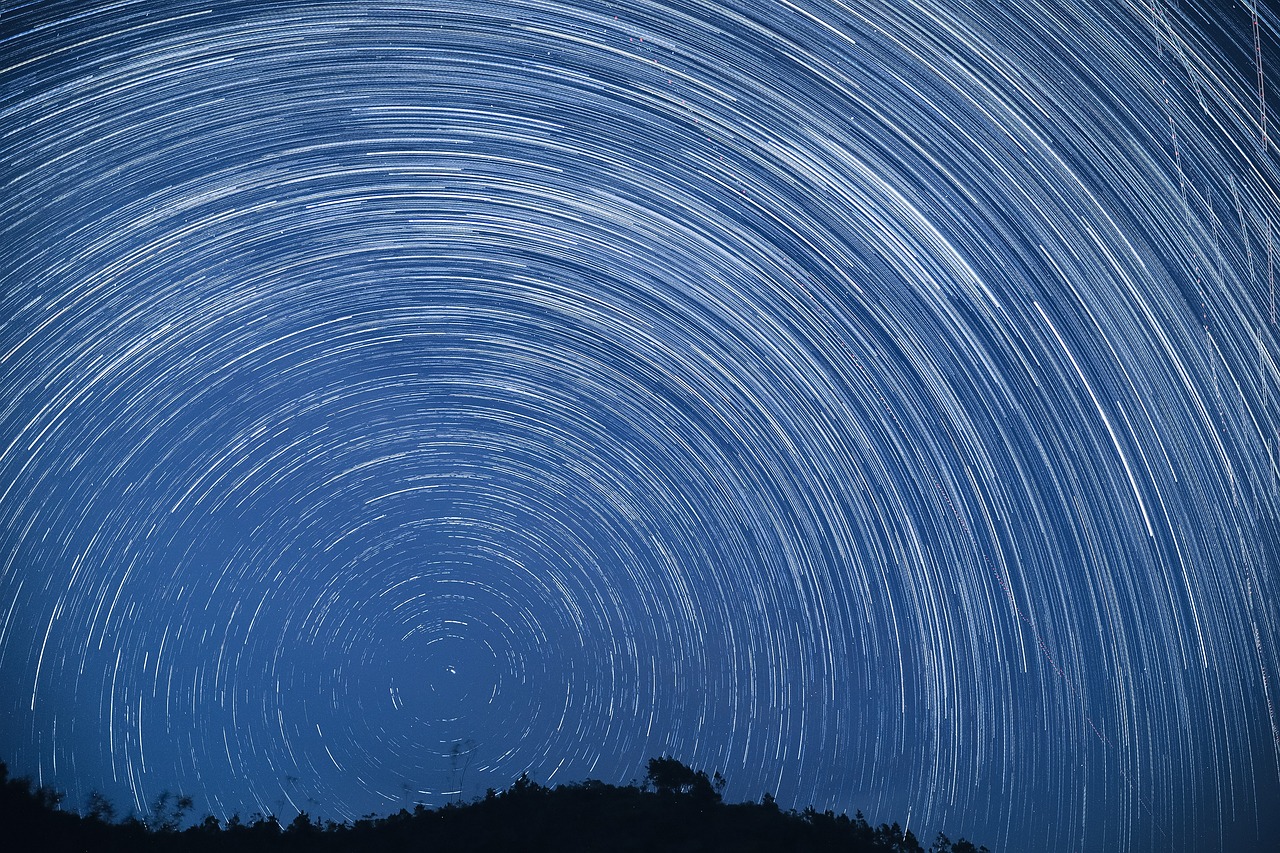
Credit: Qyulang from Pixabay

On August 1, Senators John W. Hickenlooper (D-CO) and Mike Crapo (R-ID) introduced a bill called The Dark and Quiet Skies Act (S.495) to assist astronomers with the night sky.

In a press release from Senator Hickenlooper’s office, we learn the Act would

create a Center of Excellence overseen by National Institute of Standards and Technology (NIST) to develop best practices to reduce light and noise interference. The Center would boost collaboration between the astronomical community, industry, and Federal agencies to protect federally-funded scientific research that observes the sky and celestial bodies.

Specifically, this center would:

  • Establish and circulate best practices to reduce unintentional optical and radio interference;
  • Conduct research and development on tracking, identifying, modeling, and characterizing satellite interference; and
  • Develop mitigation technology that includes satellite paint, film, orientation adjustments, cooling techniques, or fuselage design.

The bill may be a little late to the game, particularly if the press release is correct and the sky is really getting 10 percent brighter each year, but it is certainly welcome. We already know SpaceX, Amazon, and China have grand plans to fill up the sky with satellites, so this is the time to set some rules for the U.S. companies at least.

What is not clear is whether this supports or duplicates similar efforts by the International Astronomical Union (IAU), which has a Centre for the Protection of the Dark and Quiet Sky from Satellite Constellation Interference. While the bill above calls for the U.S. National Institute of Standards and Technology (NIST) to oversee this new Center of Excellence, the U.S. is also funding the IAU initiative via the National Science Foundation.

Let’s hope any and all such efforts in this area can be coordinated to bring the greatest pressure to bear on these satellite companies. The goal should be more than protecting the night sky for telescopes. If it is true that we will see hundreds of thousands of new satellites in orbit in the years to come, we need to make some sense of this booming industry before a few massive collisions make the space over our heads full of litter and unusable.

Space Stories: Launch of GOES-U Satellite, Jupiter’s Surprising Atmosphere, and the Role of Black Holes in Dark Matter

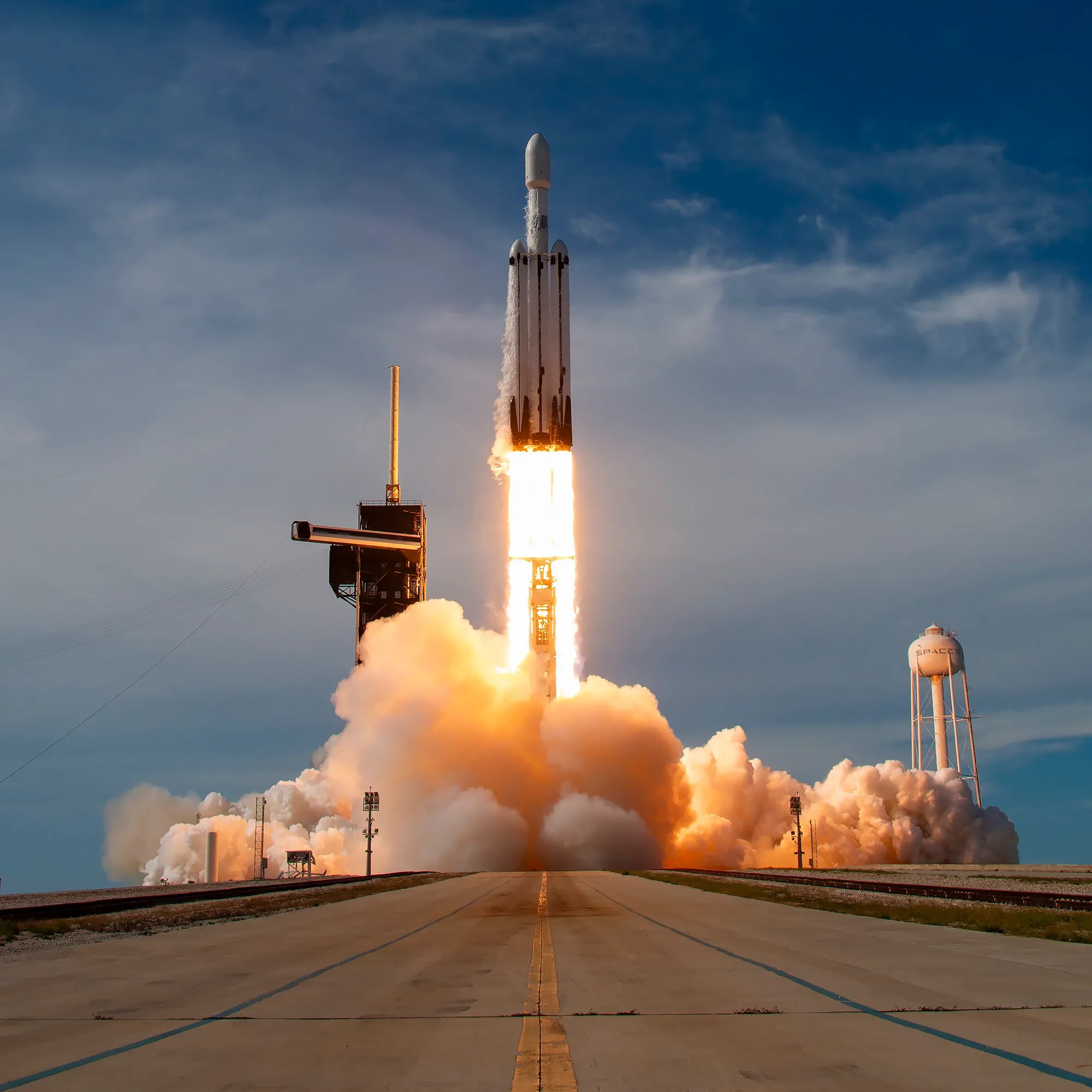
Image (Credit): June 25, 2024 launch of NASA’s GOES-U satellite. (SpaceX)

Here are some recent stories of interest.

America Space: Falcon Heavy Launches, GOES-U Heads for Geostationary Orbit

SpaceX successfully launched its first Falcon Heavy of the year on Wednesday evening, the triple-barreled booster lifting the 11,000-pound (5,000-kilogram) Geostationary Operational Environmental Satellite (GOES-U) almost to Geostationary Earth Orbit (GEO) on behalf of the National Oceanic and Atmospheric Administration (NOAA). The Heavy—flying for the first time since November 2022 with a brand-new center core and pair of side-mounted strap-on boosters—went airborne from historic Pad 39A at Florida’s Kennedy Space Center (KSC) at 5:26 p.m. EDT, ten minutes after the opening of a two-hour “launch window”.

European Space Agency: Jupiter’s Upper Atmosphere Surprises Astronomers

The Great Red Spot of Jupiter was observed by Webb’s Near-InfraRed Spectrograph (NIRSpec) in July 2022, using the instrument’s Integral Field Unit capabilities. The team’s Early Release Science observations sought to investigate if this region was in fact dull, and the region above the iconic Great Red Spot was targeted for Webb’s observations. The team was surprised to discover that the upper atmosphere hosts a variety of intricate structures, including dark arcs and bright spots, across the entire field of view. “We thought this region, perhaps naively, would be really boring,” shared team leader Henrik Melin of the University of Leicester in the United Kingdom. “It is in fact just as interesting as the northern lights, if not more so. Jupiter never ceases to surprise.”

University of Warsaw: Is Dark Matter Made of Black Holes?

Gravitational wave detectors, LIGO and Virgo, have detected a population of massive black holes whose origin is one of the biggest mysteries in modern astronomy. According to one hypothesis, these objects may have formed in the very early Universe and may compose dark matter, a mysterious substance filling the Universe. A team of scientists from the OGLE (Optical Gravitational Lensing Experiment) survey from the Astronomical Observatory of the University of Warsaw have announced the results of nearly 20-year-long observations indicating that such massive black holes may comprise at most a few percent of dark matter. Another explanation, therefore, is needed for gravitational wave sources. The results of the study were published in two articles, in Nature and the Astrophysical Journal Supplement Series.

Not Everyone Needs to be Part of the Space Age

With the recent success of Boeing’s Spaceplan and SpaceX’s Starship, we need to remember that not every country needs to be part of the space age.

Fortunately, less that two weeks ago we learned that lesson when North Korea flubbed it launch of a spy satellite that was sure to cause problems. The rocket did not even make it past it’s first stage.

Unfortunately, North Korea already has a single spy satellite in orbit.

North Korea appears to be having much better luck launching rubbish-filled balloons and sending them into South Korean airspace. The South Korean government called the gesture ““unimaginably petty and low-grade behaviour.”

The Launch of PREFIRE to Monitor the Poles

NASA has more eyes in the skies after the launch on Saturday of its Polar Radiant Energy in the Far-InfraRed Experiment (PREFIRE) mission. One of Rocket Lab’s Electron rocket place the satellites into orbit from the launch facility in New Zealand.

The pair of CubeSats will spend 10 months monitoring the two poles of the Earth and help NASA to better better predict changes to the climate based on changes in the Earth’s ice, seas, and weather.

Tristan L’Ecuyer, PREFIRE’s principal investigator at thebUniversity of Wisconsin in Madison stated:

Our planet is changing quickly, and in places like the Arctic, in ways that people have never experienced before…NASA’s PREFIRE will give us new measurements of the far-infrared wavelengths being emitted from Earth’s poles, which we can use to improve climate and weather models and help people around the world deal with the consequences of climate change.

The name of the mission, PREFIRE, is a little scary given the fires throughout the world said to be associated with climate change. Sadly, we are far from pre-fire and more like mid-fire. We can only hope that better information from the satellites can help us to steer a safer path.