Television: Pluribus and Kepler-22 b

Image (Credit): NASA provide of Kepler-22 b. (NASA)

We will have to wait for season two of Apple TV’s Pluribus series before learning more about the inhabitants of the fictional Kepler-22 b, which is the source of the “virus” that turned humans in to docile livestock. In the meantime, we can look into facts about the actual exoplanet.

According to NASA, we know that Kepler-22 b is:

  • potentially a rocky world, that is larger than Earth,
  • orbits within the habitable zone of a G-type host star (similar to our sun),
  • the only exoplanet discovered around this host star to date, and
  • about 635 light-years away.

You might also remember this exoplanet from HBO Max’s series Raised by Wolves. It is the exoplanet that the main characters escape to after a brutal war on Earth. Kepler-22 b is a strange world in the series, contained odd vegetation, bottomless pits, and an acidic sea. It is not what space dreams are made of, but at least it is not sending out signals to destroy other exoplanets hundreds of light-years away.

While we may not learn anything more about Kepler-22 b from Pluribus, I suppose it may encourage a few individuals to seek out information on the Kepler mission. Who knows, it may even stimulate more interest in our SETI efforts. Then again, if this is the future of space communications, we may want to reconsider the whole enterprise.

Credit: NASA/Ames/JPL-Caltech 

Note: Under the Kepler numbering scheme, the “22” in Kepler-22 b means that it was the 22nd host star discovered, while the “b” indicates it was the first exoplanet found orbitting that host star.

Television: 2025 Was a Good Year for Sci-fi Space Shows

Image (Credit): Some of the characters from Alien: Earth. (FXNetworks)

Before the year is over, I want to highlight five sci-fi space television series that kept me entertained. I cannot do the same with sci-fi space movies because 2025 lacked exciting, well-made films.

Here are my top five sci-fi space television shows in order of preference.

  1. Andor on Disney+
  2. Alien: Earth on FX/HULU
  3. Star Trek: Strange New Worlds on Paramount+
  4. Foundation on Apple TV
  5. Murderbot on Apple TV

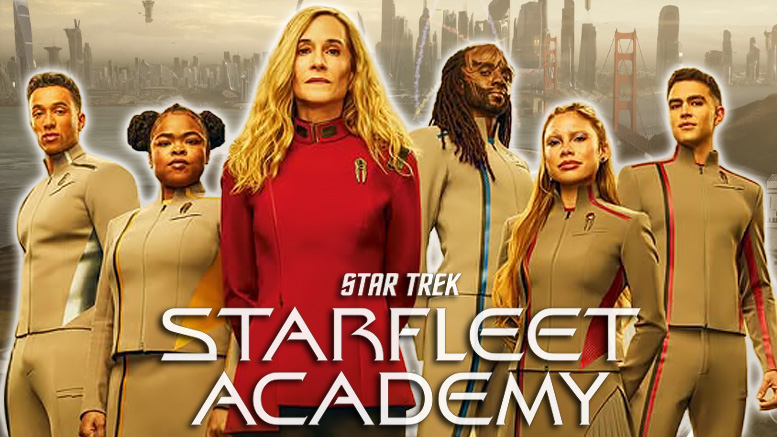
While Andor saw its second and last season this year, the remaining four will be returning for another season. When combined with the other new shows to premiere in 2026, such as Star Trek: Starfleet Academy, then we are looking at another good year for sci-fi space television series (assuming we do not need to wait years for the returning seasons).

I wanted to rank Murderbot a little higher, but it still lacks the energy of the books and each episode is too short to leave you satisfied. That said, it has a lot of potential and it is still a solid series.

Overall, great television made up for so-so movies in 2025.

Let’s hope some great sci-fi space movies in 2026.

Happy New Year!

Note: Apple TV’s Pluribus was not considered for this list. While it involves a “virus” from a distant exoplanet, we never learn anything about the distant civilization. Moreover, it is basically an Earth-based drama not involving any travel away from our planet.

Podcast: A Discussion with the Creator of Andor

You are in for a treat if you are interested in a deeper dive into the world of Andor. Reason magazine’s podcast The Reason Interview with Nick Gillespie has a eye-opening interview with Tony Gilroy, the creator, writer, and director of Andor. The series is without doubt the best of the Star Wars television series. The podcast discussion covers bureaucracy and the surveillance state as portrayed throughout the Andor series.

One of the questions discussed the lack of light sabers and the Force in the series, to which Mr. Gilroy noted:

One of my original questions to them, to the experts there, was, “In the galaxy—in this huge galaxy—how many people would have ever encountered a Jedi? How many people would ever know about the Force? How many people know about this family you keep rotating these movies on?” And the answer is: nobody, or almost nobody. If you’re living in the galaxy, if you’re a being in the galaxy, you’ve probably never had any encounter ever with Jedi or even know what it is, or the Force.

This type of thinking was made the series worth watching. The series did not need to be saved by Darth Vader or a Yoda plush toy anymore than a good Star Trek series should need to be saved by the Borg.

Andor also touches on something real happening just outside our windows rather than a galaxy far, far away. Mr. Gilroy notes it in this way:

The parallels to what’s happening in our world right now are even beyond moralistic…There is a giddy rush—you’ll see people cravenly move toward power because it’s gonna benefit them, or it’s warmer there, or they have no spine or moral commitment to really back up…People getting on board something—getting on board a train that’s on fire that they know is heading toward a cliff. It’s just amazing to watch the sort of giddy rush of people stripping off their clothes and jumping onto the fire here. It’s quite amazing.

Andor is the antithesis of getting along. It is about pushing back at the cost of everything so that others may someday have something worth holding. It is something we seem to have forgotten in our current situation even though we know the broken norms will not somehow reassert themselves via some outside Force. If we cannot see that we are the Force, then we are all truly lost.

Andor is possibly the one series that makes Star Wars relevant to a new generation. Gen Z does not need Jawas and Ewoks. It needs a new hope.

Mr. Gilroy understands this and shares all of his insights via the podcast. You will not be disappointed.

Television: For All Mankind & Star City

Credit: Apple TV

While all the talk right now is ranking the TV shows of 2025 (which I have yet to do), I am already looking forward to 2026.

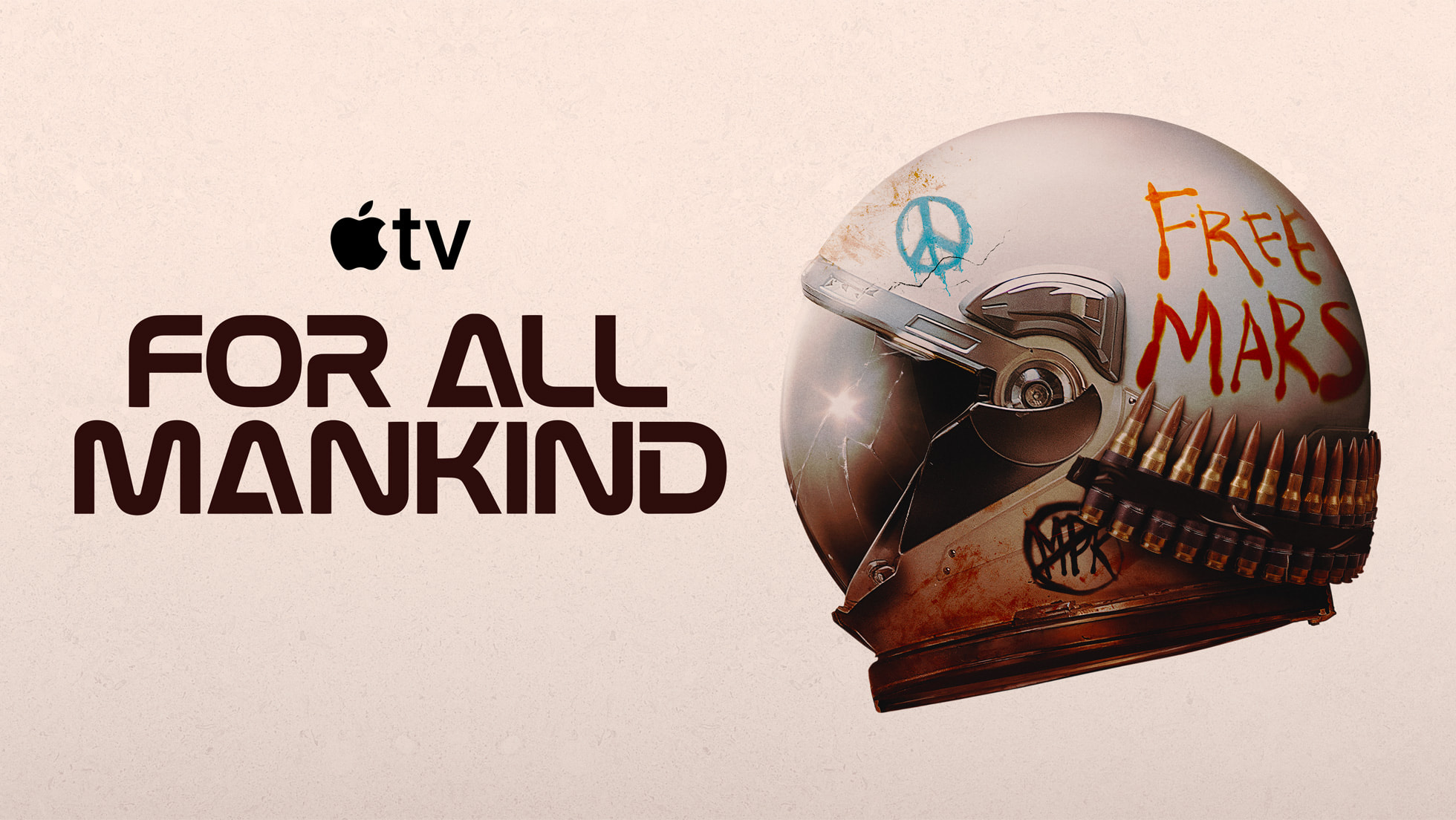
If you are not happy about the two-year delay in the return of season five of Apple TV’s For All Mankind, you can rest easy knowing that 2026 will not only have season five of this favorite, but also the premiere of a spin-off called Star City. Yes, the premiere of Star City was announced by Apple TV two-and-a-half years ago with the season five news, but it seems 2026 will see both shows break loose

So what is Star City about? That earlier announcement shared this from executive producers Matt Wolpert and Ben Nedivi:

Our fascination with the Soviet space program has grown with every season of ‘For All Mankind…The more we learned about this secret city in the forests outside Moscow where the Soviet cosmonauts and engineers worked and lived, the more we wanted to tell this story of the other side of the space race. We could not be more excited to continue building out the alternate history universe of ‘For All Mankind’ with our partners at Apple and Sony.

Wolpwert also had this to say about where season five of For All Mankind was heading:

We can say that, obviously, season four ended with an asteroid being stolen, and so there are a lot of people on Earth who are pretty pissed off about that. I think that more than anything, I would say the thrust of the season five story is how a rift is forming between the people who live on Mars, and more and more people are now living on Mars, and the people who have stayed back on Earth. And so, this show that started with a US versus USSR Cold War is now developing into a Mars versus Earth political schism, and how that impacts all of the characters we’ve come to know and love is really fun.

Okay, after that preamble, what are the premiere dates of these shows? That is unclear, though Apple TV already has a placeholder forStar City on its website, or at least this is the case in New Zealand. I know, very odd.

I am not sure why Apple TV is so quiet about all of this. The secrecy is worst than a classified Russian space program. The delays only frustrate the fan base, though it was smart that the creators showed up at San Diego Comic-Con 2025 to share more about these shows.

Maybe Pluribus is sucking up all of the oxygen in the room at the moment, but I think it is time for Apple TV to start talking about these other shows given that a very eager fan base is getting antsy.

Television: Pluribus

Credit: Apple TV+

The sixth episode of Apple TV+’s Pluribus dropped this week. If you haven’t heard of the new series, you may want to check in. It starts like the movie Contact, has elements of 3 Body Problem (including the clock), and turns into The Last Man on Earth, though in this case its an angry, lone woman dealing with Invasion of the Body Snatchers.

Interested? Oh yeah, it comes from Vince Gilligan, the same guy who also gave us on Breaking Bad and Better Call Saul. It also stars Rhea Seehorn from Better Call Saul.

It all starts when a radio signal from a civilization about 600 light-years away is intercepted by Earth. This signal contains a RNA sequence. Of course, the dumb Earthlings find it necessary to recreate this sequence, lose control of the experiment (alla Jurassic Park), and thereby release a virus that turns the human population into the Borg. The rest of the story is how one woman and twelve other unaffected humans make their way in this new world.

It’s an odd start to a very odd show, but it is fun and thought-provoking in its own way. It also doesn’t have simple story lines where the everyone agrees there is a problem with the new human state, or at least not all of the 13 remaining people agree. We know the collective mind seems to work in nature, be it bees or ants, so it is not impossible.

It is too early to know whether this show has a soft landing or even a future, but it’s the type of show, like Severance, that is sure to be discussed at the virtual office water cooler.

Okay, that’s enough references to other shows and movies. I counted eight, but I can also say that Pluribus is unique enough that none of those references really does it any justice.