Movie/Book Review: Mickey 17

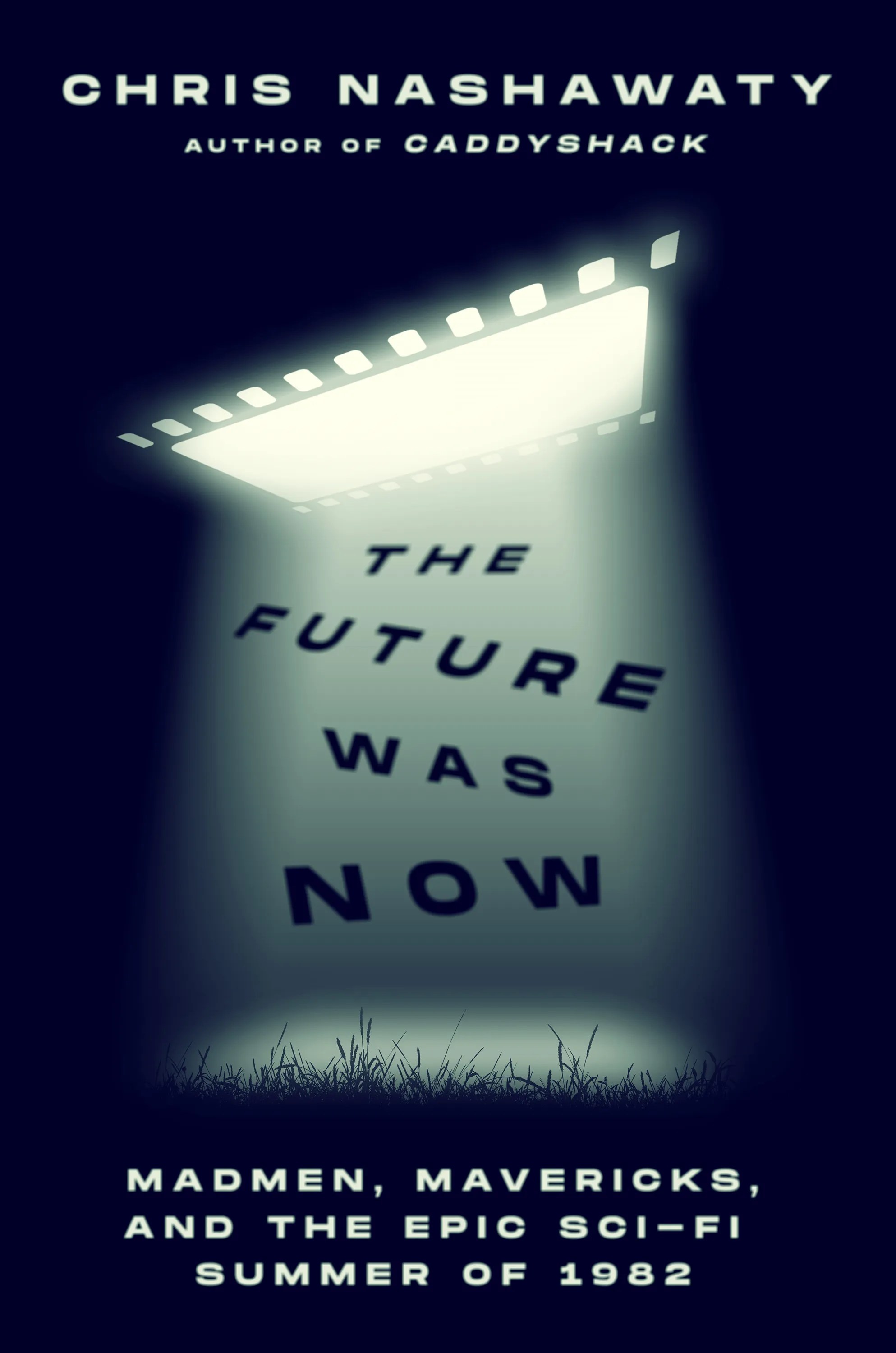
Credit: St. Martin’s Publishing Group

I recently read the book Mickey7 and thought to myself how it would make a great movie. I guess I was not alone since the movie was already in production.

It is the story of a crew member on a spacecraft who was literally dying to do his job. He performed the most dangerous tasks on the mission and when he died he would be reincarnated as the next version of himself. Hence, the term Mickey7 for the seventh iteration of his being.

So now it seems that Robert Pattinson wants to get in on the act, but this time as Mickey 17, who is therefore a little more experienced with death than the character in the book. The film cast also includes Steven Yeun, Naomi Ackie, Toni Collette, and Mark Ruffalo.

Unfortunately, you will need to wait for the film, which was supposed to be released last month. The Hollywood strike caused it to move to January 2025, much like Dune: Part Two was bumped from has year to this year.

That’s okay. Now you have plenty of time to read the book. Here is the teaser:

Dying isn’t any fun…but at least it’s a living.

Mickey7 is an Expendable: a disposable employee on a human expedition sent to colonize the ice world Niflheim. Whenever there’s a mission that’s too dangerous—even suicidal—the crew turns to Mickey. After one iteration dies, a new body is regenerated with most of his memories intact.

On a routine scouting mission, Mickey7 goes missing and is presumed dead. By the time he returns to the colony base, his fate has been sealed. There’s a new clone, Mickey8, reporting for Expendable duties. The idea of duplicate Expendables is universally loathed, and if caught, they face being recycled into protein to feed a hungry colony. Meanwhile, life on Niflheim is getting worse, and the native species are growing curious about their new neighbors, which has Commander Marshall very afraid. Ultimately, the survival of both lifeforms will come down to Mickey7.

That is, if he can just keep from dying for good.

Television: For All Mankind

Image (Credit): Promotion for season two of For All Mankind. (Apple TV+)

While awaiting the return of the Star Trek and Star Wars televisions series (by the way, do not forget that the fifth and final season of Star Trek: Discovery is slated to start tomorrow), I started to watch For All Mankind on Apple TV+. I am only halfway through season two, but I have enjoyed every minute so far. I am just surprised there has not been more press about this impressive series.

I was somewhat skeptical to start the series because I knew it was an alternate reality to our actual space program. Yet what I saw as a weakness was actually the show’s strength. The series re-imagines the space race with the Russians, having the U.S. set up a Moon base after the Russians are the first to step foot on the Moon. It just shows us what could have been if we did not stop the Apollo program 50 years ago and dither around until the Artemis program.

And while the series has plenty of action – almost as though your are watching multiple Apollo 13 movies – what makes it different is that it has heart. It is almost the Mad Men of NASA, showing the good and bad of that period in terms of human lives.

For All Mankind is honest about the period from the 1960s through the 1980s, showing that the real drama was right here on Earth as we dealt with Vietnam, racism, immigration, marital and family issues, and even a lesbian astronaut.

I did not expect all of this in one show, nor the superb acting that makes it all come to life. I am now hooked on the series, finding it strange that I already have nostalgia for an American lunar space program that never existed even though it could have.

The series continues with a Mars program in seasons 3 and 4, but I do not want to get ahead of myself. Let’s just say this other America gets to the Red Planet long before we do.

We are creating plenty of drama today with the real lunar program currently under way, as well as an eventual Mars program. It may in fact lead to some great television series down the line. I just hope we stick to the script and keep the current drama going for years to come.

Television: 3 Body Problem Premiering on Netflix

Credit: Netflix

We live in a time where we have plenty of science fiction options on television and at the theaters. Be it the Apple TV+ remake of Issac Asimov’s Foundation, the current showing of Frank Herbert’s Dune: Part Two at theaters, or the ongoing television series spinning more Star Wars and Star Trek tales.

And now, starting tomorrow, we will be treated to a Netflix series on the 3 Body Problem, one of the more recent science fiction series from the mind of Chinese writer Liu Cixin. The new series based on the Hugo-awarding winning book was created by Game of Thrones showrunners David Benioff and DB Weiss, as well as Alexander Woo from HBO drama series True Blood.

So what is it about? Netflix has a paltry summary, so let’s go to the book summary itself (and the trailer):

Set against the backdrop of China’s Cultural Revolution, a secret military project sends signals into space to establish contact with aliens. An alien civilization on the brink of destruction captures the signal and plans to invade Earth. Meanwhile, on Earth, different camps start forming, planning to either welcome the superior beings and help them take over a world seen as corrupt, or to fight against the invasion. The result is a science fiction masterpiece of enormous scope and vision.

The reviews are mixed, though I am sure you will want to judge for yourself. But just in case you want some insights from others, check out these reviews:

Should you want to see the Chinese television series, you can find it here on Youtube. Or you may want to circle back to this version if you don’t care for the Netflix production.

Note: You can also find the Chinese version of the series on Amazon Prime. Rather than 8 episodes, you will find the Chinese version called Three Body has 30 episodes. I am working my way through the Amazon Prime series and so far prefer the slower-paced Chinese original. Netflix seems to rush through the ideas, whereas they are better developed in the longer series.

Credit: Amazon Prime

Movie: Jodorowsky’s Dune

Image (Credit): One of the ships from Jodorowsky’s Dune drawings. (Sony Pictures Classics)

Now that Dune: Part Two is in theaters, it may be worth your time to revisit an earlier attempt to create a Dune movie by Chilean-French filmmaker Alejandro Jodorowsky Prullansky. The 2014 film, Jodorowsky’s Dune, discusses the filmmaker’s elaborate plans in the 1970s to create a 12-20 hour film covering the life of Paul Atreides. The planned combination of surrealistic art (Moebius), contemporary music (Pink Floyd), and stars (from Orson Welles to Dali) were being aligned to create something that might of been magical or just catastrophic. We will never know because the American film industry turned him down, even if they did use some of his ideas for future films such as Star Wars and Aliens.

When the film rights to Dune were sold again and Peter Lynch was given a green light to direct the film, we got the 1984 cultish mess that still haunts the streaming services. In the 2014 flim, Jodorowsky said he watched the Lynch film and was “happy because the picture was awful.’

In terms of the latest Dune films by Canadian filmaker Denis Villeneuve, in an interview Jodorowsky said he saw the trailer for the first Dune film and thought it was “well done” for standard industrial cinema, but noted that “industrial cinema is incompatible with auteur cinema.”

In my opinion, after a failure and then a flop, we are lucky to have the determination of Denis Villeneuve to finally give us a high-quality, memorable Dune. That said, it would have been fun to see Dali as the Emperor.

Movies: Dune and Denis Villeneuve’s Classy Gesture

Image (Credit): Scene from Dune: Part Two. (Warner Bros.)

It was a classy move by the Canadian filmmaker who gave us of this year’s most anticipated movie, Dune: Part Two.

A dying man in northern Quebec had one last wish before he died – he wanted to see the second installment of Denis Villeneuve’s Dune. Once the request appeared on social media, the film team went into action, even offering to fly the man to the film’s premiere in Montreal. But that was two month’s away, and the man could not wait that long nor was the medical team able to move him to another location.

So the film was flown up to Quebec on Villeneuve’s computer laptop for a private showing. The man watched the film and died a few days later.

Asked about this gesture, Villeneuve’s comment was, ““It’s for him, it’s for that man that we make films.”

As I said, classy.