Podcast: Cool Worlds Labs Has Started a Podcast

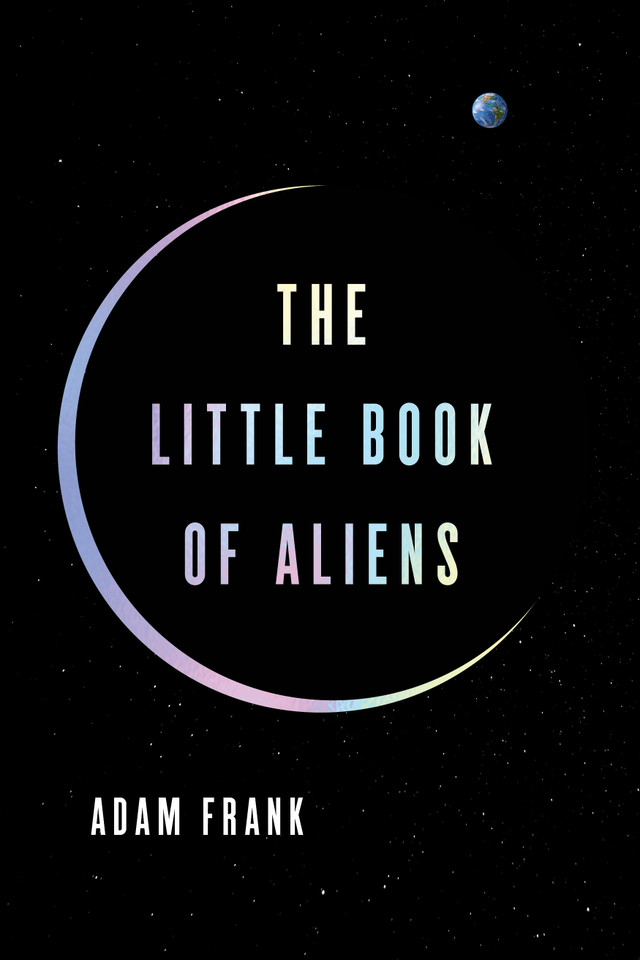
In an earlier posting, I noted that the people at Cool Worlds Lab were planning to create a podcast to further share the Lab’s research. Well, that day has come and you can now listen to the first episode with Professor David Kipping interviewing Rebecca Charbonneau, who is a Janksy Fellow at the National Radio Astronomy Observatory (NRAO). She is a historian of astronomy who is writing a book on the history of the Search for Extraterrestrial Intelligence (SETI).

The conversation covers a number of SETI topics, including a young Carl Sagan’s collaboration with Soviet astronomer I.S. Shklovsky on an English translation of Shklovsky’s book Universe, Life, Intelligence. It was a chance to escape Soviet censors and bring new light to SETI ideas.

It’s a great start to a new series. I look forward to many more podcast episodes in addition to all of the other great media shared by Cool Worlds Labs.

Credit: Emerson-Adams Press

Podcast: Assist UCLA with a SETI Project

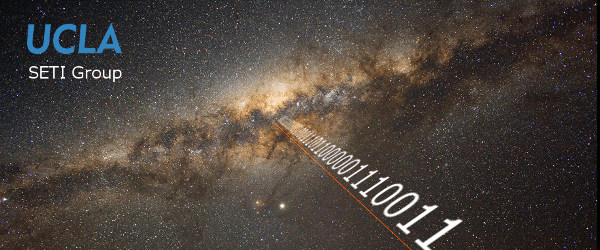
I found another episode from The Planetary Society’s podcast Planetary Radio that is worth checking out. In this episode, Are we Alone? The Search for Alien Technosignatures, Professor Jean-Luc Margot and doctoral student Megan Li discuss their project at University of California Los Angeles (UCLA) to identify signals from other civilizations in the galaxy and then extract information encoded in those extraterrestrial signals. This project, called UCLA SETI, was also the winner of a Planetary Society STEP Grant as well as a NASA grant to conduct this work.

As of last week, a volunteer site was set up to assist the UCLA SETI team with this project. Here is some key information from its website:

We host a citizen science collaboration on Zooniverse. Please consider partnering with us to identify the most interesting signals in our data. Subscribe to our newsletter to stay informed about our progress. Past issues of our newsletter are available.

Watch a two-minute video about the UCLA SETI course or a 30-minute talk about the search for life in the universe.

The video is actually a 55-minute talks, but the key section related to this project starts at the 23:38 minute mark where the downloaded data is discussed.

This is your chance to identify something that no one has every seen before. Put some of that time you might have spent watching The Ark toward something useful.

Podcast: Discussing Science Fiction and Astronomy with Andy Weir & Rob Manning

Credit: Planetary Society

If you have not yet tapped into The Planetary Society’s podcast Planetary Radio, then now is the time to do so. Host Mat Kaplan and his guests had a great time on the recent podcast, One Last Blast: Author of ‘The Martian’ Andy Weir with JPL Chief Engineer Rob Manning.

Both Andy Weir (author of The Martian, Artemis, and Project Hail Mary) and Rob Manning (Chief Engineer at the Jet Propulsion Laboratory) were shooting the you-know-what as they chatted about science fiction books they read as teenagers, the role of real science in fictional tales, astronomical conspiracy theories, and mankind’s need to expand into the unknown.

It was interesting to hear Andy Weir talk about curiosity being humanity’s survival mechanism. He pointed out that curiosity has allowed humanity to survive disasters here on Earth because we were all spread out rather than clustered on one flood plain. The same applies to expansion beyond the Earth.

Check it out for yourself. You may want to check out some of the earlier podcasts as well, such as:

Credit: Random House Publishing Group

A Day in Astronomy: The Birth of Carl Sagan

Image (Credit): Astrobiologist Carl Sagan. (Nautilus.us)

On this day in 1934, scientist and communicator Carl Edward Sagan was born in Brooklyn, NY. He was to become a great communicator of all things related to astronomy. He has played a key role over the years introducing millions to our place in the universe through his books, television series, speeches, and scientific work. His television series Cosmos was a milestone in educational television, bringing the stars and planets into everyone’s living room, while his books (Contact, Pale Blue Dot, The Dragons of Eden) continue to encourage the next generation of astronomers.

Dr. Sagan has a long resume, but I am most fascinated with his work to communicate with extraterrestrial life. He was a strong supporter of the Search for Extra-Terrestrial Intelligence (SETI) and worked with NASA to ensure our spacecraft were equipped with a record of human activity to educate other planetary civilizations, including the gold records placed on the Pioneer 10 and 11 space probes as well as the two Voyager space probes.

Years ago, the Smithsonian magazine had a good summary of Dr. Sagan’s life in the article “Why Carl Sagan is Truly Irreplaceable.” I recommend the article as a good way to get to know the man, though delving into his books is even better.

Credit: Ballantine Books

Extra: Carl Sagan was also the founder and first president of the Planetary Society. Visit this Planetary Society site, Ann Druyan wishes you a happy Sagan Day, for more on Dr. Sagan’s work.

Arecibo Observatory Gone Forever

Image (Credit): Matthew McConaughey and Jodie Foster at the Arecibo Observatory in the movie Contact. (Warner Bros.)

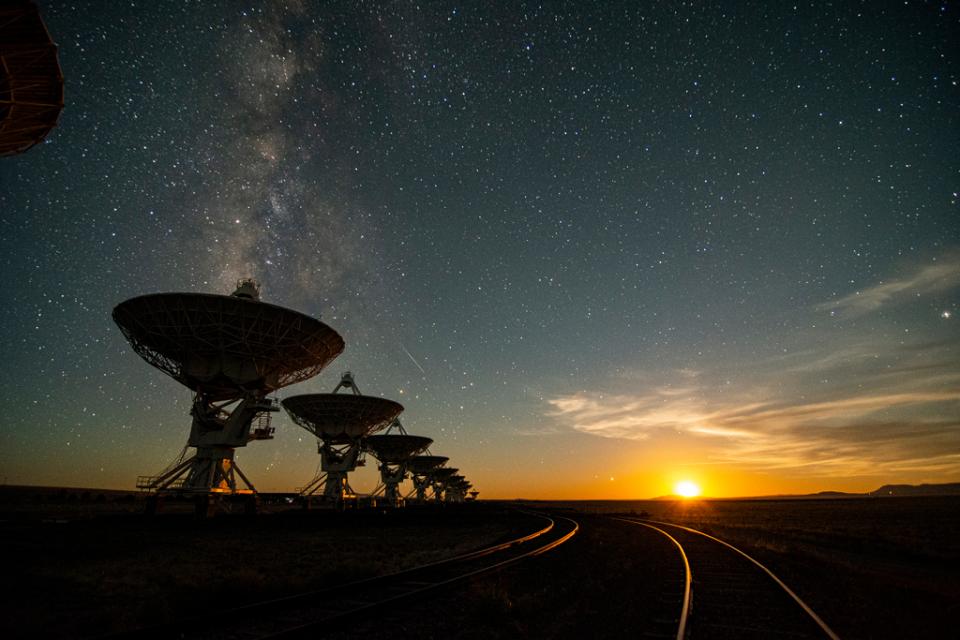
If you were hoping that the Arecibo Observatory in Puerto Rico would have a second life, it may be time to say goodbye. Efforts to rebuild the radio telescope since it collapsed in 2020 have ended. Nature reports that the US National Science Foundation (NSF) has given up on the idea of rebuilding the telescope and instead plans to establish an educational center at the site.

You may have memories from the 1997 film Contact where Matthew McConaughey and Jodie Foster enjoyed some private time at the Observatory. Her character Dr. Ellie Arroway was working at the Observatory as part of the Search for Extraterrestrial Intelligence works (SETI) program. In fact, the SETI connection is true. You can see a SETI tribute to the telescope here.

Of course, scientists will remember almost 60 years of work with the radio telescope. While it was initially built for military purposes, it was soon transformed into a scientific site and served as the largest radio telescope on the planet for some time. As far as scientific accomplishments, here are a few of them from the NSF:

  • 1967: Arecibo discovered that the rotation rate of Mercury is 59 days, not the previously estimated 88 days.
  • 1981: Arecibo produced the first radar maps of the surface of Venus.
  • 1992: Arecibo discovered the first ever exoplanet: In subsequent observations, an entire planetary system was found around the pulsar PSR 1257+12.
  • 2008: Astronomers use Arecibo to detect for the first time, methanimine and hydrogen cyanide molecules — two organic molecules that are key ingredients in forming amino acids — in a galaxy 250 million light-years away.

So many new telescopes have come online in the past 60 years that some will say we will be fine with an educational center. This is true, but it is also worth remembering each of the telescopes along the way that helped us to understand this awesome universe of ours.

Image (Credit): The damaged Arecibo Observatory reflector dish after suffering damage from a broken cable. (University of Central Florida)