The Artemis II Mission is Underway

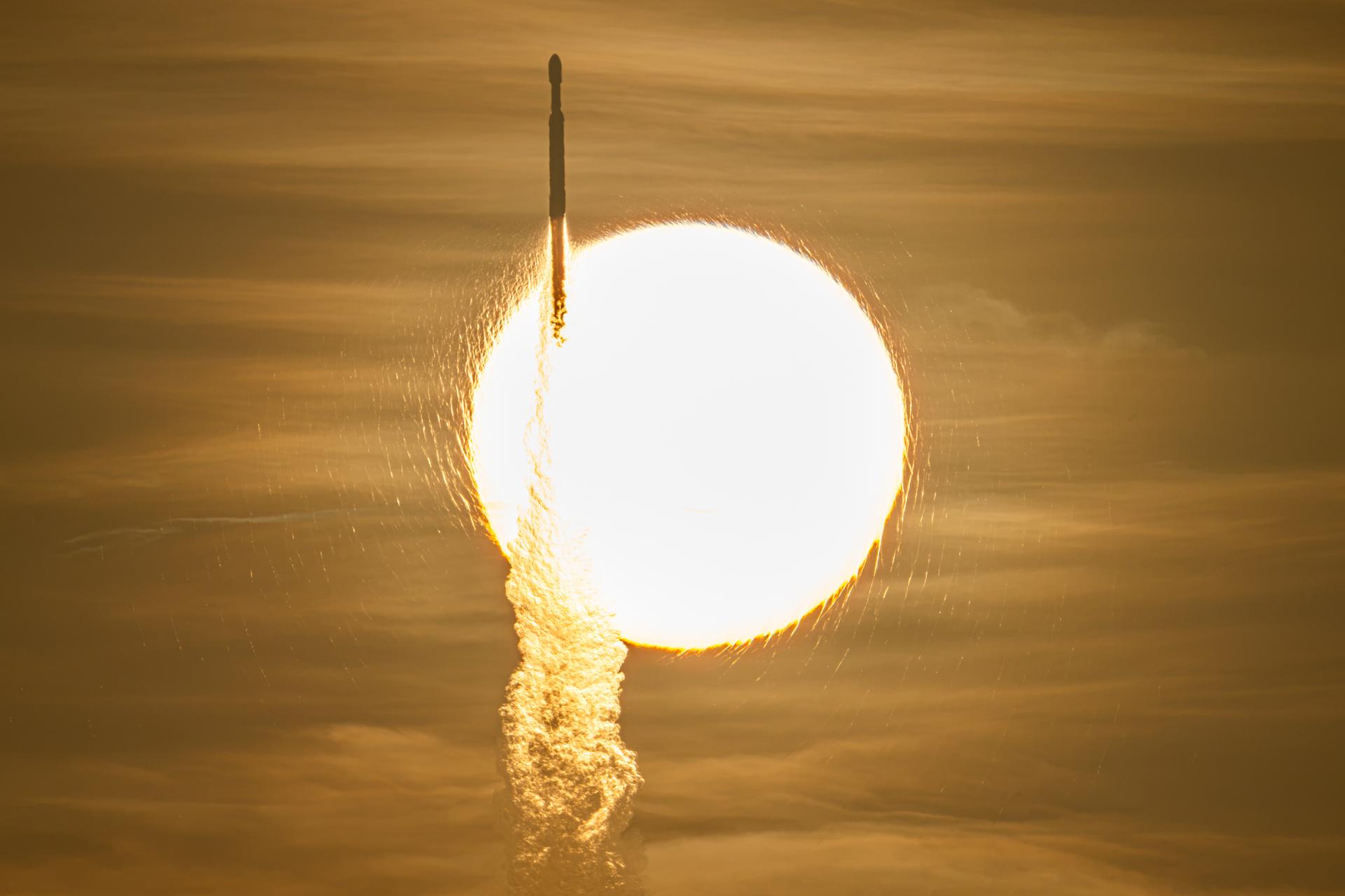
Image (Credit): NASA’s Artemis II mission lifting off from Launch Complex 39B at NASA’s Kennedy Space Center in Florida on Wednesday, April 1, 2026. (NASA/Joel Kowsky)

The second phase of our return to the Moon, Artemis II, is underway after a successful launch from the Kennedy Space Center earlier today. Three American astronauts as well as one Canadian astronaut will circle the Moon in a 10-day mission to iron out any bugs in the Orion spacecraft.

Here is a day-by-day schedule for the 10-day mission, with a graphic version below (provided on the Planetary Society’s website):

  • Day 1: Over 24 hours in Earth orbit, the astronauts perform a proximity operations demo with the ICPS and make sure various spacecraft systems are working (water, toilet, carbon dioxide removal, communications). The crew sleeps in two four-hour periods.
  • Day 2: Orion engines fire for several minutes, accelerating the spacecraft to escape velocity and sending the crew toward the Moon on their free-return trajectory. The crew also works out on a flywheel and do video calls with people on the ground.
  • Days 3-5: Orion performs three trajectory corrections to fine-tune its approach to the Moon. The crew tests the medical kit and performs a CPR demo. On day 5, they test their spacesuits.
  • Day 6: The crew flies by the Moon, coming within 6,400-9,600 kilometers (4,000-6,000 miles) of its far side. Their maximum distance from Earth is between 370,000-450,000 kilometers (230,000-280,000 miles), depending on their launch date. This may exceed the current human record set by Apollo 13. The crew takes photographs and videos of the Moon’s far side.
  • Days 7-9: Orion performs three trajectory corrections to fine-tune its return to Earth. On day 7, the crew rests off-duty, and on day 8, the crew demonstrates the construction of a radiation shelter construction demo and performs manual piloting tests.
  • Day 10: The crew dons spacesuits and compression garments to prepare for reentry. About 122,000 meters (400,000 feet) above Earth, Orion’s service module separates from the crew module, and Orion reenters Earth’s atmosphere at 40,000 kilometers per hour (25,000 miles per hour). Two drogue parachutes slow Orion to roughly 480 kilometers per hour (300 miles per hour). Then, three pilot parachutes, followed by three main parachutes, slow the capsule to 27 kilometers per hour (17 miles per hour). Artemis II splashes down off the coast of San Diego, California.

If you want to track the mission in real time, you can visit this NASA site.

Credit: NASA

NASA Changes the Mileposts, Again

Image (Credit): NASA’s February 2026 somewhat confusing graphic that seems to indicate we will either be on the Moon by 2028 or simply orbiting around the Moon and thinking about it for years to come. (NASA)

It is hard to keep up with the space program these days, between potential budget cuts last year, the recent changes to the Artemis III mission, and now the changes this week by the new NASA administrator.

So what is the latest? Let’s start with the Moon mission in today’s post. According to a new set of initiatives released this week, the idea of a permanently crewed lunar base, or even a base that can be used for two months at a time, is moving further into the future. The whole theme appears to be “ignition,” but not “arrival,” mind you.

Here are the new plans:

  • Phase One: Build, Test, Learn: NASA shifts from bespoke, infrequent missions to a repeatable, modular approach. Through CLPS (Commercial Lunar Payload Services) deliveries and the LTV (Lunar Terrain Vehicle) program, the agency will increase the tempo of lunar activity, sending rovers, instruments, and technology demonstrations that advance mobility, power generation (including radioisotope heater units and radioisotope thermoelectric generators), communications, navigation, surface operations, and a wide range of scientific investigations.

  • Phase Two: Establish Early Infrastructure: With lessons from early missions in hand, NASA moves toward semi‑habitable infrastructure and regular logistics. This phase supports recurring astronaut operations on the surface and incorporates major international contributions, including JAXA’s (Japan Aerospace Exploration Agency) pressurized rover, and potentially other partner scientific payloads, rovers, and infrastructure/transportation capabilities.

  • Phase Three: Enable Long‑Duration Human Presence: As cargo‑capable human landing systems (HLS) come online, NASA will deliver heavier infrastructure needed for a continuous human foothold on the Moon, marking the transition from periodic expeditions to a permanent lunar base. This will include ASI’s (Italian Space Agency) Multi-purpose Habitats (MPH), CSA’s (Canadian Space Agency) Lunar Utility Vehicle, and opportunities for additional contributions in habitation, surface

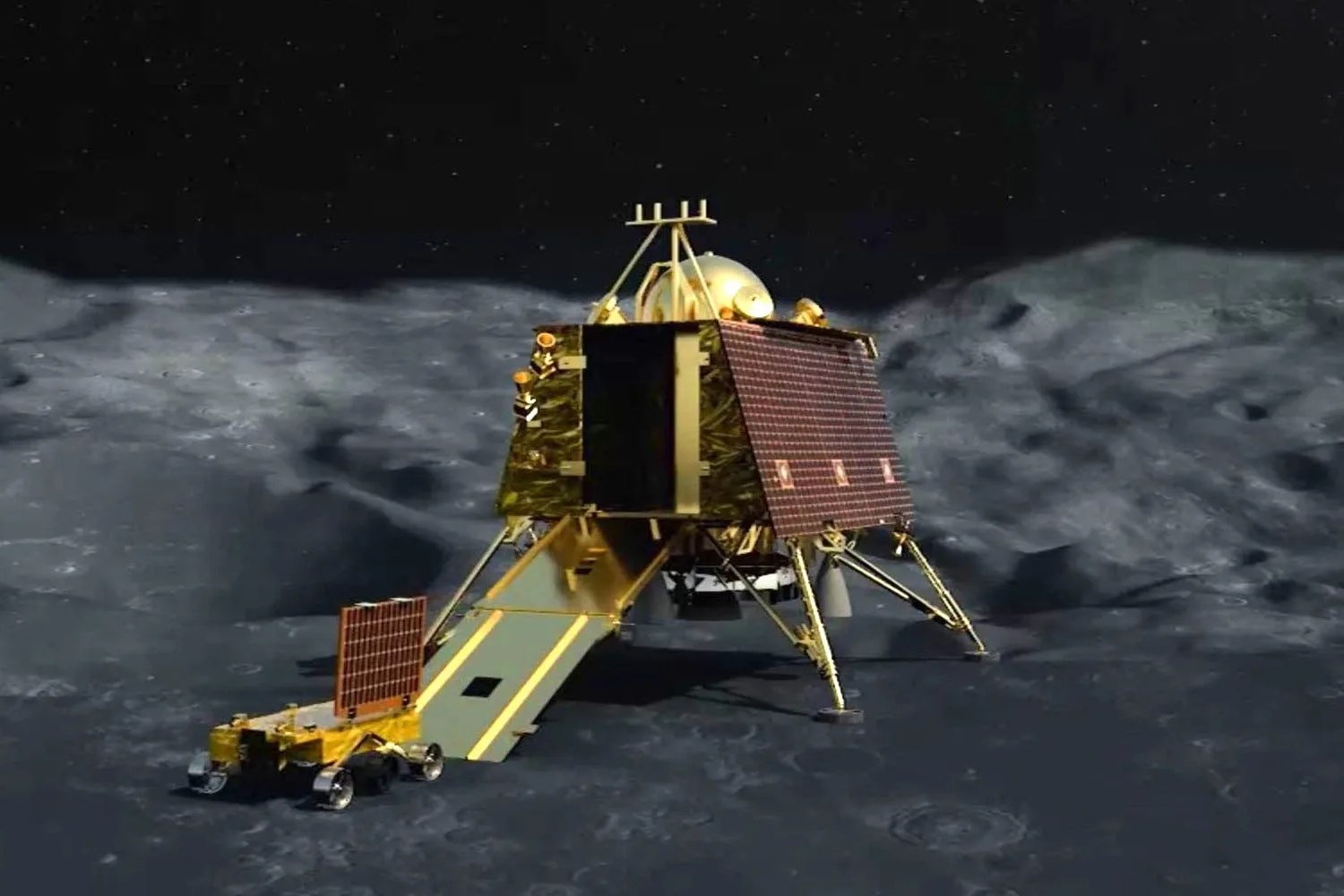
Phase One makes sense – let’s keep trying. You may remember the various commercial lunar missions in recent years that have faced severe issues on or around the Moon. For instance, we had:

What worries me is that the past could be a predictor for the future. Other than Blue Ghost, NASA and the commercial sector have little to brag about. If this continues, how long do we wait? Is the commercial sector even ready for this new work and expected pace?

Phase Two is talking about agreements with Japan at a time that NASA’s credibility with any of its partnerships is questionable given the attitude in the White House. For instance, since 2022 Japan has been a partner in the Lunar Gateway project that the White House tried to kill last year and NASA has now paused (or more likely killed) this week. Such actions do not build confidence between the two space programs, nor the space programs of other nations also assisting with the Lunar Gateway. Also, what does it mean to live in semi‑habitable infrastructure? That is a semi-scary term. Do they mean “semi-permanent” infrastructure?

Phase Three assumes the successful creation of a HLS by SpaceX and Blue Origin, but the companies do not have a lot of time to create simpler landing craft for Artemis III, iron out their bugs, and maybe even completely scrap their current multiple rocket refueling design. Moreover, these simpler models are expected to expand into the full HLS models. So what does that mean in terms of getting actual astronauts on the Moon for Artemis IV and cargo thereafter?

NASA notes that the simpler landing systems will not only need to be created for the Artemis III low Earth orbit test in 2027, but then those companies have to also prove that they can safely land whatever they create on the lunar surface without a crew before Artemis IV in early 2028. We are asking this of two companies that have never done anything like this. SpaceX is still playing with its Starship after all of his promises that it would be much further ahead by now. SpaceX has not even had a launch test in the past six months. Again, is it any surprise if the public’s confidence is waning?

Finally, a new timeline interlaced with the Artemis timeline would be nice. My fear is that all of this complexity and busy work means we will be arriving on the Moon after the Chinese have set up camp. Having some clear dates aligned with the phases above would help to alleviate this concern.

Artemis II Reset for April 1 Launch

Credit: NASA

It’s a “go,” for now at least, per NASA’s Artemis II Flight Readiness Review.

NASA has a small window in April to launch the Artemis II mission (see above), so the plan is for a launch on April 1.

The next step is to get the Space Launch System and Orion capsule back onto the launch pad, which is planned for March 19.

If you are so interested, you can watch yesterday’s press conference regarding the Artemis II Flight Readiness Review. The participants included:

  • Lori Glaze, acting associate administrator, Exploration Systems Development Mission Directorate
  • John Honeycutt, chair, Artemis II Mission Management Team
  • Shawn Quinn, manager, Exploration Ground Systems Program
  • Norm Knight, director, Flight Operations Directorate

Pic of the Week: Blue Origin Moon Landing

The image above is from a NASA Office of the Inspector General audit report on the Human Landing System. It shows the complexity of the Blue Origin process for getting a crew on the Moon. It is complex, and has one more step than the SpaceX plan, which already seems close to impossible.

This is how the audit report explained the graphic you see above:

For the Artemis V mission, Blue Origin is developing its Blue Moon lander. Standing 52 feet tall, Blue Moon will launch on Blue Origin’s reusable New Glenn heavy-lift rocket from Cape Canaveral Space Force Station in Florida. The lander will utilize Blue Origin’s BE-7 engines, which are fueled by liquid oxygen and liquid hydrogen. Prior to the Artemis V mission, Blue Origin will launch a transporter to low Earth orbit, essentially serving as a propellant depot. From there a fleet of refuelers will launch, rendezvous with the transporter, and transfer propellant. The Blue Moon lander will then launch to low Earth orbit to receive fuel from both a refueler and the transporter before traveling to NRHO to dock with Gateway for the Lunar Orbit Checkout Review. The transporter, left in low Earth orbit, will receive additional propellant there before traveling to a higher “stairstep” orbit for final propellant aggregation.14 Once the transporter has traveled to NRHO, Blue Moon will undock with Gateway to receive its final propellant transfer and then dock with Gateway a second time. Next, Orion will deliver the astronauts to Gateway, who will then transfer to Blue Moon for transit to the lunar surface and back to the station. At the end of the mission, Orion will return the astronauts to Earth and the lander will transition to another orbit for disposal or later reuse.

Audit Report: Questions about the Human Landing System

Auditors with NASA’s Office of the Inspector General (OIG) evaluated three aspects of the Human Landing System (HLS) to be used with the Artemis Moon landing: (1) the extent to which the HLS providers are meeting cost, schedule, and performance goals; (2) the HLS Program’s implementation of the insight/oversight model; and (3) the Program’s identification and mitigation of risks to astronaut safety.

In its report, NASA’s Management of the Human Landing System Contracts, the auditors found issues in all three areas. In particular, the report stated:

…both SpaceX and Blue Origin have experienced schedule delays and face technical and integration challenges that have the potential to further impact lander costs and delivery schedules. In particular, SpaceX’s lander will not be ready for a June 2027 lunar landing.

It is possible that the draft version of this audit report was already the desk of NASA Administrator Isaacman right before he decided to move the Moon landing date again. Pending audit reports have a tendency to stir action.

Yet, even once we get to the moon, the auditors identified some safety issues. Specifically, the auditors stated:

We also observed limitations in the Agency’s approach to crew survival analyses—the evaluation of available crew survival capabilities to counter a catastrophic event—due to functional constraints and the availability of resources…While NASA is taking steps to prevent catastrophic events from occurring, ultimately, should the astronauts encounter a life-threatening emergency in space or on the lunar surface, NASA does not have the capability to rescue the stranded crew.

None of this is too surprising with a new approach like this one. Delays are inevitable, and even the best of plans cannot account for everything, as Apollo 13 demonstrated. It also shows that NASA has a tough balancing act, with the need for speed weighed against the mechanisms to ensure the safety of the astronauts.

One of the safety concerns stated later in the report really should have been its own report. It discussed the height of the HLS. As shown in the image above, the Starship Lander is huge compared to the Apollo lander and even Blue Origin’s Blue Moon Lander. Here are the dimensions per the report:

Landers may also encounter hazards such as boulders or mounds that are too large or depressions that are too deep for the landing legs and stability design. For example, steep slopes of up to 20 degrees on the lunar South Pole present navigation and landing challenges. Given Starship’s height of 171 feet— about the equivalent of a 14-story tall commercial building—there is a risk that its momentum will continue after landing causing it to tip over. Blue Moon—standing at 53 feet tall—also faces landing risks, including exceeding the lander’s tilt tolerance for safe and effective execution of critical crew functions. Surpassing the tilt tolerance for either lander, which NASA established as not to exceed 8 degrees to support all post-landing crew activities, could impact the operation of equipment such as the hatch used by the crew to exit and enter the vehicle. By comparison, the Apollo Lunar Module stood 23 feet tall.

This is scary given the multiple spacecraft we have already witness toppling over onto the lunar surface just last year. Why would we ever want to land a 14-story tall rocket with an elevator on the Moon as our first attempt after 50 years? I can understand Elon Musk proposing this ridiculous idea, but it is not clear how the original planners could have gone along with it. This is a “catastrophic event” waiting to happen.

The auditors also added a Apollo 15 Lunar Module story (shown below) to the report. After reading this report and the Apollo 15 clip, I think I will also have trouble sleeping tonight due to an uncomfortable feeling that the current Artemis approach was a mess (if not doomed) from the start.