NASA Had a Busy Year

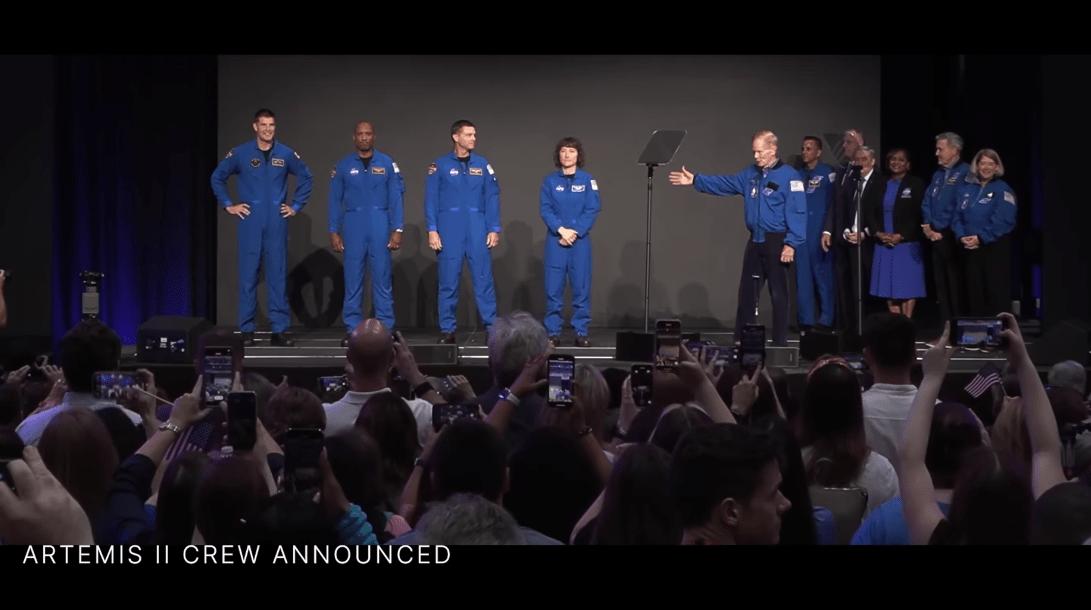
Image (Credit): The introduction of the Artemis II crew, just one of many items highlighted in NASA’s new video summarizing 2023. (NASA)

This is the time of year for lists, so I wanted to highlight one of the more important lists, at least in the opinion of this writer. That’s right, we need to remember the important space milestones from this year.

Fortunately, NASA recently summed up its successes in 2023 with a new video titled NASA 2023: Nothing is Beyond Our Reach. The video highlights many of the Agency’s accomplishments this year, including the launch of the Psyche mission, the announcement of a crew for the Artemis II mission, and the OSIRIS-REx capsule retrieval.

It is quite a list. Luckily, NASA provided a list of links so you can read more about the various efforts:

Time to read up on 2023 before we dive into more activities in 2024.

Note: You can read a more detailed list of accomplishments at this NASA site.

Audit Report: Artemis III May Not Be Possible Until 2027

The legislative branch’s audit arm, the Government Accountability Office (GAO), has some bad news regarding the Artemis mission to the moon – the landing on the Moon may need to wait until 2027.

Here is what the auditors said in their November 30 report, NASA Artemis Programs: Crewed Moon Landing Faces Multiple Challenges, about NASA’s delays:

As of September 2023, the Human Landing System program had delayed eight of 13 key events by at least 6 months. Two of these events have been delayed to 2025—the year the lander is planned to launch. The delays were caused in part by the Orbital Flight Test, which was intended to demonstrate certain features of the launch vehicle and lander configuration in flight. The test was delayed by 7 months to April 2023. It was then terminated early when the vehicle deviated from its expected trajectory and began to tumble. Subsequent tests rely on successful completion of a second Orbital Flight Test.

The Human Landing System was awarded to SpaceX, which has been having a few issues getting everything to work on schedule. Of course, this is just one of many issues that contribute to potential delays (such as the space suit), but I expect SpaceX does not want to be labeled as the drag on the program when we are trying to beat the Chinese to the Moon.

The audit report is comprehensive and serves as a warning that things are slipping and may continue to slip without sufficient attention.

Artemis represent an international effort to bring together the best parties from the government and private sector for something amazing. The Apollo missions to the Moon were run by one country as a central government program. This is a chance for everyone to shine using a whole new approach. We just need to keep up the momentum.

A Day in Astronomy: Pioneer 10 Approaches Jupiter

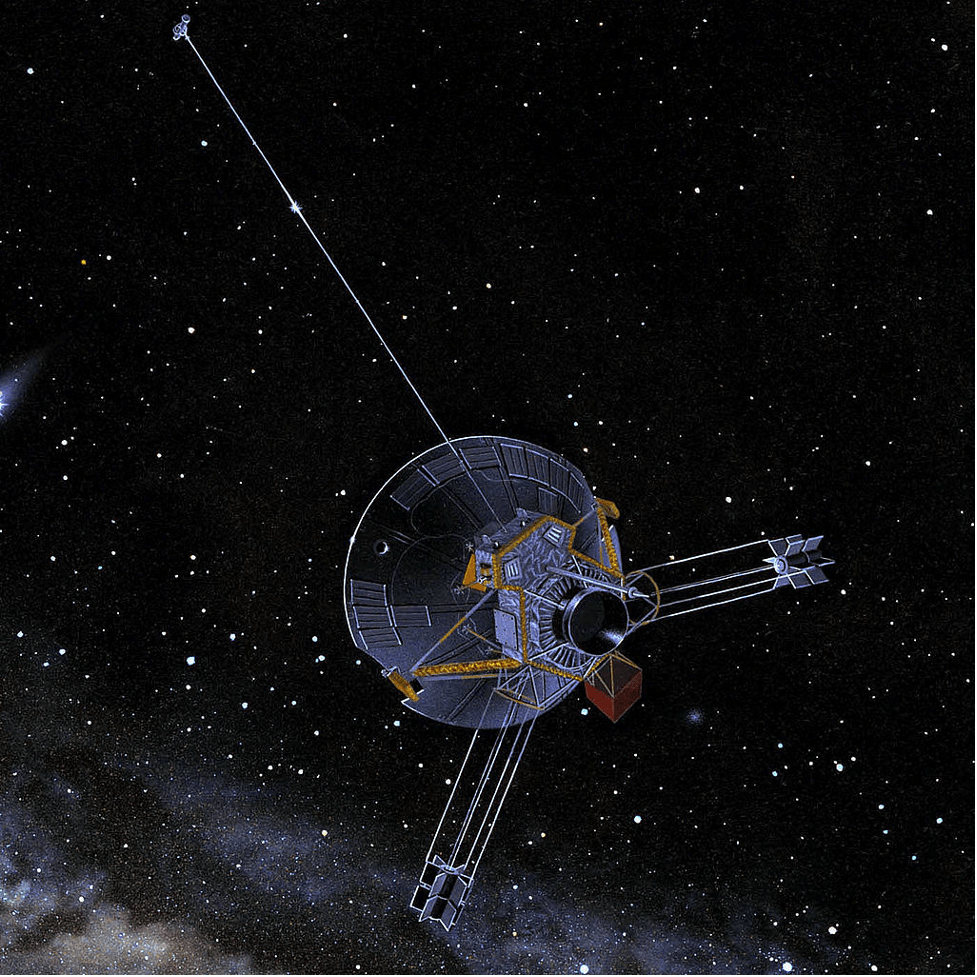
Image (Credit): Artist’s rendering of the Pioneer 10 spacecraft. (Don Davis for NASA)

We may have missed the date of the story in this piece (the anniversary was November 6), but this is an opportunity to share another site that brings astronomical history to life. The American Astronomical Society, which brings together professional astronomers, astronomy educators, and amateur astronomers, has its own blog on astronomical anniversaries that I wanted to highlight. It is called This Month in Astronomical History.

The November article is about the 50th anniversary of NASA’s Pioneer 10 mission as it came in contact with Jupiter. The article notes that the spacecraft first started imaging Jupiter on November 6, 1973 when it was still 16 million miles away from the planet. Overall, it sent back about 500 images of Jupiter and its moons.

You can read the article itself for information on the success of the mission. The author also noted the fate of the spacecraft:

Originally slated for 21 months of operation — sufficient to complete the Jupiter observations — its official science mission was ended on 31 March 1997. Its last signal was sent on 23 January 2003; from a distance of about 12.2 billion km (7.6 billion miles) from home, Pioneer’s swansong took over 11 hours to reach us.

The spacecraft was still communicating with us about 50 years after its Jupiter mission. That is impressive.

Space Stories: Name-dropping on Europa, Flying Toolboxes, and Space Veggies

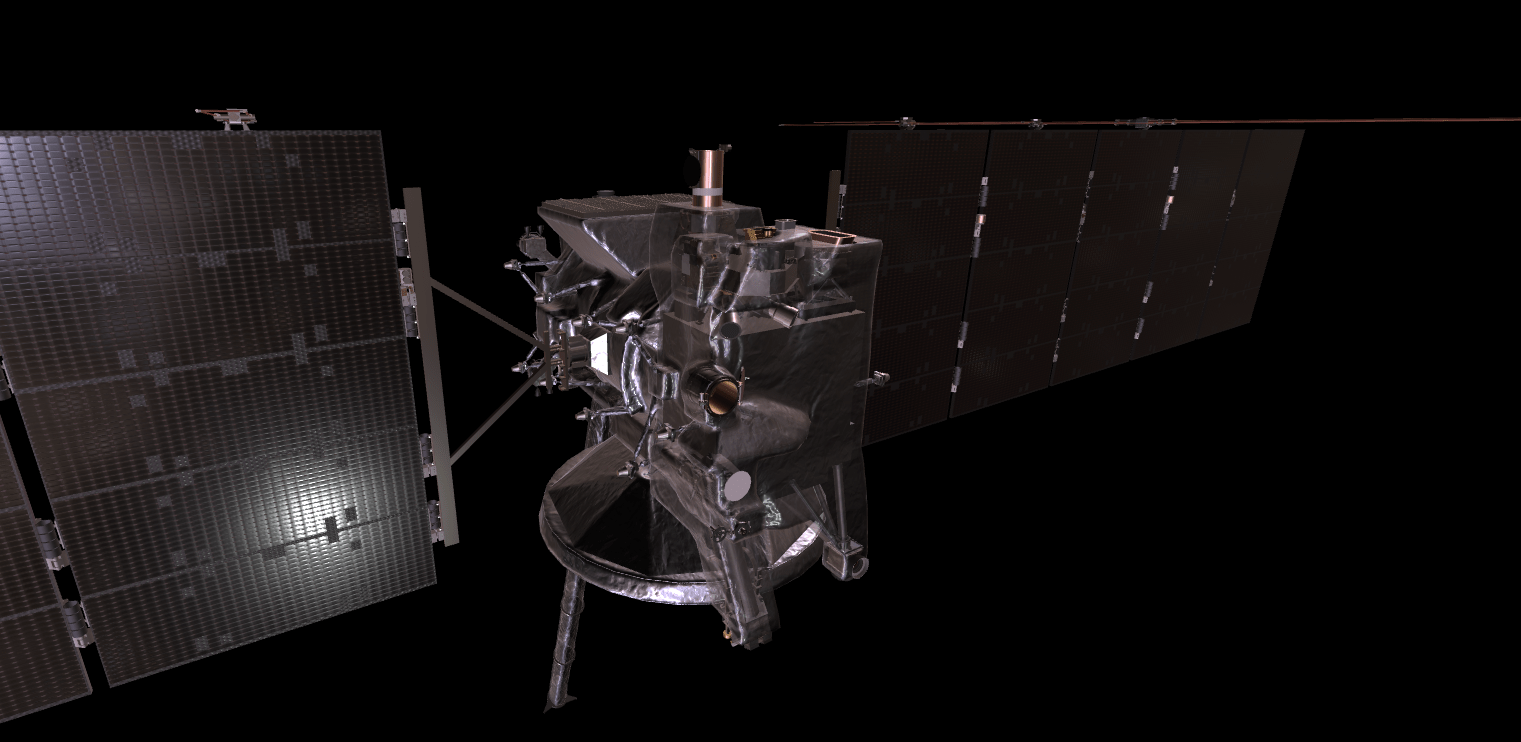
Image (Credit): NASA’s Europa Clipper. (NASA)

Here are some recent stories of interest.

NASA JPL: “Time is Running Out to Add Your Name to NASA’s Europa Clipper

Six weeks remain for you to add your name to a microchip that will ride aboard the spacecraft as it explores Jupiter’s moon Europa. It’s not every day that members of the public have the chance to send their names into deep space beyond Mars, all the way to Jupiter and its moon Europa. But with NASA’s Europa Clipper, you have that opportunity: Names will ride aboard the spacecraft as it journeys 1.8 billion miles (2.6 billion kilometers) to this icy moon, where an ocean hides beneath a frozen outer shell. The deadline to join the mission’s “Message in a Bottle” campaign is only six weeks away. The campaign closes at 11:59 p.m. EST, Dec. 31, 2023.

NBC News: “Look! Up in the sky! It’s a bird! It’s a plane! It’s … a tool bag?

That’s no moon. An astronaut’s tool bag that accidentally floated away during a routine spacewalk at the International Space Station is now orbiting Earth and may be bright enough to spot by keen-eyed skywatchers. The bag drifted away from the space station this month when NASA astronauts Jasmin Moghbeli and Loral O’Hara were performing maintenance on the exterior of the orbiting outpost.

LiveScience: “China Successfully Grows Lettuce and Tomatoes Aboard Tiangong Space Station

China’s Shenzhou 16 astronauts have been growing vegetables aboard the Tiangong space station, as part of plans for future deep space exploration. Mission commander Jing Haipeng and rookie astros Zhu Yangzhu and Gui Haichao have been aboard Tiangong since late May and are due to return to Earth on Oct. 31, after handing over control of the station to the newly arrived Shenzhou 17 mission crew. Jing and company have spent time cultivating veggies using two sets of specialized equipment. The first started operation in June and has reaped four batches of lettuce. The second one was put into operation in August for growing cherry tomatoes and green onions.

Look What Lucy Found

Image (Credit): A view of the newly discovered second asteroid behind asteroid Dinkinesh. (NASA/Goddard/SwRI/Johns Hopkins APL/NOIRLab)

NASA’s Lucy spacecraft encountered a surprise last Wednesday as it approached the target asteroid Dinkinesh, located in the asteroid belt. Instead of finding a single asteroid, it found a binary pair. Early data indicated that asteroid Dinkinesh is about 0.5 miles wide and its orbiting partner is only 0.15 miles wide.

Lucy did not have time to stick around, but it captured enough images during its fly by to keep astronomers busy for some time. The spacecraft was flying about 10,000 mph as it passed the pair.

Lucy’s primary mission is the Trojan asteroids (that is, asteroids that share Jupiter’s orbit around the Sun). And why are they of interest? NASA mission page tells us:

Planet formation and evolution models suggest that the Trojan asteroids are likely to be remnants of the same primordial material that formed the outer planets (Jupiter, Saturn, Uranus, and Neptune), and thus serve as time capsules from the birth of our solar system over four billion years ago.

We may have many more surprises before Lucy finishes her 12-year mission.