The Psyche Mission Begins

Credit: NASA

It may be Friday the 13th, but the news has been positive about the Psyche spacecraft, which earlier today successfully launched from  NASA’s Kennedy Space Center in Florida.

Here is part of a statement by Arizona State University Professor Lindy Elkins-Tanton, the Principal Investigator (PI) of the Psyche mission, from back in 2017 as she awaited word on whether the Psyche mission had been green-lighted by NASA:

I’ve only been working on this project for five and a half years. Some of my competitors have been through the process before with the same ideas, and are coming up on a decade of trying to fly their concept. Still, five and a half years. About 150 people have worked on this concept with me. We’ve written about 2,000 pages, including the step 1 and step 2 proposals and all the written, edited, revised, formatted, and published answers to questions that came in between. We have art and models and videos and new scientific and engineering results because of all our efforts to understand how to get to the metal world Psyche and what we might find if we did, and how we could measure it and send the information back to Earth and understand it and interpret it for everyone in the world.

To say our hearts are in this project would be too facile, too surficial, too trite. We have lived and breathed this. We know and love each other and we know each other’s families and we have learned when to be quiet and let the other person work through a peak of frustration late at night after no rest for weeks. We have sweated through countless reviews and celebrated with numerous cakes and dinners the many intermediate successes that allowed us to get here, the ultimate intermediate success, the privilege to wait for the phone call.

Here is PI Lindy Elkins-Tanton’s quote from earlier today:

We said ‘goodbye’ to our spacecraft, the center of so many work lives for so many years – thousands of people and a decade…But it’s really not a finish line; it’s a starting line for the next marathon. Our spacecraft is off to meet our asteroid, and we’ll fill another gap in our knowledge – and color in another kind of world in our solar system.

Congratulations to PI Lindy Elkins-Tanton and her team on a job well done (so far, of course).

NASA Gets Ready for a Thursday Launch to Asteroid Psyche

Image (Credit): The Psyche spacecraft sits aboard a SpaceX Falcon Heavy rocket earlier today at Launch Complex 39A. (NASA/Aubrey Gemignani)

After a number of delays, the Psyche mission appears ready to go as the spacecraft sits at Launch Complex 39A at the Kennedy Space Center in Florida. The launch is scheduled for tomorrow at 10:16 a.m. EDT.

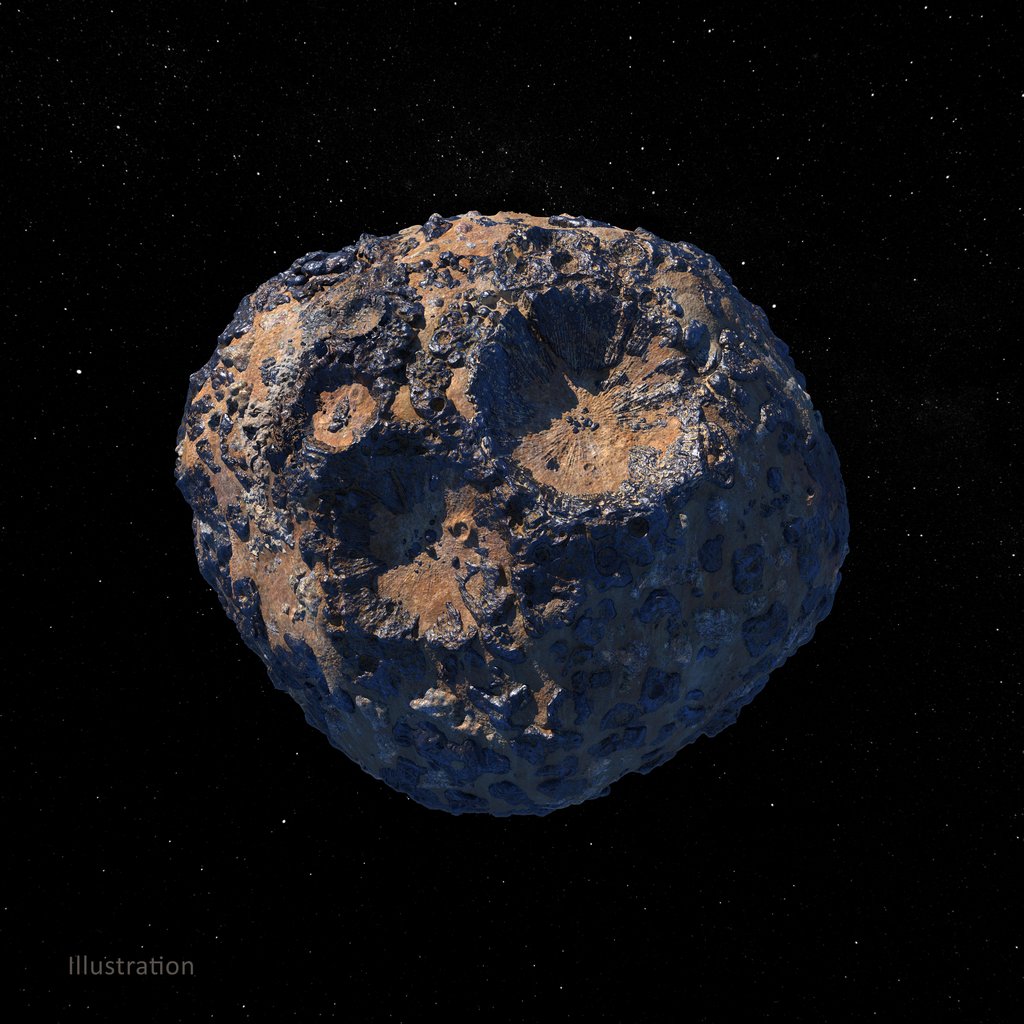
The spacecraft will not reach the metal-rich asteroid Psyche until 2029. It will then orbit the asteroid for about two years collecting data to learn more about an object that astronomers believe may contain clues about the formation of the rocky planets closest to the Sun.

The scientific goals of the mission are to:

  • Understand a previously unexplored building block of planet formation: iron cores.
  • Look inside terrestrial planets, including Earth, by directly examining the interior of a differentiated body, which otherwise could not be seen.
  • Explore a new type of world. For the first time, examine a world made not of rock and ice, but metal.

NASA has a good track record this years with asteroid missions, so let’s hope the positive track record continues with tomorrow’s launch.

Update: Bad weather had delayed the launch until Friday, October 13th.

Image (Credit): Artist’s rendering of asteroid Pysche. (NASA)

Space Quote: New Horizons for New Horizons

Image (Credit): Artist’s rending of the New Horizons spacecraft approaching Pluto. (Johns Hopkins University Applied Physics Laboratory/Southwest Research Institute (JHUAPL/SwRI))

“The New Horizons mission has a unique position in our solar system to answer important questions about our heliosphere and provide extraordinary opportunities for multidisciplinary science for NASA and the scientific community…The agency decided that it was best to extend operations for New Horizons until the spacecraft exits the Kuiper Belt, which is expected in 2028 through 2029.”

Statement by Nicola Fox, NASA’s associate administrator for NASA’s Science Mission Directorate in Washington, regarding the plans for the New Horizons spacecraft. The NASA statement notes that starting in fiscal year 2025, the New Horizons spacecraft will focus on gathering unique heliophysics data, which does not preclude additional flybys of later identified items in the Kuiper Belt.

Space Missions: Good News for an Asteroid Sample, But Bad News for a Lunar Rover

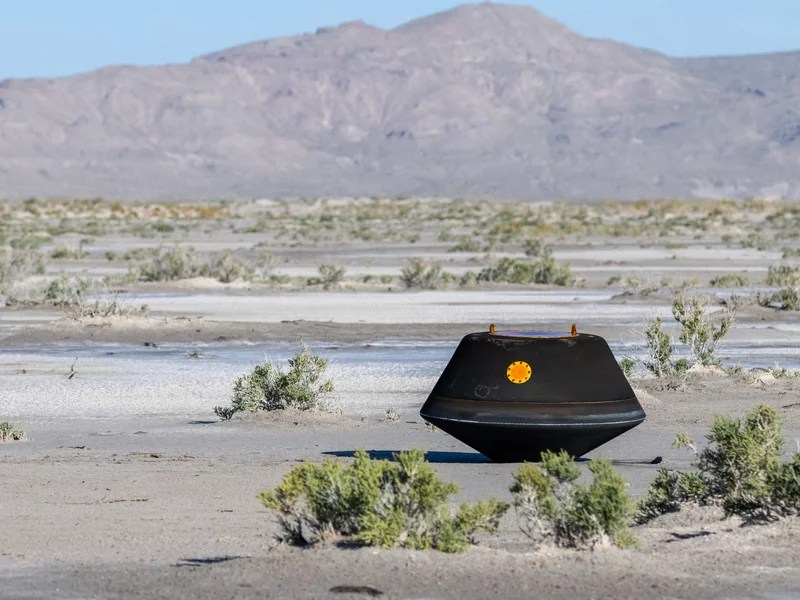
Image (Credit): NASA’s OSIRIS-REx sample capsule safely situated in the Utah desert earlier today. (Keegan Barber/NASA)

First, let discuss the good news. The capsule carrying the sample material from the asteroid Bennu successfully landed in the Utah desert earlier today, as planned. NASA’s Origins, Spectral Interpretation, Resource Identification, Security, Regolith Explorer (OSIRIS-REx) mission was a success. The space agency has plenty to celebrate.

And now for the bad news. India’s Chandrayaan-3 moon lander as well as its lunar rover were supposed to wake up around September 22 with the return of sunlight to the Moon’s South Pole. Unfortunately, neither craft showed any signs of coming back online. That said, the India space agency still has plenty to celebrate given its ability to successfully explore the South Pole before night set in.

Asteroid Sample Coming to Earth This Weekend

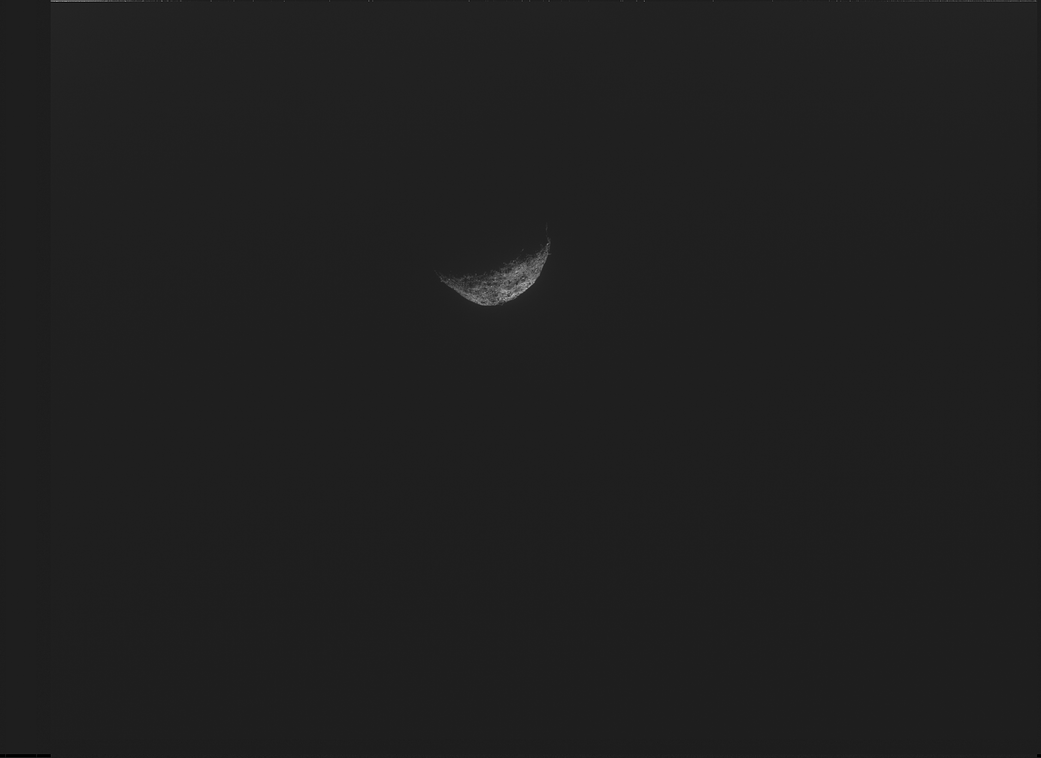
Image (Credit): Asteroid Bennu as seen by the OSIRIS-REx as it begins its return to Earth back in May 2021. (NASA/Goddard/University of Arizona; Writer Daniel Stolte, University of Arizona)

This weekend will should see the safe landing of a asteroid sample from far away. On Sunday, NASA’s Origins, Spectral Interpretation, Resource Identification, Security, Regolith Explorer (OSIRIS-REx) spacecraft will return to Earth with sample material from asteroid Bennu, which it encountered two years ago.

Launched on Sept. 8, 2016, the spacecraft spent about two years getting to Bennu and then more than two years studying the asteroid and collecting a 250-gram sample that should be in the hands of NASA scientists shortly. The graphic below shows the return path of the sample as it heads for the Utah desert. You can also watch this NASA video for more information on the overall mission and keep abreast of mission highlights via this mission blog. NASA also has a recent podcast discussing the spacecraft’s adventures and trip back to Earth.

And what about OSIRIS-REx after it makes this deposit? It will become OSIRIS-APEX (APEX for “Apophis Explorer”) and go back into the inner solar system before encountering asteroid Apophis in 2029.

We talk about rocket reuse, but this is a terrific example of spacecraft reuse.

The timing could not be better as NASA awaits 2024 budget decisions from Congress and further discussions about another sample return, this one from Mars.

Credit: NASA