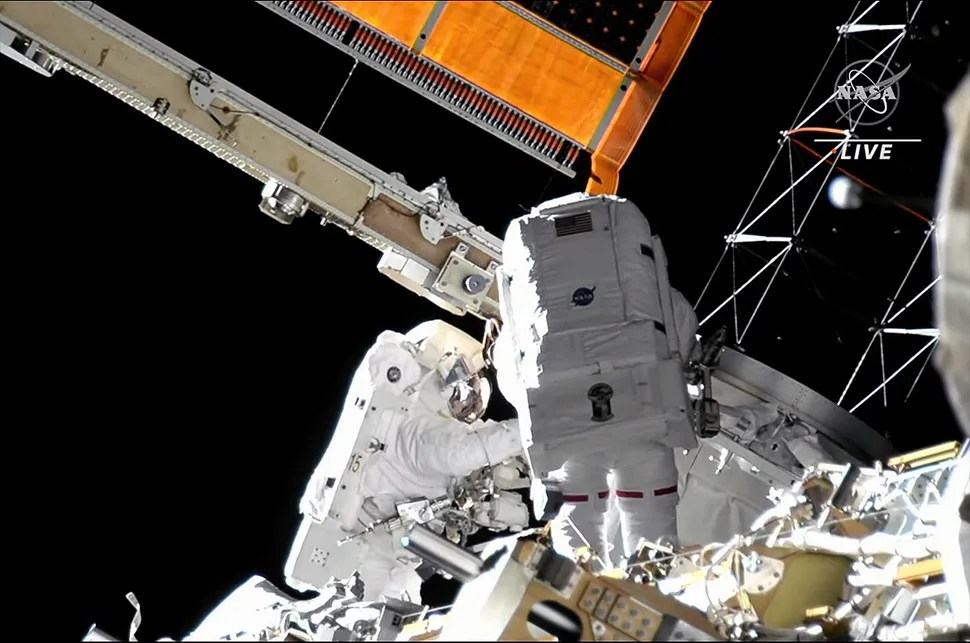
Pic of the Week: Astronaut Frank Rubio Still at Work on the ISS

Image (Credit): NASA astronauts Frank Rubio (left) and Josh Cassada (back to camera) working outside the ISS last November. (NASA TV)

This week’s image shows astronaut Frank Rubio hard at work last year outside the International Space Station (ISS). He has now exceeded the U.S. space duration record, which was 355 days. All of this was unplanned, come as the result of a faulty Russian capsule that kept him on the station longer than his scheduled six month tour.

Mr. Rubio is set to return to Earth on September 27. At that point, he will have spent 371 days in space.

This CBS News segment discusses some of the risks related to a longer stay on the station.

The Pragyan Rover is Sleeping on the Moon

Image (Credit): Photo of the Vikram lander, which put the Pragyan rover on the Moon. (ISRO via AP/Alamy)

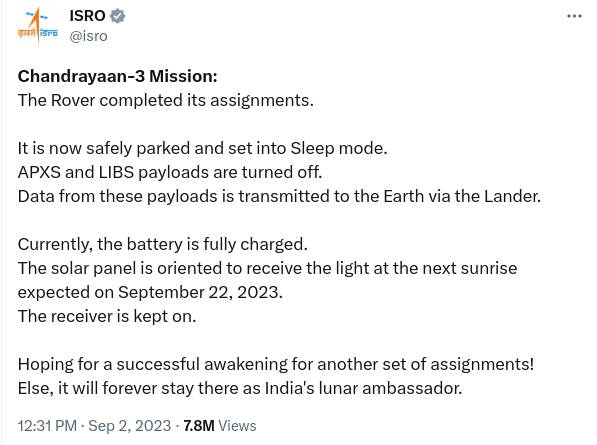
After a few weeks of work, India’s Pragyan rover on the Moon’s south pole was put to sleep last weekend to sit out the long lunar evening. It accomplished all of its goals, according to a Tweet from the Indian Space Research Organisation (ISRO):

We shall know in a few weeks whether the little lander is ready for more work.

Nature magazine noted some of the findings from the rover’s primary mission, including:

  • ions and electrons swirling near the lunar pole;
  • variations in soil temperature;
  • a moonquake; and
  • presence of sulfur and other elements.

Whatever happens, the Indian rover has been a great success.

India Has Been Busy – It Now Heads for the Sun

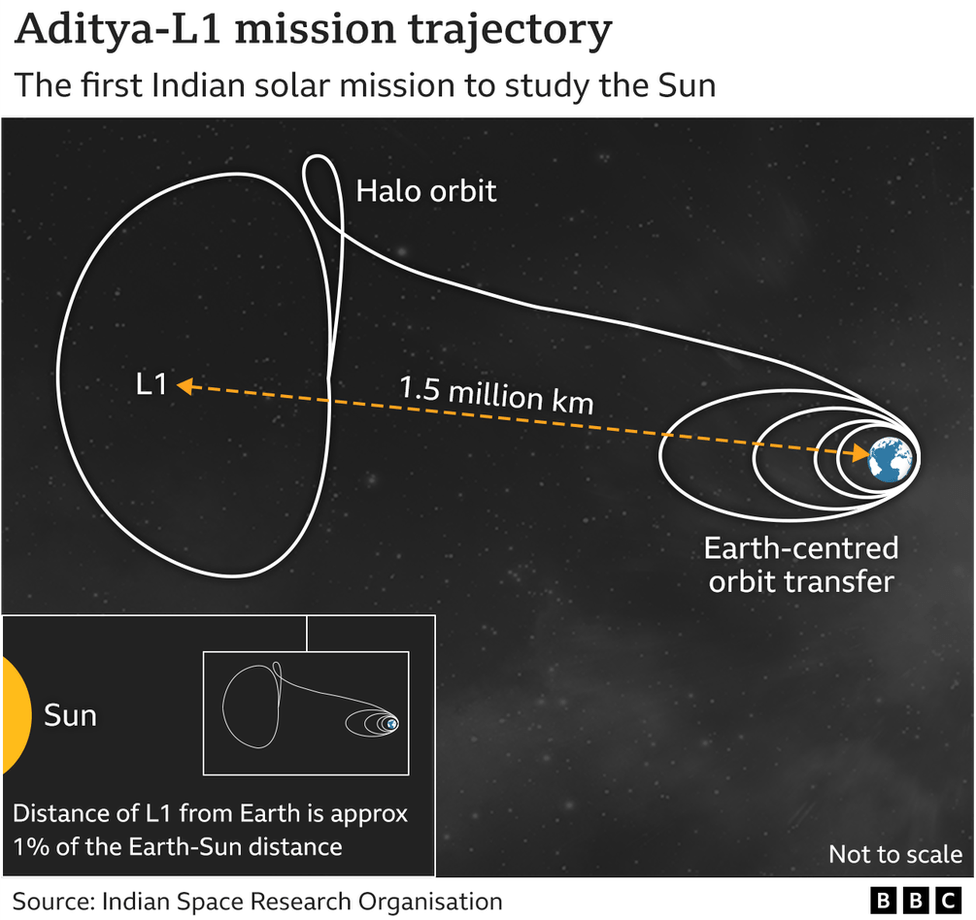
Over the weekend, India launched another important space mission. The mission of the Aditya-L1 spacecraft is to spend four months studying the outer layers of the Sun.

The Indian Space Research Organisation (ISRO) is overseeing the mission, which will come to rest at the L1 Lagrange point from where it will observe the Sun.

For more details on the mission, check out the ISRO website where you can find details about the spacecraft’s objectives and scientific equipment.

This latest mission comes right after India’s successful landing on the Moon, showing all of us that it is not resting on its laurels. The country clearly wants to be in the forefront of the space and science race.

A New Crew Departs for the ISS

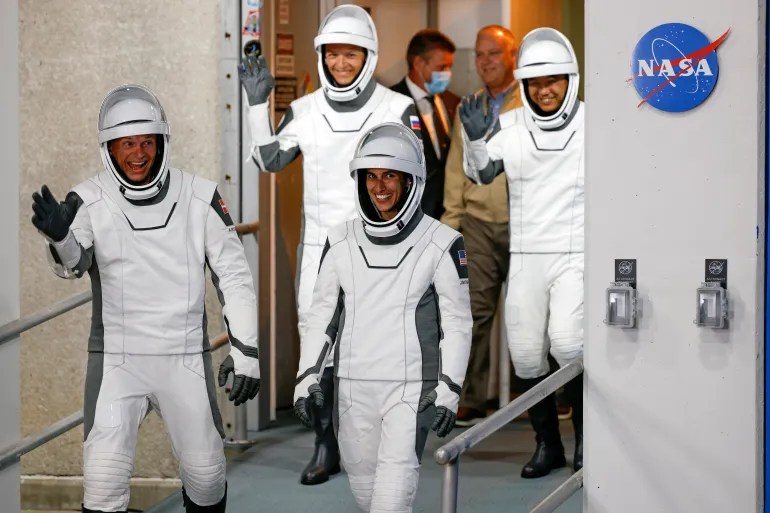
Image (Credit): ISS crew preparing for August 26, 2023 launch. (Terry Renna/AP Photo)

A new crew departed Earth for the International Space Station (ISS) at 3:27am ET today from NASA’s Kennedy Space Center in Florida via a SpaceX Falcon 9 rocket. The crew includes:

  • NASA astronaut Jasmin Moghbeli,
  • ESA (European Space Agency) astronaut Andreas Mogensen,
  • JAXA (Japan Aerospace Exploration Agency) astronaut Satoshi Furukawa, and
  • Roscosmos cosmonaut Konstantin Borisov.

The new crew should be onboard the ISS tomorrow morning, bringing the number of occupants at the station to 11 until 4 crew members return to Earth in a few days.

Russia is probably happy to have attention back on the ISS rather than the Moon for the moment. It has not been a good week for the Russian space program.

You can read more about the new crew members at this NASA site.

A Day in Astronomy: Launch of the Spitzer Space Telescope

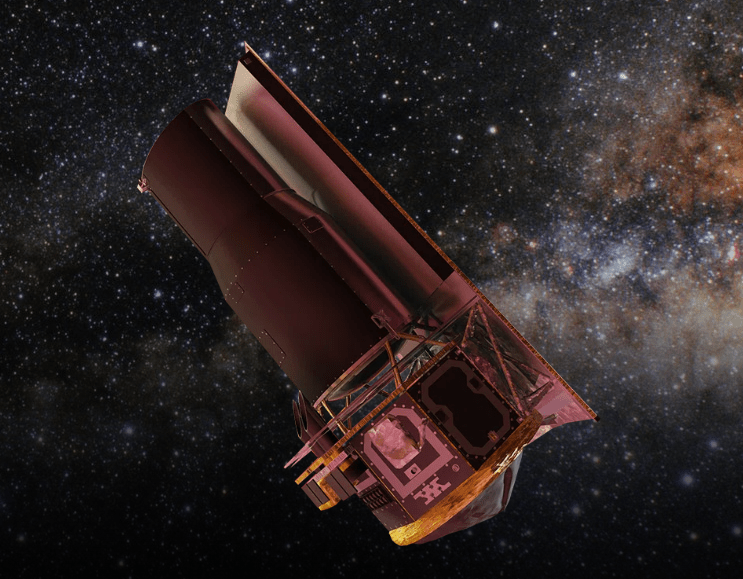
Image (Credit): Artist’s rendering of the Spitzer Space Telescope. (NASA/JPL)

On this day in 2003, NASA launched the Spitzer Space Telescope to conduct infrared astronomy. Spitzer continued to operate until January of 2020.

NASA’s Jet Propulsion Laboratory (JPL) noted some of the triumphs of the space telescope, including:

  • revealing a system of seven Earth-size planets around a star 40 light-years away;
  • creating an unprecedented map of the Milky Way;
  • directly observing light from a planet outside our solar system;
  • directly identifying molecules in the atmospheres of exoplanets; and
  • revealing Saturn’s largest ring.

An impressive list of accomplishments for any telescope.

You can read more about Spitzer at this NASA mission website as well as this JPL website.