Space Quote: The Changing Competition in Space and Elsewhere

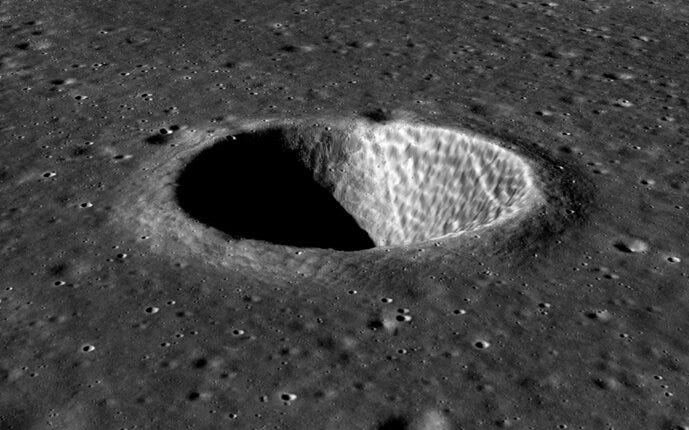
Image (Credit): 3D view of a crater on the Moon generated from images captured by Chandrayaan 2 orbiter’s Terrain Mapping Camera in 2019. (ISRO)

“…a comparison with India is illuminating: India’s economy was about half the size of Russia’s when the Berlin Wall came down in 1989. Today, India’s economy is 50 percent bigger than Russia’s. Forget about keeping pace with the United States: Russia can’t keep up with India.”

-Editorial in The Washington Post by David Von Drehle titled “India’s Brilliant Moon Landing Illuminates Russia’s Drastic Decline.” India’s steady progress on space missions, including Chandrayaan 2 back in 2019 (shown above), has occurred during Russia’s slow decline and current situation. This cannot be lost on Russia as its cosmonaut traveled to the International Space Station this weekend aboard an American rocket. Around the world, space programs are moving on without Russia, which was the leading nation at the start of the Space Age.
Space Quote: If You Build It…Don’t Forget to Maintain It

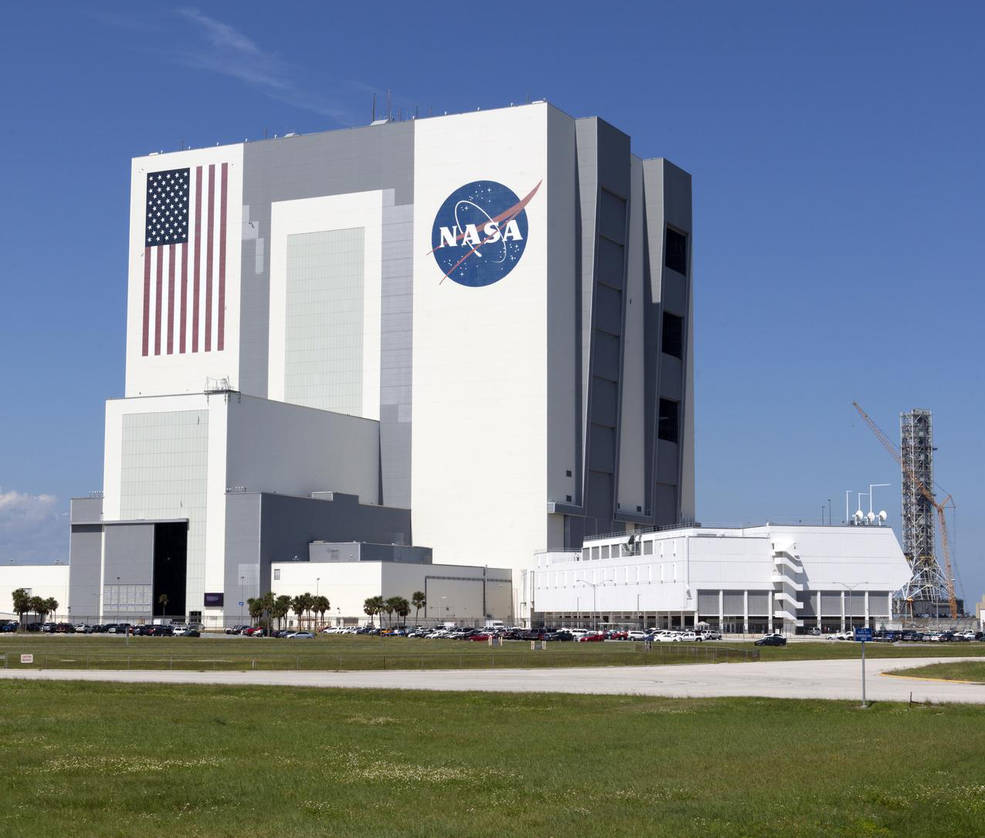
Image (Credit): The Vehicle Assembly Building at NASA’s Kennedy Space Center in Florida. (NASA/Kim Shiflett)

“On average we have a $250 to $260 million dollar annual maintenance gap…Unplanned failures can have mission impacts, and the last thing we want to do is affect Artemis or some other significant mission.”

-Statement by NASA Facilities and Real Estate Division Director Eric Weiser regarding the maintenance of NASA’s infrastructure, as reported in The Register. He went on to say, “What that means is, on average, we’re renewing our infrastructure around every 200 years… A better number would be 60 to 80 years, and to do that we simply need more funding.” I know maintenance expenditures are boring, but this is no different than defense or highways. You get what you pay for, and also what you maintain.

Space Quote: NASA Funding May Not Be What You Think It Is

“While NASA’s programs are very popular and highly visible, we really don’t spend much on our space agency. In 2022, the U.S. treasury took in revenues of $4.9 trillion and then charged up another $1.4 trillion so it could spend a whopping $6.3 trillion. Of that largesse NASA received an historically generous appropriation of $24 billion. Still, that was just 0.35% of federal spending.”

-Statement by Greg Autry, Clinical Professor of Space Leadership, Policy & Business at Thunderbird School of Global Management, ASU, in a Forbes magazine article, “Pennywise, Future Foolish: Congress Moves To Cut NASA Science Budget.” As with foreign assistance, Americans tend to assume NASA has greater funding than it really has. At the same time, the majority of Americans want a strong space program.

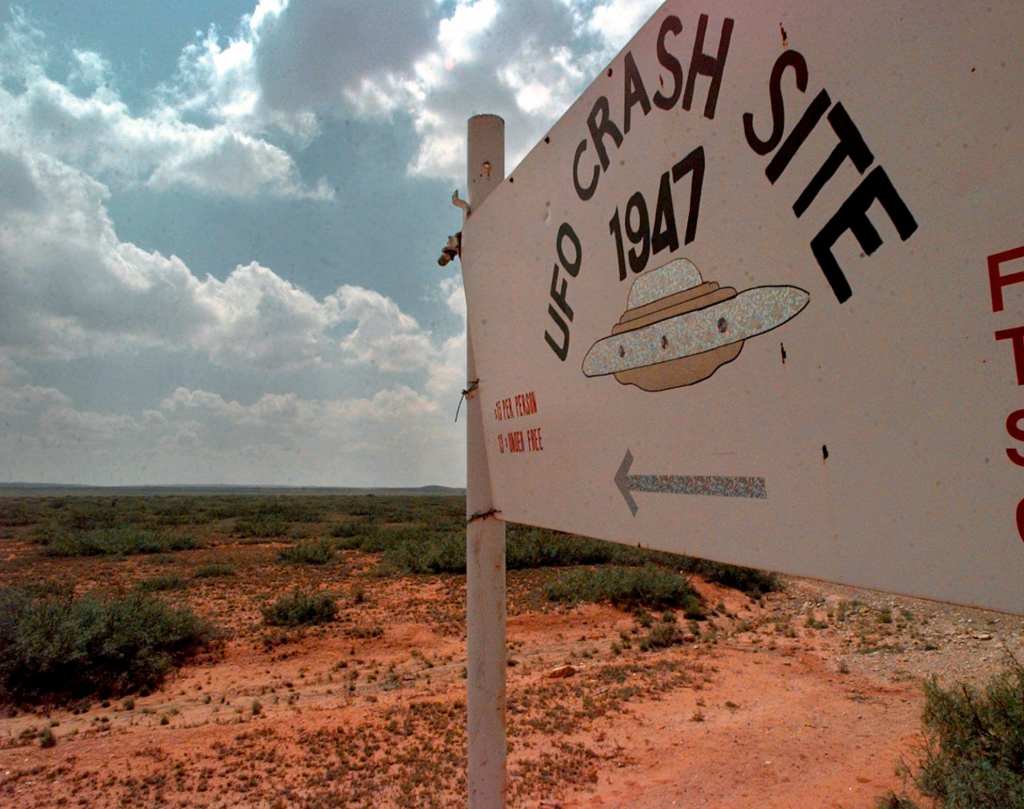
Space Quote: Alien Crash Retrieval and Reverse Engineering?

Image (Credit): Roswell road sign. (Washington Post)

“In 2019, the UAPTF director tasked me to identify all Special Access Programs & Controlled Access Programs (SAPs/CAPs) we needed to satisfy our congressionally mandated mission.

At the time, due to my extensive executive-level intelligence support duties, I was cleared to literally all relevant compartments and in a position of extreme trust in both my military and civilian capacities.

I was informed, in the course of my official duties, of a multi-decade UAP crash retrieval and reverse engineering program to which I was denied access to those additional read-on’s.

I made the decision based on the data I collected, to report this information to my superiors and multiple Inspectors General, and in effect become a whistleblower.”

Prepared statement by David Grusch, Former National Reconnaissance Officer Representative on DOD’s Unidentified Anomalous Phenomena (UAP) Task Force, for a hearing before the House Oversight Committee held earlier this week. The hearing was titled “Unidentified Anomalous Phenomena: Implications on National Security, Public Safety, and Government Transparency.” The hearing is part of a series of such hearings calling for greater transparency by the federal government regarding UAP issues.

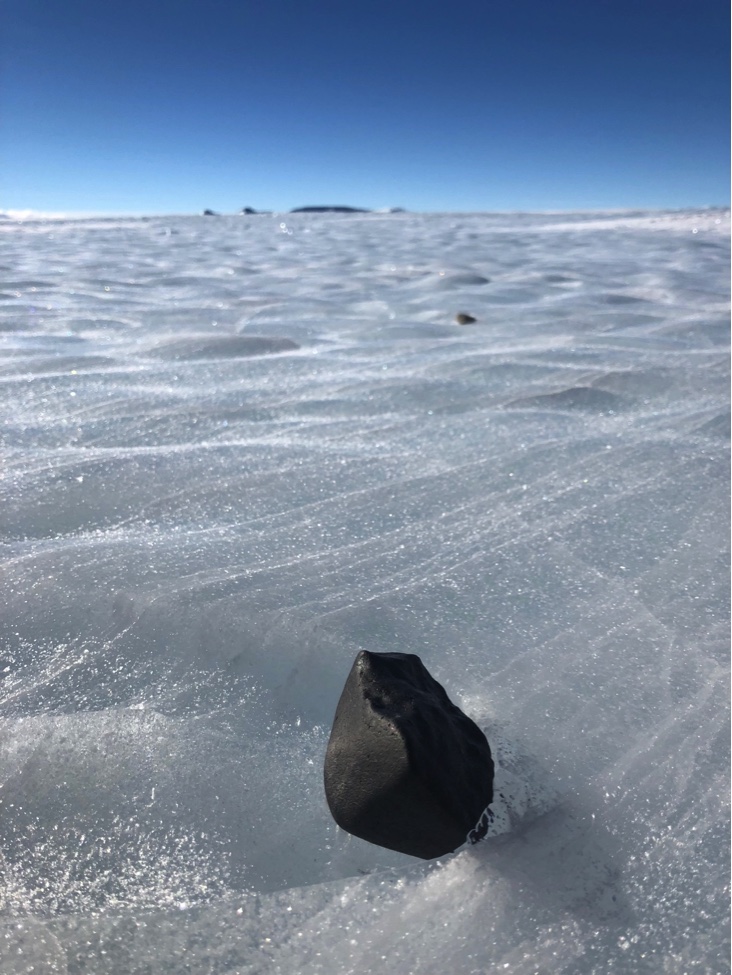
Space Quote: Meteorite Hunters

Image (Credit): A meteorite in the Antarctic. (Rutgers University)

“We get a piece for our collection and a new meteorite sample for potential research…In turn, they know what they can sell the specimen for because they know what kind of meteorite it is.”

-Statement by Alan Rubin, a research geochemist and curator of the University of California, Los Angeles meteorite collection, in a Wall Street Journal article titled “A $25,000 Prize Still Sits in the Maine Woods. Meteorite Hunters Aren’t Giving Up.” The article discusses the meteorite-hunting hobby of some individuals and how it has created a symbiotic relationship between hunters and scientists. As another scientist in the article stated, ““We as scientists, with a few exceptions, don’t have the time, effort or money to go hunting meteorites.” You can also find the article here.