Space Stories: JWST Exoplanet Images, Nearby Exoplanets Located, and Exoplanet Biosignatures,

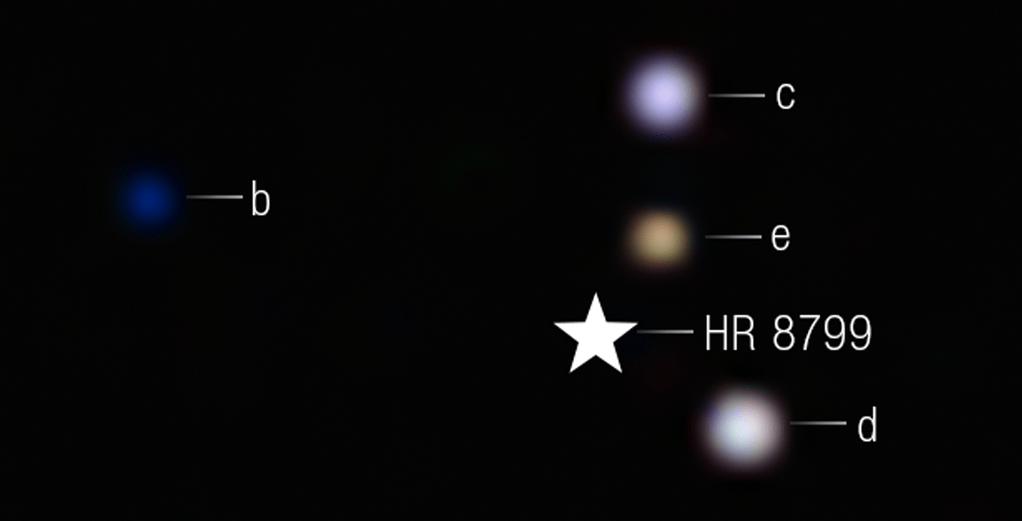
Image (Credit): Infrared view of the multi-planet system HR 8799. Colors are applied to filters from Webb’s NIRCam (Near-Infrared Camera). A star symbol marks the location of the host star HR 8799, whose light has been blocked by the coronagraph. (NASA, ESA, CSA, STScI, W. Balmer (JHU), L. Pueyo (STScI), M. Perrin (STScI))

Here are some recent stories of interest related to exoplanets.

Webbtelescope.org: NASA’s Webb Images Young, Giant Exoplanets, Detects Carbon Dioxide

The first planet outside our solar system was discovered in the 1990’s, but it wasn’t until more than a decade later astronomers actually obtained a direct image of one. It’s extremely difficult to image an exoplanet, as stars in other planetary systems can be thousands of times brighter and bigger than their planets. NASA’s James Webb Space Telescope is equipped with a highly sensitive coronagraph, a tiny mask that blocks the light of the star, allowing Webb to image exoplanets. Webb’s new images of two iconic systems, HR 8799 and 51 Eridani, and their planets have stunned researchers, and provided additional information into the chemical make-up of the young gas giants.

ABC News: Several Planets Found Orbiting Star Less Than 6 light-years Away

Astronomers have confirmed the existence of four planets orbiting a star less than 6 light-years away with help from some of the world’s most powerful telescopes. Research published in October 2024 revealed that one planet was rotating around Barnard’s Star, the second-closest single star system to Earth. But a combination of telescopes all over the world confirmed the presence of four small exoplanets, according to a study published last week in The Astrophysical Journal Letters.

Universe Today: Astronomers Think They’ve Found a Reliable Biosignature. But There’s a Catch

The search for life has become one of the holy grails of science. With the increasing number of exoplanet discoveries, astronomers are hunting for a chemical that can only be present in the atmosphere of a planet with life! A new paper suggests that methyl halides, which contain one carbon and three hydrogen atoms, may just do the trick. Here on Earth they are produced by bacteria, algae, fungi and some plants but not by any abiotic, non biological processes. There is a hitch, detecting these chemicals is beyond the reach of current telescopes.
Space Stories: NASA Spinoffs, Moving the NASA HQ to Ohio, and the Many Moons of Saturn

Credit: NASA

Here are some recent stories of interest.

NASA: NASA Releases its Spinoff 2025 Publication

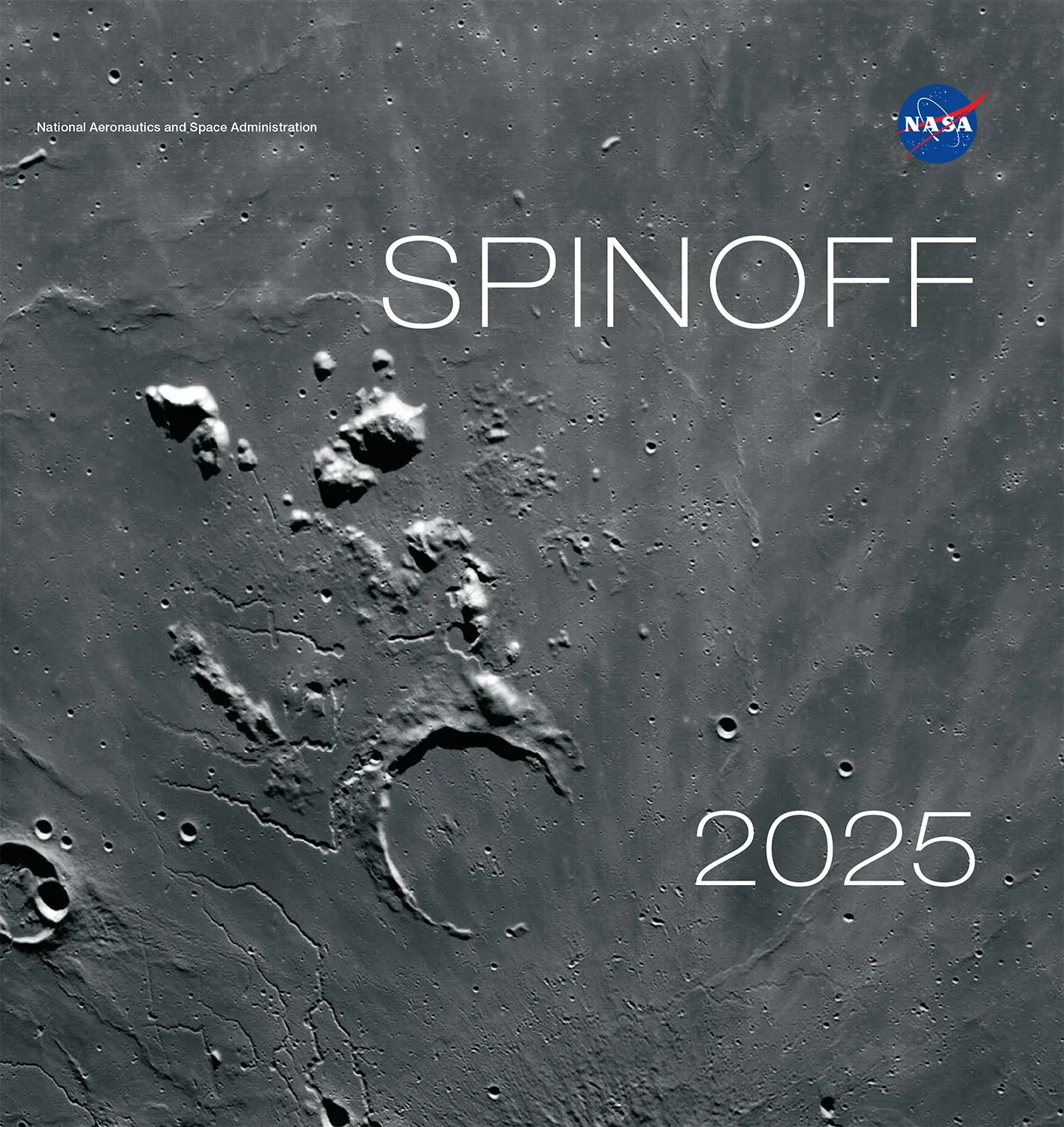
The work NASA conducts in space leads to ongoing innovations benefiting people on Earth. Some of these latest technologies, which have been successfully transferred from NASA to the commercial sector, are featured in the latest edition of Spinoff 2025 publication now available online. The publication features more than 40 commercial infusions of NASA technologies, including research originated at NASA’s Glenn Research Center in Cleveland.

Cleveland.com: NASA Urged to Move Headquarters to Ohio as D.C. Lease Expires

When the National Aeronautics and Space Administration‘s lease on its current Washington, D.C. headquarters expires in 2028, Ohio members of Congress want NASA to move its headquarters to Ohio. In a Tuesday letter to Vice President JD Vance and President Donald Trump’s nominee to be NASA Administrator, Jared Isaacman, Ohio Congress members argue that bringing the headquarters of the nearly 18,000 employee agency to their state would align with broader government efforts to decentralize federal agencies and reinvigorate parts of the country outside Washington.

USA Today: Moon King: Astronomers Discover 128 New Moons Orbiting Saturn. Here’s What We Know.“

Astronomers have discovered 128 new moons orbiting Saturn, further solidifying the planet as the “moon king” of our solar system. Astronomers from Taiwan, Canada, France and the U.S. announced the discovery on Tuesday. The findings push Saturn’s moon count to 274, towering over the previous record-holder Jupiter, which has 95 moons. The recent discovery points to what astronomers have speculated for decades, that Saturn’s rings were caused by a massive collision about 100 million years ago, researcher Mike Alexandersen, an astronomer at the Center of Astrophysics, told USA TODAY. A collision of such size could explain the small moons that orbit Saturn.

Space Stories: Upcoming ESA Exoplanet Mission, Evidence of Early Water in the Universe, and a New Nearby Dwarf Galaxy

Here are some recent stories of interest.

German Aerospace Center: PLATO Mission to Launch in Late 2026 Onboard Ariane 6

On 29 January 2025, the European Space Agency (ESA)’s Director of Science, Carole Mundell; ESA’s Director of Space Transportation, Toni Tolker-Nielsen; and Arianespace’s Chief Commercial Officer, Steven Rutgers, signed the launch contract for the ESA PLATO science mission...PLATO stands for PLAnetary Transits and Oscillations of stars…PLATO’s goal is to detect Earth-like planets that orbit Sun-like stars in the Milky Way and may even have conditions suitable for life.

ScienceNews: The Universe’s First Supernovas Probably Produced Water

The first generation of stars in the universe could have produced significant amounts of water upon their deaths, just 100 million to 200 million years after the Big Bang. Signatures of water have previously been observed some 780 million years after the Big Bang. But now, computer simulations suggest that this essential condition for life existed far earlier than astronomers thought, researchers report March 3 in Nature Astronomy.

Phys.org: New Dwarf Galaxy Discovered in the Halo of Andromeda Galaxy

An international team of astronomers reports the discovery of a new dwarf galaxy, which they have named Pegasus VII. The newfound galaxy, which lies about 2.4 million light years away, was identified in the Ultraviolet Near-Infrared Optical Northern Survey (UNIONS). The discovery was detailed in a research paper published Feb. 13 on the arXiv preprint server. Dwarf galaxies are low-luminosity and low-mass stellar systems, usually containing a few billion stars. Their formation and activity are thought to be heavily influenced by interactions with larger galaxies.

Space Stories: Distant Metalic Mining, Mapping Water on the Moon, and Lunar Cell Phone Service

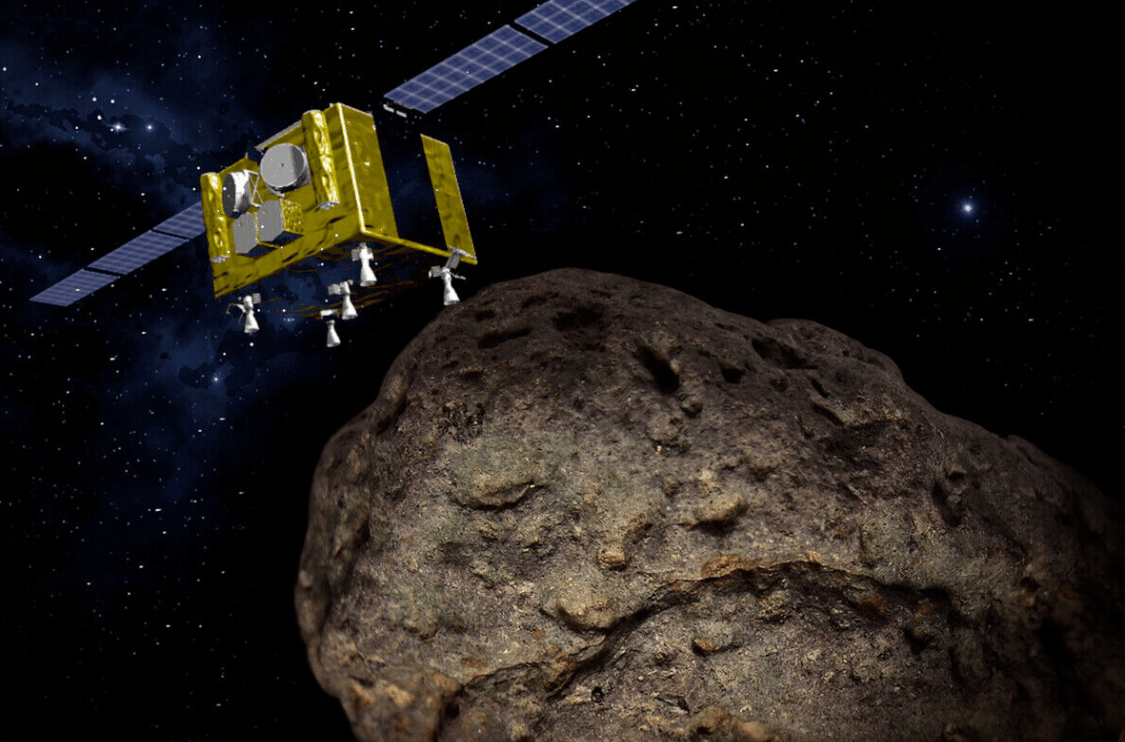
Image (Credit): Artist’s rendering of the Odin spacecraft approaching an asteroid. (Astroforge)

Here are some recent stories of interest related to the upcoming Intuitive Machines’ launch to the Moon.

CNN: A Tiny Spacecraft is Poised to Launch on an Unprecedented Deep-space Mission. The CEO Behind it is ‘Terrified’“

His venture may seem far out, but asteroid mining CEO Matt Gialich has no illusions. The engineer cofounded the bold California startup AstroForge in 2022 with the aim of hunting for precious metals in space, and he is all too aware that success is not guaranteed…The probe is set to lift off aboard a SpaceX Falcon 9 rocket from NASA’s Kennedy Space Center in Florida on February 26. AstroForge’s spacecraft will ride alongside Athena, a lunar lander developed by the startup Intuitive Machines, until it breaks off on its own.

Caltech: NASA’s Lunar Trailblazer is Launching to the Moon’“

NASA’s Lunar Trailblazer mission is led by Caltech’s Bethany Ehlmann, professor of planetary science and the Allen V. C. Davis and Lenabelle Davis Leadership Chair and director of the Keck Institute for Space Studies, and the mission is operated by IPAC at Caltech. The Lunar Trailblazer small satellite, or smallsat, will orbit the Moon to understand the nature of water on the Moon’s surface, providing maps to guide future robotic and human explorers. Prior missions have seen hints of ice and other forms of water that could be used in a variety of ways, from purifying it for human use, to processing it for fuel and breathable oxygen for future human Moon landings.

Fox News: NASA Will Test Cell Phone Service on the Moon in Latest Mission’“

NASA and Intuitive Machines are gearing up for a Wednesday evening liftoff, and one of the payloads will test a moon-based cell network. Researchers with Nokia Bell Labs Solutions Research developed the network and say it’s the same tool that we use here on Earth when we pick up our phones and make a call. But they had to make a cell tower much smaller so it could fit in a rocket and land on the moon.

Space Stories: Solar Orbiter Encounters Venus, White Dwarf Exoplanets, and the End of Gaia

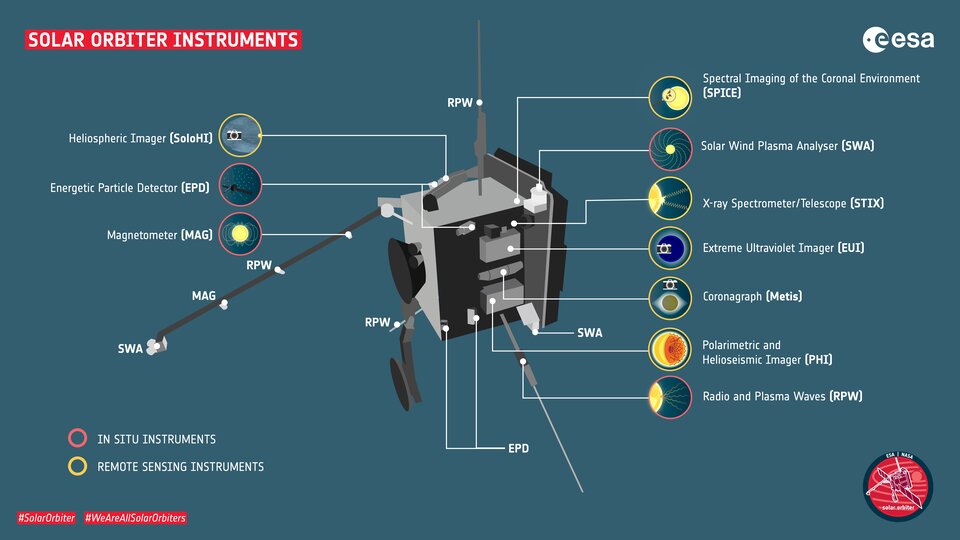
Credit: ESA

Here are some recent stories of interest..

European Space Agency: Solar Orbiter Ready for Close Encounter with Venus’“

The European Space Agency (ESA) is ready to guide the ESA/NASA Solar Orbiter spacecraft through its closest encounter with Venus so far. Today’s flyby will be the first to significantly ‘tilt’ the spacecraft’s orbit and allow it to see the Sun’s polar regions, which cannot be seen from Earth. Studying the Sun’s poles will improve our understanding of solar activity, space weather, and the Sun-Earth connection.

UC Irvine News: UC Irvine Astronomers Gauge Livability of Exoplanets Orbiting White Dwarf Stars’“

Among the roughly 10 billion white dwarf stars in the Milky Way galaxy, a greater number than previously expected could provide a stellar environment hospitable to life-supporting exoplanets, according to astronomers at the University of California, Irvine. In a paper published recently in The Astrophysical Journal, a research team led by Aomawa Shields, UC Irvine associate professor of physics and astronomy, share the results of a study comparing the climates of exoplanets at two different stars. One is a hypothetical white dwarf that’s passed through much of its life cycle and is on a slow path to stellar death. The other subject is Kepler-62, a “main sequence” star at a similar phase in its evolution as our sun.

Uppsala University: Mission Accomplished for Space Telescope Gaia’“

The space telescope Gaia has created the largest three-dimensional map of the Milky Way ever. On January 15, 2025, Gaia shut down after 11 years in space. But the research on data Gaia collected will continue for many years to come. Gaia is a space telescope onboard a satellite that has orbited the sun for 11 years. With the help of astrometry, which is a technique to measure the positions, distances and movements of stars and other heavenly bodies, Gaia has been able to measure distances and luminosities for up to 2 billion stars, which is about 1% of all stars in the Milky Way.