Space Stories: Aliens Using Black Holes, Fire Approaches JPL, and New Approaches for the Mars Sample

Credit: Image by Gerd Altmann from Pixabay

Here are some recent stories of interest.

Universe TodayScientists Propose New Method to Detect Alien Civilizations via Black Holes

A new paper looks at another way we might be able to detect advanced civilizations, and at its center is the need for energy. The more advanced a civilization becomes, the greater their need for energy and one of the most efficient ways, according to current theories, is to harness the energy from an actively feeding black hole. The paper suggests a civilization feeding matter into a black hole could harvest energy from it; more excitingly perhaps, the process could be detectable within 17,000 light years.

LA TimesFirefighters Battle to Protect NASA’s Jet Propulsion Laboratory, Mt. Wilson

Officials said they are making progress in protecting two key institutions from the Eaton fire. Don Fregulia, an operations section chief for the California Department of Forestry and Fire Protection, which has joined in the Eaton fire response, said that efforts to protect Mt. Wilson had proved successful and he expected that to remain the case. “We’re actively engaged there, and so far, no loss to any values at risk at Mt. Wilson,” Fregulia said. “We’re feeling good about what we have to do up there tonight to keep that site secure.” He said the fire had also spread close to NASA’s Jet Propulsion Laboratory, but he said that’s a priority and crews were “making good progress there as well.”

NASANASA to Explore Two Landing Options for Returning Samples from Mars

To maximize chances of successfully bringing the first Martian rock and sediment samples to Earth for the benefit of humanity, NASA announced Tuesday a new approach to its Mars Sample Return Program. The agency will simultaneously pursue two landing architectures, or strategic plans, during formulation, encouraging competition and innovation, as well as cost and schedule savings. NASA plans to later select a single path forward for the program, which aims to better understand the mysteries of the universe, and to help determine whether the Red Planet ever hosted life. NASA is expected to confirm the program – and its design – in the second half of 2026.
Space Stories: Support for the Near Space Network, Another Interesting Exoplanet, and Firefly Gets Fourth Lunar Contract

Image (Credit): Part of NASA’s Near Space Network. (NASA)

Here are some recent stories of interest.

SatnewsNASA Selects Four Commercial Companies to Support Near Space Network

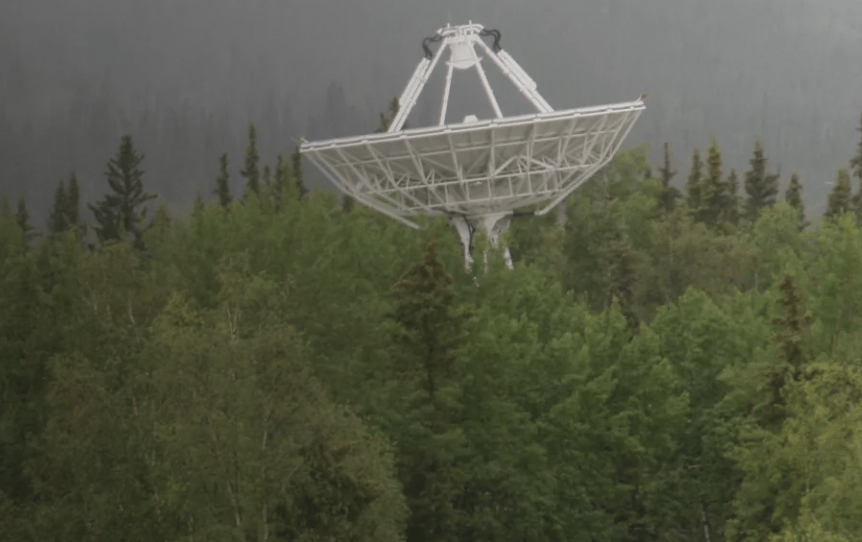
NASA has selected multiple companies to expand the agency’s Near Space Network’s commercial, direct-to-Earth capabilities services, which is a mission-critical communication capability that allows spacecraft to transmit data directly to ground stations on Earth. The work will be awarded under new Near Space Network services contracts that are firm-fixed-price, indefinite-delivery/indefinite-quantity (IDIQ) contracts. Project timelines span from February 2025 to September 2029, with an additional five-year option period that could extend a contract through Sept. 30, 2034. The cumulative maximum value of all Near Space Network Services contracts is $4.82 billion.

Daily GalaxyNASA Discovers Massive Planet Bigger Than Earth with Gas Tied Exclusively to Living Organisms

Scientists have made a groundbreaking discovery on a planet over eight times the mass of Earth, located 120 light-years away. Using advanced technology, researchers detected a gas in its atmosphere that, on Earth, is only produced by living organisms. Could this be the first real hint of life beyond our planet? While the findings are intriguing, they come with questions that still need answering.

Express NewsTexas-based Firefly Aerospace Gets Another NASA Moon Mission, a $179.6M Deal That’s Part of Artemis

NASA gave Texas-based Firefly Aerospace a Christmas present of sorts — a $179.6 million deal to deliver six scientific instruments to the lunar surface as part of the Artemis program, which is intended to put astronauts back on the moon. Awarded a week before the holiday, the contract is the fourth for the Cedar Park company under the space agency’s Commercial Lunar Payload Services initiative. The $2.6 billion program aims to create a lunar economy while learning more about the moon in preparation for the first crewed flights to the lunar surface in more than 50 years.

Space Stories: Solar Probe’s Close Flyby, Cosmic Tunnels, and More Complexities in Planet Formation

Credit: NASA

Here are some recent stories of interest.

Sky & Telescope:Parker Solar Probe Swings By Sun in Closest Approach Yet

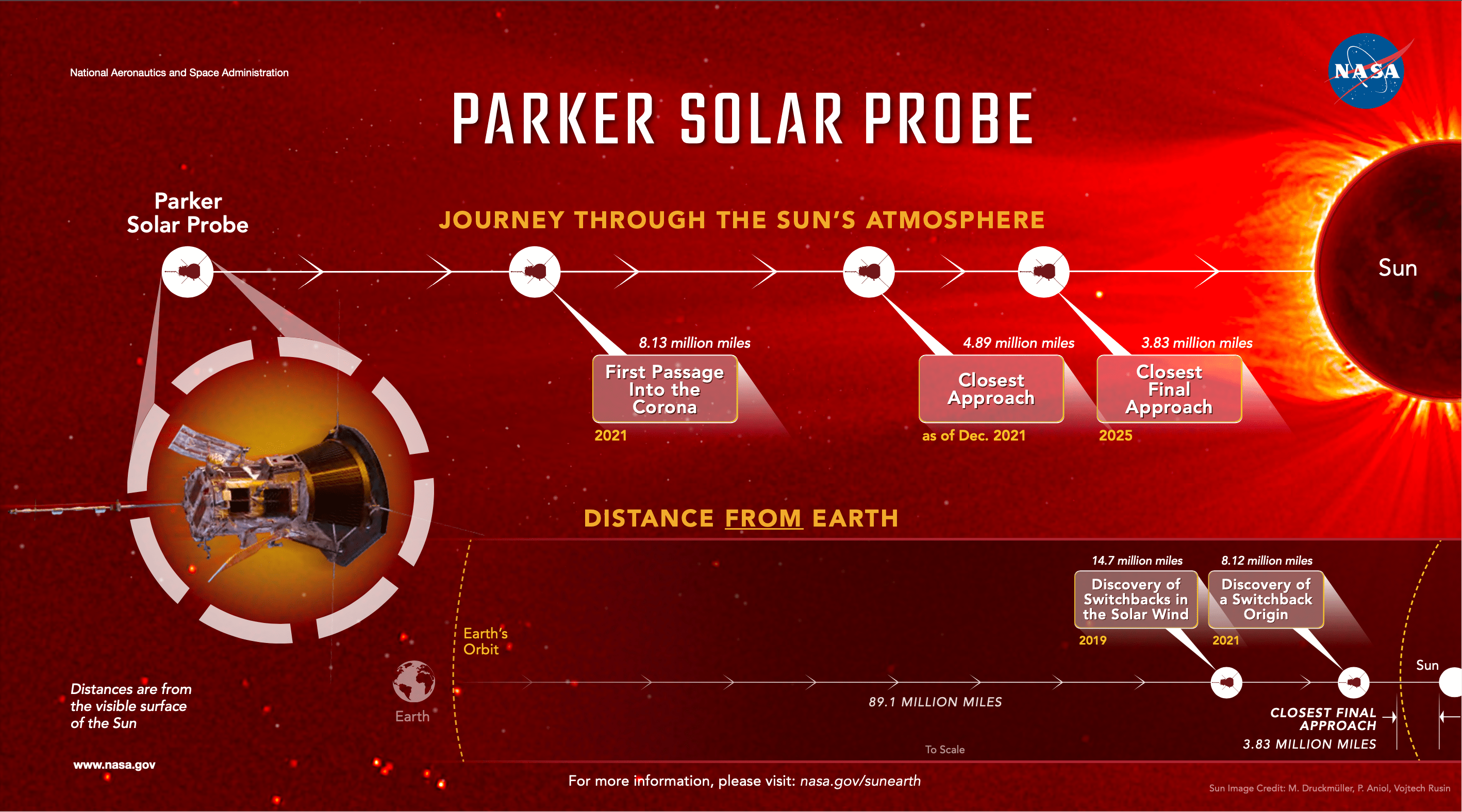
NASA’s Parker Solar Probe is about to go where no spacecraft has gone before. A final flyby of Venus last month has sped up Parker for the mission’s next solar perihelion, set to occur on December 24 at 6:40 EST / 11:40 UT. At just 6.2 million km (3.9 million miles) from the solar surface — about nine times the Sun’s radius — this perihelion will be the closest for the mission. Parker is breaking its own record to once again become the closest human-made object to ever approach the Sun…the mission is totally autonomous in taking measurements; it should start transmitting data back to Earth within a week after this pass, though it has the capability to carry out operations on its own for up to two months if needed.

BRG: Astronomers Say They Found a Tunnel Connecting Our Solar System to Other Stars

Astronomers have made a startling discovery. Using data from the eRosita X-ray instrument, researchers say they’ve discovered a “cosmic tunnel” that connects our solar system to other stars. Scientists have long known that our solar system exists in a Local Hot Bubble. This bubble is believed to have formed following several supernovas over the past several million years and is estimated to be around 300 light-years across. Using data from the eRosita, researchers from the Max Planck Institute say they found evidence of a cosmic tunnel stretching from our solar system out toward the Centaurus constellation. The tunnel appears to move through the material that makes up the Local Hot Bubble

Northwestern Now: Young Exoplanet’s Atmosphere Unexpectedly Differs from its Birthplace

Just as some children physically resemble their parents, many scientists have long thought that developing planets should resemble the swirling disk of gas and dust that births them. But, in a new study, a Northwestern University-led team of astrophysicists discovered the resemblance might be looser than previously thought. By studying a still-forming exoplanet and its surrounding natal disk using new instrumentation at W.M. Keck Observatory, the researchers uncovered a mismatched composition of gases in the planet’s atmosphere compared to gases within the disk. The surprising finding potentially confirms long-held skepticism that scientists’ current model of planet formation is too simplified.

Space Stories: Firefly Wins Another NASA Contract, Commercial Space Station Progress, and Another Starliner Delay

Image (Credit): Firefly’s Blue Ghost lunar lander and a rover on the lunar surface. (Firefly Aerospace)

Here are some recent stories of interest.

Firefly AerospaceFirefly Awarded $179 Million NASA Contract for Moon Delivery to Gruithuisen Domes

Firefly Aerospace, Inc., the leader in end-to-end responsive space services, was awarded an approximately $179.6 million NASA contract to deliver and operate six NASA instruments in the Gruithuisen Domes on the Moon’s near side in 2028. As part of NASA’s Commercial Lunar Payload (CLPS) initiative, the mission will utilize Firefly’s Blue Ghost lunar lander, Elytra Dark orbital vehicle, and a rover from an industry provider to investigate the unique composition of the Gruithuisen Domes – a part of the Moon that has never been explored.

NASANASA Sees Progress on Starlab Commercial Space Station Development

A NASA-funded commercial space station, Starlab, recently completed four key developmental milestones, marking substantial progress in the station’s design and operational readiness. The four milestones are part of a NASA Space Act Agreement awarded in 2021 and focused on reviews of the habitat structural test article preliminary design, systems integration, integrated operations, and a habitat structural test plan. “These milestone achievements are great indicators to reflect Starlab’s commitment to the continued efforts and advancements of their commercial destination,” said Angela Hart, program manager for NASA’s Commercial Low Earth Orbit Development Program. “As we look forward to the future of low Earth orbit, every successful milestone is one step closer to creating a dynamic and robust commercialized low Earth orbit.”

Associated PressNASA’s 2 stuck Astronauts Face More Time in Space with Return Delayed Until at Least Late March

NASA’s two stuck astronauts just got their space mission extended again. That means they won’t be back on Earth until spring, 10 months after rocketing into orbit on Boeing’s Starliner capsule. NASA announced the latest delay in Butch Wilmore and Suni Williams’ homecoming on Tuesday. The two test pilots planned on being away just a week or so when they blasted off June 5 on Boeing’s first astronaut flight to the International Space Station. Their mission grew from eight days to eight months after NASA decided to send the company’s problem-plagued Starliner capsule back empty in September.

Space Stories: Classifying Supernovae, Non-Water Liquid on Mars, and Understanding Exoplanet Atmospheres

Image (Credit): Wolf-Rayet 124 (WR 124), a hot star just about to go supernova, as captured by the James Webb Space Telescope. (NASA, ESA, CSA, STScI, Webb ERO Production Team)

Here are some recent stories of interest.

CaltechZwicky Transient Facility Leads to Classification of 10,000 Supernovae

Fast forward to now, and Zwicky’s namesake, the Zwicky Transient Facility (ZTF)—a National Science Foundation-funded sky survey that began operations in 2017 using the 48-inch telescope—has detected about a hundred thousand supernovae. These detections, in turn, have led to the spectroscopic classification and confirmation of more than 10,000 supernovae, making ZTF the largest supernova survey to date. “There are trillions of stars in the universe, and about every second, one of them explodes. Reaching 10,000 classifications is amazing, but what we truly should celebrate is the incredible progress we have made in our ability to browse the universe for transients, or objects that change in the sky, and the science our rich data will enable,” says Christoffer Fremling, a staff astronomer at Caltech. Fremling leads the Bright Transient Survey (BTS), ZTF project that discovers and classifies new supernovae.

MIT NewsLiquid on Mars was Not Necessarily All Water

Dry river channels and lake beds on Mars point to the long-ago presence of a liquid on the planet’s surface, and the minerals observed from orbit and from landers seem to many to prove that the liquid was ordinary water. Not so fast, the authors of a new Perspectives article in Nature Geoscience suggest. Water is only one of two possible liquids under what are thought to be the conditions present on ancient Mars. The other is liquid carbon dioxide (CO2), and it may actually have been easier for CO2 in the atmosphere to condense into a liquid under those conditions than for water ice to melt. 

Institute of Astrophysics and Space SciencesA Rare Venus Solar Transit Helps Unravel Exoplanet Atmospheres

In the next decade, researchers will start probing the atmosphere of planets as small as Earth and Venus orbiting nearby stars. But although these two solar system planets are similar in size and bulk density—so that some call them “twins”—their atmospheres are nothing alike. Would scientists be able to set them apart if seen from light-years away? A team led by the Institute of Astrophysics and Space Sciences (IA) pretended Venus was faraway in another planetary system—an exoplanet—and asked what kind of information they could extract. The results were published in an article in the journal Atmosphere and prove that techniques being used to study large hot exoplanets can be effectively applied to those with a diameter 10 times smaller.