Space Stories: Axiom Space Struggling Financially, Intuitive Machines Gets $4.8 billion NASA Contract, and Water and Hydroxyl Widespread on Moon

Credit: Axiom Space

Here are some recent stories of interest.

ARS TechnicaA Key NASA Commercial Partner Faces Severe Financial Challenges

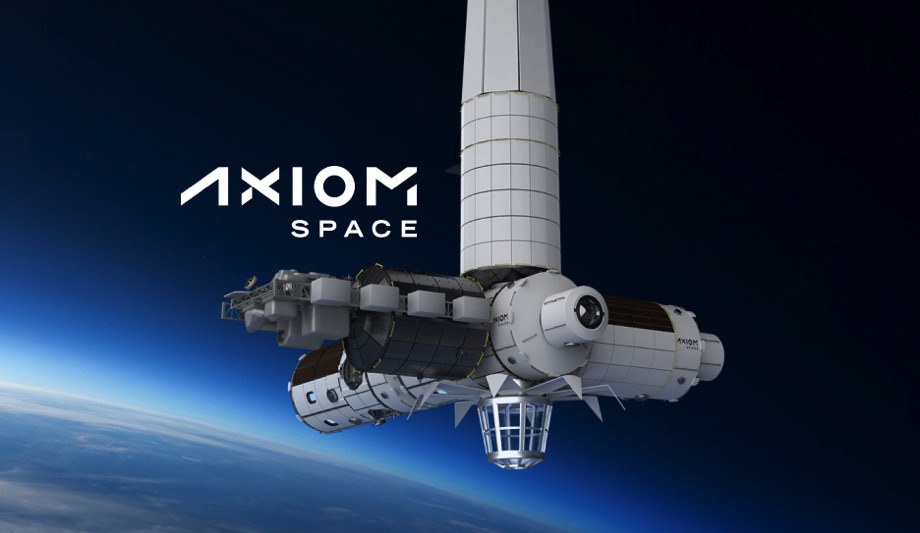
Axiom Space is facing significant financial headwinds as the company attempts to deliver on two key commercial programs for NASA—the development of a private space station in low-Earth orbit and spacesuits that could one day be worn by astronauts on the Moon. Forbes reports that Axiom Space, which was founded by billionaire Kam Ghaffarian and NASA executive Mike Suffredini in 2016, has been struggling to raise money to keep its doors open and has had difficulties meeting its payroll dating back to at least early 2023. In addition, the Houston-based company has fallen behind on payments to key suppliers, including Thales Alenia Space for its space station and SpaceX for crewed launches.

ReutersIntuitive Machines Clinches $4.8 billion Navigation Services Contract from NASA

Intuitive Machines said on Tuesday it has bagged a navigation and communication services contract of up to $4.82 billion from NASA for missions in the near space region. As part of the contract, which has a base period of five years with an additional five-year option period, Intuitive will deploy lunar relay satellites and provide communication and navigation services to aid NASA’s Artemis campaign.

Planetary Science InstituteSources of Water and Hydroxyl are Widespread on the Moon

A new analysis of maps of the near and far sides of the Moon shows that there are multiple sources of water and hydroxyl in the sunlit rocks and soils, including water-rich rocks excavated by meteor impacts at all latitudes. “Future astronauts may be able to find water even near the equator by exploiting these water-rich areas. Previously, it was thought that only the polar region, and in particular, the deeply shadowed craters at the poles were where water could be found in abundance,” said Roger Clark, Senior Scientist at the Planetary Science Institute and lead author of “The Global Distribution of Water and Hydroxyl on the Moon as Seen by the Moon Mineralogy Mapper (M3)” that appears in the Planetary Science Journal. “

Space Stories: Polaris Dawn Mission Starts, Report Blasts NASA, and Galaxies Are Larger Than We Thought

Here are some recent stories of interest.

NASANASA to Test Telemedicine, Gather Essential Health Data with Polaris Dawn Crew

NASA researchers will soon benefit from a suite of experiments flying aboard a new fully-commercial human spaceflight mission, strengthening future agency science as we venture to the Moon, Mars and beyond. The experiments are flying as part of the Polaris Dawn mission which launched aboard a SpaceX Dragon spacecraft and Falcon 9 rocket earlier today…“Each mission, whether the crew is comprised of commercial or NASA astronauts, provides a key opportunity to expand our knowledge about how spaceflight affects human health,” said Jancy McPhee, associate chief scientist for human research at NASA. “Information gathered from Polaris Dawn will give us critical insights to help NASA plan for deeper space travel to the Moon and Mars.”

Flying Magazine: “Report to Congress: Shortsighted, Aging NASA Faces Uncertain Future

A report published Tuesday raises serious questions about NASA’s ability to effectively function as the nation’s preeminent space agency. The 218-page document, assembled by the National Academies of Sciences, Engineering, and Medicine (NASEM) at the behest of Congress, warns that NASA is prioritizing short-term missions and commercial contracts over the people and technology that make its out-of-this-world activities possible. Per the report, the space agency’s emphasis on near-term victories and overreliance on private contractors comes at the price of a strained budget, degraded infrastructure, and exodus of talented personnel.

Astro3D: “Galaxies are Much, Much Bigger Than We Thought

A shroud of gas stretches up to a million light years around every galaxy and is its first interaction with the wider Universe beyond. For the first time, scientists have photographed this halo of matter and examined it pixel by pixel. If this galaxy is typical, then the study, published today in Nature Astronomy, indicates that our galaxy is already interacting with its closest neighbour, Andromeda.

Space Stories: ESA Drill Going to the Moon, ROMAN Takes on the Ever-changing Universe, and Six New Worlds Discovered

Image (Credit): The Hadley-Apennine region of the Moon photographed during the Apollo 15 mission of 1971. (NASA)

Here are some recent stories of interest.

European Space AgencyEuropean Drill and Mini Lab Secure Ride to the Moon

ESA’s Prospect package, including drill and a miniaturised laboratory, will fly to the Moon’s South Polar region in search of volatiles, including water ice, as part of NASA’s Commercial Lunar Payload Services initiative…NASA has selected Intuitive Machines for a flight opportunity in 2027 that will deepen our understanding of the Moon and answer key questions about where and how volatiles can be found on the lunar surface.V olatiles, such as water ice, are chemical components that easily evaporate or vaporise under certain conditions. Prospect is a suite of instruments that will drill up to at least one metre depth beneath the lunar surface, extract samples, and process them in a mini lab. The combination of robotic drill and sample analysis package aims to identify volatiles trapped beneath the surface at extremely cold temperatures down to –150 °C.

Space Telescope Science InstituteNASA’s Roman Space Telescope to Investigate Galactic Fossils

The universe may seem static, only capable of being captured in still frames, but that is far from the truth. It is actually ever-changing, just not on timescales clearly visible to humans. NASA’s upcoming Roman Space Telescope will bridge this gap in time, opening the way to the dynamic universe. RINGS, the Roman Infrared Nearby Galaxy Survey, will specifically uncover the dynamic universe by searching galaxies for fossils of their formation history. RINGS will also lead scientists to clues about the true nature of dark matter, the mysterious substance that makes up the majority of the mass in our universe. Roman will launch in 2027, prepared to revolutionize how scientists understand our universe and give them access to the vision of the universe as it truly is: changing.

Science DailySix New Rogue Worlds: Star Birth Clues

The James Webb Space Telescope has spotted six likely rogue worlds — objects with planet-like masses but untethered from any star’s gravity — including the lightest ever identified with a dusty disk around it. The elusive objects offer new evidence that the same cosmic processes that give birth to stars may also play a common role in making objects only slightly bigger than Jupiter.

Space Stories: The Search for Super Civilization, Students Sought for Lunar Mission, and Kilonova Seekers

Image (Credit): Murchison Widefield Array radio telescope in Western Australia. (Curtin University)

Here are some recent stories of interest.

SETI InstituteSETI Institute Starts First Low Frequency Search for Alien Technology in Distant Galaxies

The SETI Institute, the Berkeley SETI Research Center and the International Centre for Radio Astronomy Research announced a groundbreaking study using the Murchison Widefield Array (MWA) in Western Australia. Led by Dr. Chenoa Tremblay of the SETI Institute and Prof. Steven Tingay of Curtin University, this research is the first to search for signs of alien technology in galaxies beyond our own, focusing on low radio frequencies (100 MHz).

This innovative study used the MWA’s large field of view (FOV), allowing the team to cover about 2,800 galaxies in one observation, of which 1300 we know the distance to. Usually, the search for extraterrestrial intelligence (SETI) has focused on signals within our galaxy. This new approach goes further, looking at distant galaxies. This new approach looks at distant galaxies, making it one of the most detailed searches for super civilizations—those more advanced than ours. To send a signal from another galaxy, a civilization would need technology powerful enough to use the energy of their sun or several stars in their galaxy.

KXANCollege Students Sought to Help NASA Return to Moon

NASA needs some help with frozen liquid. As part of the space agency’s planned trip to the moon as part of the Artemis mission, NASA is looking for a way to store “super-chilled” propellants for months on end. They’re asking college students for help. Announced earlier this month, NASA’s 2025 Human Lander Challenge (HuLC) is open for submissions. The competition, now in its second year, is asking for students to develop innovative methods for “in-space cryogenic liquid storage.”

University of PortsmouthCitizen Science Project Identifies 20 New Astronomical Discoveries

A citizen science project, which invites members of the public to take part in identifying cosmic explosions, has already identified 20 new astronomical discoveries. Over 2,000 volunteers across 105 different countries have worked on 600,000 classifications over a six-month period. The project ‘Kilonova Seekers’ aims to find kilonovae – the cosmic explosions of neutron stars and black holes colliding in distant galaxies. Volunteers are asked to play ‘spot the difference’ using data from the two Gravitational-wave Optical Transient Observer (GOTO) telescopes, which are located on opposite sides of the planet – on La Palma, in Spain’s Canary Islands, and Australia’s Siding Spring Observatory.

Space Stories: Oceans on Ariel, Dinosaur-Killer Asteroid from Beyond Jupiter, and the Launch of the Polaris Dawn Mission

Image (Credit): Uranus and distant galaxies as seen by the James Webb Space Telescope. (NASA, ESA, CSA, STScI)

Here are some recent stories of interest.

ForbesNASA’s Webb Telescope Finds Evidence For An Ocean World Around Uranus

New observations by the James Webb Space Telescope suggest that an icy moon around Uranus may have an underground liquid ocean. Ariel is one of 27 moons around Uranus, the seventh planet from the sun and the third largest planet in the solar system. It’s one of four moons that scientists have long been interested in as part of a search for water across the solar system, the others being Umbriel, Titania and Oberon.

Nature: Dinosaur-killing Chicxulub Asteroid Formed in Solar System’s Outer Reaches

The object that smashed into Earth and kick-started the extinction that wiped out almost all dinosaurs 66 million years ago was an asteroid that originally formed beyond the orbit of Jupiter, according to geochemical evidence from the impact site in Chicxulub, Mexico. The findings, published on 15 August in Science, suggest that the mass extinction was the result of a train of events that began during the birth of the Solar System. Scientists had long suspected that the Chicxulub impactor, as it is known, was an asteroid from the outer Solar System, and these observations bolster the case.

Space DailyPolaris Dawn Mission Set for August 26 to Advance Commercial Space Exploration

The Polaris Program, focused on testing and developing new spaceflight technology, is preparing to launch its first mission, Polaris Dawn, aboard SpaceX’s Falcon 9 rocket on Monday, August 26, 2024. This mission marks a significant step forward in commercial space exploration. Key objectives include testing a next-generation spacesuit during the first commercial spacewalk, attempting to achieve the highest altitude for a human spaceflight since the Apollo missions, and evaluating a new communication system through Starlink.